The Four Years That Launched Nike Football

- June 17, 2026
- Words:
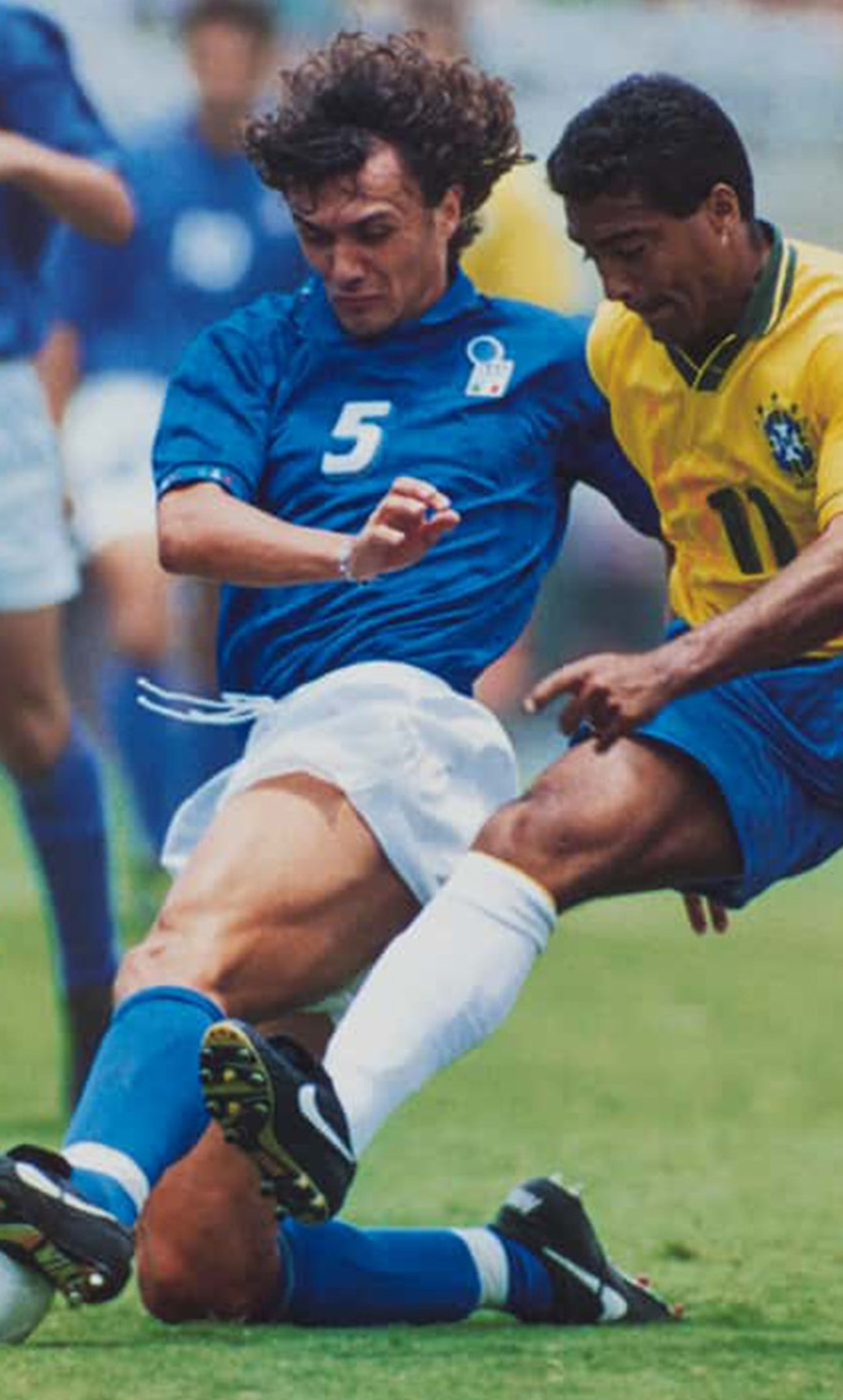
It was July 14, 1994, and Brasil and Italy were about to play for the most coveted trophy in football. The temperature at the Rose Bowl had climbed past 80 degrees, and by the time the two teams walked out of the tunnel, there were more than 94,000 people in the stands — and billions more watching from around the world.
Among them was Phil Knight, co-founder and CEO of the world’s largest athletic footwear company. Nike had already transformed running and basketball, but football, despite captivating the world, remained a great sport and cultural frontier.
As he watched, Knight noticed something beyond the score. The Brasileiros — eight of them in Nike Tiempos — played with a quality he couldn’t quite name. We know it now as joga bonito, Portuguese for “play beautifully,” a style that is expressive, creative, joyful, unscripted.
Two days later, Knight pulled aside his global sports marketing director and said three words that would reshape the company’s relationship with football forever:
“I want Brasil.”
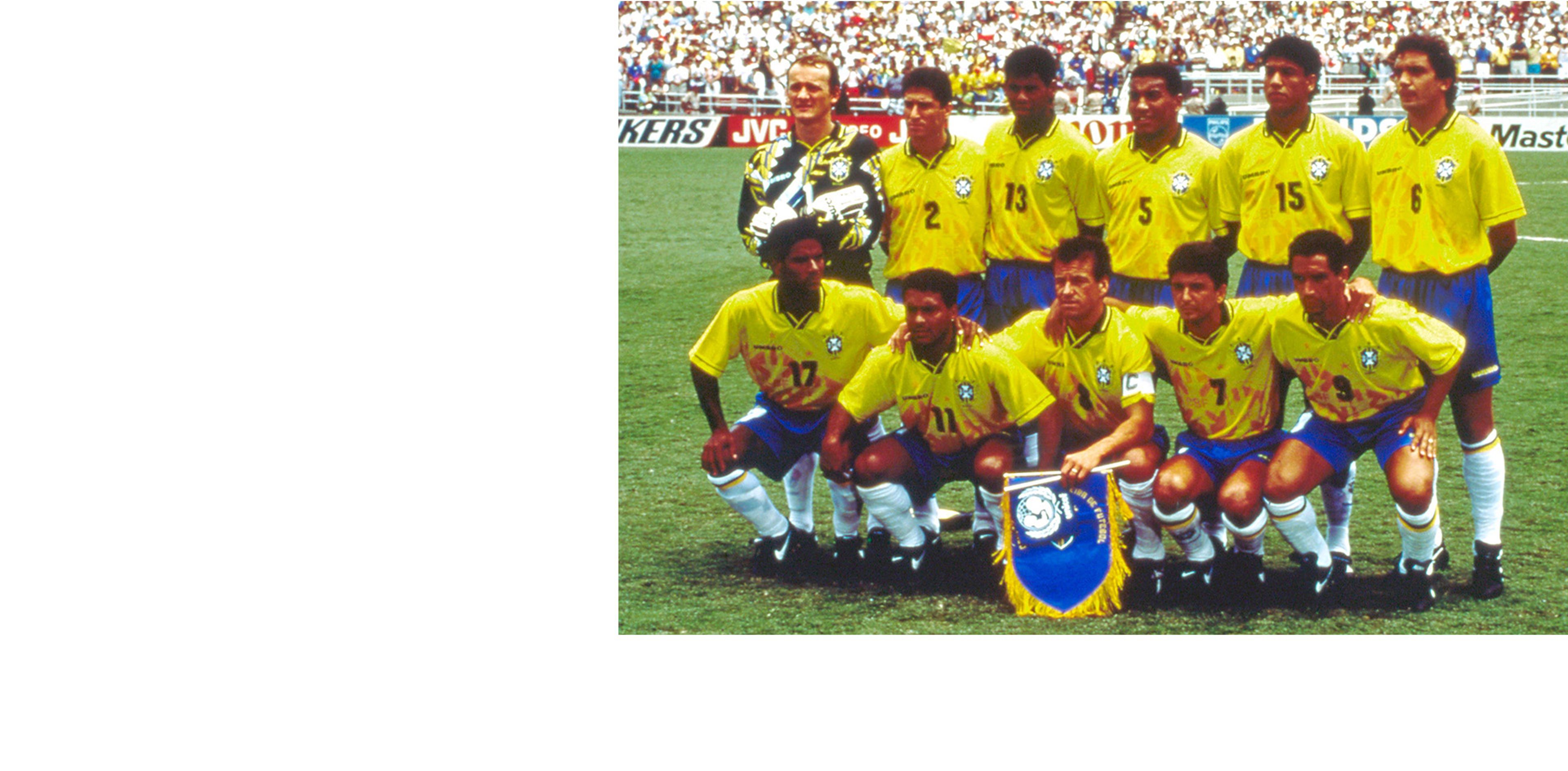
The Brasil national team at the 1994 World Cup — the moment that changed everything.
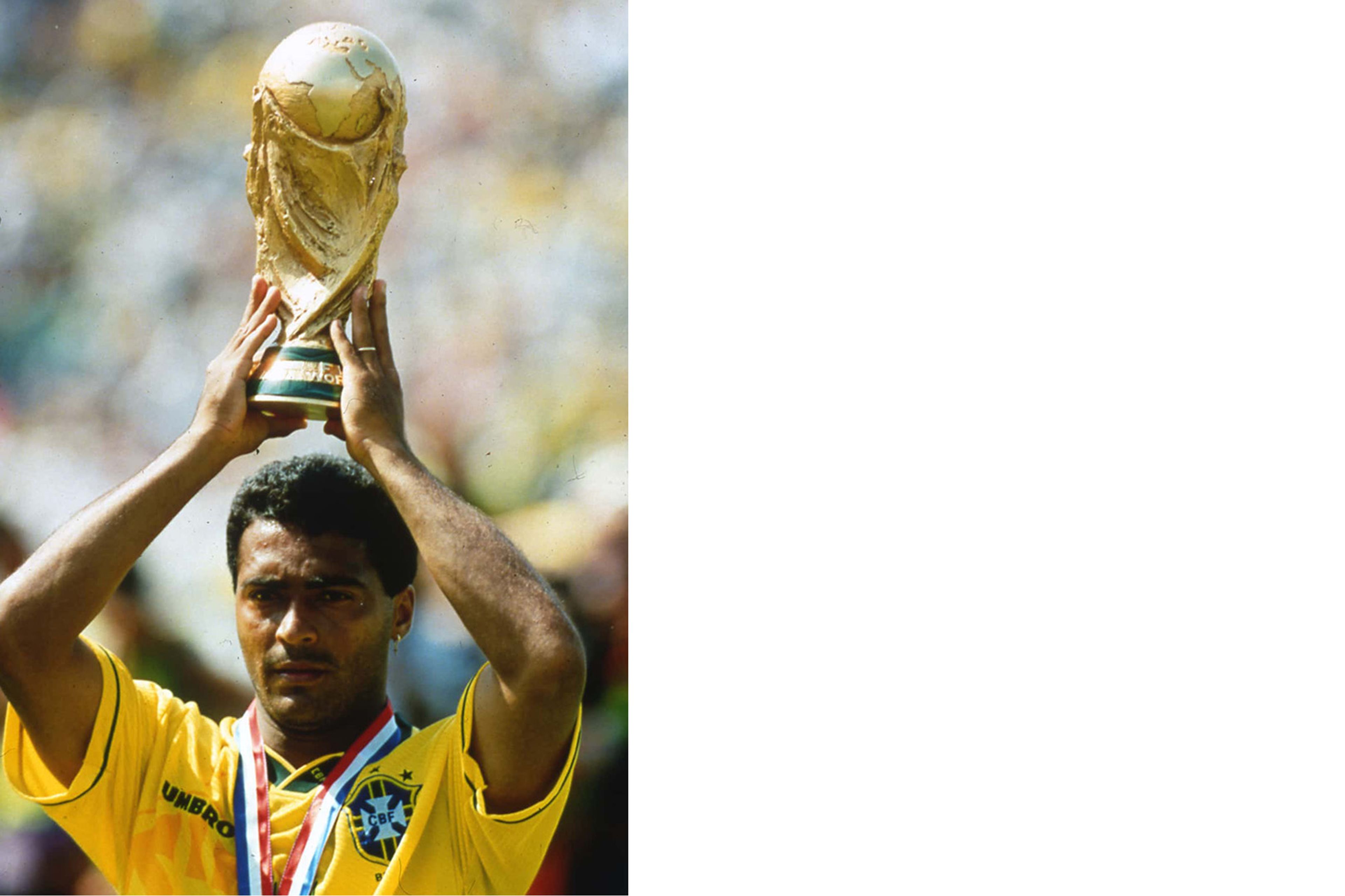
Brasil striker Romário raises the trophy at the Rose Bowl, one of eight Brasil players on the pitch that day wearing Nike Tiempos.
To understand the significance of what came next, it helps to know where Nike stood going into the summer of 1994. Football — still called “soccer” inside the offices of Nike’s headquarters near Beaverton, Oregon — had existed at the edges of the company for years. There were shoes. There were player and team relationships and some moderate success in the U.K. and Scandinavia. But on a global scale, Nike’s influence on the sport barely registered. It was, by most internal accounts, an afterthought.
“We meant absolutely nothing in the sport to anybody,” said Sandy Bodecker, Nike Football’s first general manager.
He was about to change that.
In the early 1990s, Bodecker — who would go on to be a pivotal teammate, later leading projects such as the resurgence of Nike SB and Nike’s Breaking2 moonshot — had been a trusted forward-thinker in Nike’s footwear R&D operation. For years, he and a few others had been making the case that football was a sport the brand couldn’t afford to ignore. But up until that point, there hadn’t been the will to act on it. When Knight’s directive came down after the 1994 final, Bodecker finally had the mandate he needed. Nike Football was becoming its own division, and he would lead it.
The goal was simple: Become a force in the sport by the time France hosted the tournament in 1998. They had four years to make it happen.
“We wanted to be the new heritage of the sport. We liked that, because we didn’t have an old heritage.”
Sandy Bodecker, Nike Football’s first GM
What followed was the assembly of a small, intentional core team, including an apparel director, apparel developer, creative director, sports marketing lead and global sports marketing director, among others. They were a unified force, and the odds were stacked against them. Nike had no deep heritage in the sport, and no small amount of skepticism from European football insiders about how an American company, run out of Oregon, would attempt to serve the world’s game.
Bodecker chose to see it differently. He embraced the skepticism. The absence of history, he decided, wasn’t a liability. It was the whole point.
“We wanted to be the new heritage of the sport,” he told the Department of Nike Archives (DNA) in a series of interviews prior to his passing in 2018. “We liked that, because we didn’t have an old heritage.”
That didn't mean ignoring football’s history. It meant knowing it well enough to go beyond it.
Whatever Nike Football was going to become, it would succeed by honoring that history — and then building something entirely its own.
The team got to work immediately. The first order of business was securing a deal with the U.S. Soccer Federation, an ideal partner to help Nike support and serve the sport and its athletes on the brand’s home turf. After months of relationship building, Nike was able to ink the deal, which covered both the men’s and women’s national programs and ended a 28-year tenure with the team’s previous sponsor, a major competitor.
With this single stroke, Nike was embedded in American football at every level — able to work with its greatest athletes and the soon-to-be greatest, and to innovate for their needs.
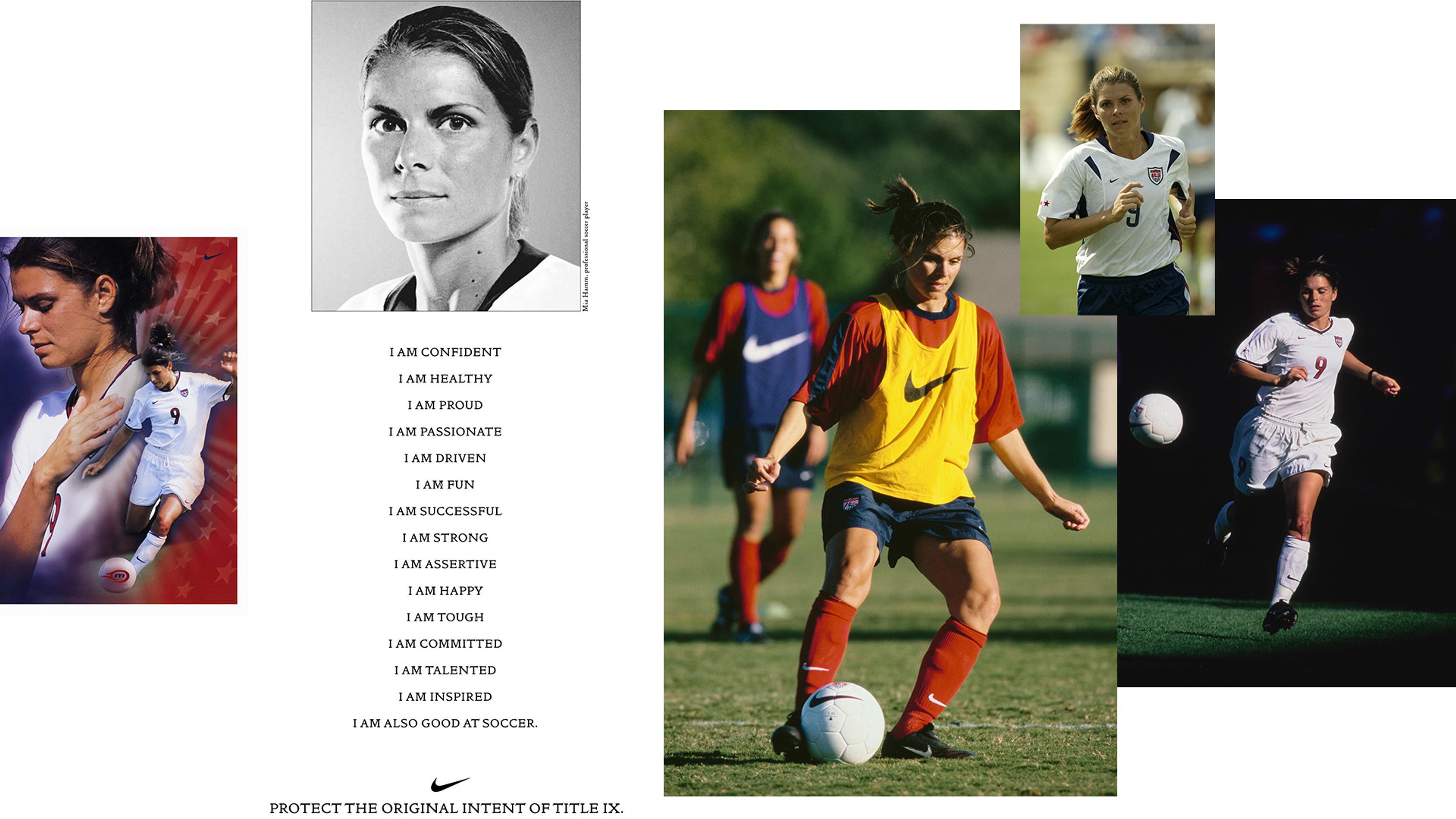
For Mia Hamm, one of the greatest footballers of her generation, the appeal of Nike wasn’t just the contract. It was the promise of something bigger. “It meant I had a lot of input,” she said.
Around the same time, Nike made another essential move, signing an athlete who would come to define Nike’s relationship with the women’s game for a generation.
An intrepid sports marketing executive had approached Mia Hamm two years earlier after watching the University of North Carolina football star score two goals in six minutes on a soggy day in Chapel Hill at the 1992 NCAA Championship.
The contract was worked out in the basement of the Rams Head Rathskeller Bar in Chapel Hill, where the marketing exec sketched out details on a napkin and carried it back to Oregon to go about finding the money to honor it.
“The respect that they had for us made a huge difference. It makes you proactive. It makes you want to get out there and see what else you can do as an individual.”
Mia Hamm, soccer world champion
After Nike signed the U.S. federation, the brand could make its commitment to women’s soccer more formal. For instance, Nike treated Hamm and the U.S. women’s team as genuine collaborators, asking how they wanted their apparel to fit, developing footwear designed specifically for women’s feet, and listening in ways the sport hadn’t seen before.
“They were doing a lot of research in the differences between men’s and women’s feet,” said Hamm during a DNA interview. “They talked to me a lot about footwear and what I liked and what some of the other players like. The respect that they had for us made a huge difference. It makes you proactive. It makes you want to get out there and see what else you can do as an individual.”
When the apparel came back, it reflected everything the players had asked for. For Hamm, it added up to something that felt less like a sponsorship and more like a partnership. And it left a lasting impression on the entire team.
Years later, a deal that began scribbled on a bar napkin would culminate in a building at Nike’s world headquarters bearing her name.
With the federation signed and Hamm inked, the new division turned to the prize that had started everything.
Knight had said he wanted Brasil. Now it was time to deliver.
This would require something beyond hard work or ambition: patience. In Brasil, relationships come before deals, and Nike’s team learned that quickly. For two years, they showed Brasil why they should partner with the brand. Repeated meetings; follow-up calls; and, most important, listening.
It was pure, dogged determination, the kind that comes from having a single, unwavering goal.
In July 1996, the work paid off. The Nike team signed a contract to cover every Brasil national squad. To date, it was the sport’s most monumental deal, and for the Swoosh, the Brasil ethos would set the tone for what Nike Football meant: creative, attacking, instinctive and joyful — a style that the brand still stands for and supports today.
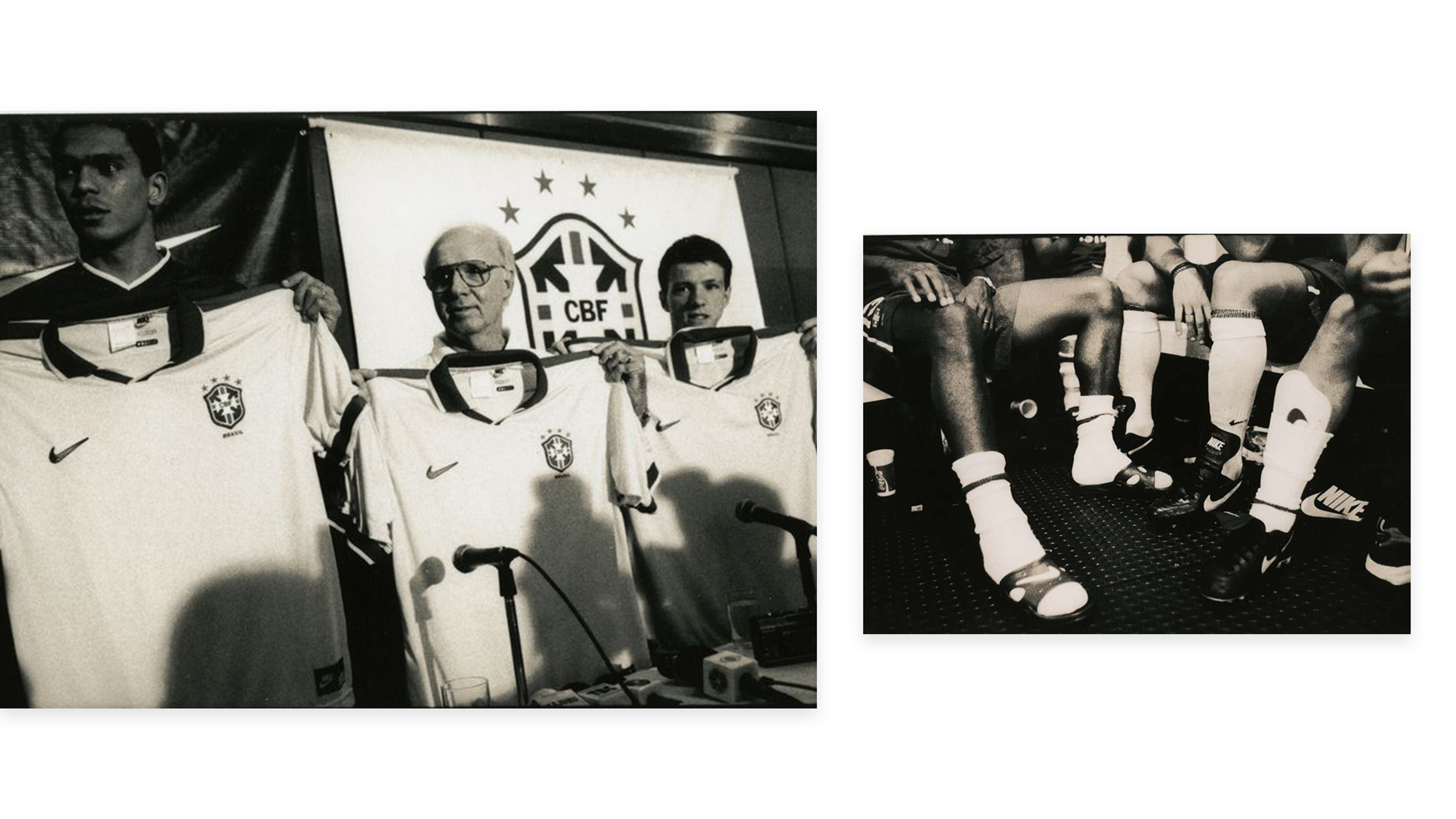
In July 1996, Nike signed the Brasil Football Federation — at the time the most monumental deal in the history of the sport. Their creative, joyful style would come to define Nike Football.
The day the deal was announced, Nike’s stock dropped 5 percent. The market was grappling with the brand in unproven territory. Inside Nike, however, nobody was losing sleep. The team that had spent two years flying to Brasil for lunch understood exactly what they had secured. “It was an incredibly galvanizing, exciting proposition,” said Bodecker. “It’s the New York Yankees or Boston Celtics.” The stock would come around.
They were so sure, in fact, that after the papers were signed, a couple of the deal’s key players walked into a nearby bar and ordered the most expensive bottle of cognac they could find. As luck would have it, two of the most powerful figures in European football — men firmly in Nike’s biggest competitor’s corner — walked in and took a seat nearby. One of the Nike men recognized them instantly but said nothing.
“I had to control myself,” Nike’s then global sports marketing director recalled. “I would have loved to whisper in one of their ears, ‘We just signed Brasil.’”
“When you transcend the sport and start seeping into popular culture, that’s what Nike does best.”
A Nike Football lead teammate in 1997
Signing Brasil wasn’t the only thing that made 1996 a landmark year. That summer, at the Atlanta Olympics, the investments Nike had been making in football paid off on the biggest stage in sport.
The U.S. Women’s National Team — led by Mia Hamm, Brandi Chastain and Briana Scurry — won gold in the first Olympic women’s football final, drawing the largest crowd ever to watch a women’s sporting event in the United States. On the men’s side, Nigeria, which had just been signed the year before, claimed gold against Argentina. Two Nike teams. Two gold medals.
It was also the year Nike Football stepped into its creative identity.
In April, the company released “Good vs. Evil,” a film that pitted a team of the world’s best players against the Devil’s own squad on a burning pitch in an ancient Tunisian coliseum. The shoot ran for approximately 16 consecutive nights, with a record budget at the time.
While earlier ads like “The Wall” had introduced Nike to the football world, this was the first to catch the attention of a global audience. Several countries deemed it too violent to air in prime time. It became a cultural phenomenon anyway.
In the closing image, Eric Cantona, one of the world’s most charismatic footballers at the time, scored the decisive goal against the Devil, flipped his collar, and delivered a single icy line: “Au revoir.” Across Europe, kids were flipping their collars and reenacting the moment in backyards and playgrounds.
A month after it aired, Glenn Cole, the Wieden+Kennedy creative director behind the film, found himself in a taxi in Europe. When the driver learned he worked in advertising, he began telling him about a commercial he’d seen on television — the “one with the Devil.” His son, he said, asked him to go out in the backyard every night and stand on the far side of the yard while the boy kicked a ball at his chest, playing the Devil and trying to make him blow up.
“That’s when I realized this actually captured the average guy’s imagination,” said Cole.
If “Good vs. Evil” had announced Nike’s arrival in football, “Airport” took it to the next level.
The concept was deceptively simple: The newly signed Brasil national team, killing time before a flight, breaks into an impromptu match through the terminal. No villain. No Devil. No burning pitch. Just football players doing what football players do when no one is watching: playing and laughing, alive with the particular joy that had made Brasil the world’s most beloved team.
“I always thought the secret to success was, whatever people are expecting, go the other way,” said Cole. “Nobody saw ‘Good vs. Evil’ coming. It was really dark and heavy, and I think people were waiting for the sequel to that.”
The misdirection worked. But it didn’t come easy.
The bulk of the shoot took place at the Rio de Janeiro international airport between Christmas and New Year’s Eve 1997, with director John Woo at the helm. Nike had negotiated permission to film once the terminal closed for the night.
Everything was in place — except the talent.
The national team, on holiday in Brasil, arrived four hours late, and the logistics were further complicated by the nature of the set itself. Woo was a celebrated film director, but commercial shoots run on athletes’ schedules, not director’s schedules. On top of that, he was working through severe heat exhaustion.
Nike brought in Hollywood producer Lawrence Bender to help manage the chaos.
What emerged from the mayhem, however, was something unlike anything Nike had made before. Instead of a cast of global stars or a dramatic storyline, “Airport” simply showed Brasil being Brasil: unscripted, buoyant and completely themselves. It was the first time Nike had ever built a campaign around a team rather than an individual. Bodecker called it a “watershed.”
“When you transcend the sport and start seeping into popular culture, that’s what Nike does best,” said one of the Nike Football lead teammates. “Being able to do that with football, which was the one sport that Nike hadn’t really been able to crack, was a huge accomplishment. After that, it was off to the races.”
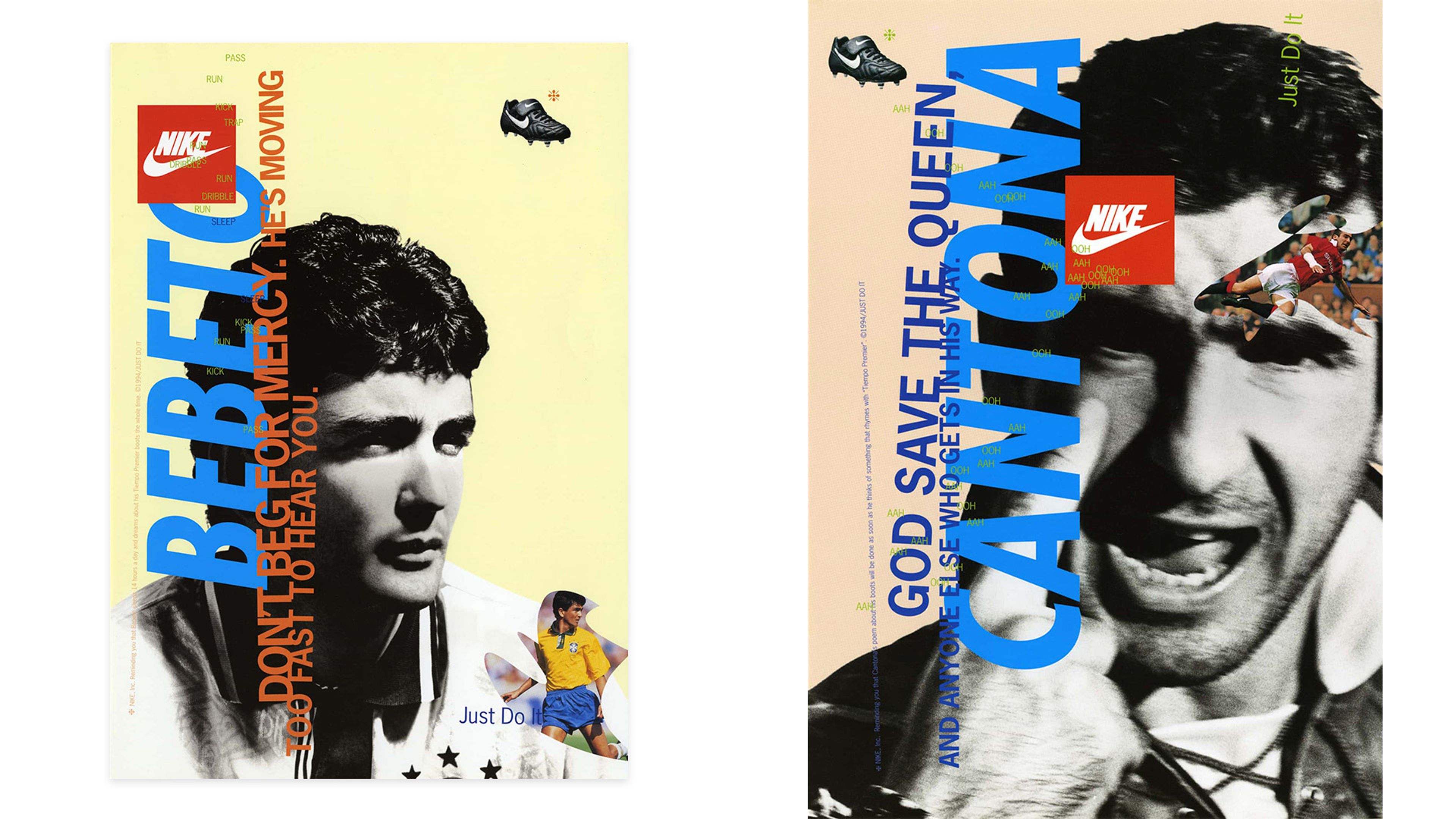
Two 1994 Nike print ads featuring Brasil striker Bebeto and French forward Eric Cantona offer early examples of athlete relationships that laid the groundwork for Nike Football’s global ambitions.
As the ads were capturing the world’s attention, Nike was putting language to something that was already taking shape around them.
At the time, there was a feeling inside the sport that football was losing something — becoming more predictable, more cautious, less alive. Pierre-Laurent Baudey, the football-obsessed Frenchman Nike had brought in to lead its advertising efforts, felt it acutely.
When Nike asked him to define what the brand stood for in the game, he said he’d been waiting for the question.
To find the answer, he traveled to schools and clubs across Europe, asking kids where they thought the game should go. What came back, distilled through months of conversation, echoed what was already unfolding in the team they’d just signed: creativity, spontaneity and joy. Football played with freedom rather than fear.
“It was something hard to define,” said Baudey. “But at the time we just signed Ronaldo, and he was becoming this uber star. He was a gifted, visionary, passionate player and added a dimensional soul to his game.”
They called it “Brilliant Football” — a philosophy that argued the “beautiful game” should actually be beautiful. Inside Nike, it was captured in a single Portuguese word: alegria, or “joy of life.”
Brasil was its living embodiment. It would shape everything Nike did in football for the next decade.
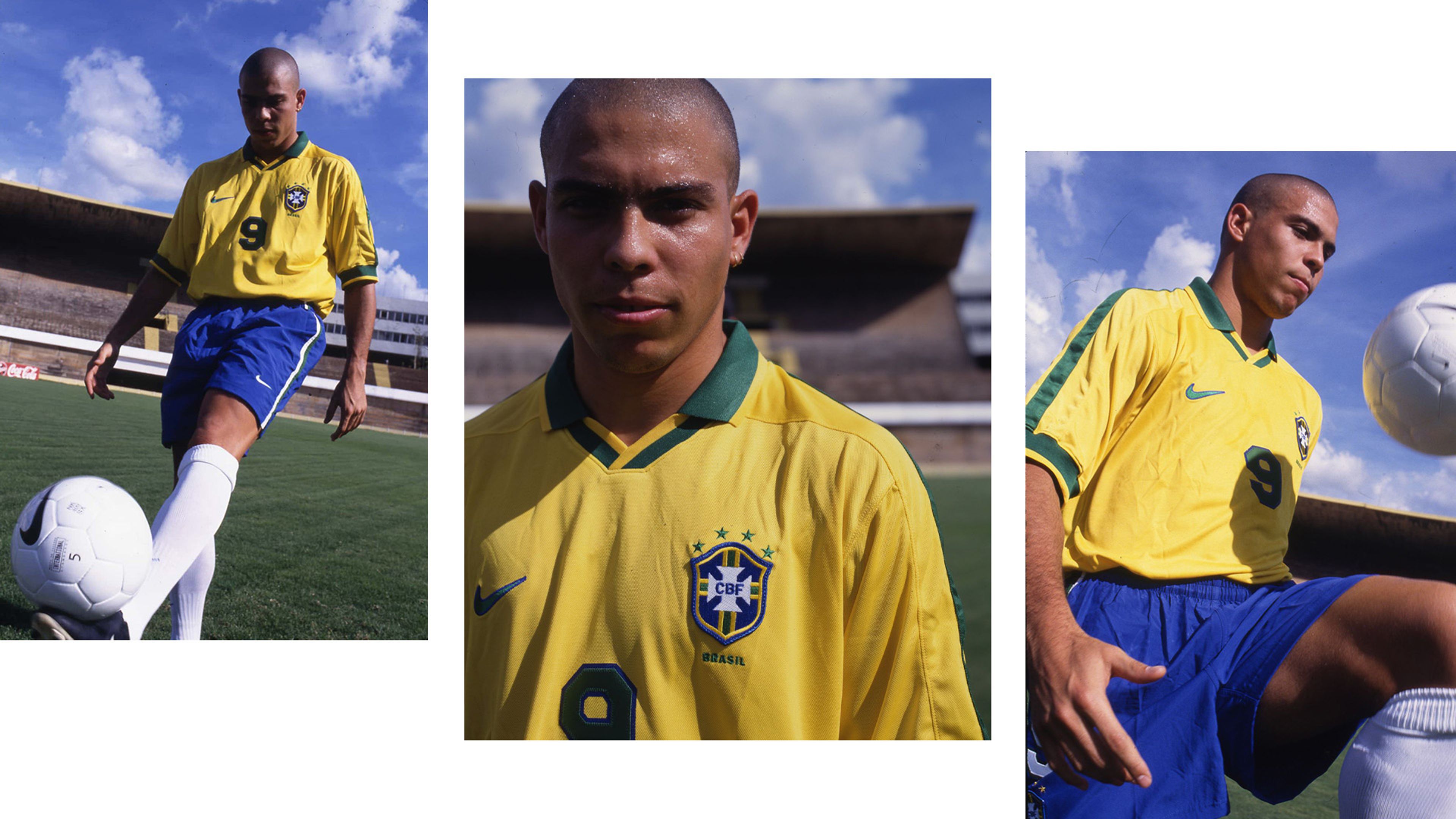
Ronaldo, photographed in his first Nike Brasil kit in 1997, added a “dimensional soul” to his game, according to Pierre-Laurent Baudey, Nike’s then global football brand marketing lead.
By 1997, the pieces were falling into place. The team was signed. The films were resonating. The philosophy had taken shape. What Nike needed now was a boot that would match the ambition of everything around it.
To get there, Nike had first needed to solve a more specific problem: how to make a boot that elite European players would want to wear. The answer came from the foothills of the Dolomites.
A couple of years earlier, as the football deals were unfolding, Nike had sent Mark Wasley, an expat living in Italy, to a facility in Montebelluna, Italy. The area had been the epicenter of European shoemaking for generations, home to the world’s ski boot manufacturing hub and the birthplace of other well-known football brands.
The operation was built around a fundamentally different, artisan philosophy. In Asia, factories produced everything under one roof. In Montebelluna, every component was sourced to a specialist; a vendor who made nothing but sock liners had spent a career perfecting that single craft. The result was a partnership that created a level of craftsmanship that would change what Nike could do in football footwear.
With the Montebelluna collaboration running, Nike was ready to attempt something genuinely new.
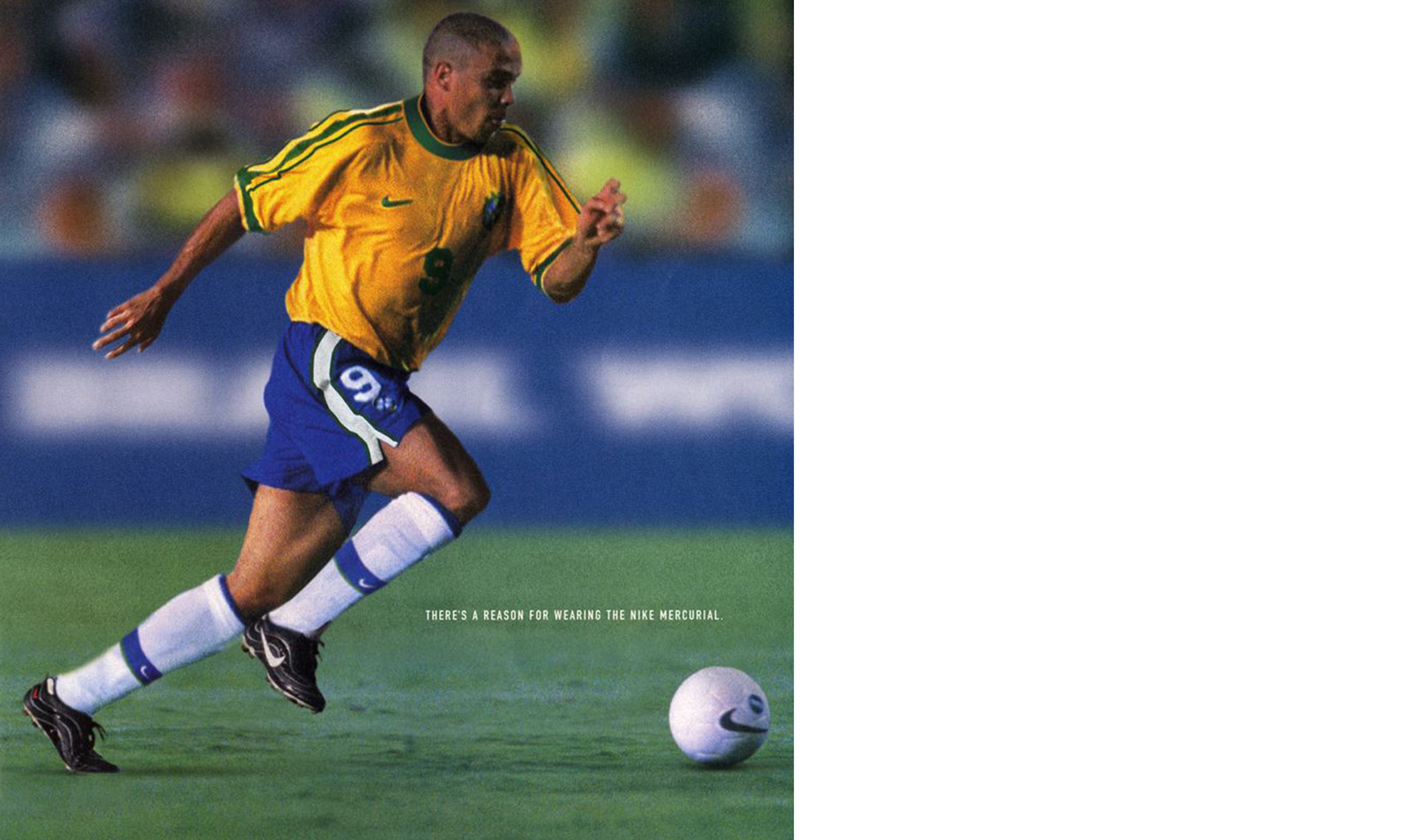
Ronaldo was featured in an ad for the Nike Mercurial, a boot designed to match the sudden, violent acceleration that made him unlike any player the sport had seen.
Tim Smith, a Nike PLM with a degree in creative writing, took a track spike, removed the spikes, screwed in soccer cleats, and sketched it to look like a football boot. That crude prototype was the beginning of what would become the Mercurial.
The shoe was built around Ronaldo, specifically around the way he played. The long stretches of stillness, the sudden violent acceleration. Nike surveyed elite under-17 players across seven European countries, choosing them because none of them had shoe contracts and they would give honest answers. Their priorities became the engineering brief.
The most consequential decision was the upper. Up until that point, quality football boots were made with leather, and synthetic materials were typically considered for knockoffs. Nike worked with a Japanese company to develop something called KNG-100, a synthetic leather that didn’t absorb water, didn’t stretch, and was lighter and thinner than anything the sport had seen. A ball-control coating sourced from Italian racing motorcycle chassis gave it unprecedented feel on the ball. At 1.75 millimeters, the plate was nearly half the standard thickness.
Nike took prototypes to members of the Brasil national team and told them it was the best leather they had ever used, not mentioning that it wasn’t actually leather at all. The players loved them so much they refused to return them.
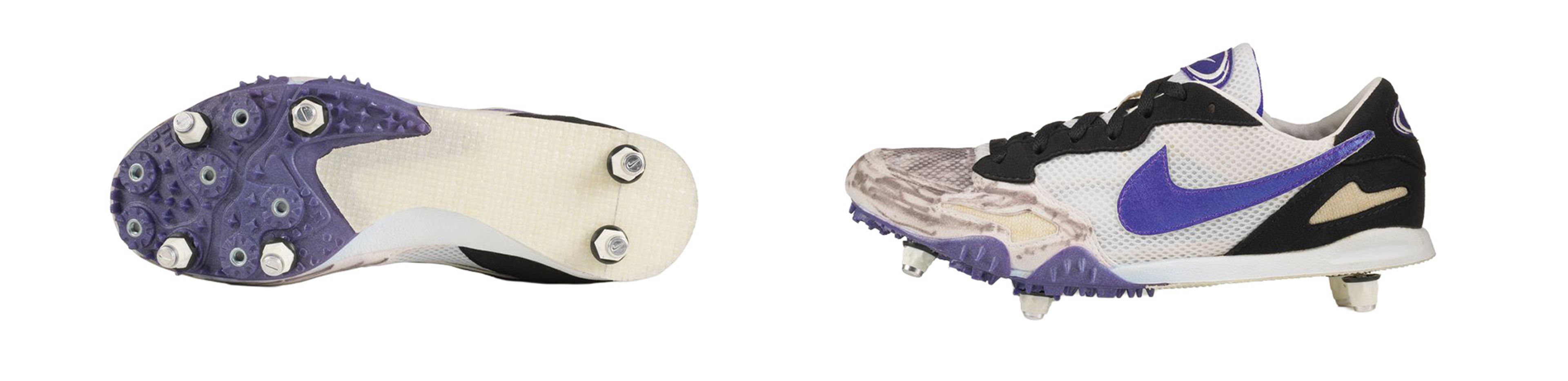
To make the Mercurial prototype, Nike PLM Tim Smith took a track spike, screwed in cleats and sketched it to look like a football boot. The humble beginnings of one of the most iconic football boots.
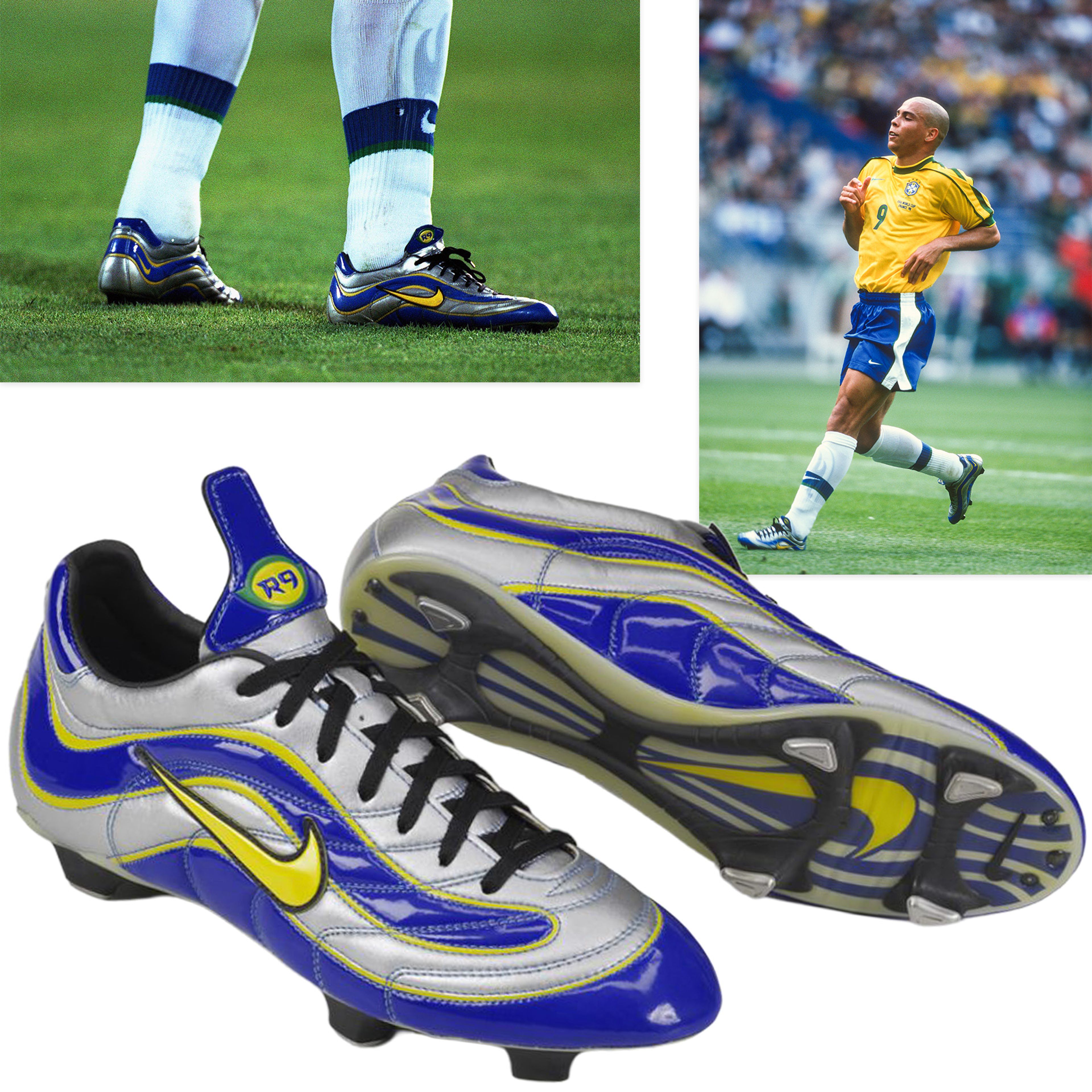
The Nike Mercurial SG, debuted by Ronaldo at the 1998 tournament in France, was blue, yellow and chrome, the first significantly colored boot the sport had seen.
When it came time to name this new boot (which had internally been called the “Ronaldo Ultra Speed”), Smith and his teammates consulted Greek mythology books and were considering the name “Ultravelox.” Smith was driving home from work one evening when the work “mercurial” popped in his head.
“One of the definitions is ‘quickly changing in nature,’ which is perfect, because if you look at Ronaldo, he’s walking around waiting for the right moment to strike, and then when he does, he’s a different player,” said Smith. “He accelerates.”
The Mercurial debuted at the 1998 tournament in France on Ronaldo’s feet — blue and yellow and chrome, the first significantly colored boot the sport had seen. “That was an absolutely defining moment in my involvement in football,” recalled Dave Daly, Europe’s football marketing manager.
“We made a shoe that was so different to what anybody had ever seen before, and it was absolutely fantastic. It wasn’t bogus. It wasn’t just a bizarre, cranky, crazy Nike idea. It was actually real, it was authentic and it was beautiful, and players absolutely died to be in it.”
Nike estimated they would make around 20,000 pairs in the first year. They closed the year with 80,000.
“We were new to football and needed to make a splash.”
Mark Pilkenton, who oversaw Nike Park’s construction
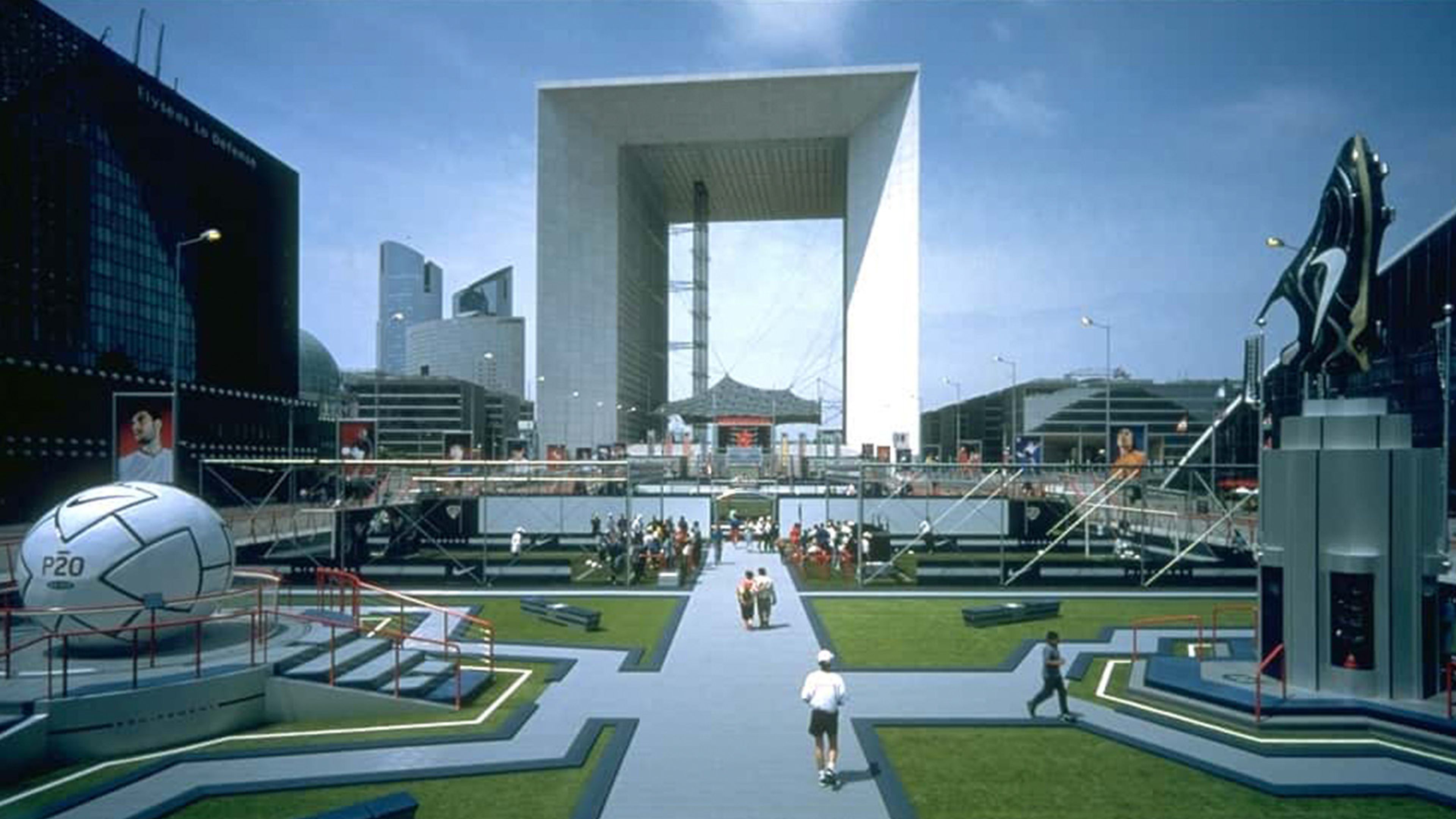
At the Arche de la Défense in Paris, during the 1998 tournament, a 70,000-square-foot interactive space called Nike Park took shape, built in the heart of one of France’s most iconic landmarks.
Nike arrived in Paris that summer outfitting six national teams: Brasil, the United States, Italy, Nigeria, Portugal and the Netherlands. But the most visible statement wasn’t in the stadium. At the Arche de la Défense, one of Paris’ most iconic landmarks, the company built a 70,000-square-foot interactive space called Nike Park with field turf; interactive drills; a retail store; and, at its center, in a glass case, the 1994 trophy on loan from Brasil. On the arch itself — a grand structure that sits on the same axis as the Arc de Triomphe and the Champs-Elysées — Nike erected a giant model of the Mercurial.
One of the most recognizable landmarks in France, draped in the Swoosh.
“We were new to football and needed to make a splash,” said Mark Pilkenton, who oversaw Nike Park’s construction.
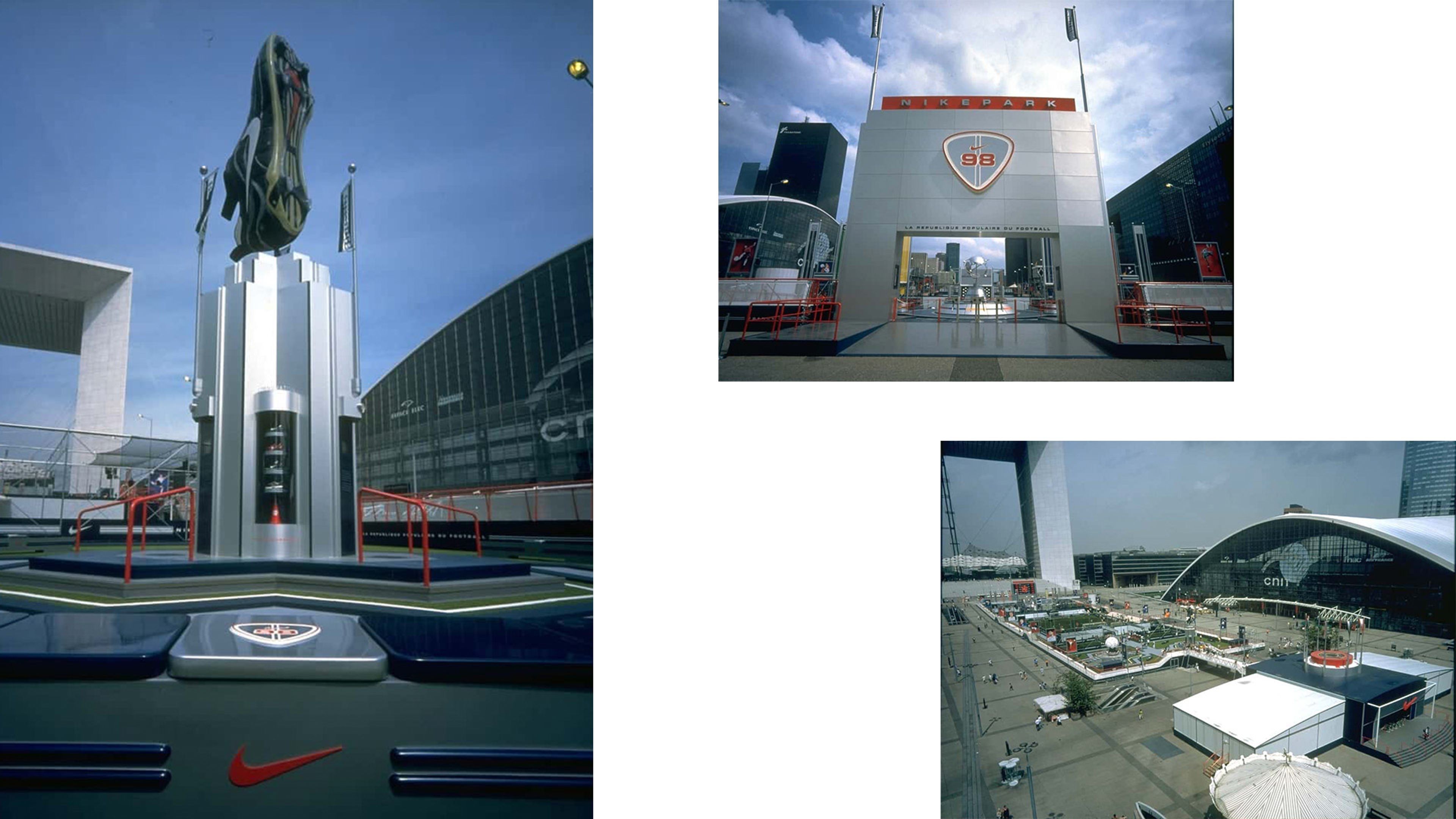
The Nike Park installation included field turf, a giant Mercurial model, a retail store and, at its center, the 1994 trophy on loan from Brasil — Nike’s statement to football that it had arrived.
France won that year, and while it wasn’t Brasil with the trophy, Nike’s support of the sport was clear. The brand that had arrived in football as an outsider four years earlier had become an undeniable presence in the game.
This summer, the tournament returns to American soil for the first time since that hot July afternoon at the Rose Bowl. The sport Nike once called an afterthought is now one of the most significant chapters in the company’s history — and one of the most powerful forces in the game.