The History of Nike Free: How Sports Science Helped Fuel the Barefoot Revolution
- November 16, 2026
- Content:
- Words:
- Images:
In 2001, Nike innovator Tobie Hatfield stood beside the track at Stanford University and watched as some of the nation’s best collegiate runners moved across the grassy infield. The athletes had just finished a demanding training session, and as Hatfield observed their post-workout routine, something caught his attention.
They were all barefoot.
A newly minted innovator in Nike’s Innovation Kitchen — then a months-old team created to explore new approaches to footwear — Hatfield had come to Stanford with Nike Running to meet with the university’s track and field coach, Vin Lananna, and learn more about the training methods behind the program’s success.
Watching the runners move across the grass without shoes, Hatfield couldn’t help wondering: Why were some of the country’s best runners, with access to virtually any running shoe they wanted, choosing to go barefoot?
The question would ultimately lead Hatfield and his team to develop an entirely new kind of running shoe and reshape Nike’s approach to footwear design for years to come.
At the turn of the millennium, running footwear had reached a new level of sophistication. Cushioning was more advanced; stability had improved; support was greater than ever. Yet in some running circles, a different philosophy had been gaining ground — one that questioned whether all that protection might actually be working against the runner.
Lananna, Stanford’s championship-winning coach, was a firm believer that keeping his athletes healthy was just as important as improving their speed and endurance. He’d begun incorporating barefoot cooldowns into their training routines, believing that exercising the muscles in their feet without the support of shoes could help them build strength, flexibility and balance and better withstand the physical demands of running.
Back at Nike, the Innovation Kitchen had already begun experimenting with footwear that mimicked the experience of going barefoot. But the work was still exploratory, without a clear application.
Watching Lananna’s athletes put the philosophy into practice, Hatfield began to see a larger opportunity. Equipped with the cutting-edge Nike Sport Research Lab (NSRL), the brand had the scientific resources to investigate the coach’s theory and explore how the mechanics of barefoot running might translate into a better shoe for athletes.
“Everything Vin was saying made sense,” recalls Hatfield. “But he pointed out that he wasn’t a scientist, so he couldn’t prove it. That’s when it all came together for me.
“I told him: ‘We have scientists.’”
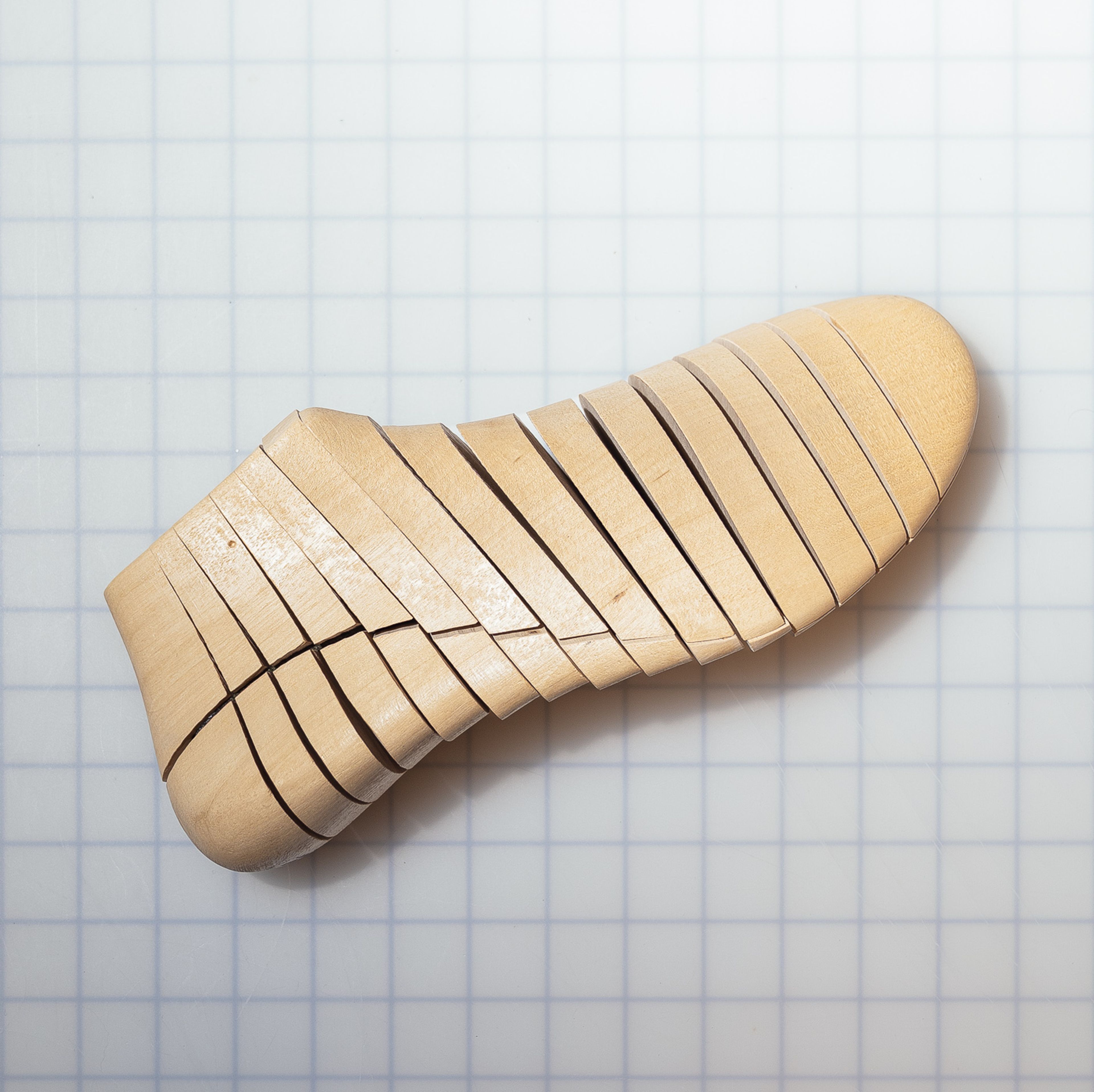
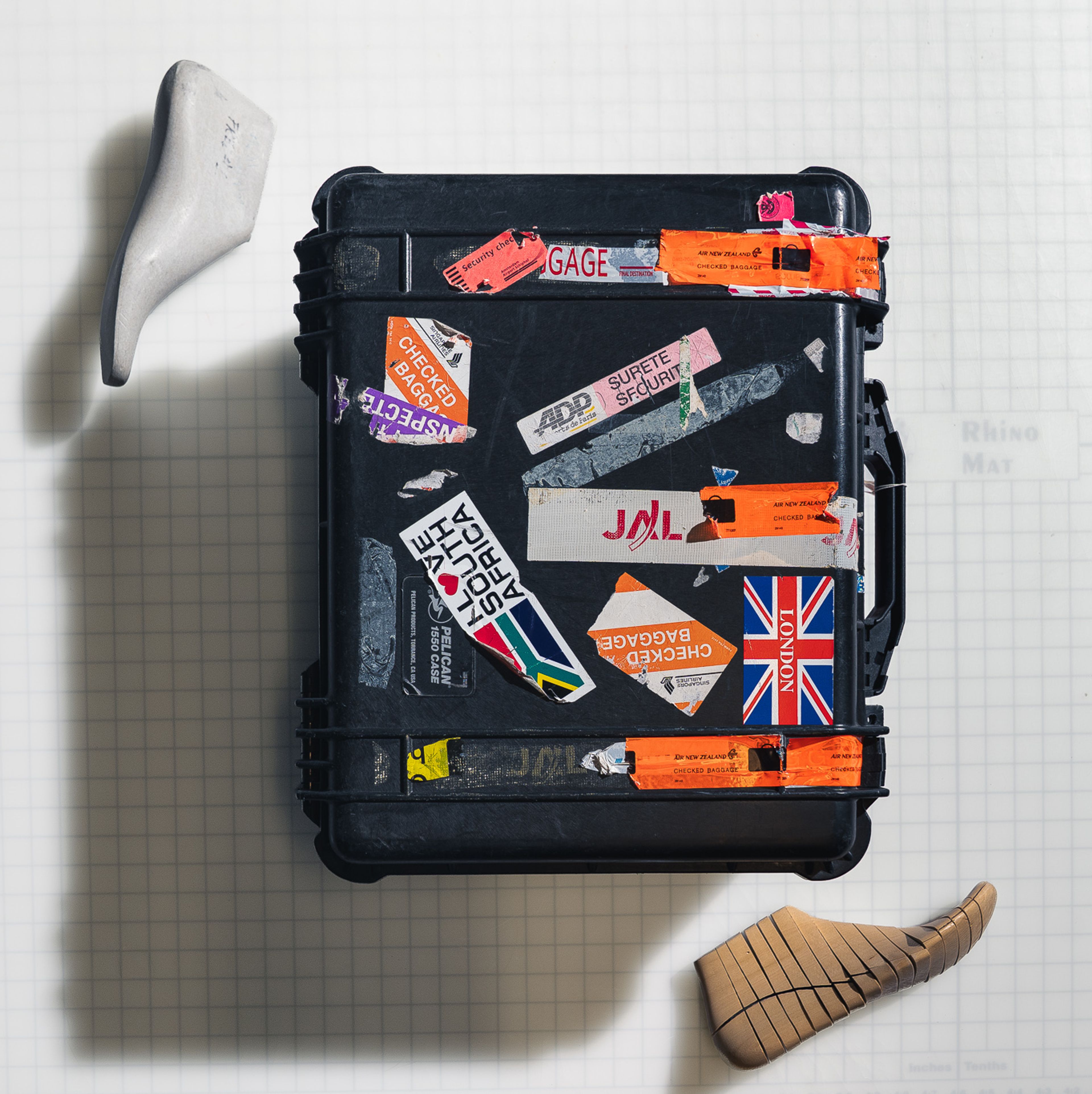
This wooden last, which flexes and bends, helped inspire Nike designers in the early aughts to create for the foot's full range of motion.
Hatfield returned to Nike headquarters with a new sense of purpose. Among the Innovation Kitchen’s early experiments was a lightweight mesh bootie with small silicone pods underneath, more reminiscent of a ballet slipper than a conventional running shoe. The prototype had offered a glimpse of how footwear might protect the foot while allowing it to move naturally.
Now the challenge was to move beyond experimentation and understand the science behind what Hatfield had witnessed at Stanford. The NSRL had spent decades studying athletic performance and running biomechanics, yet little was known about how barefoot movement specifically might inform footwear design.
In June 2002, Nike researchers gathered 19 runners at Ronaldo Field on the company’s Beaverton, Oregon, campus to study exactly what happens when athletes run without shoes. They attached reflective markers to the runners’ hips, knees, ankles and feet to track their movements, then fitted them with thin pressure-sensing pads containing 99 sensors that collected data 100 times per second. Small computers carried in waistpacks recorded the measurements as the athletes ran across the field.
What emerged was a revealing picture of how the body adapts when shoes are removed. Runners who ordinarily landed on different parts of their feet tended to adopt a flatter, more uniform landing pattern when barefoot. Much of the change occurred in the feet and ankles, where joints and muscles worked together to respond to the ground. That shift helped distribute the forces of landing across the foot, engaging smaller muscles that play an important role in stability and balance.
Hatfield recalls one particularly striking example when a distance runner who typically landed heavily on his heels was so surprised by footage of his barefoot stride that he questioned whether the runner on screen was actually him.
“He was convinced he was a heel striker,” recalls Hatfield. “But when we took his shoes off, he naturally changed the way he landed. We showed him the footage, and his first words were, ‘That’s not me.’”
“The goal was to give athletes the benefits of barefoot training while also providing protection and comfort."
Eric Avar, VP, Creative Director, Innovation
For Nike, the study provided something the early prototypes had lacked: measurable information about the movements a “barefoot shoe” would need to accommodate. The objective now wasn’t simply to make footwear lighter or less structured. It was to understand where the foot needs to bend, how it responds to impact, and how a shoe could allow those movements while still offering protection.
The investigation required a willingness to question established assumptions. As the project progressed, one Nike researcher kept a famous phrase from the Tao Te Ching written on his whiteboard: “Forget what you know.”
It was a fitting philosophy for an initiative that was beginning to turn conventional footwear thinking on its head.
Armed with the new research, Hatfield and his colleagues began translating what they’d learned about the human foot into a shoe that could move with it.
The biggest challenge lay in the sole. Traditional running shoes relied on relatively rigid structures to provide cushioning, stability and support. But the team’s research had revealed how differently the foot moved without those structures in place.
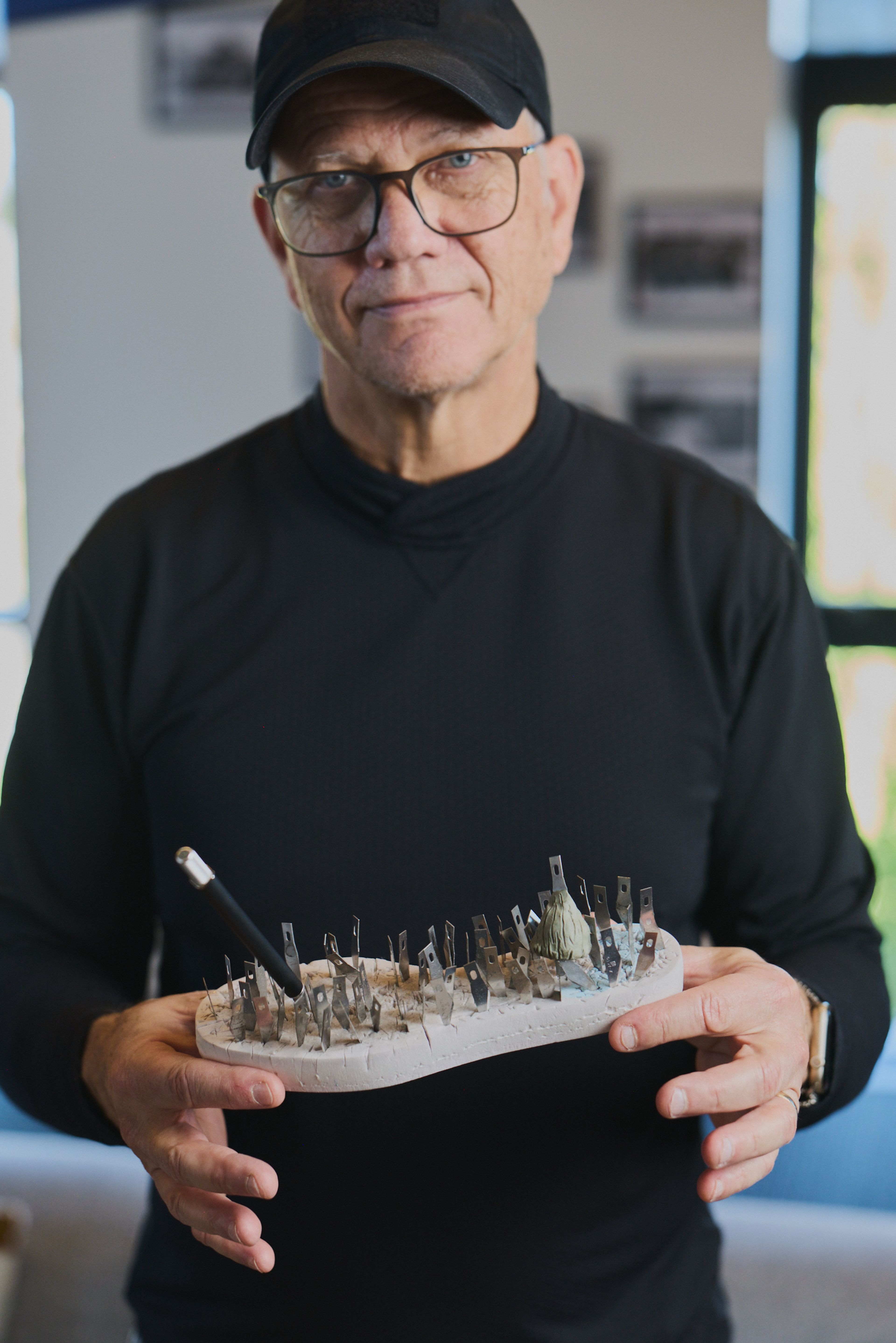
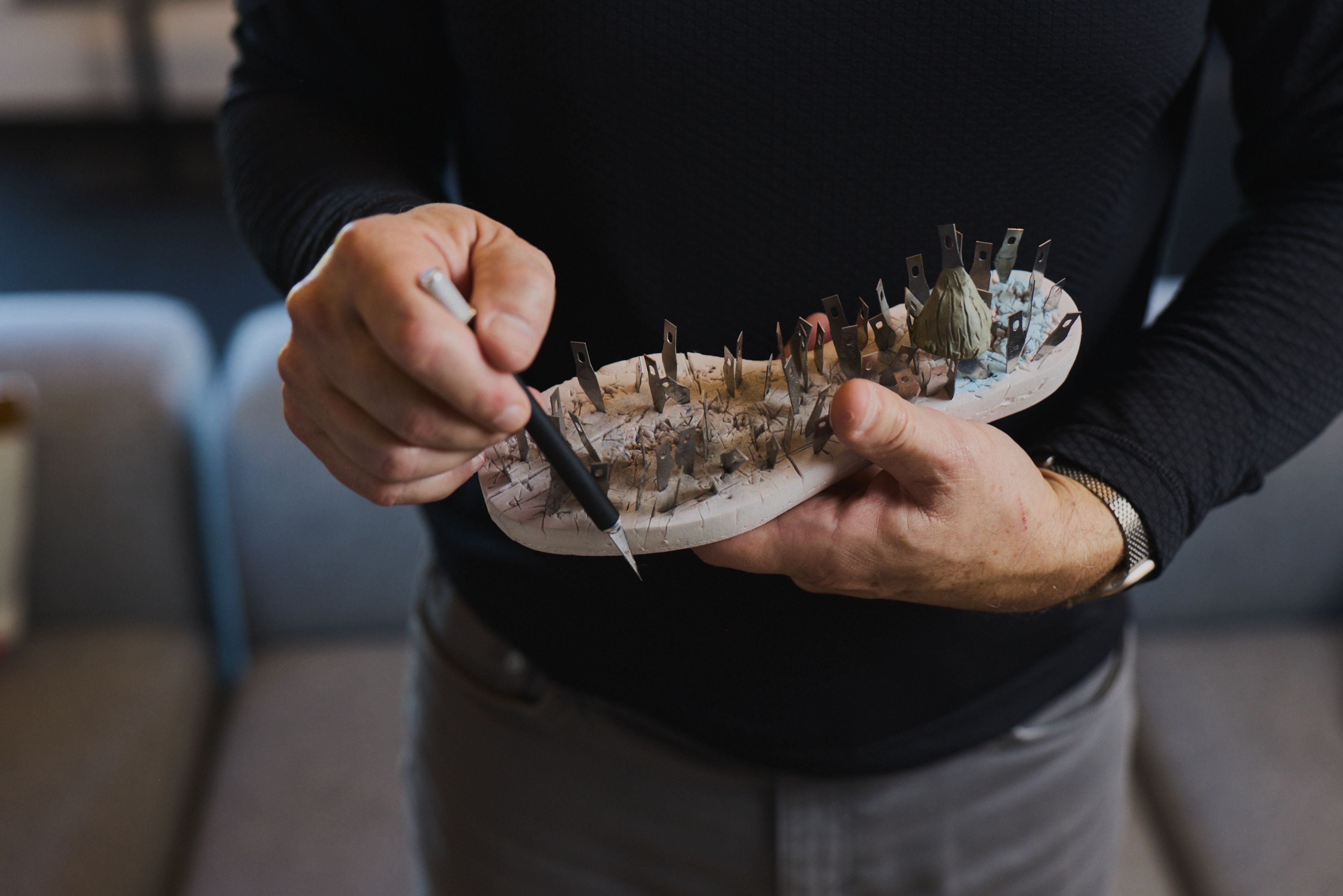
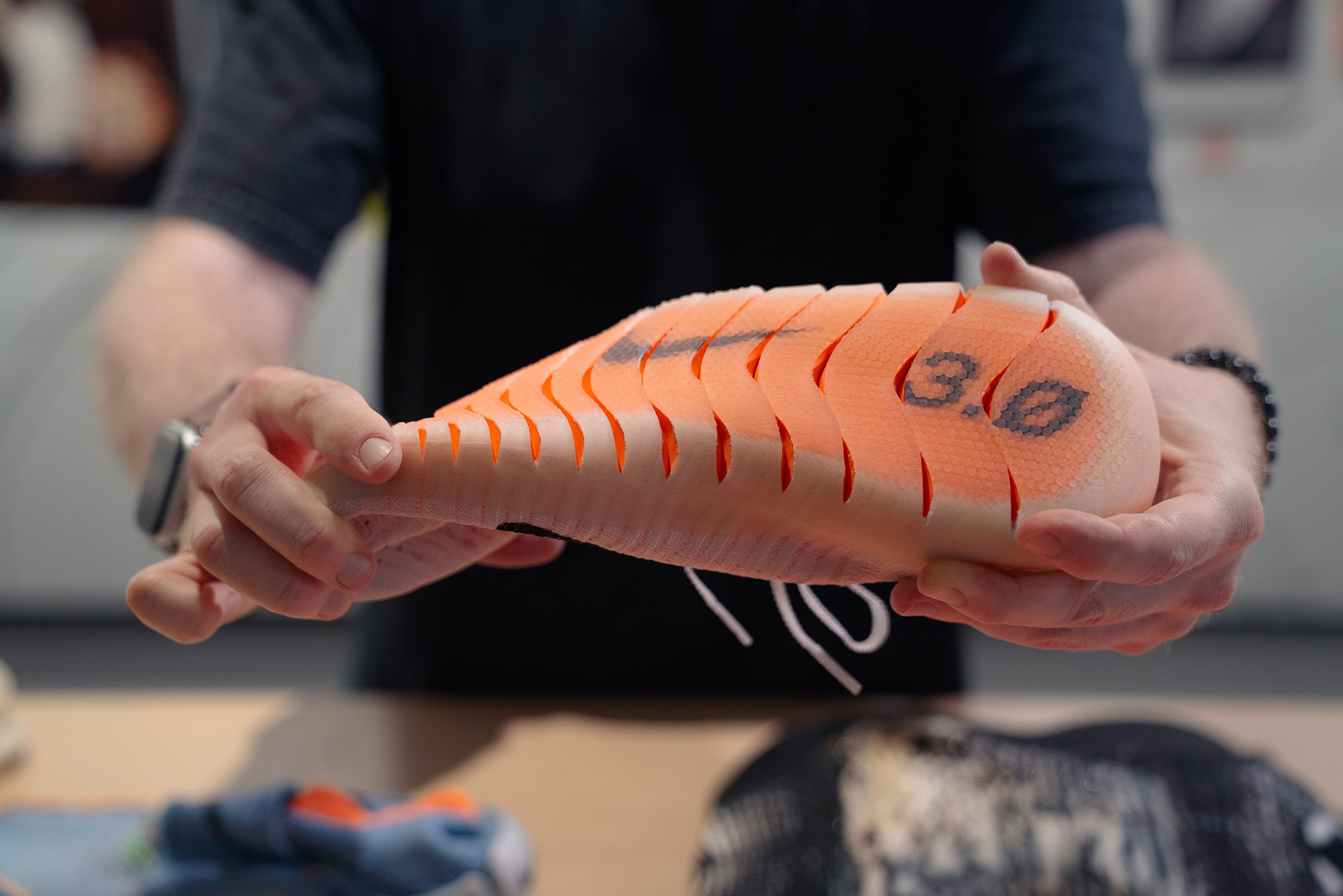
To recreate that freedom of movement, Hatfield began experimenting with cutting grooves into the soles of prototypes. The process, known as siping, was painstaking. Hatfield recalls spending dozens of hours in the Innovation Kitchen dragging an exacto knife across foam to carve exact patterns. With each set of cuts, he tested how the arrangement changed the way the shoe moved.
“‘How many sipes do we need?’ we’d ask. ‘If we have 10 to 15 different sipes, could each sipe be a different depth? How deep should we go on each one?’ We were literally throwing darts. We didn’t know what we didn’t know.”
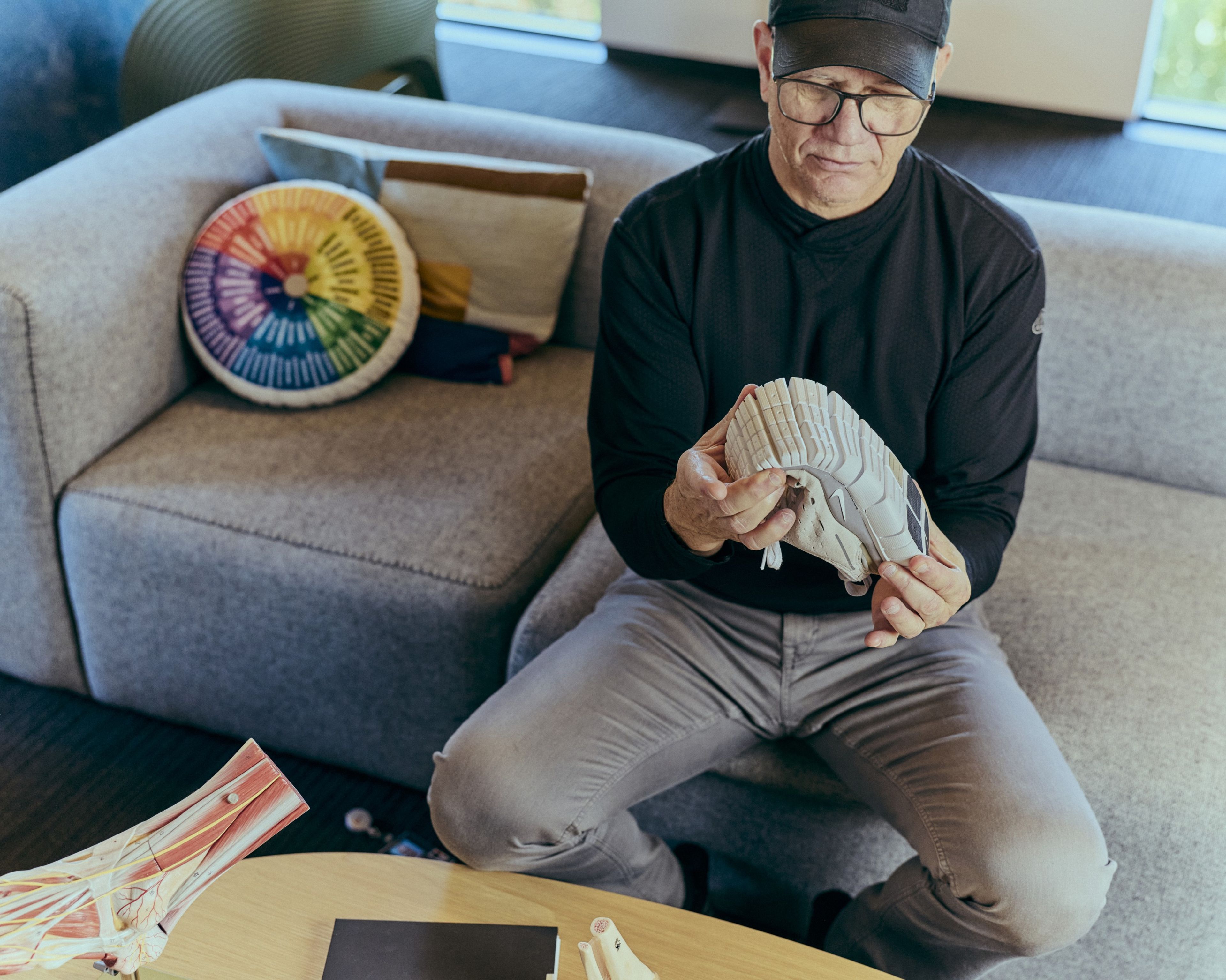
Intent on better understanding the movement they were trying to replicate, the team developed a special shoemaking last. Unlike a traditional last — the solid, foot-shaped form used to construct a shoe — this one was made from articulated wooden segments that could bend and twist, illustrating how the foot changed shape in motion.
The tool highlighted the central philosophy behind Nike Free: Rather than controlling how the foot moved, the shoe would be built to accommodate its natural motion.
With the sole taking shape, the team turned its attention to the upper. Working alongside Nike designer Eric Avar, Hatfield and his team experimented with lightweight materials and different constructions, searching for a way to hold the foot securely without restricting its natural movement.
“The goal was to give athletes the benefits of barefoot training while also providing protection and comfort,” recalls Avar.
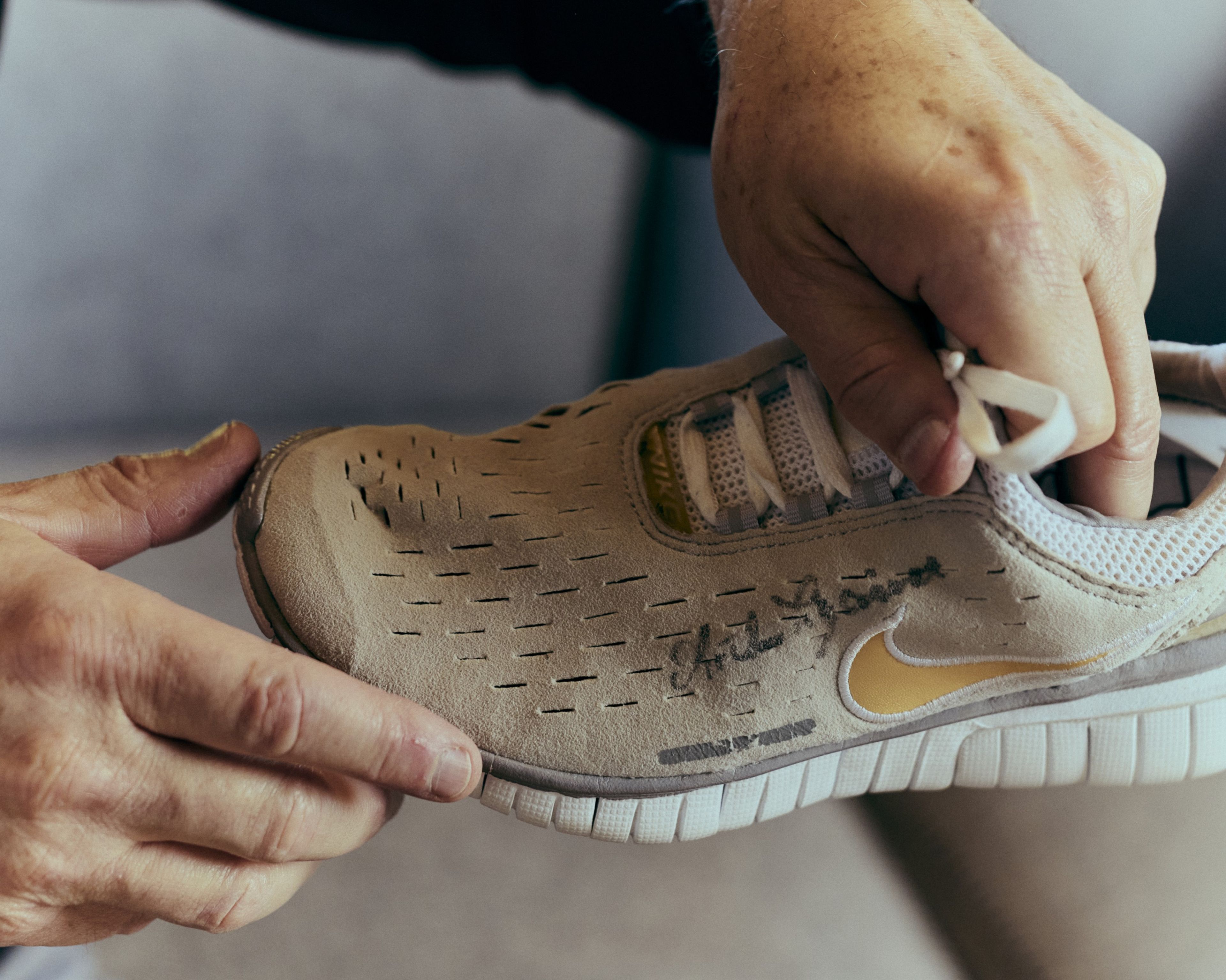
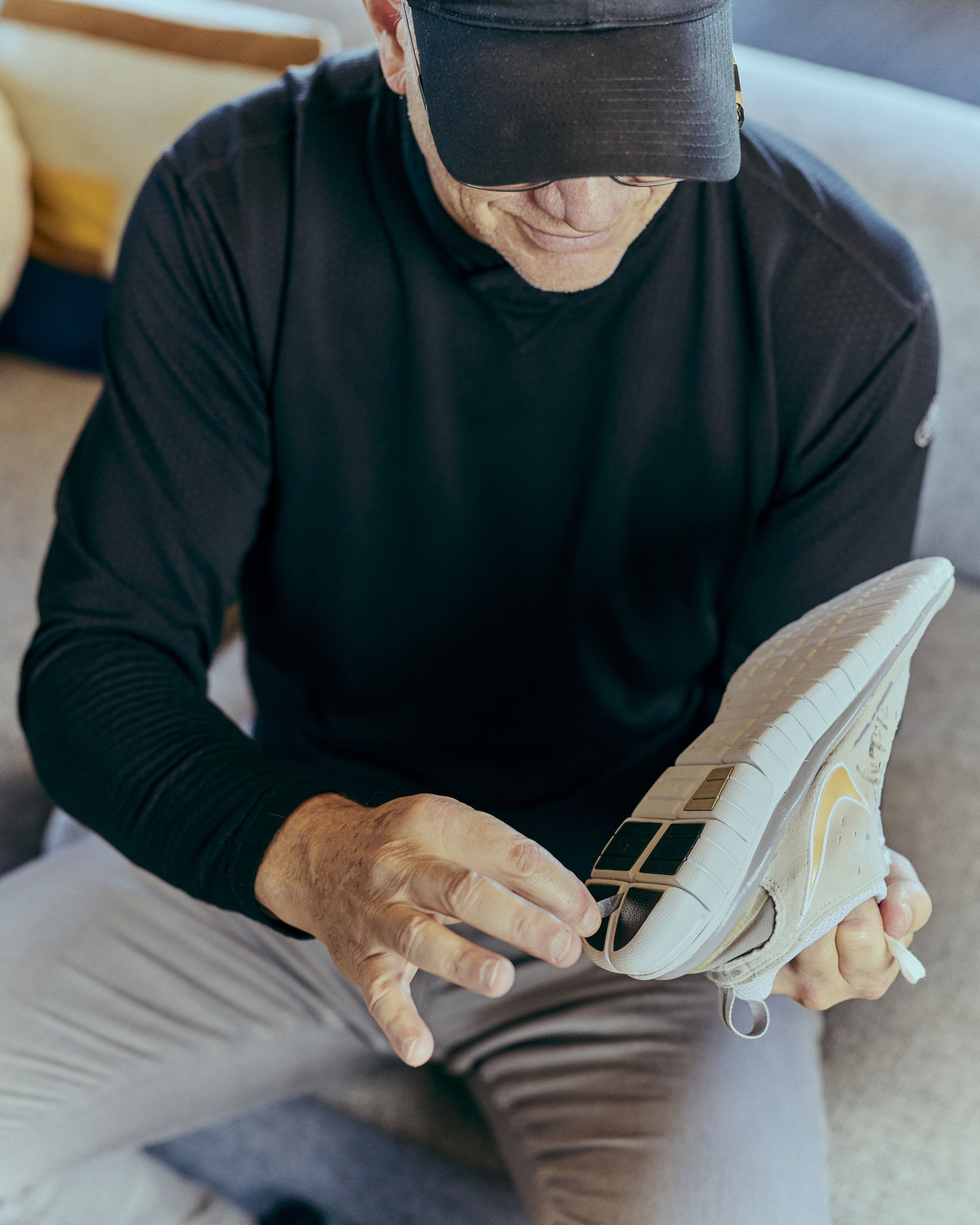
The result was an early prototype of what would become the Nike Free 5.0. Combining a deeply grooved, exceptionally flexible sole with a lightweight upper that moved with the foot, the shoe represented a radical departure from conventional running footwear.
“The breakthrough was having a way to protect the foot while still working the intrinsic muscles of the foot and ankle to make them stronger, gain more range of motion in the joints, and increase balance for the athlete at the same time,” says Hatfield.
The next challenge would be convincing others that such an unconventional design could actually improve the way people moved.
“We were literally throwing darts. We didn’t know what we didn’t know.”
Tobie Hatfield, Nike Senior Director of Athlete Innovation
To demonstrate the benefits of the new design, the team developed a series of tests illustrating how the shoe affected natural movement and recorded the results. One proved particularly compelling, thanks to a miniature test subject who had no idea he was taking part.
Researchers filmed a 16-month-old toddler moving in two different pairs of shoes — one a conventional, stiffer children’s model, the other an early Nike Free. The difference was immediately visible. In Free, the child moved more easily and even began to run.
What made the footage so convincing was the instinctive nature of the toddler’s responses. He wasn’t reacting to instructions or consciously changing his stride. He was simply moving.
“It was important because a 16-month-old isn’t coachable,” explains Hatfield.
As the shoe continued to take shape, Nike began sharing the concept with athletes and coaches. At the 2003 track and field World Championships in Paris, members of the Free team demonstrated the developing footwear and explained the research behind it.
The following winter, a six-month study at the University of Cologne provided another layer of scientific evidence. While Nike’s earlier research had examined how the foot moved without shoes, the new study investigated what happened when people trained in Free over time. Its findings showed improvements in foot and ankle strength, flexibility and range of motion.
By fall 2004, Nike Free was ready for its commercial debut.
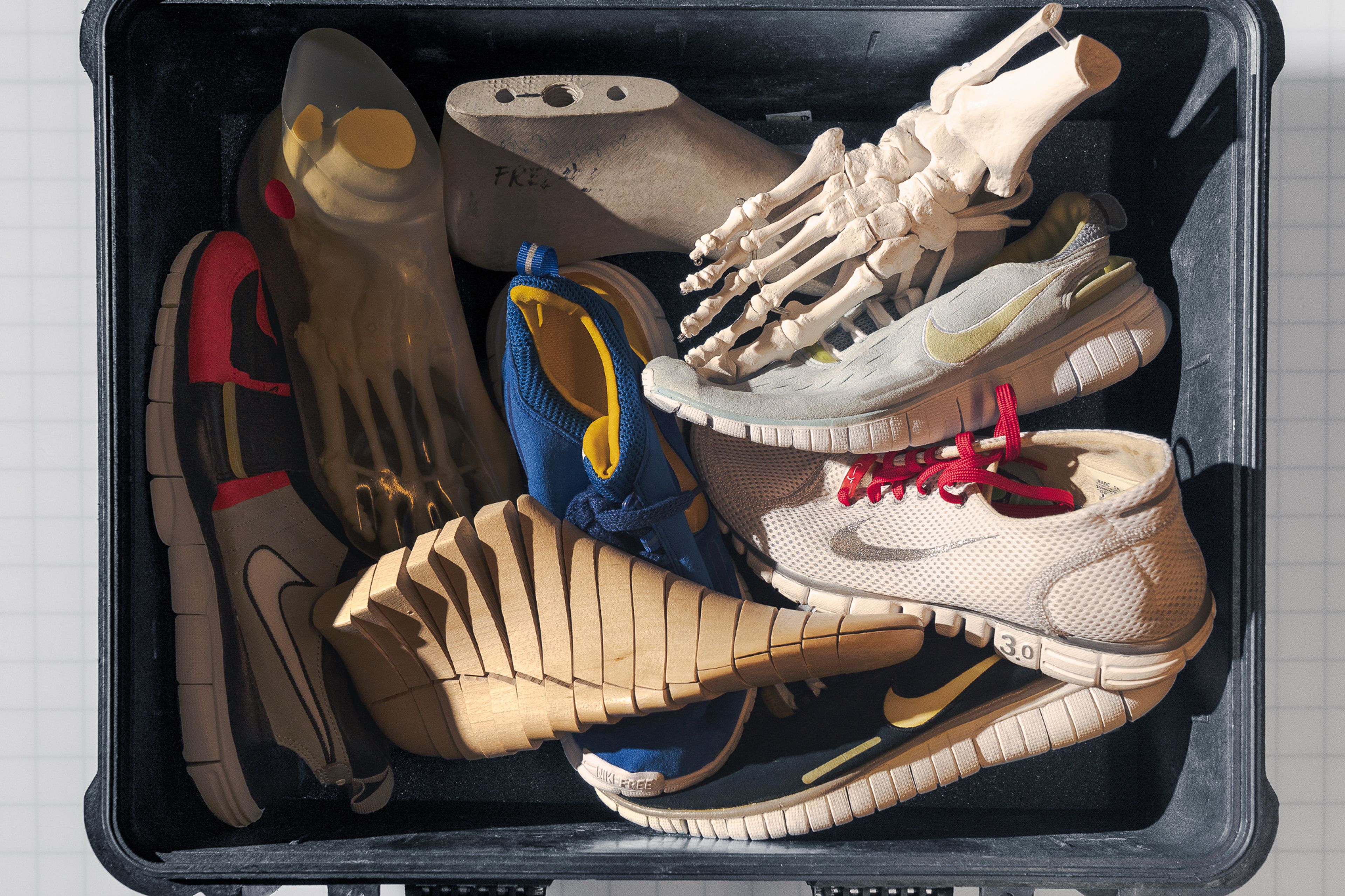
The first collection featured four shoes: men’s and women’s running and training models, all bearing the name Nike Free 5.0. The number was no accident. The company had developed a scale from zero to 10 to describe how closely a shoe approximated barefoot movement, with zero representing the bare foot and 10 a traditionally structured shoe. The 5.0 sat squarely in the middle, offering a balance of natural movement and protection.
To be clear, Free was never intended to replace conventional running shoes. It was a training tool, meant to encourage the muscles of the feet and ankles to do more of the work normally managed by a shoe’s structure. But for athletes accustomed to conventional footwear, suddenly switching to Free for every run could place too much strain on muscles and tissues that weren’t yet conditioned for the extra work, increasing the risk of injury. And that meant its introduction required a different approach.
Rather than launching Free broadly, Nike released thousands of pairs through select specialty running retailers, where knowledgeable staff could explain the research and help athletes understand how to incorporate the shoes into their training routines.
“We didn’t know what the future held or how big it was ultimately going to get, but we wanted to give it the best chance to succeed,” recalls Hatfield.
Athletes were encouraged to begin by walking in Free, then gradually progress to light jogging and longer periods of running as their feet adapted. Ensuring they knew how to use the shoe was as important as explaining the innovation behind it.
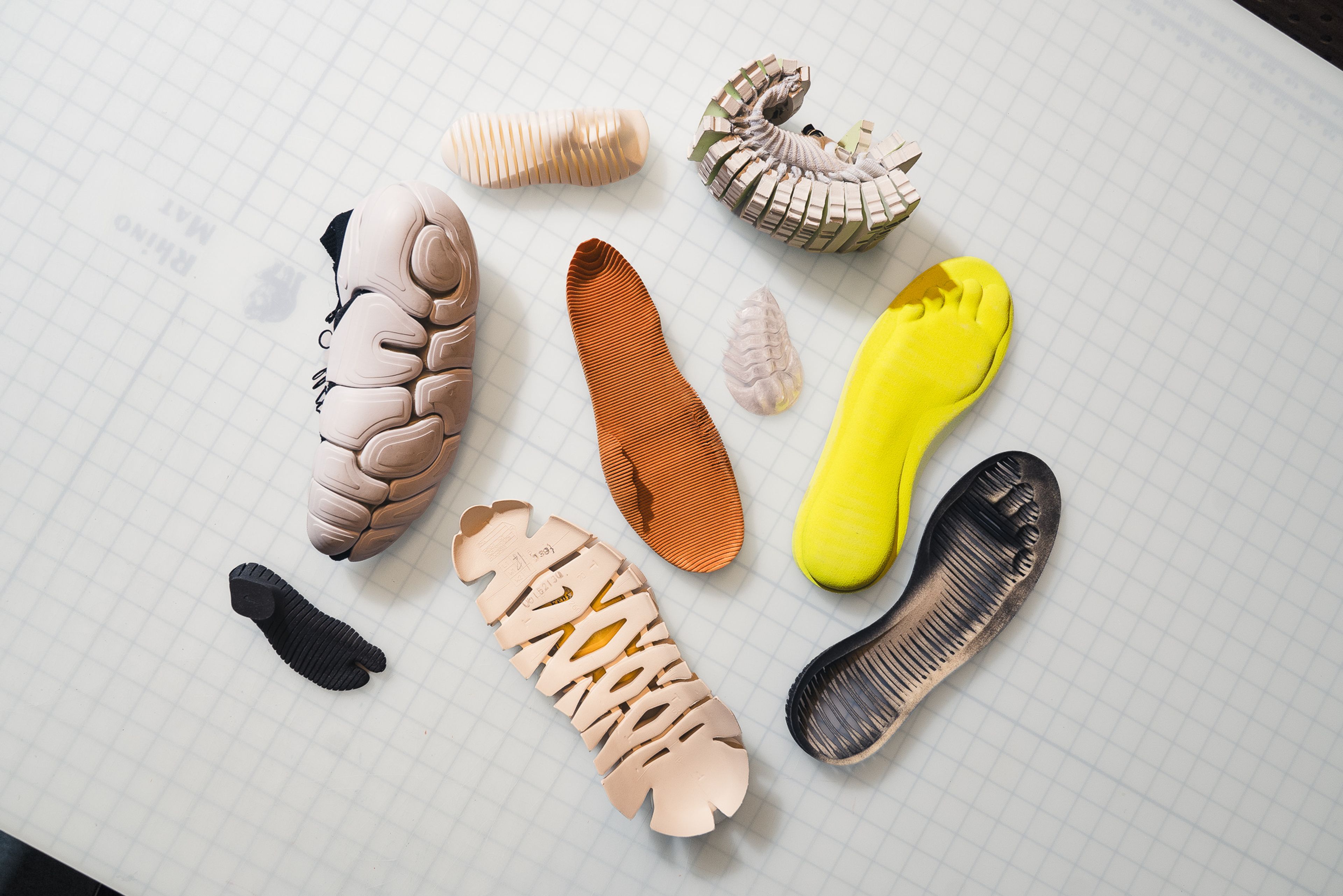
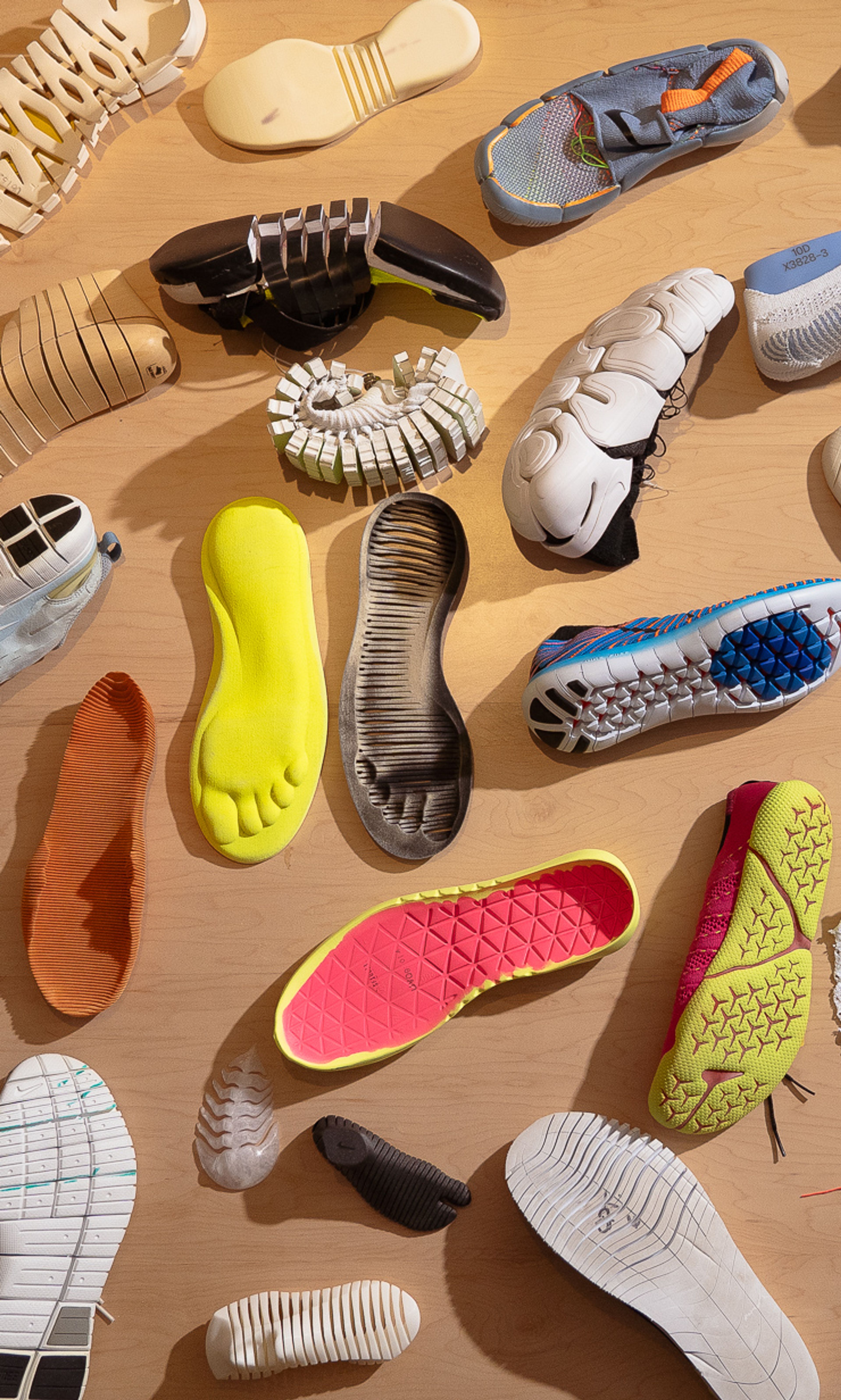
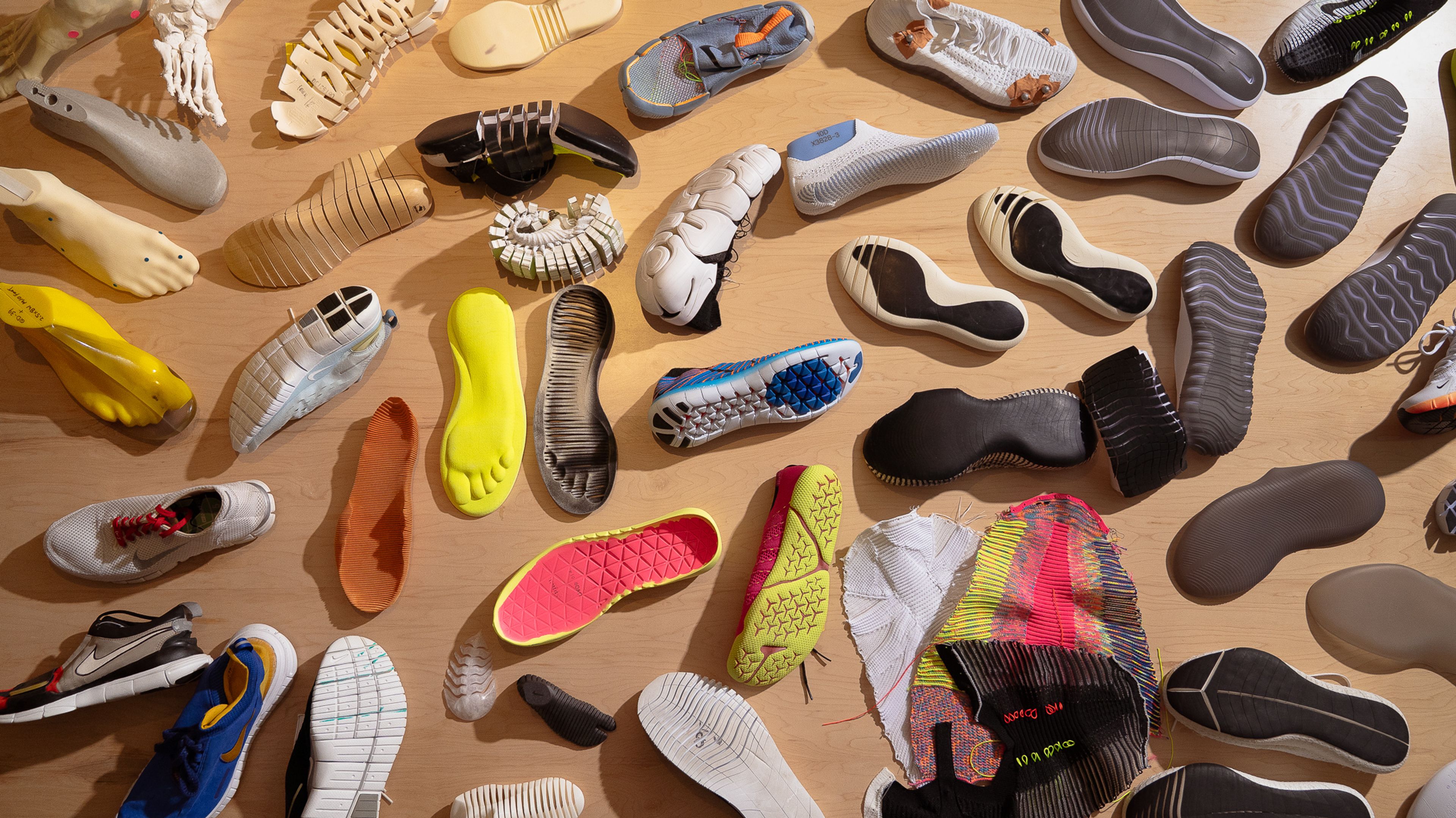
Nike's Innovation team experimented with a range of flexible models, lasts and materials to explore where they could take the Free platform next.
Despite the years of research and innovation behind it, Nike Free wasn’t an overnight success. The concept of barefoot running was still unfamiliar to many athletes, and its benefits weren’t always immediately understood.
Nike’s innovators continued refining the design and experimenting with new materials, but the shoe struggled to gain widespread traction. At one point, in fact, Nike nearly discontinued the franchise.
Then, in 2009, two things happened.
First, five years of experimentation culminated in the fourth-generation Nike Free 5.0 V4, the most advanced iteration yet. Designer Thomas Bell had worked through roughly 30 rounds of prototypes, reimagining the shoe with a streamlined silhouette and a lighter, simpler construction.
Then came a bestselling book, chronicling the extraordinary athleticism of Mexico’s Tarahumara runners, and it took the running world by storm. Almost overnight, barefoot running and minimalist footwear became major topics of conversation. The same questions that had sent Hatfield and his colleagues into the Innovation Kitchen nearly a decade earlier were now capturing the attention of runners everywhere.
Nike Free was ready for the moment.
From 2010 to 2012, Nike Free sales nearly sextupled. What began as an unconventional training experiment had become a phenomenon.
As Free’s popularity soared, its natural-motion philosophy began finding applications beyond running. Nike worked with its leading golfers on golf footwear that incorporated the principles behind Free, introducing greater flexibility to accommodate the movements of swinging a club.
In 2014, Nike introduced a hexagonal outsole pattern that allowed Free to flex in multiple directions, better accommodating the way the foot bent, twisted and shifted during movement.
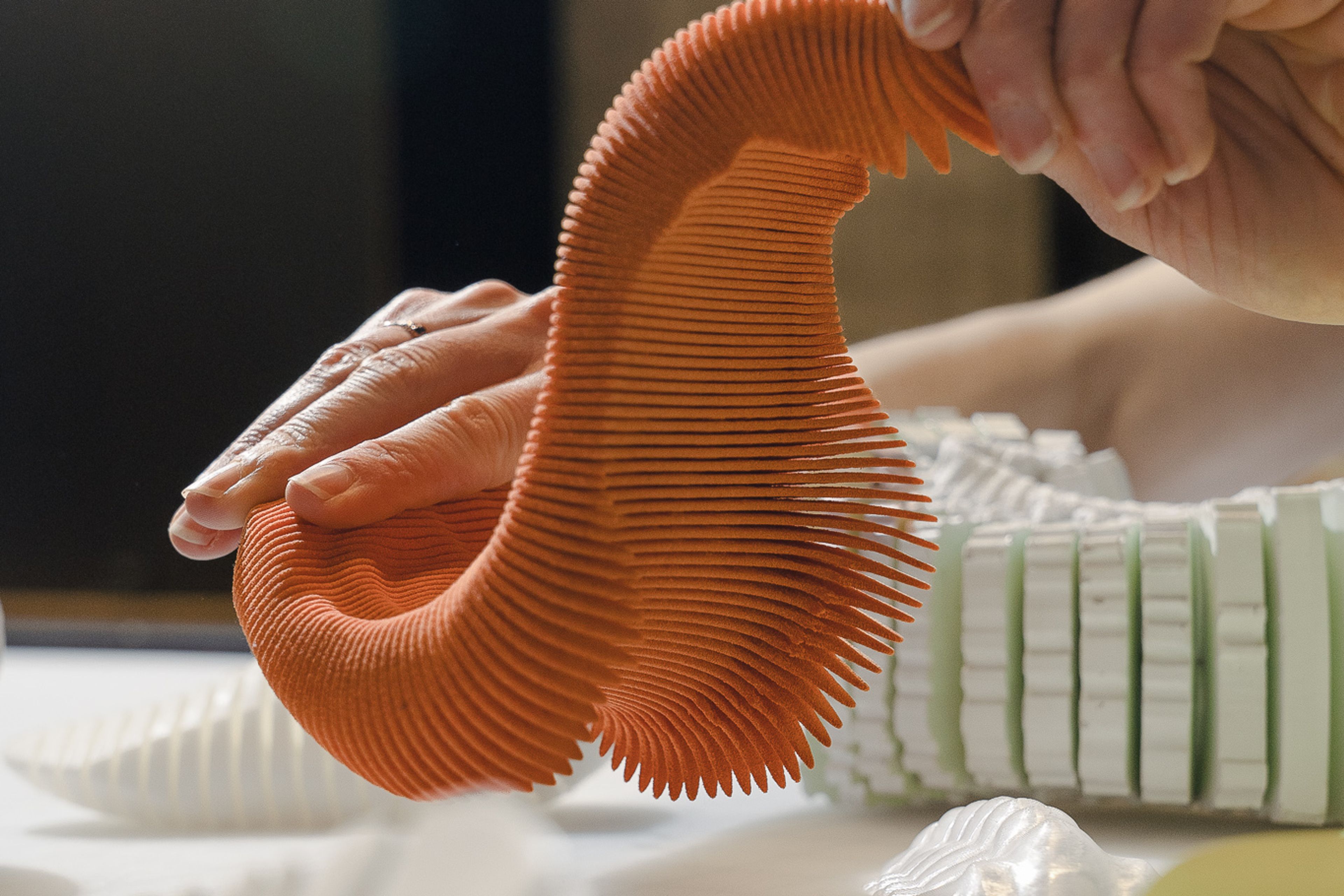
Two years later, Nike introduced another advance known as auxetic geometry, a pattern that allowed the sole to expand both lengthwise and widthwise as the foot moved. The idea grew out of an earlier experiment involving expandable backpack panels that had been shelved before finding a new application in footwear. The resulting design became a defining feature of the Nike Free RN, introduced in 2016.
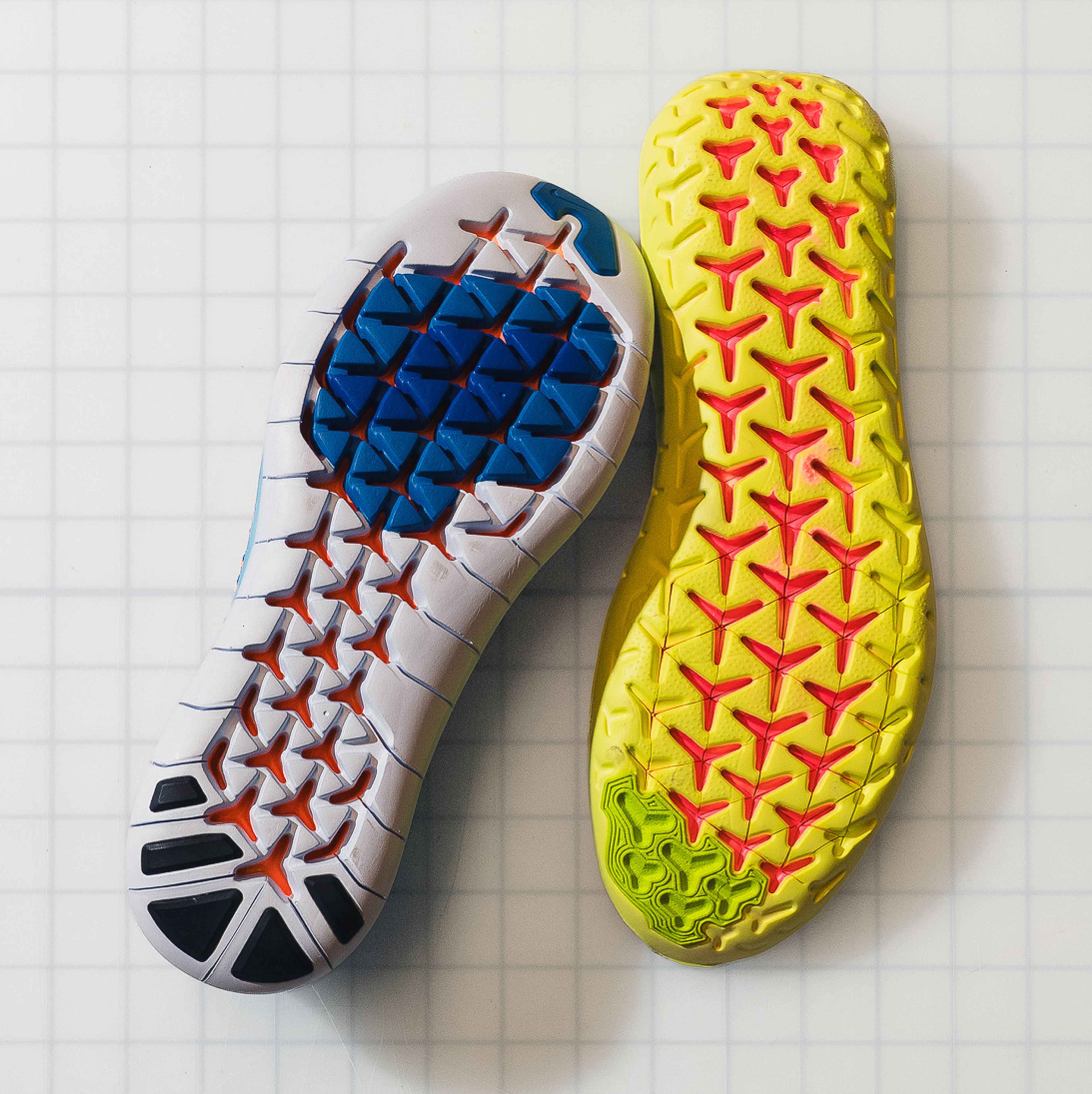
An auxetic geometry pattern, debuted in 2016, that better accommodated a foot's dorsiflexion and plantarflexion, or flexing down and up.
More than two decades after Nike Free’s debut, running footwear has undergone a remarkable transformation. From the advanced cushioning of the Vomero to the carbon-plated technology of the super shoe era, designers have continued to push technology.
Alongside those advances, Nike Free has maintained a distinctive place in the running world.
Where performance racing shoes like the Alphafly and Apex provide energy-returning tech to carry athletes over long distances, Free helps them build the foot strength, balance and mobility to get there. The two work in tandem, each enhancing the benefits of the other.
“Projects like Nike Free and the modern super shoe do not need to compete,” says Avar, now Nike VP, Creative Director, Innovation. “They can work in harmony as part of a holistic performance system, helping athletes optimize their training, movement and ultimately their performance.”
As Hatfield puts it, “Using Nike Free makes running in your Air Max or your Vomero or your Pegasus a better experience."
For him, the rise of maximalist running shoes has made Free a natural complement, and one he believes athletes need now more than ever.
“I still get calls from elite athletes who want to feel closer and more connected to the ground,” he says.
Now, there’s even more choice to offer them, with fresh training iterations — Nike Free 3.0 and 5.0 — carrying the original natural-motion concept forward for another generation of athletes. Made possible by a new robotic siping process developed at Nike’s Advanced Product Creation Center, the latest designs use machine-vision technology to make precise cuts at varying depths and angles through multiple layers of the shoe at once.
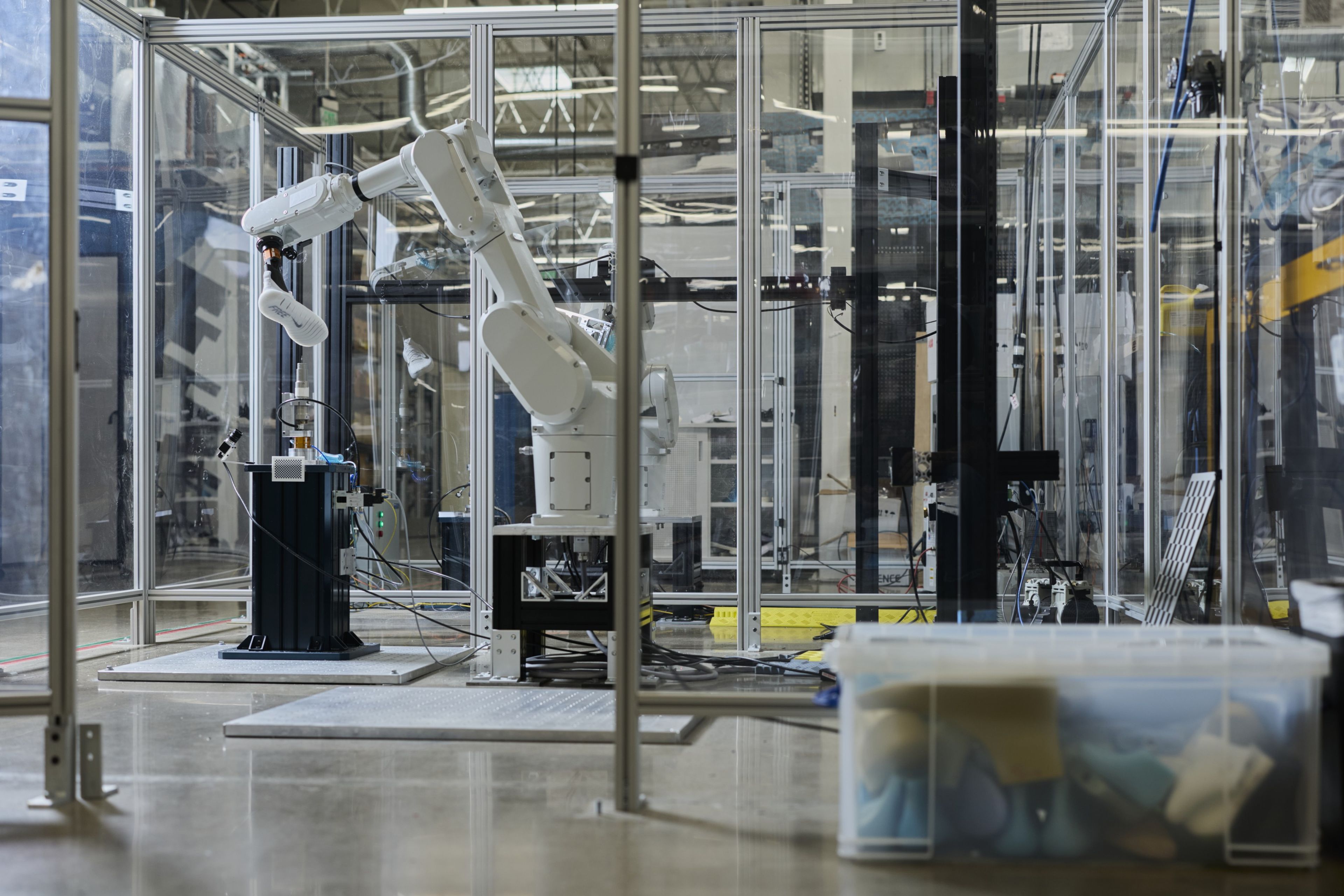
Engineers in the Advanced Product Creation Center merged a cutting tool from one machine with the robotic parts of another to create a technique to sipe at any depth or angle.
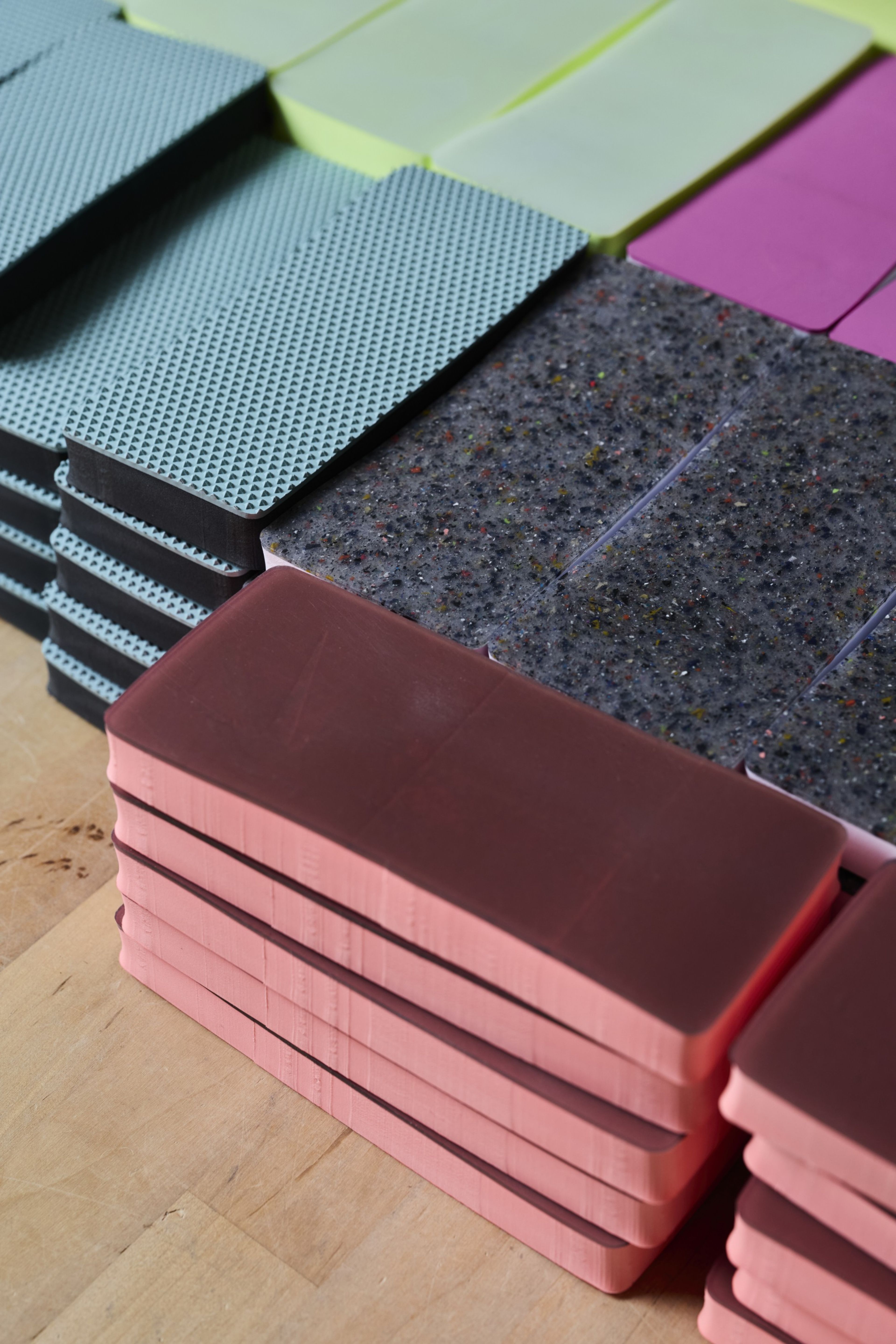
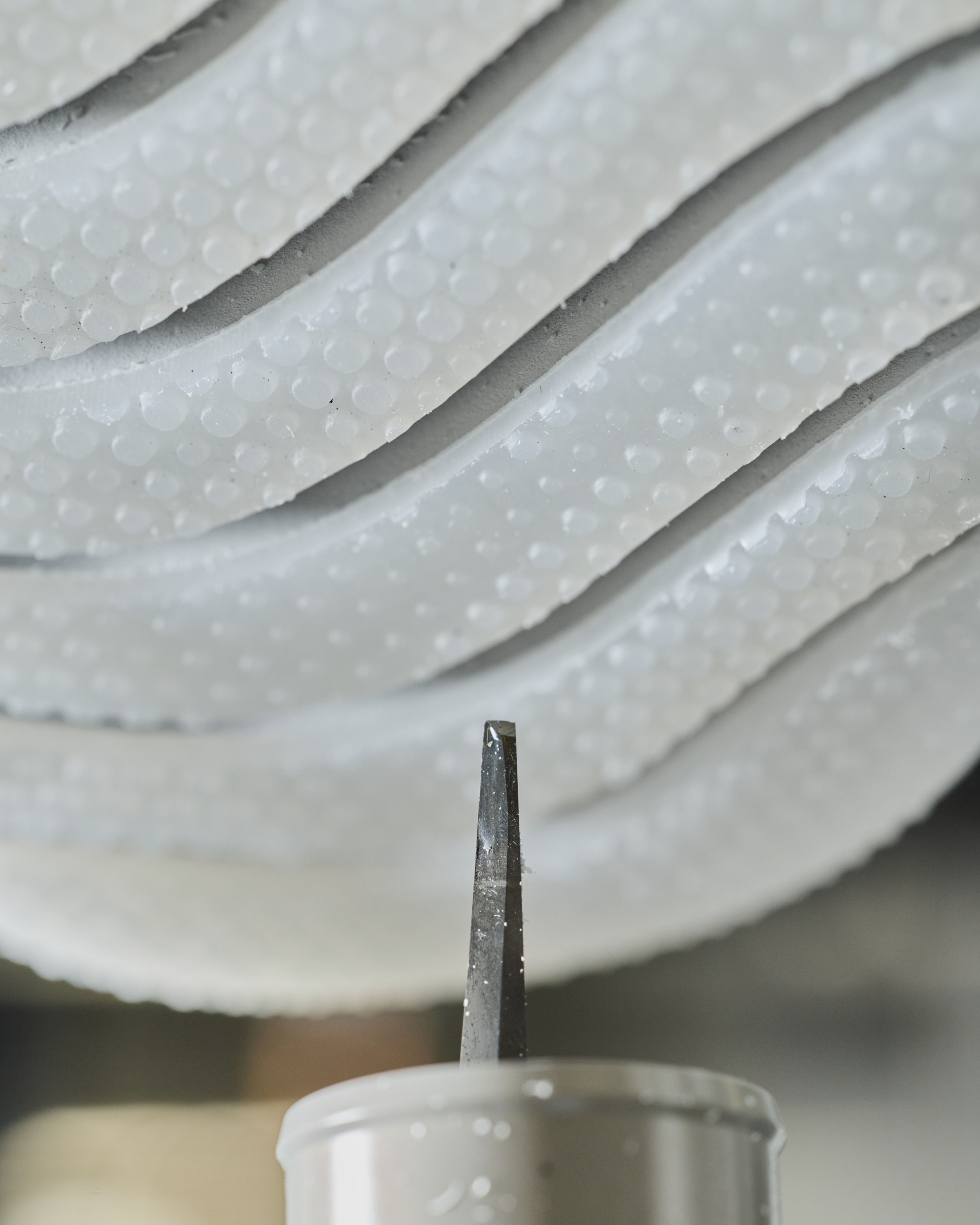
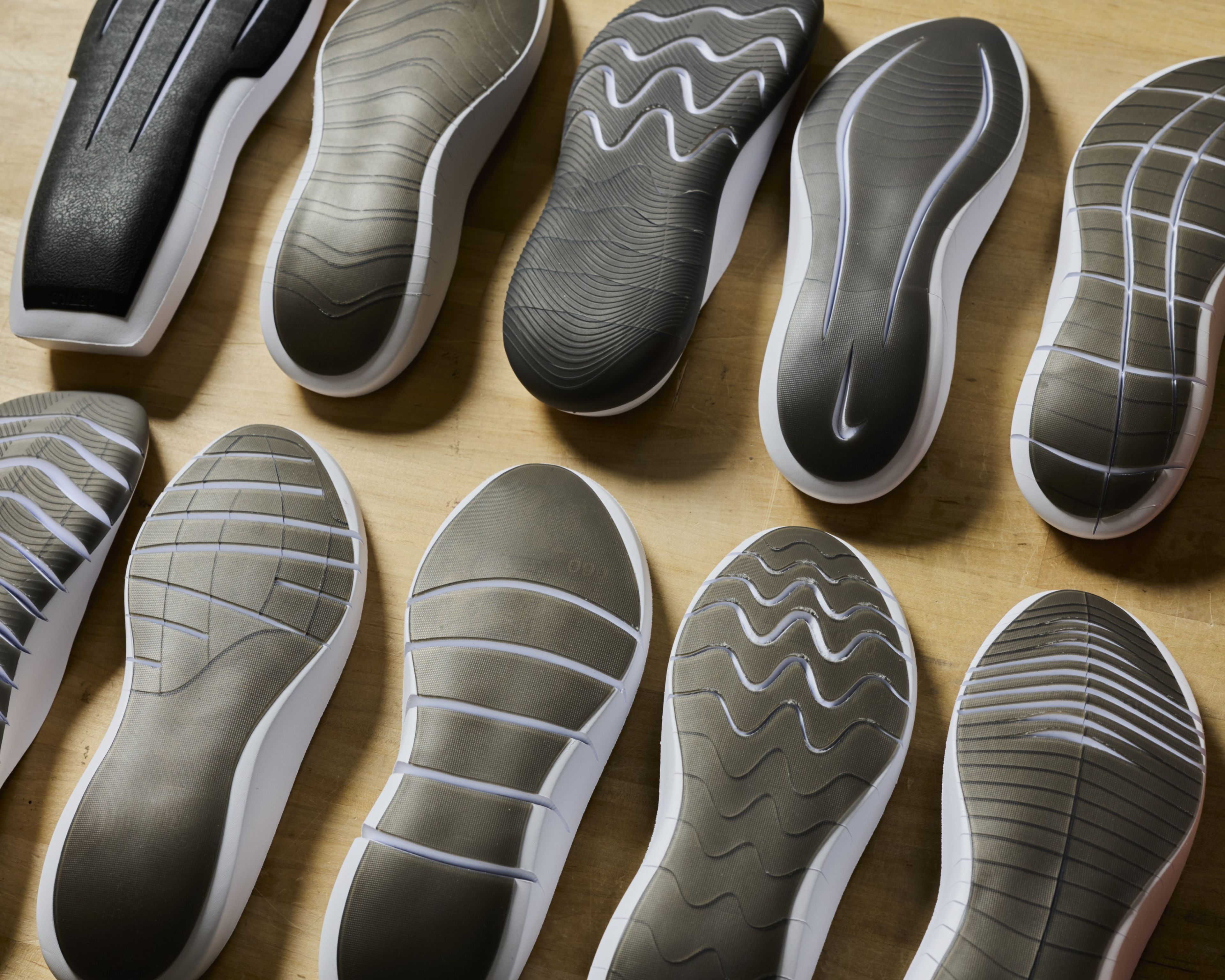
Where designers once spent hours carving grooves by hand with an exacto knife, the team can now experiment with a dozen or more design iterations in a single day, opening up a new world of possibilities for Nike Free and the future of flexible footwear.
The lasting contribution of Free, explains Hatfield, extends beyond the shoes and into the philosophy they helped define — one rooted in the belief that great design begins with understanding how the human body moves.
“If there’s anything Free has done, it has caused all of us — designers, engineers, developers, marketing, all of us — to say, ‘OK, whatever we’re going to create next, it has to work with the body. It should never detract from it. It should always amplify it.’”