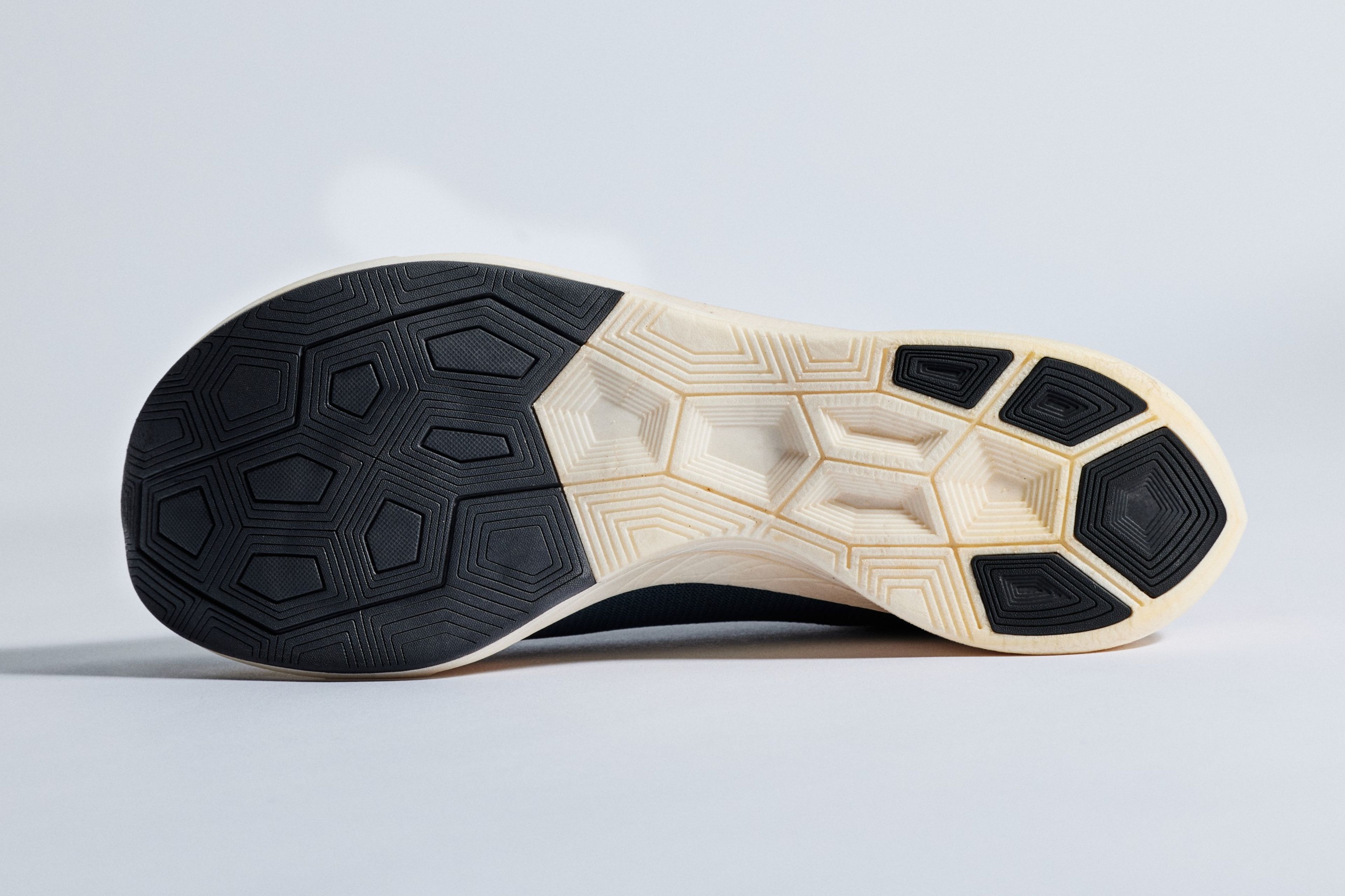
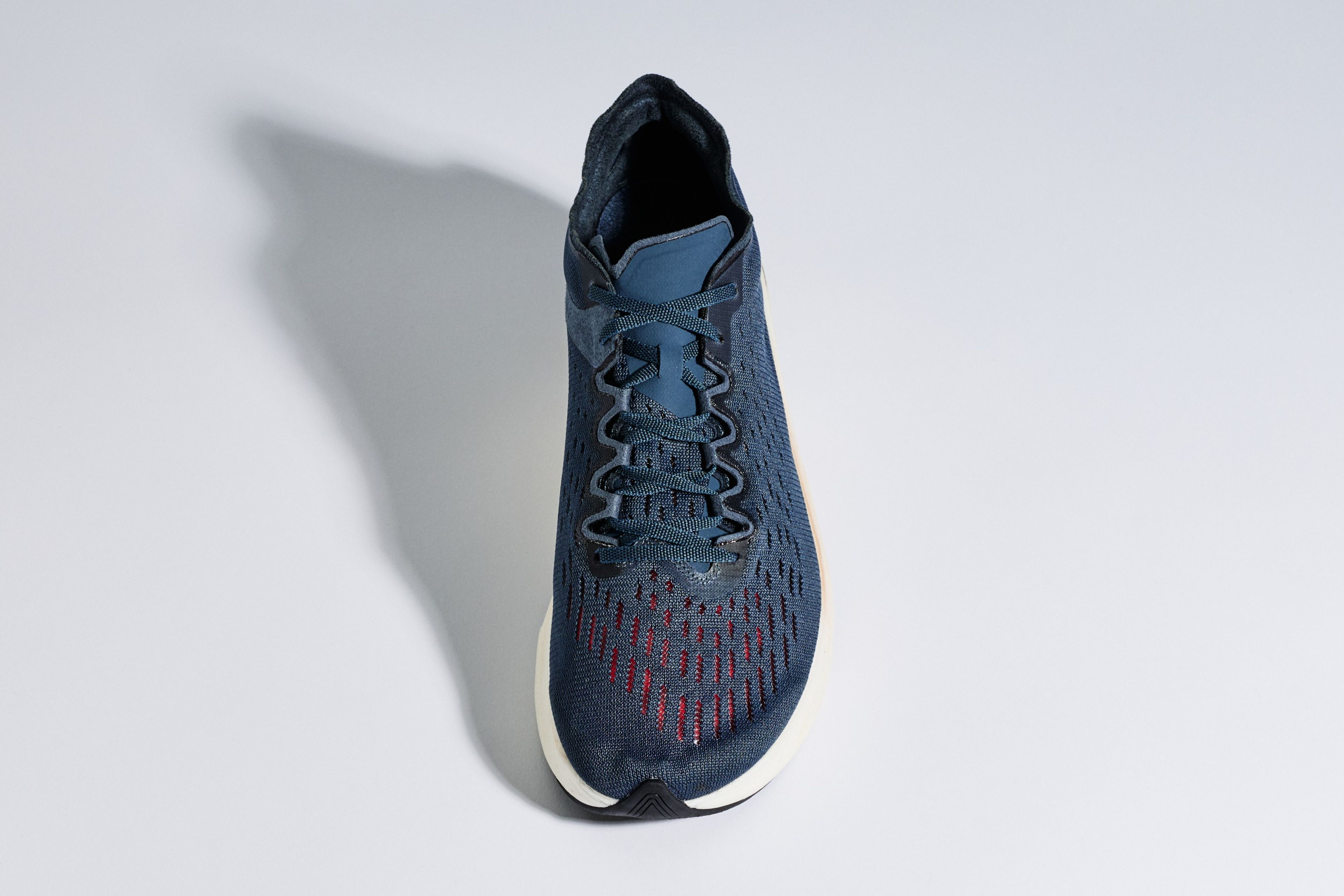
A Decade of the Super Shoe: How Nike Redefined Speed
- October 09, 2026
- Words:
In 2014, a prominent sports-science journalist predicted that it would be 2075 before a human being ran a sub-2-hour marathon. The following year, researchers said it was unlikely to happen before the end of the century.
There was something the experts didn’t know, though: Even as those projections were being made, a team of Nike scientists in a lab far from public view was already at work on a project that would shatter the predictions, collapsing the timeline by decades and fundamentally changing the sport of marathon running.
In the mid 2010s, the marathon world record stood at 2:02:57. Closing the remaining gap would require the world’s best runners to sustain unprecedented speed over 26.2 miles without burning through their energy reserves — a feat still thought to be beyond the limits of human performance.
Inside the Nike Sport Research Lab (NSRL), scientists had quietly begun asking a simple question: What if everyone was wrong?
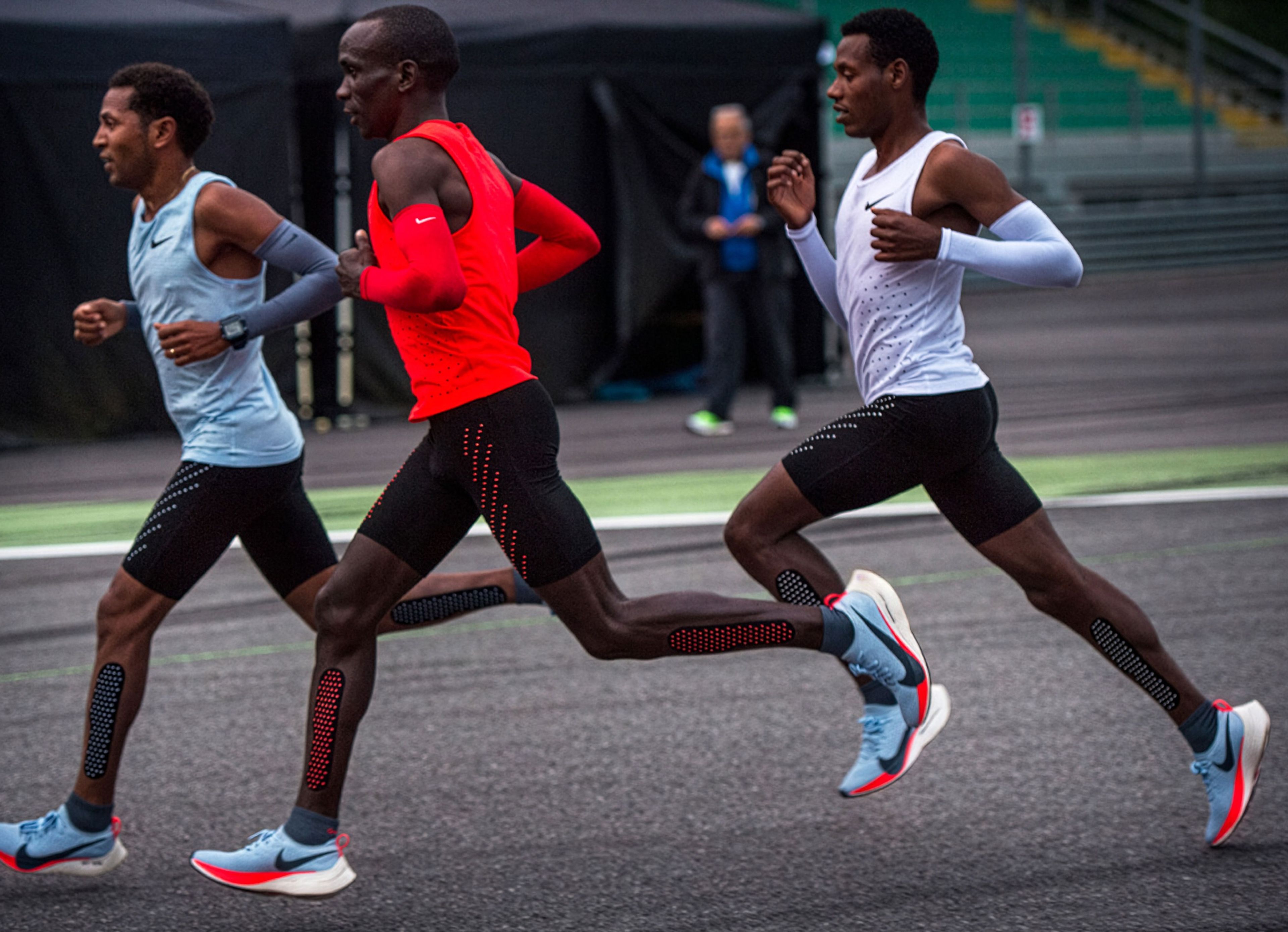
What began inside the NSRL would ultimately help give rise to the super shoe and produce Breaking2, when, in 2017, three elite distance runners pursued the first sub-2-hour marathon.
“The idea of taking 3 minutes off in one go sounded crazy. Yet we knew enough internally that we might just do it.”
Stefan Guest, Nike VP, Creative Director
To find the answer, they turned to research that had been underway for years. Scientists at the NSRL had been studying fatigue, examining how to define and quantify it across different sports and athletes, how it affected performance and injury, and how Nike might help mitigate its effects.
“Fatigue is universal. It’s something every athlete, at every level, experiences,” says Matthew Nurse, Nike Chief Science Officer and Vice President, NSRL. “We’d spent years studying how it affects performance and injury and how we might mitigate those effects. By the time we began looking at the 2-hour marathon, the ingredients were already on the table.”
With the 2-hour marathon now in their sights, the team began doing the math. How much faster would the world’s best marathoners need to get? And how much of that improvement could come from their footwear?
The calculations pointed to an enormous jump — to break 2 hours, the best would need to get roughly 3% faster, and likely improve their running economy by more than 3%. In a sport where records were typically chipped away in seconds over many years, they were looking to shave off 3 minutes in a single leap.
“The idea of taking 3 minutes off in one go sounded crazy,” recalls Stefan Guest, VP, Creative Director, Global Football, who was leading running footwear innovation design at the time. “Yet we knew enough internally that we might just do it.”
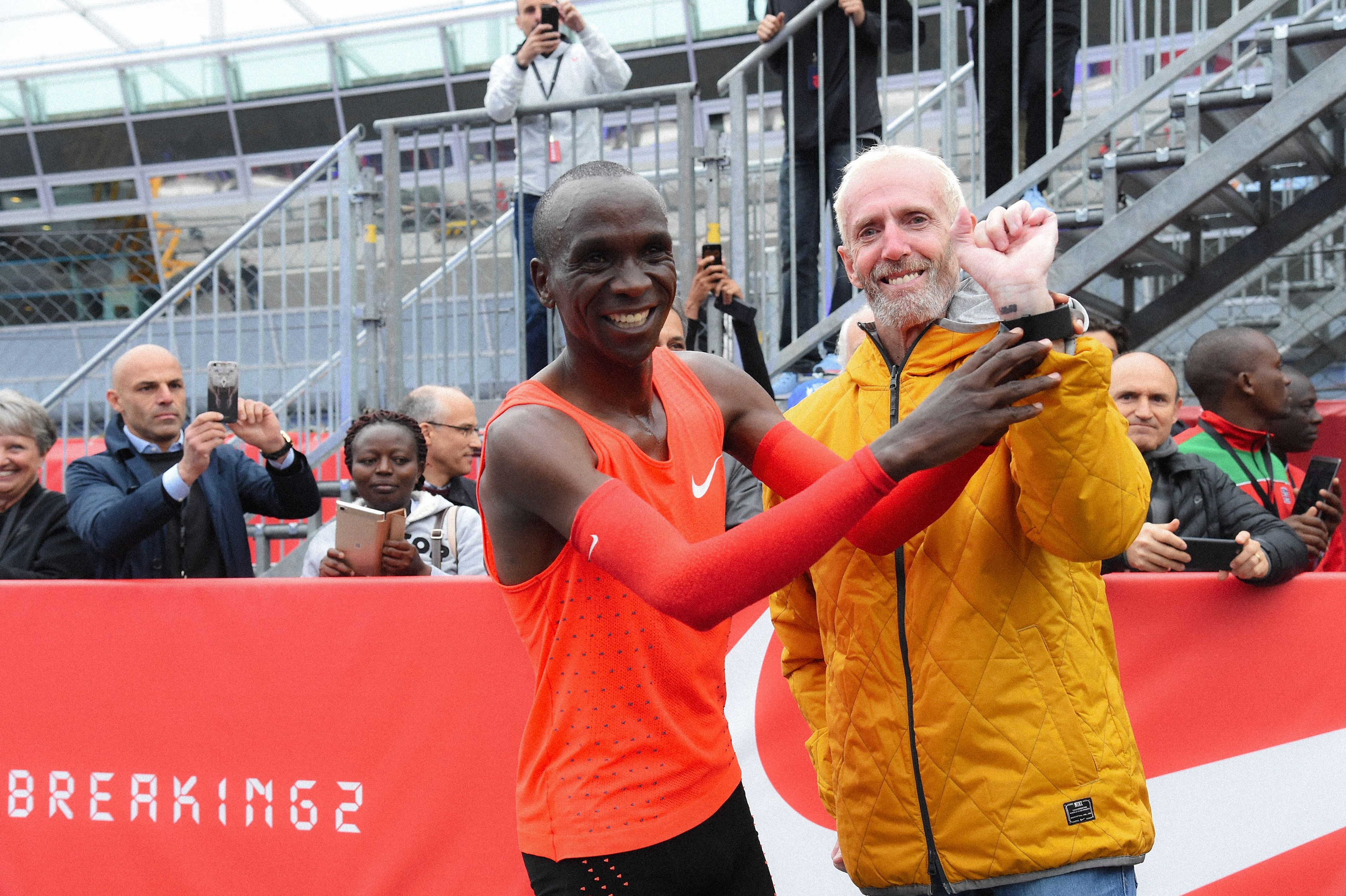
Eliud Kipchoge and the late Sandy Bodecker at the Breaking2 finish line; Sandy shows off his 1:59.59 tattoo.
The possibility caught the attention of the late Sandy Bodecker, then Nike’s Vice President of Special Projects, who’d spent decades building a reputation around pursuing ideas others considered unattainable.
With Bodecker’s backing, the team began looking for where those some 180 seconds of gains might come from.
The prevailing wisdom around marathon footwear at the time was that if you wanted to make a racing shoe faster, you had to make it lighter. For years, that had meant stripping shoes down. Making them lower, flatter, thinner. Removing as much material as possible while leaving just enough cushioning to carry a runner through 26.2 miles and roughly 28,000 steps.
Nike had already pushed that formula close to its limit. There was only so much material that designers could remove before there was nothing left.
“We were exhausting that path,” Guest remembers. “You could keep making it thinner and thinner and lighter and lighter, but at some point, the shoe was going to disintegrate.”
Researchers already knew that other footwear properties, including cushioning and plate stiffness, could improve running economy. But the gains had been relatively small, and what benefited one athlete didn't necessarily benefit another.
Reaching a sub-2 goal, then, would require the brand to rethink its approach to speed entirely and create something completely new.
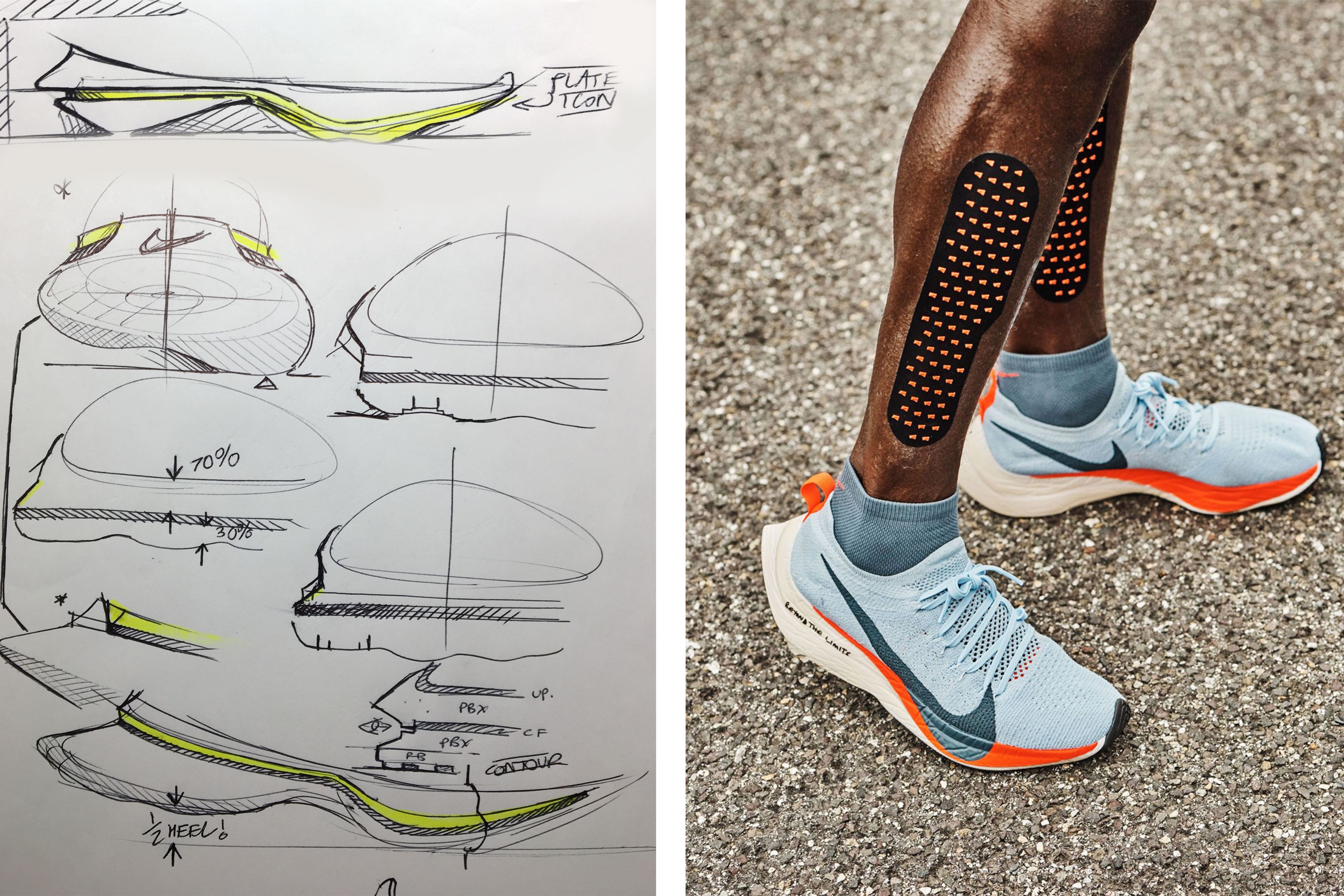
Early prototypes and sketches charted a radically different approach to marathon footwear.
“We got this massive unlock all in one material: better-quality foam, more energy return, lighter weight, and it also turned out to be more resilient than we expected.”
Chris Cook, Nike Footwear Developer
The breakthrough would come thousands of miles away, at a lesser-known materials manufacturer in the United Kingdom.
Back then, most athletic footwear foams were made using a chemical process. But with the Swoosh in search of a new way forward, Denis Schiller, now Nike Senior Footwear Material Researcher, made a discovery: Zotefoams, a British materials company, had recently developed an approach that used extreme pressure to force nitrogen into its foam, resulting in a material that was significantly lighter while returning more energy.
“We got this massive unlock all in one material: better-quality foam, more energy return, lighter weight, and it also turned out to be more resilient than we expected,” says Nike Footwear Developer Chris Cook, who worked on the project’s earliest prototypes.
The unlock would eventually become known as ZoomX.
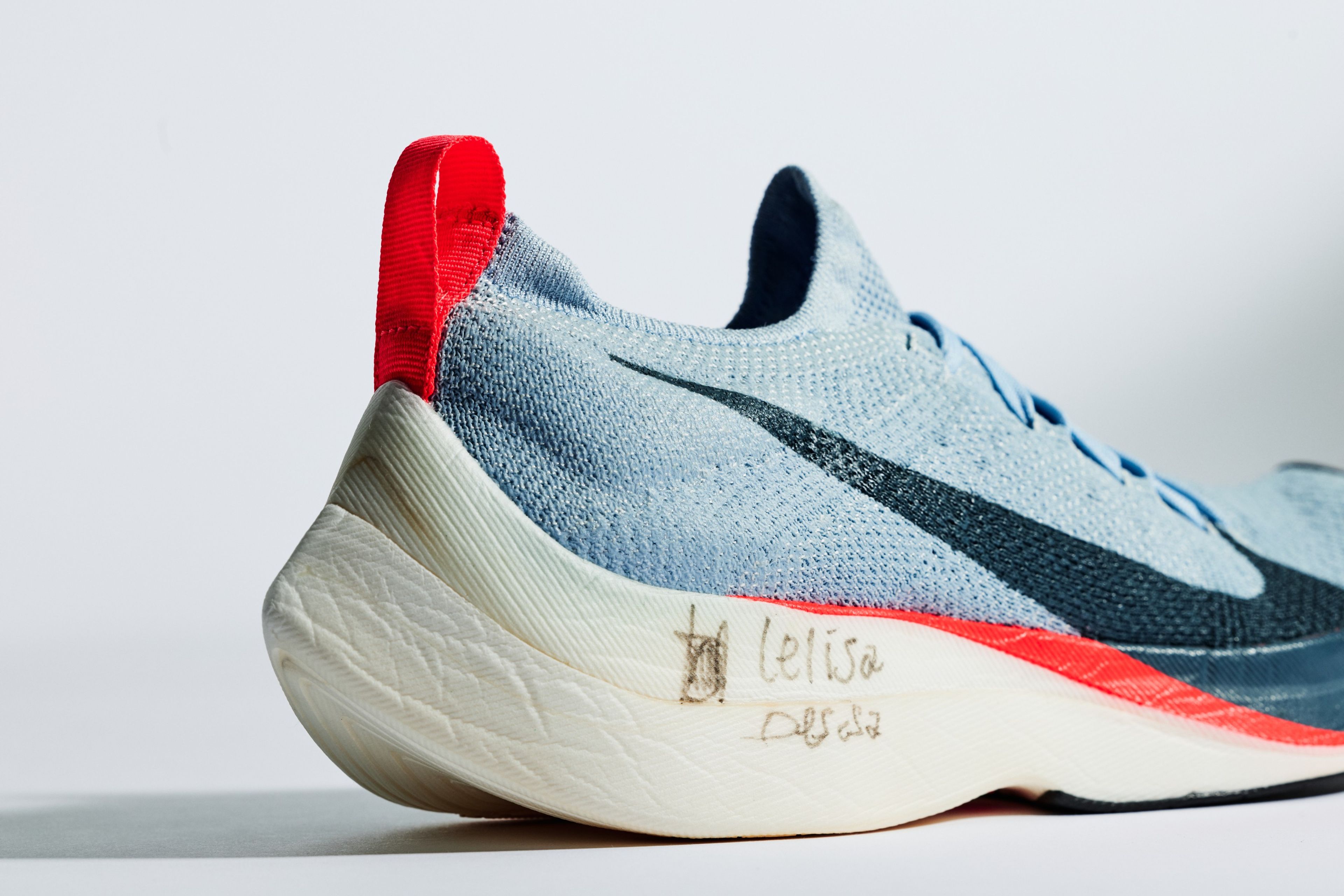
Created through a nitrogen-injection process, ZoomX foam — found in the midsole of this 2017 ZoomX Vaporfly Elite, signed by runner Lelisa Desisa — is light, responsive and energy-returning.
With the new lighter-weight foam came a new sense of possibility. For the first time, Nike could add more cushioning without the weight penalty that had traditionally come with it. Instead of continuing to strip material away, designers could begin adding it back, getting more energy return in the process.
But the team was still chasing an unimaginable target: To erase nearly 3 minutes from the world’s fastest marathon time, the new technology would have to deliver a dramatic improvement in running economy, or how much energy you use to maintain your pace.
They began experimenting with how much foam they could put underfoot and how it might work together with another emerging piece of the shoe equation: a curved carbon-fiber plate. Rather than simply making the plate stiffer, the team engineered its shape and curvature to reduce the biomechanical load on the runner.
Together, the two technologies created a new kind of system, combining cushioning, stiffness and energy return in a way racing shoes hadn’t before. With each step, the curved plate worked in concert with the lightweight, energy-returning foam to reduce the amount of energy required to maintain pace.
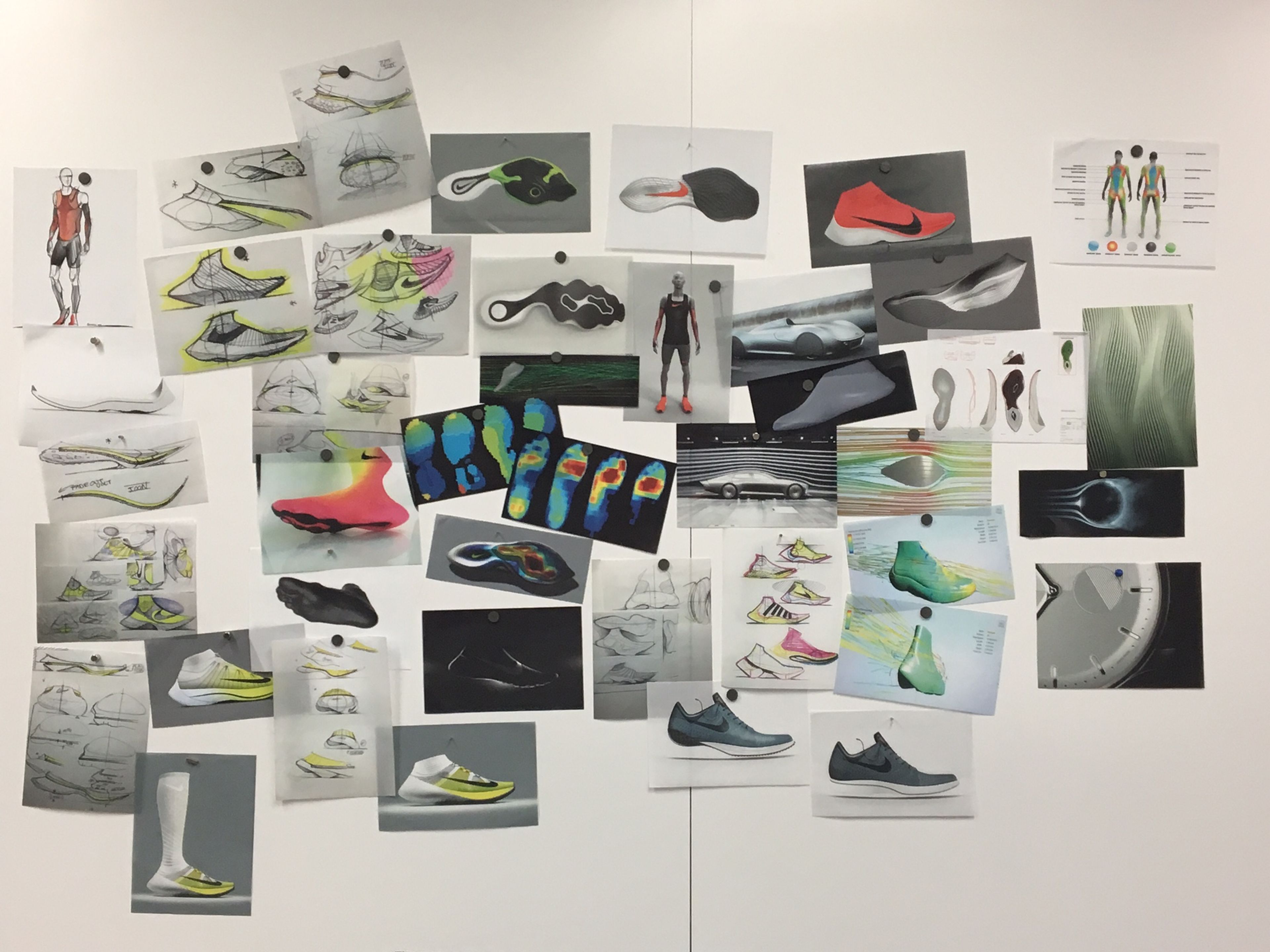
The earliest Vaporfly prototype was called the “3% test vehicle,” a reference to Nike‘s target of making runners at least 3 percent faster.
“Before we even analyzed the data, I knew something big was happening.”
Emily Farina, Senior Principal Researcher, NSRL
As the pieces began coming together, the team built a series of prototypes with the NSRL to find out if the theoretical gains would translate to better results when athletes ran in them in the real world.
Emily Farina, now Nike’s Senior Principal Researcher, NSRL, was one of the researchers conducting those early studies, using biomechanics to drive the footwear design. Part of her role involved measuring athletes’ oxygen consumption as they ran at a controlled speed — they wore oxygen masks as they ran on a treadmill — and tracking how much energy it took to maintain their pace. The PhD-trained researcher recalls sitting behind her monitor as the data began coming in.
“I’m watching the screen, and I’m seeing the numbers, and I did a double take," she recalls. “I almost wanted to check the mask: ‘Is this working?’”
The improvement in metabolic cost was so striking that Farina immediately understood a significant moment was unfolding.
“The numbers that were popping up on the screen in real time were different from anything we’d previously seen,” she says. “Before we even analyzed the data, I knew something big was happening.”
When she calculated the results, Farina’s instincts were confirmed. Runners in the new prototypes were seeing a 4 percent boost in running economy compared with Nike’s previous racing shoe. Even more rare, every runner was getting the benefit.
With the numbers to back up their new formula, designers began turning the prototype into a racing shoe. What emerged was a piece of footwear the world would soon know as the Nike Zoom Vaporfly 4%.
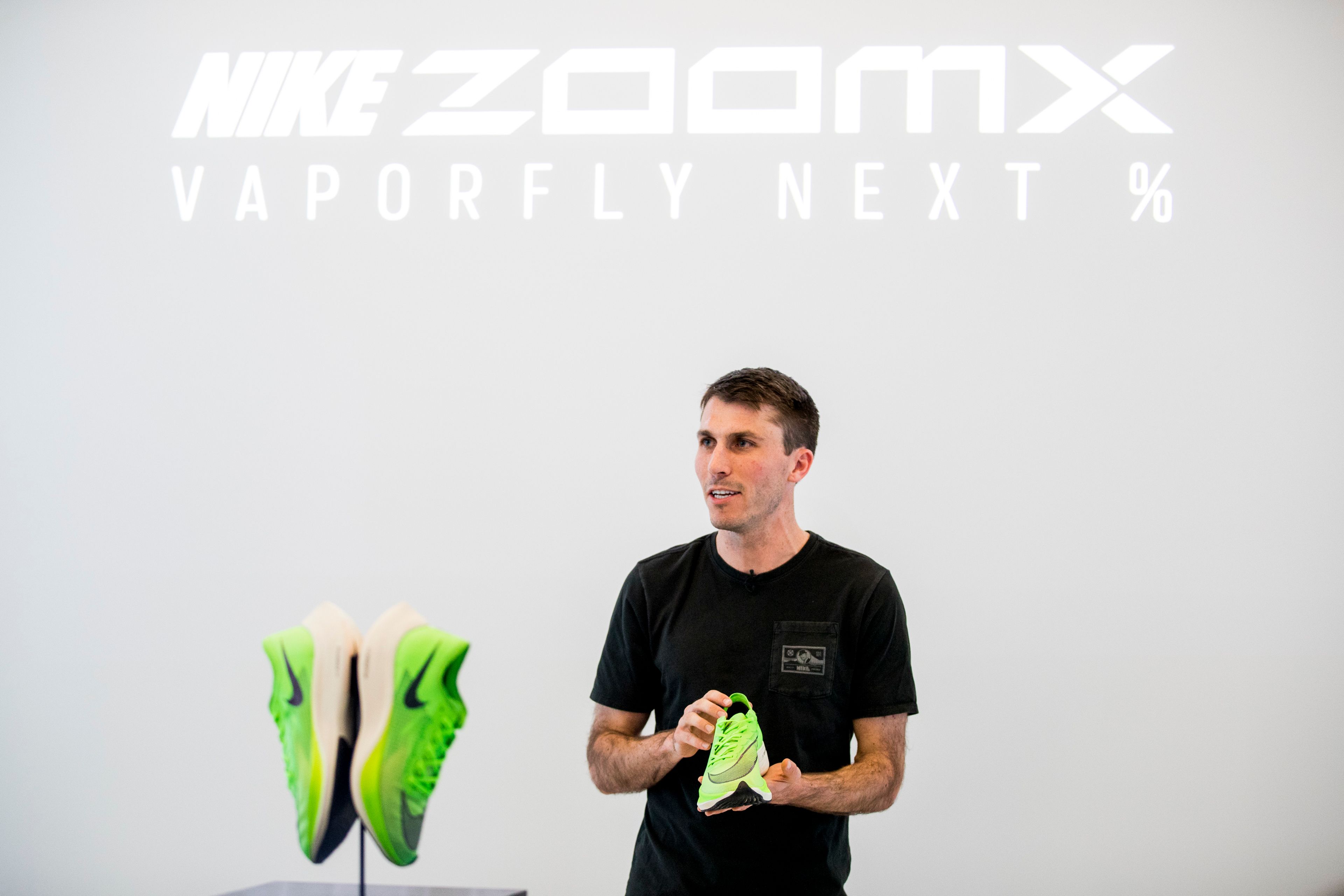
Elliott Heath, pictured at the Vaporfly Next% launch in 2019, recalled athletes’ early reactions to the original Vaporfly: “It was unlike anything they’d ever seen.”
As designers continued working with the new foam and the Vaporfly began taking shape, a secondary benefit soon became clear, one no one had expected. The same formula that was producing marked gains in speed was also delivering something rarely associated with racing shoes at the time: comfort.
For generations of distance runners up to that point, going faster had generally meant giving something up. The lightest racing shoes offered little protection from the pavement, and the pounding on their feet was simply part of racing.
“The mindset at the time was that there was an inverse relationship between speed and comfort,” says Elliott Heath, Nike’s Running Lead for Sport Innovation Studio. “It was just accepted that to be the fastest, you had to sacrifice part of your body.”
“When I stood on the starting line of the Boston Marathon in 2017, it was when Vaporfly was still pretty early and unknown. It felt like having a secret edge.”
Carrie Dimoff, Product Director, Footwear Innovation
Carrie Dimoff, a former U.S. Olympic Trials marathoner who joined Nike Innovation in 2016, knew the tradeoff well. She’d spent years racing in the thin, lightweight flats that dominated the sport at the time.
But working at Nike meant she understood the benefits of the Vaporfly before the masses. When she began racing in it, the difference was immediate.
“When I stood on the starting line of the Boston Marathon in 2017, it was when Vaporfly was still pretty early and unknown. It felt like having a secret edge,” she recalls.
Now Product Director, Footwear Innovation, Dimoff remembers looking at fellow competitors wearing the thin racing flats that had long defined the category and feeling sorry for them.
“I was standing next to runners wearing 10-millimeter EVA-foam flats, as thin as slippers, and I thought, I cannot believe they’re going to beat themselves up on this hilly course wearing those little shoes, while I'm out here with all this protection and propulsion."
For Heath, also an elite runner and U.S. Olympic Trials athlete, the benefits of that extra protection went beyond race day. As a professional runner, he’d endured a series of foot injuries and three surgeries in four years. During his recovery, he began wearing the Vaporfly simply to walk around Nike campus.
“The carbon-fiber plate and the rocker and the propulsive geometry made my foot do less work, and then the extra cushion protected the hot spot,” he remembers. “It gave me hope that I would be able to run again.”
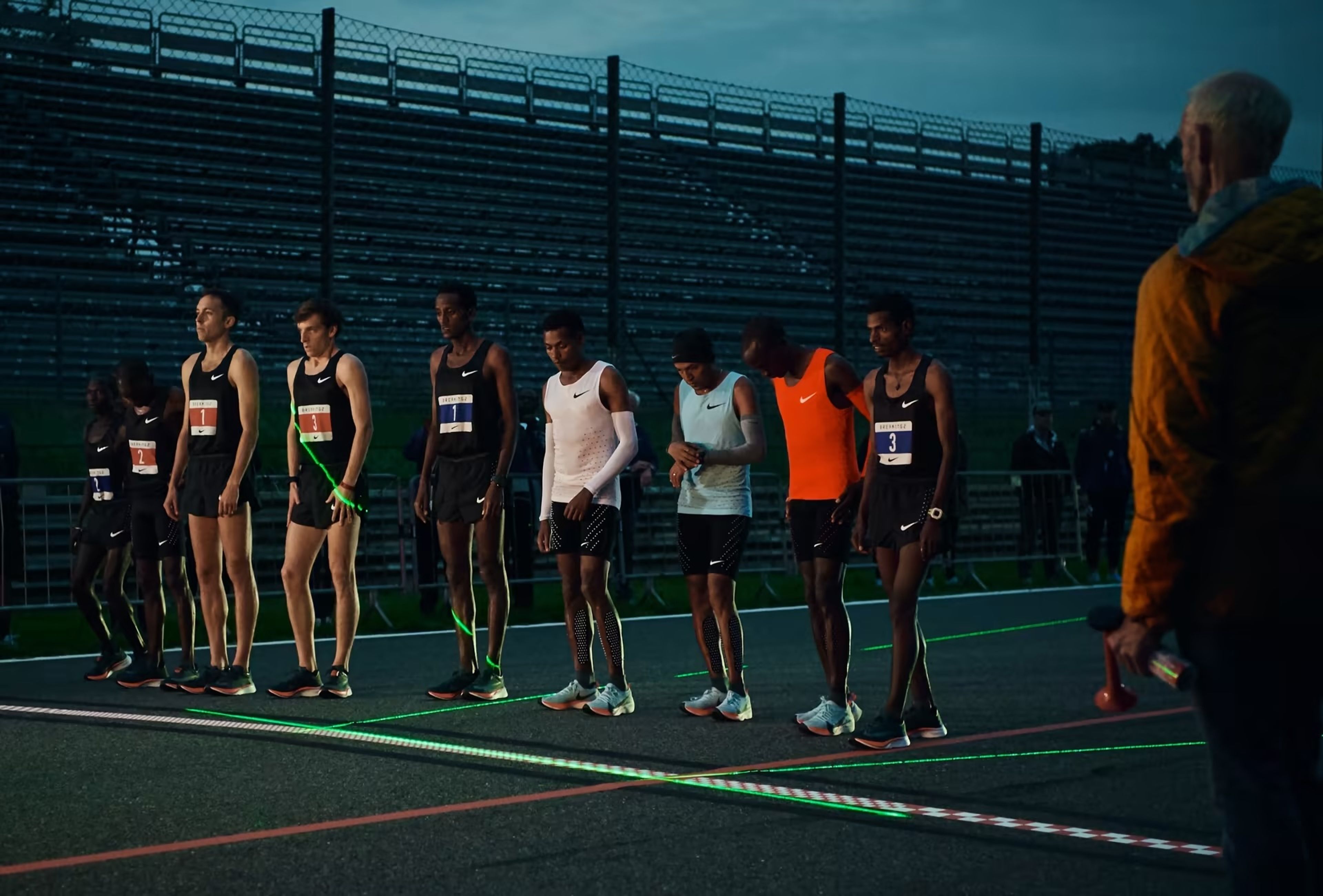
As runners lined up at the Monza Circuit track for Breaking2, they approached the 2-hour marathon as a system, bringing together footwear, training, nutrition, hydration and race-day strategy.
Now that the Vaporfly was out in the world, it was time to put it to the test.
The project had originated with the audacious goal of achieving a sub-2-hour marathon, and with a shoe already showing incredible gains in speed, Nike was ready to see if its moonshot could land.
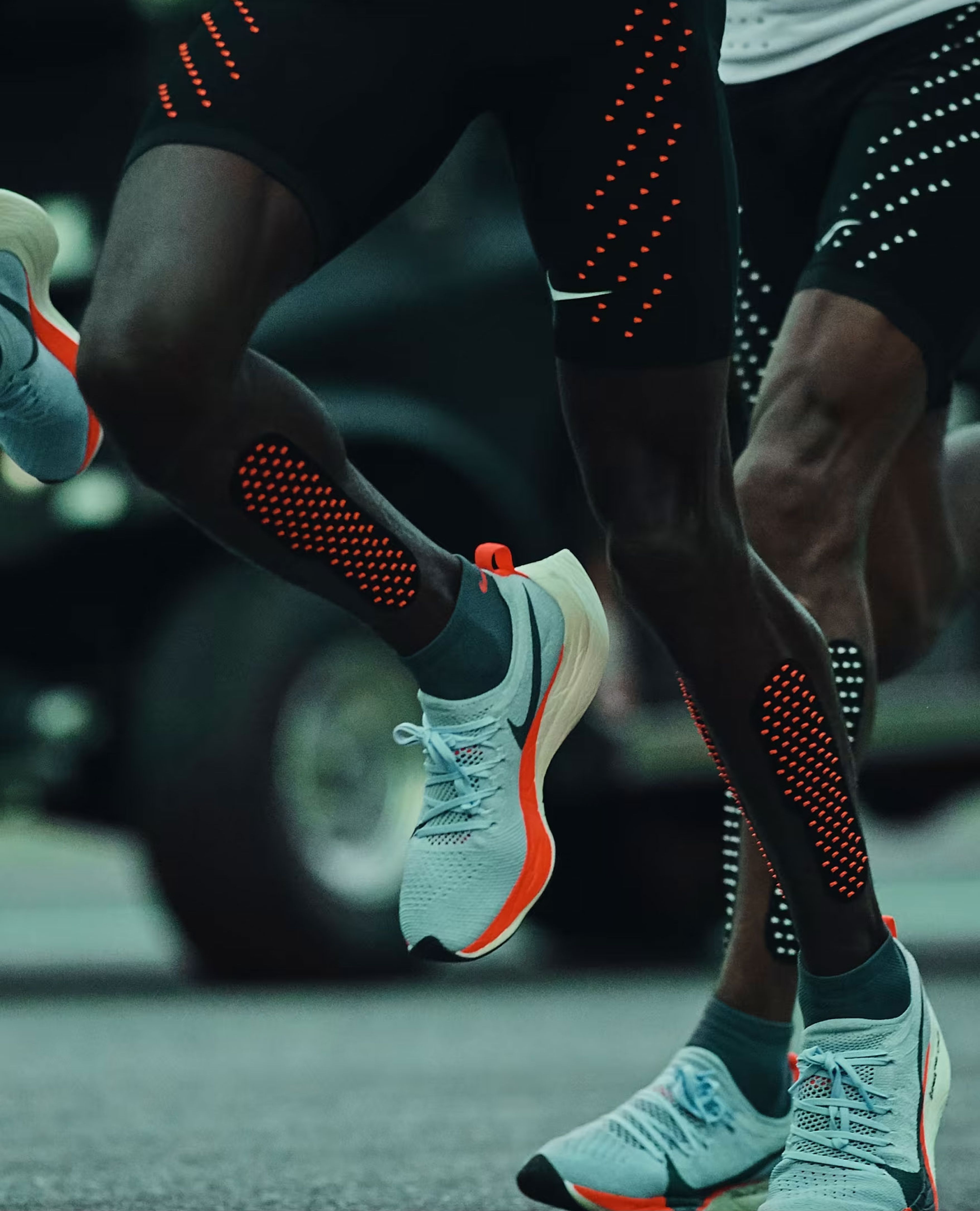
The Nike Zoom Vaporfly Elite was created specifically for Breaking2, with individually tuned versions for each of the project’s three world-class marathoners.
The ambition became Breaking2. On May 6, 2017, three of the world’s best marathoners lined up before dawn on a Formula One track in Monza, Italy, ready to see if they could break the elusive barrier.
Nike had spent months obsessing over every detail, from fueling, aerodynamics and pacing to the course itself. A team of 30 pacers stood ready to rotate in and out. At 5:45 a.m., they took off in pursuit of history.
Two hours and 25 seconds later, Eliud Kipchoge crossed the finish line, just shy of a barrier that, only a few years earlier, experts had predicted might stand for decades.
The 2-hour mark remained unbroken, but with Kipchoge’s performance, it was suddenly within reach.
Nike was already working on the shoe that would take him the rest of the way.
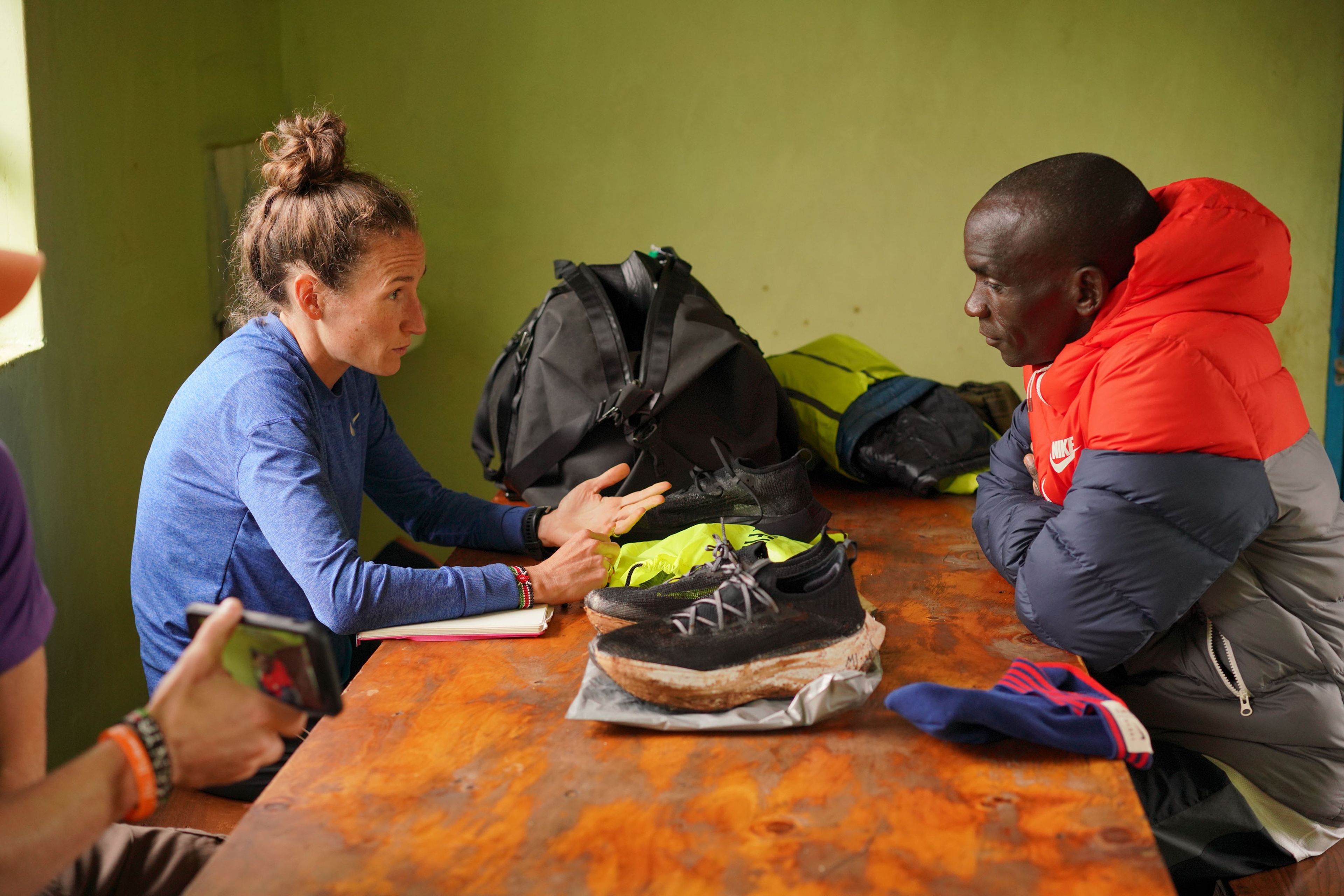
Carrie Dimoff, pictured with Eliud Kipchoge, helped develop the Alphafly, the next evolution of the super shoe and the model Kipchoge wore to make history.
Unbeknownst to the rest of the world, Nike had begun working on the next generation of super shoes before Breaking2 even took place. As the Vaporfly prepared to make its public debut, designers and researchers were asking how they could push the new system further.
For Guest, part of the answer lay in a technology that had been defining Nike for decades: Air. The team began exploring how the proprietary cushioning platform could work in concert with the ZoomX foam and carbon-fiber plate, eventually developing a system of speed that placed two highly responsive Air Zoom units beneath the forefoot.
Farina, who had helped study the biomechanics of the original Vaporfly, remembers the Alphafly beginning to take shape before runners had even fully grasped what its predecessor could do.
“By the time the Vaporfly came out, the idea of the Alphafly already existed,” she says. “So in our minds, we were thinking, Oh, just wait. There’s even more coming.”
Two years after Monza, Kipchoge was ready to try again. This time, he arrived with a prototype of Nike’s next-generation racing shoe on his feet, an early version of what would become the Alphafly Air Zoom NEXT%.
On a tree-lined course in Vienna, Austria, thousands of spectators crowded the route as Kipchoge ran behind a rotating formation of pacers. For 26.2 miles, he maintained the blistering pace — an average of 4 minutes and 34 seconds per mile, or 2 minutes and 50 seconds per kilometer — required to break the 2-hour barrier.
When he crossed the finish line, the clock read 1:59:40. The performance of the future had arrived more than a half century early.
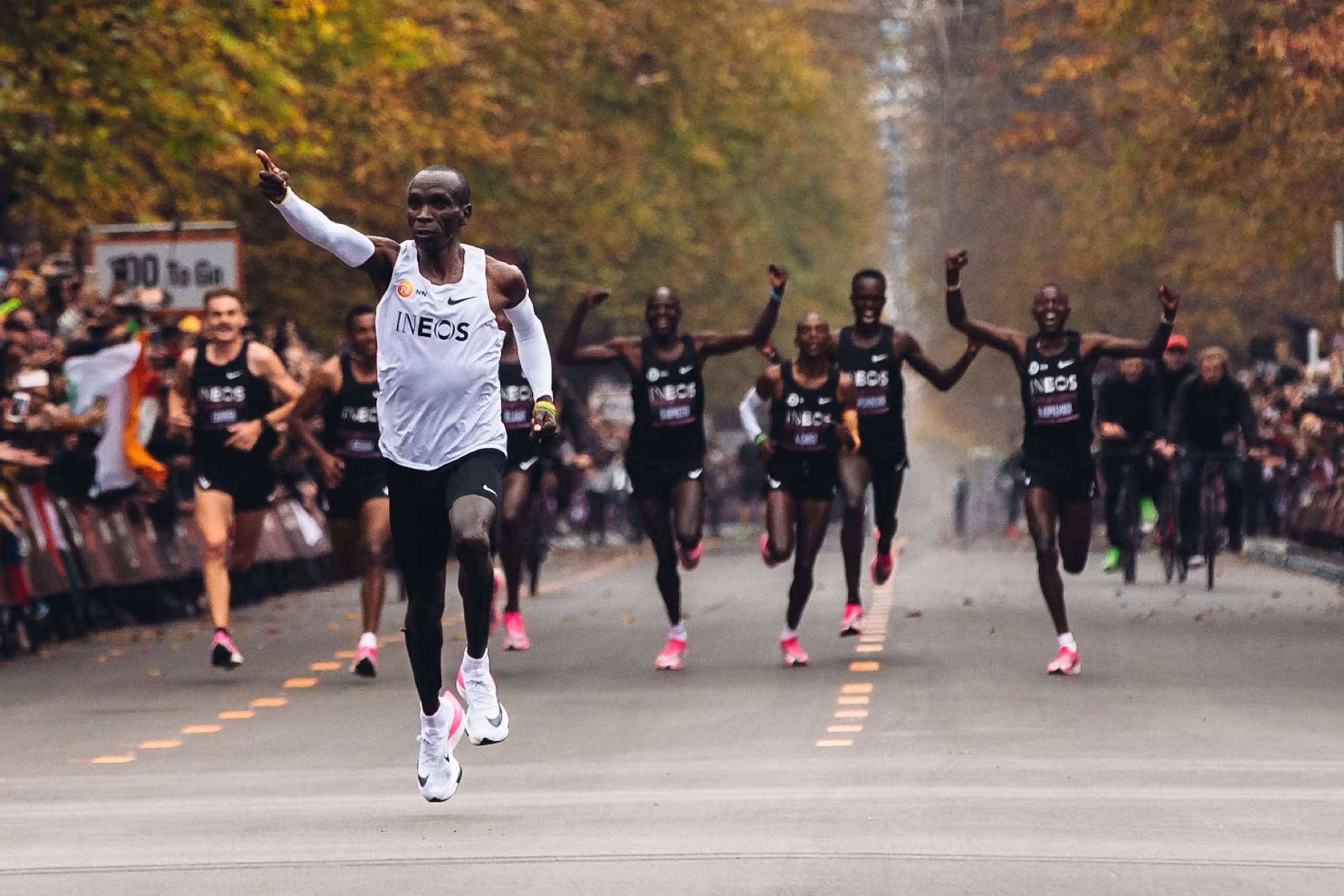
Two years after Breaking2, Kipchoge crossed the 2-hour threshold in Vienna, running 1:59:40 in a prototype that would become the Nike Air Zoom Alphafly NEXT%.
For all the attention paid to the clock in Vienna, there was another, quieter sign of just how much marathon racing was changing.
Heath, who was working closely with Kipchoge at the time, remembers talking with him the next morning when the marathon champion mentioned that he’d gone for a run. Heath was stunned — in Kipchoge’s previous 10 marathons, he’d never run the following day.
“He told me it was the first time he ever felt like his body could run the day after a marathon,” Heath recalls. “And he did it the day after running 1:59:40.”
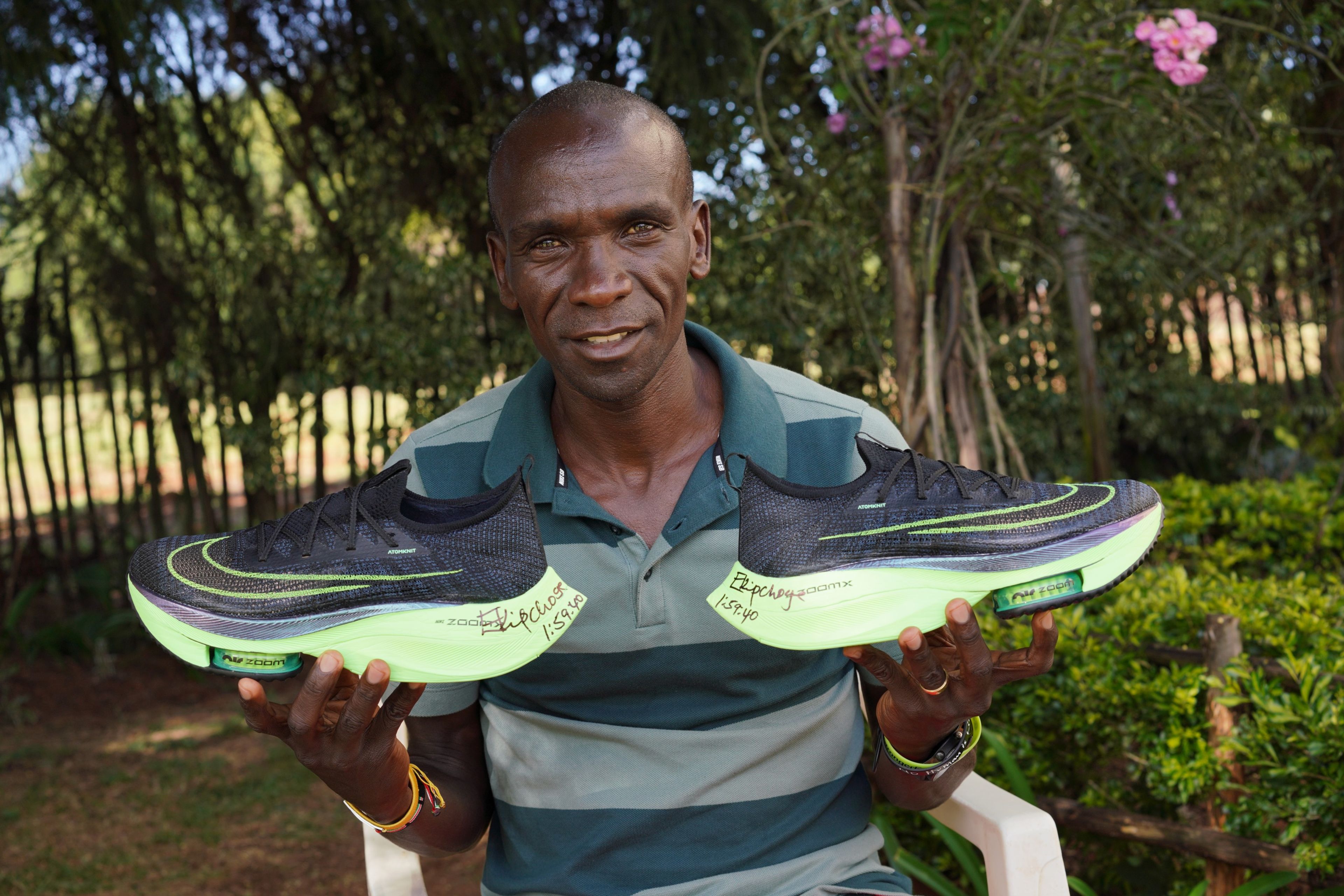
The Air Zoom Alphafly NEXT% pushed the super shoe formula further by adding Air Zoom units to the ZoomX and carbon-fiber system, enhancing its energy return.
“Our job is to continue finding those edges. To keep pushing into spaces where no one is going and really show the world what’s possible.”
Carrie Dimoff, Product Director, Footwear Innovation
During the next seven years, Nike continued building on their system of speed, refining the interplay between foam, Air and carbon-fiber plate across successive generations of the Vaporfly and Alphafly. The process has been relentlessly iterative.
“Once we started seeing how big the effects could be, we created a model relating footwear properties to athlete outcomes, and it became a scientific playground of, ‘Wow, what are the limits? What can we make next?’” says Farina.
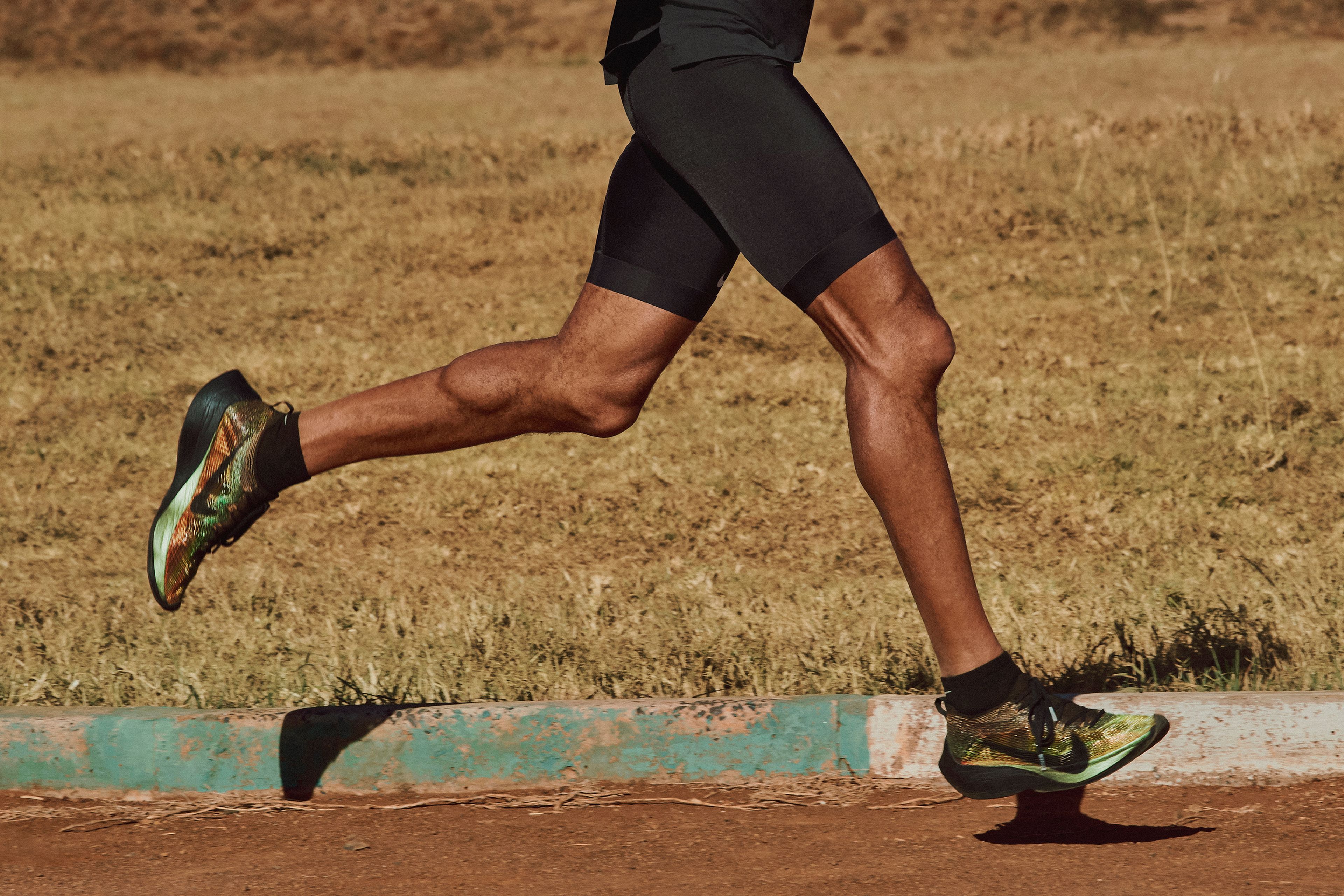
The Nike Zoom Vaporfly Elite Flyprint, which debuted a new 3D-printed upper, created with the help of insights from Eliud Kipchoge, who wore the shoe when he won the 2018 London marathon.
This work is only possible, she says, because Nike can connect what researchers are learning in the lab directly to the people creating the shoes, all under one roof at the LeBron James Innovation Center. If her team wants to understand what would happen with a differently shaped plate or a precise change in stack height, for example, they can ask for it, have a prototype built, test it, and begin the cycle again within days. Those prototypes can then go directly to some of the world’s best athletes, allowing the team to listen to their feedback, learn from their experience, and continually refine the technology.
The process is purposeful, reminds Matthew Nurse, who keeps the signed 2017 custom Vaporfly Elite that Eliud Kipchoge wore for Breaking2 on his desk. "We didn't accidentally stumble onto the solution for breaking the two-hour barrier, or any of our product advancements since," he says. "Our research and our work with our athletes has allowed us to deeply understand the interplay among all the footwear levers, and how they effect performance, comfort and injury risk. And that's helped us to pioneer, innovate and drive this industry."
It's a leader's recipe for launching the next generation of racing footwear, already underway.
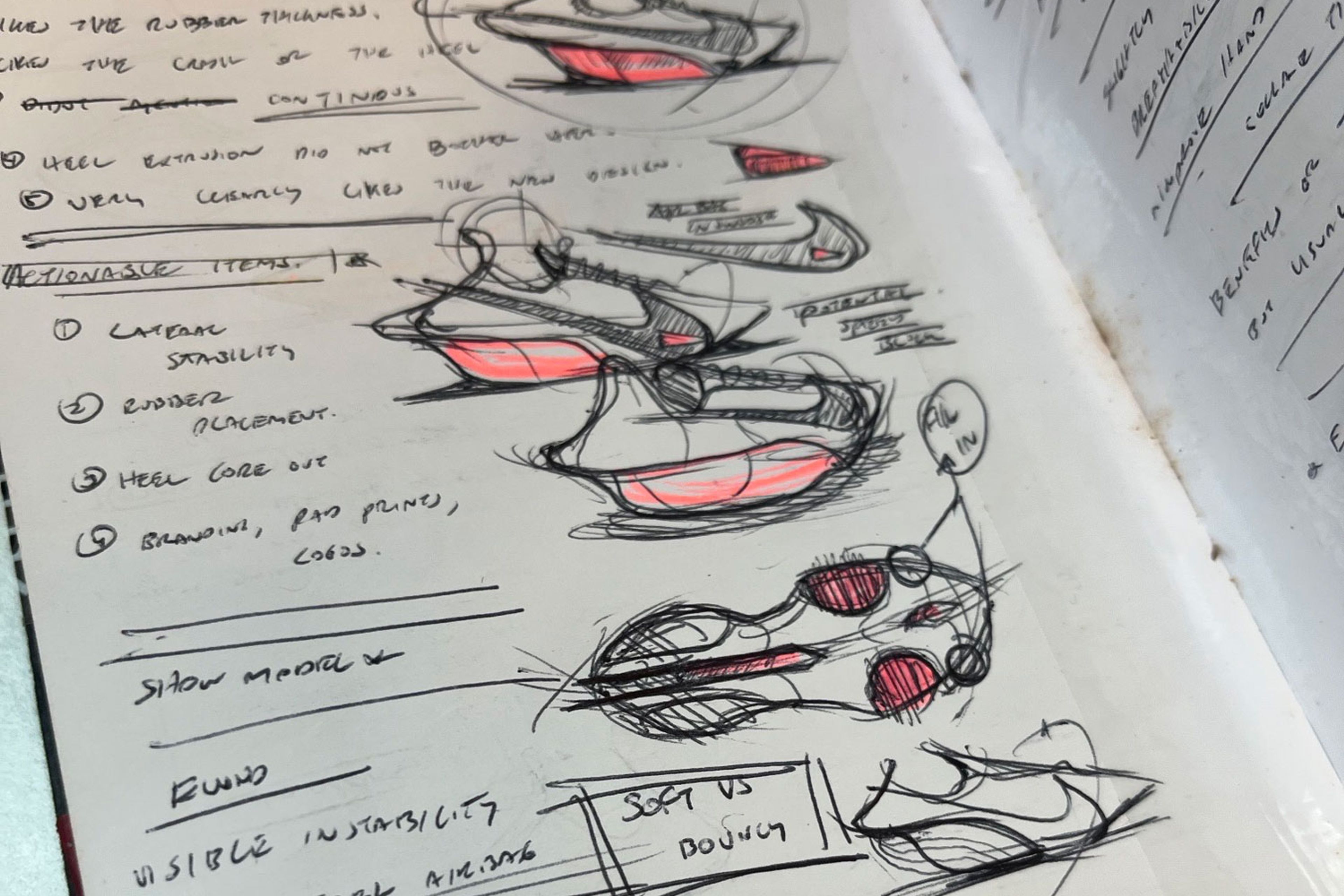
The Alphafly 3 continued Nike’s pursuit of speed, with designers refining the shoe’s geometry to deliver a lighter, more stable racing platform.
Ten years after rewriting the formula for marathon shoes, Nike is still discovering new ways to push the sport’s gain-making technology forward. Its latest leap, Nike Apex, delivers up to 40 percent more energy return than the Alphafly 3.
For Dimoff, that pursuit is the through line that connects the audacious experiment that began more than a decade ago with whatever comes next.
“Our job is to continue finding those edges,” she says. “To keep pushing into spaces where no one is going and really show the world what’s possible.”
—
See the milestone models and technology updates that kept pushing the sport, and Nike, forward.
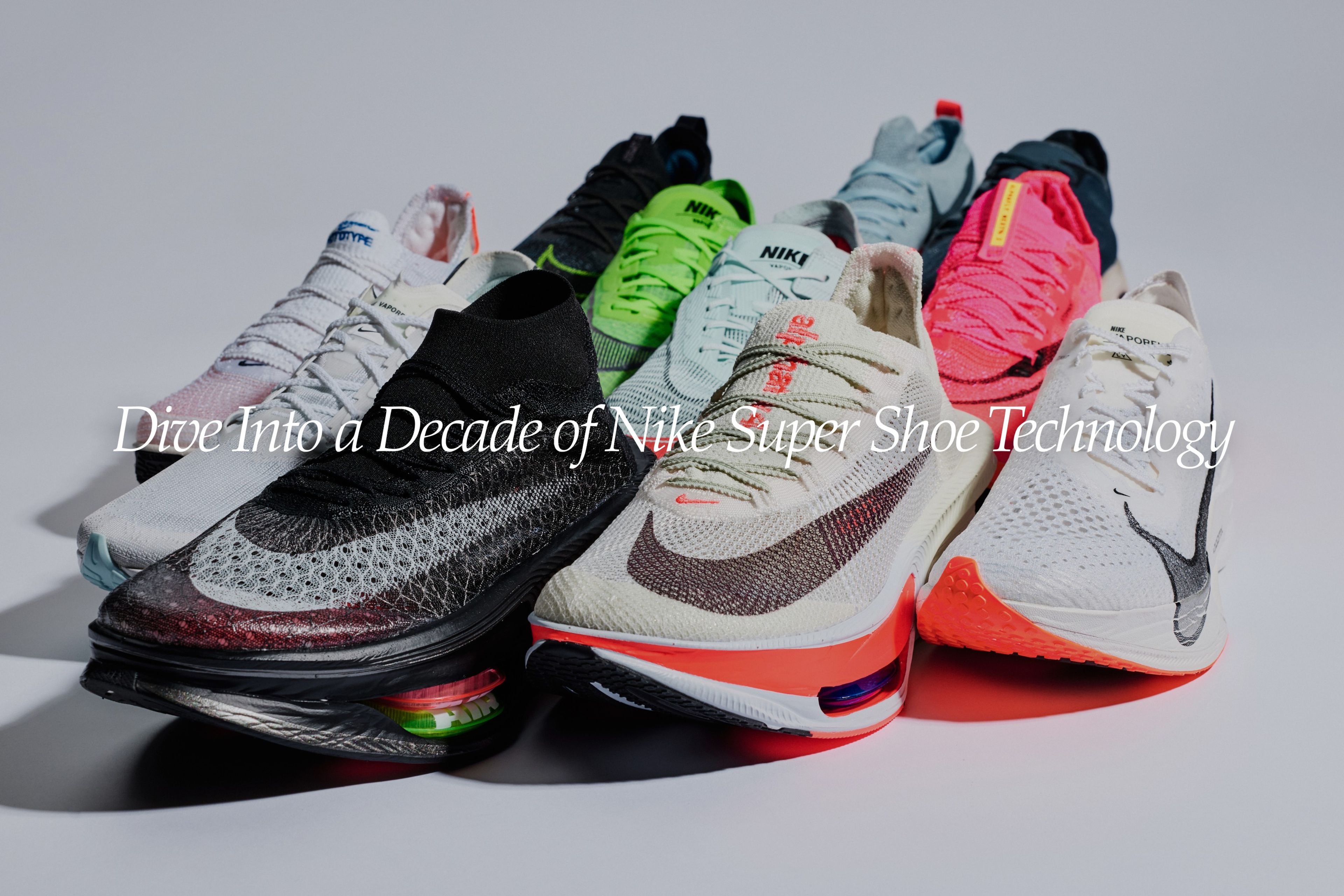
Arriving in January 2027, Nike Apex introduces the first double-stacked Air Zoom units in a racing shoe, along with new ZoomX LT foam and a redesigned carbon-fiber Flyplate, all while weighing some 10 percent less than the Alphafly 3. The shoe is Nike’s current pinnacle expression of race-day innovation, created for marathon runners chasing every possible second.
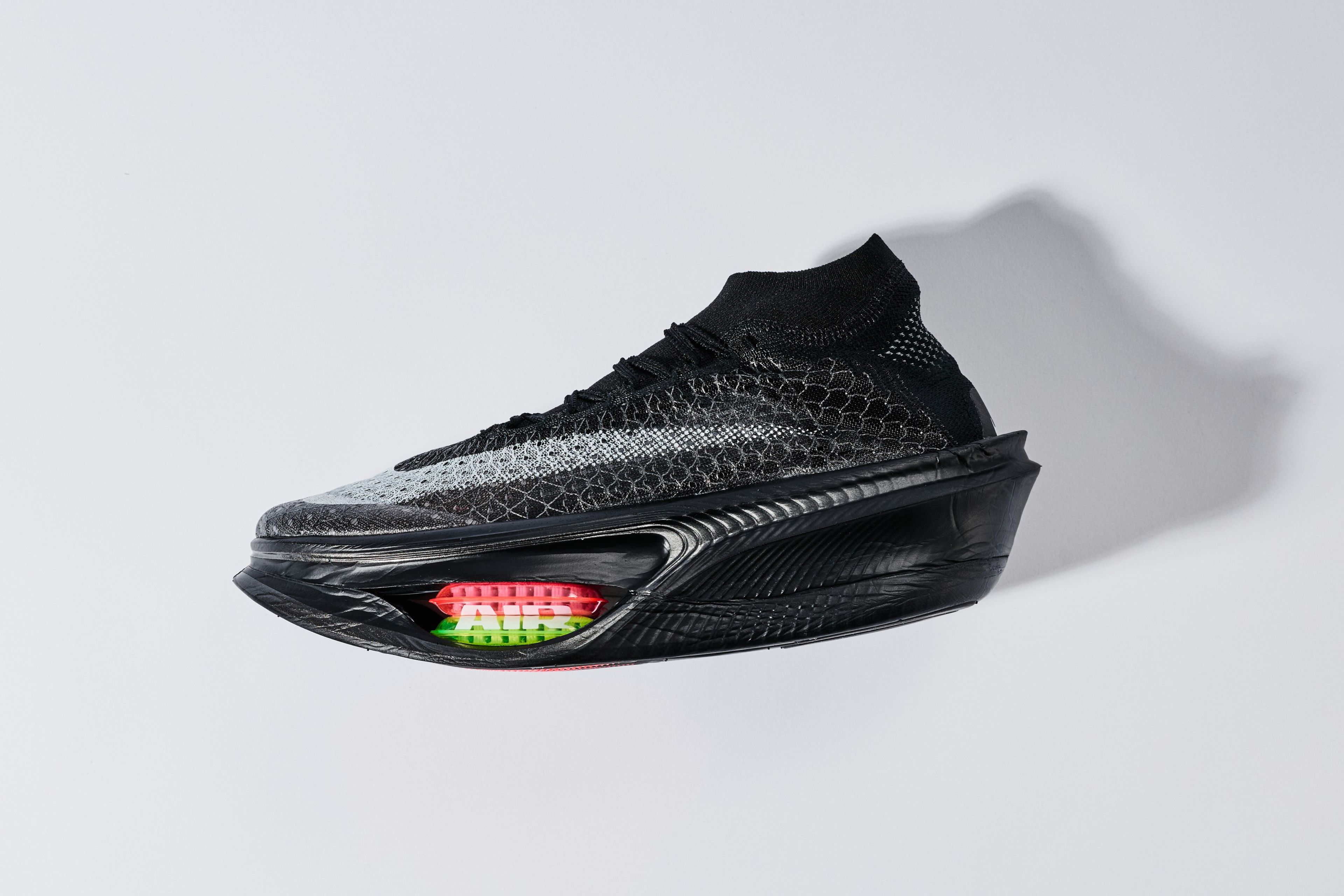
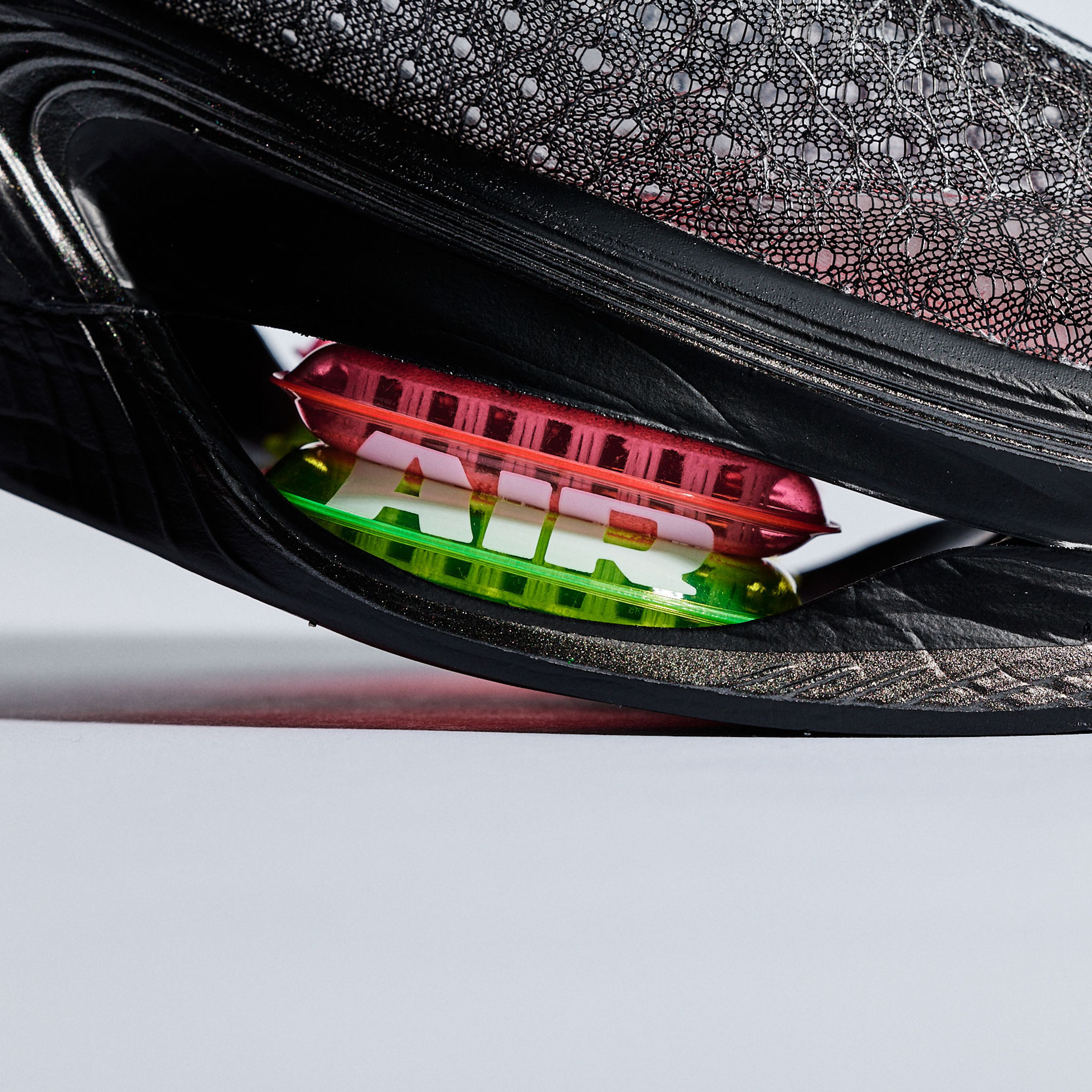
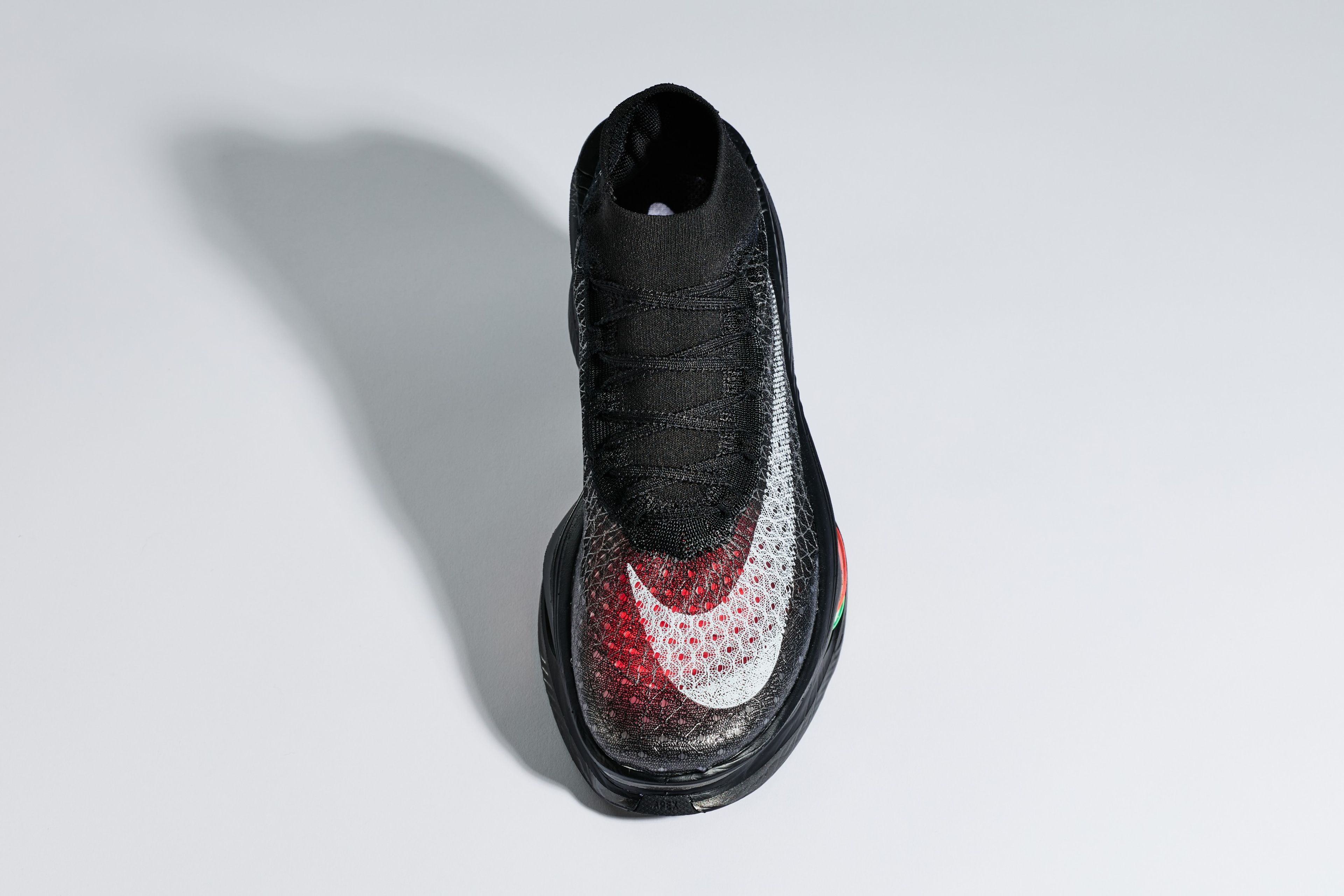
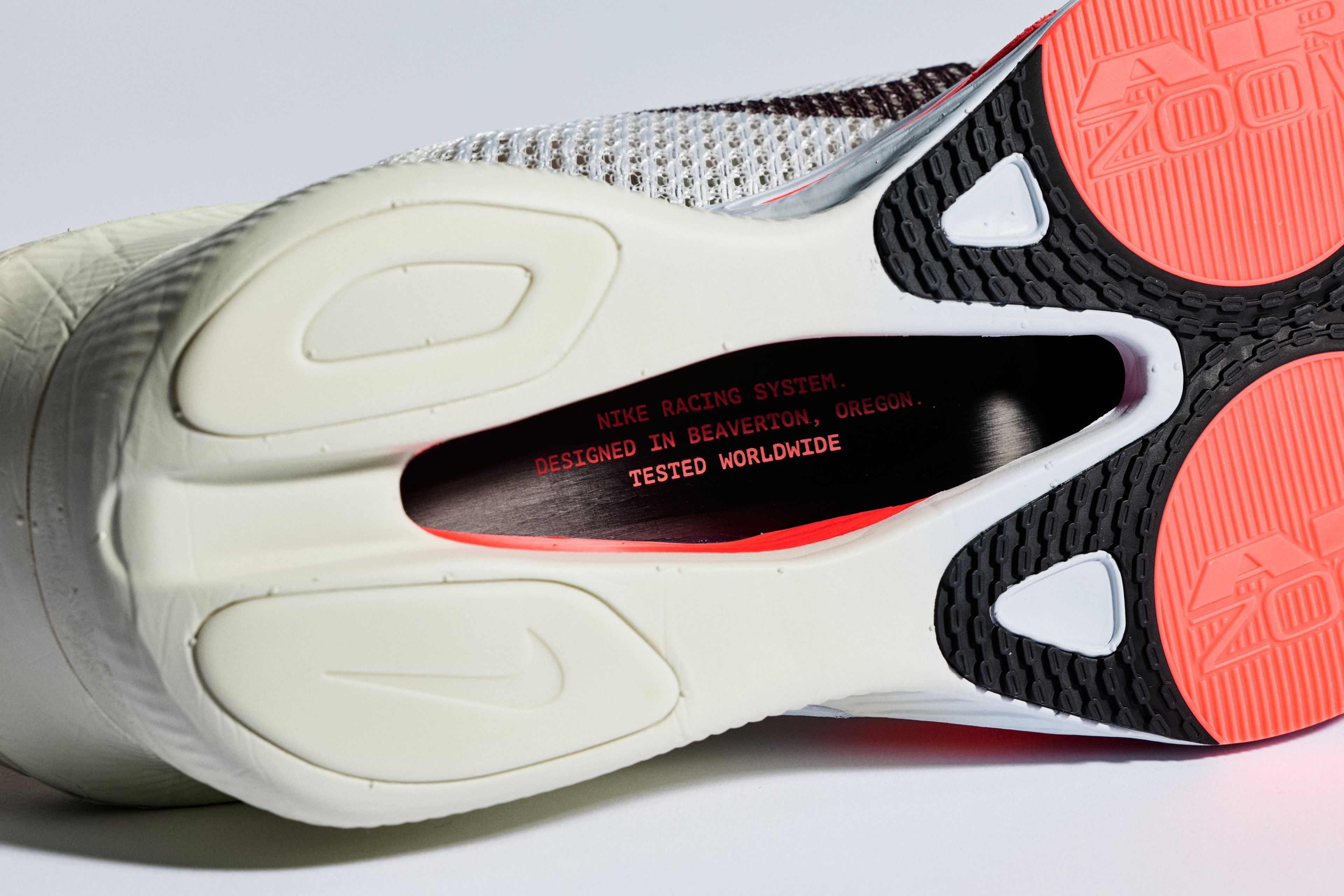
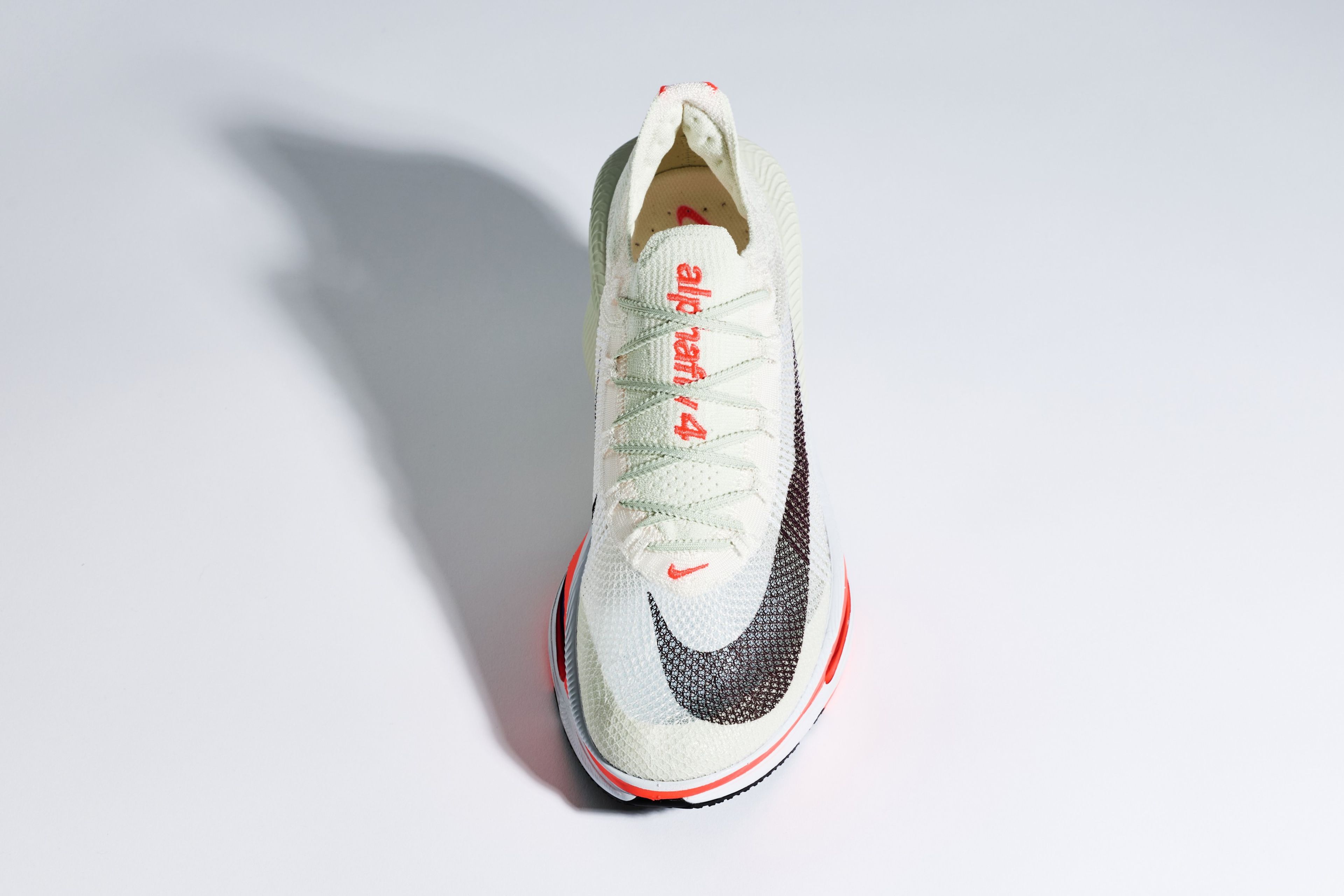
Designers refined every component of the Nike Alphafly 4 to create a smoother, more efficient marathon experience. The result is a shoe that delivers 10 percent more energy return than its predecessor; is 5 percent lighter; and features a new Atomknit upper, ZoomX LT foam, updated Air Zoom units, a carbon-fiber Flyplate and a Fast Shot outsole.
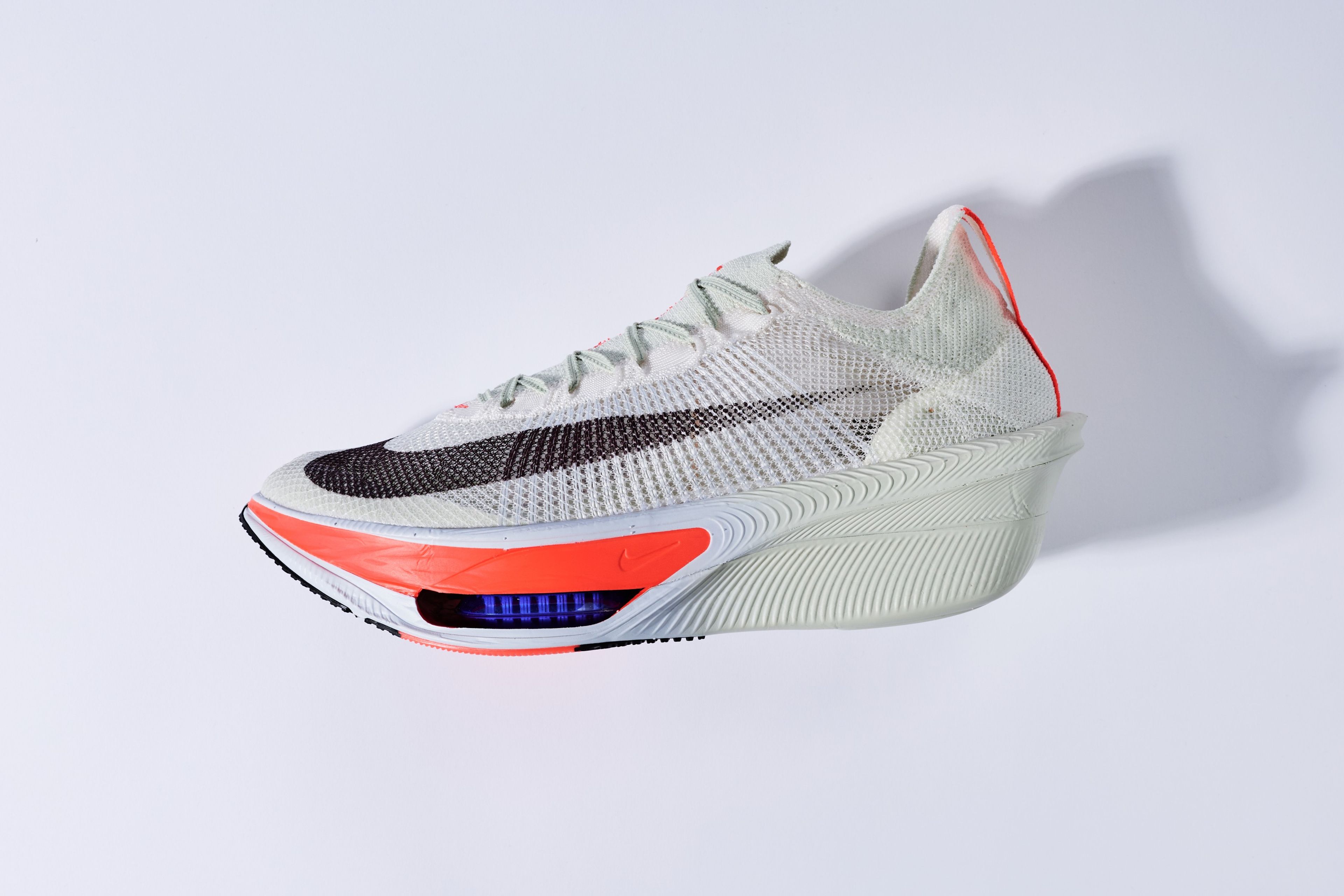
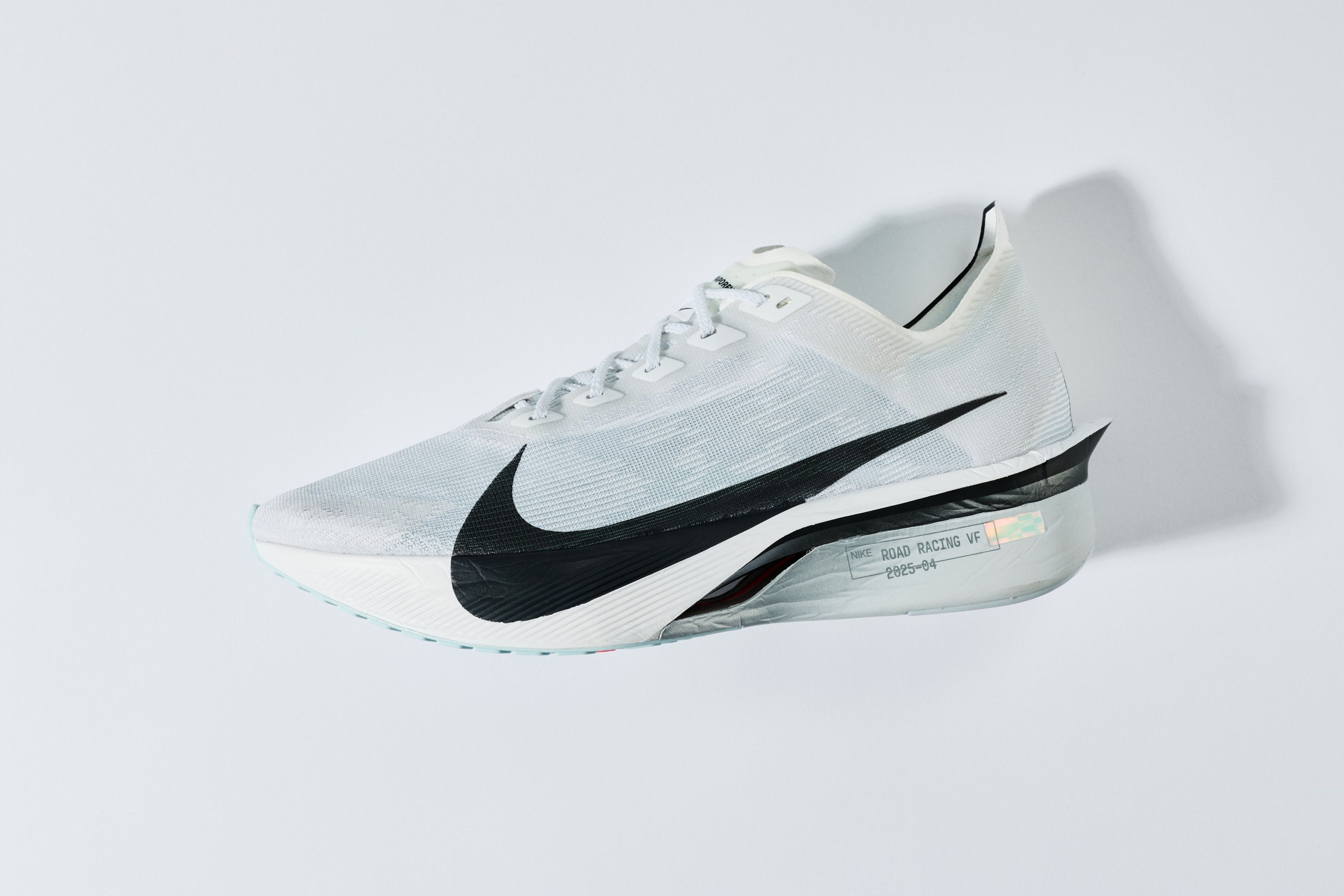
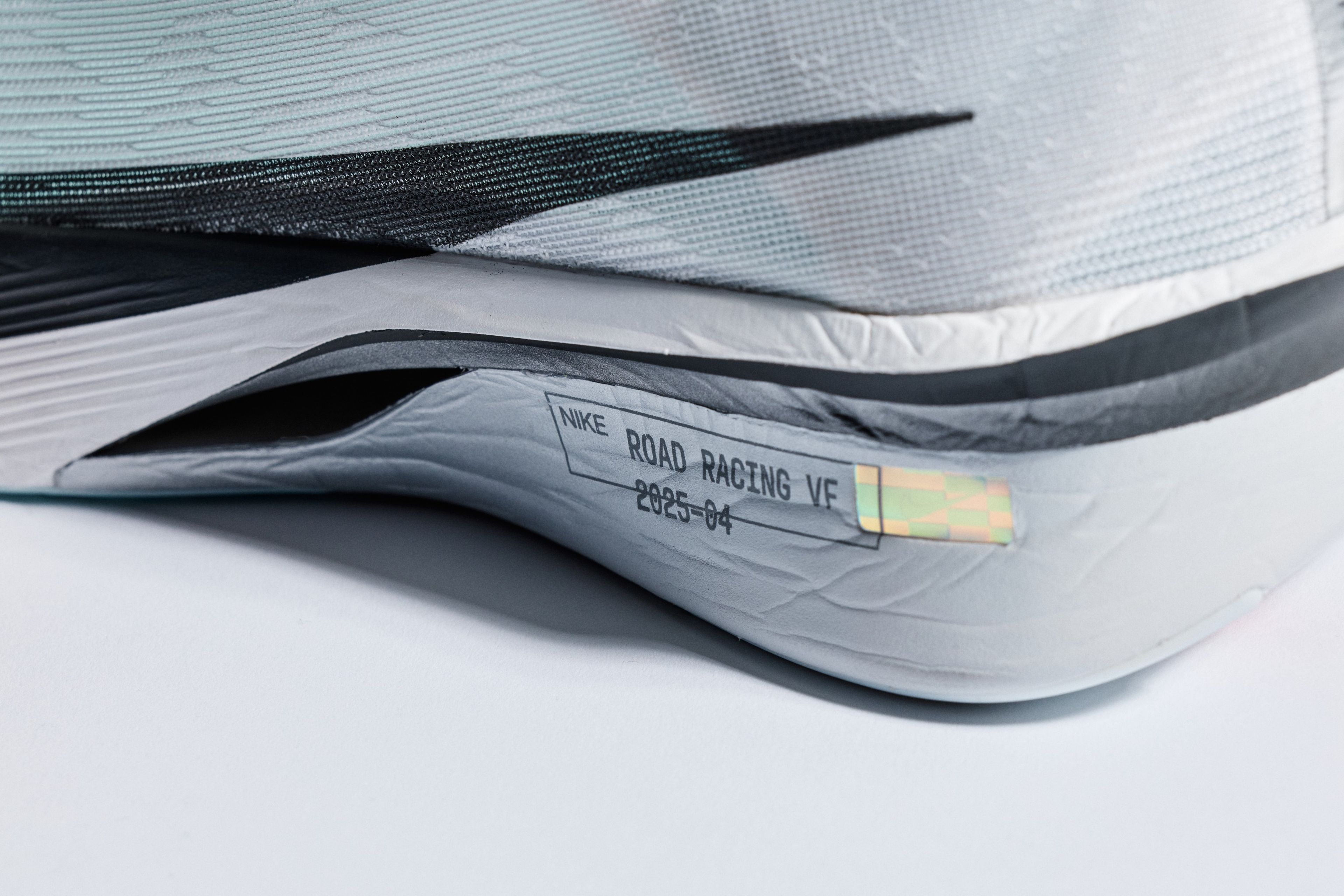
The Nike Vaporfly 4 blends the stability and softness of the Vaporfly 3, creating a finely tuned balance of support and propulsion. That’s born from an updated Nike Flyplate curvature, which helps unlock leverage from the foot and ankle, and energy return generated by ZoomX foam. It’s also boosted by the featherweight design, which is roughly 10 percent lighter than the Vaporfly 3 and 20 grams lighter than the original Vaporfly (2017).
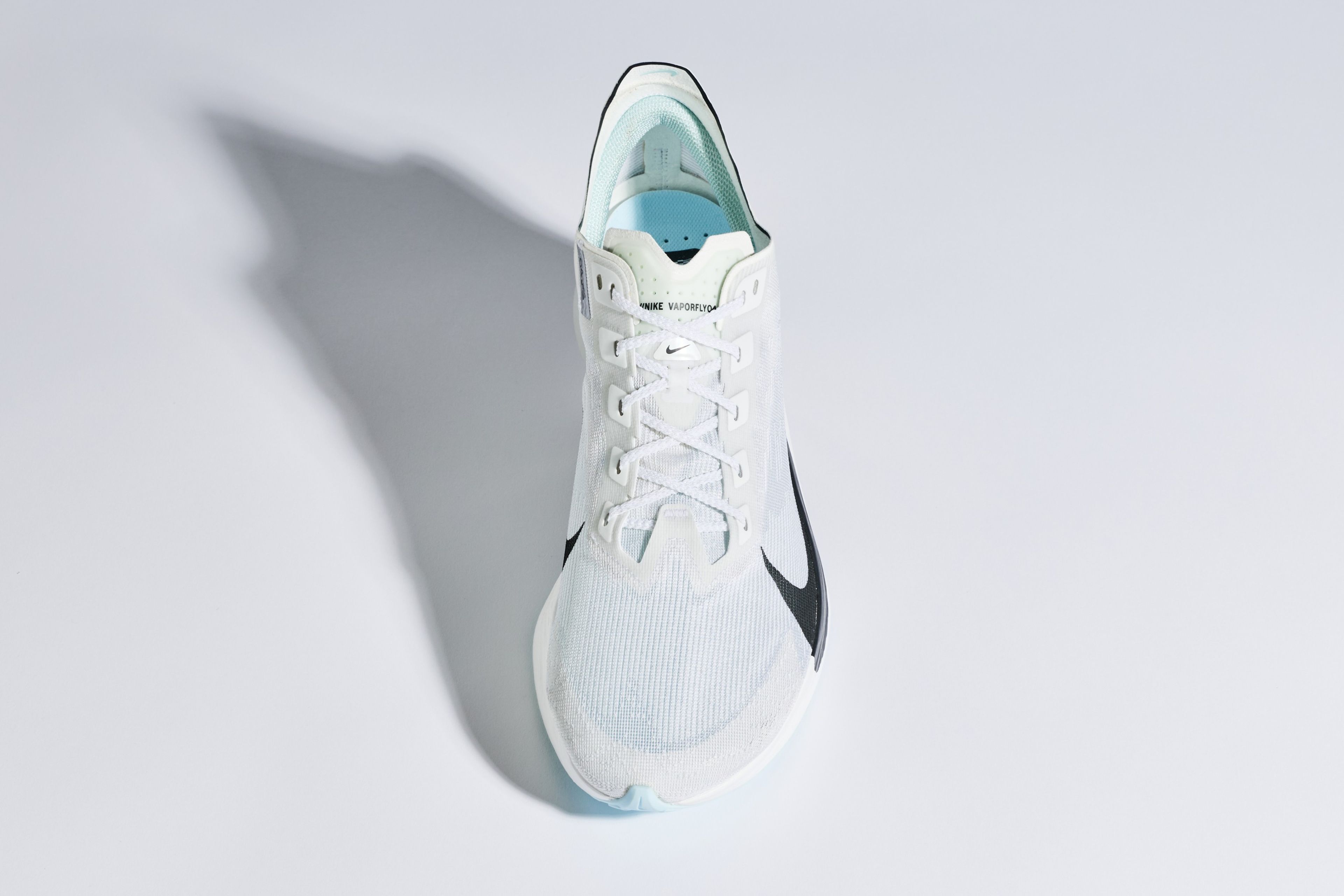
For the first time, the Nike Alphafly 3 connected the heel and forefoot with one continuous bottom, offering varying foot-strike patterns a smoother heel-to-toe transition regardless of the runner’s pace. Dual Nike Air Zoom units in the forefoot cushion impact with the road and return energy to the runner, and a wider full-length carbon-fiber Flyplate delivers a propulsive, stable ride.
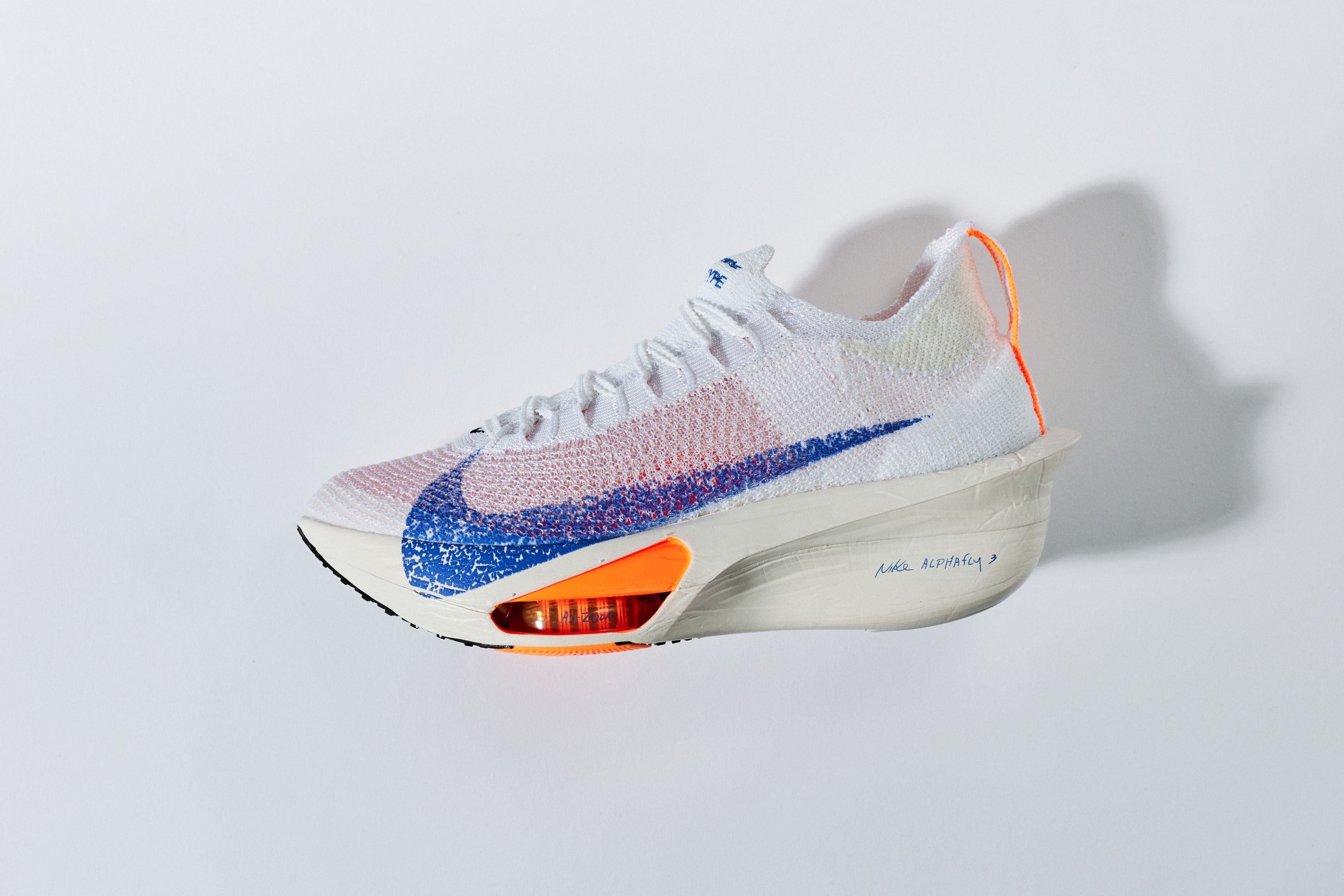
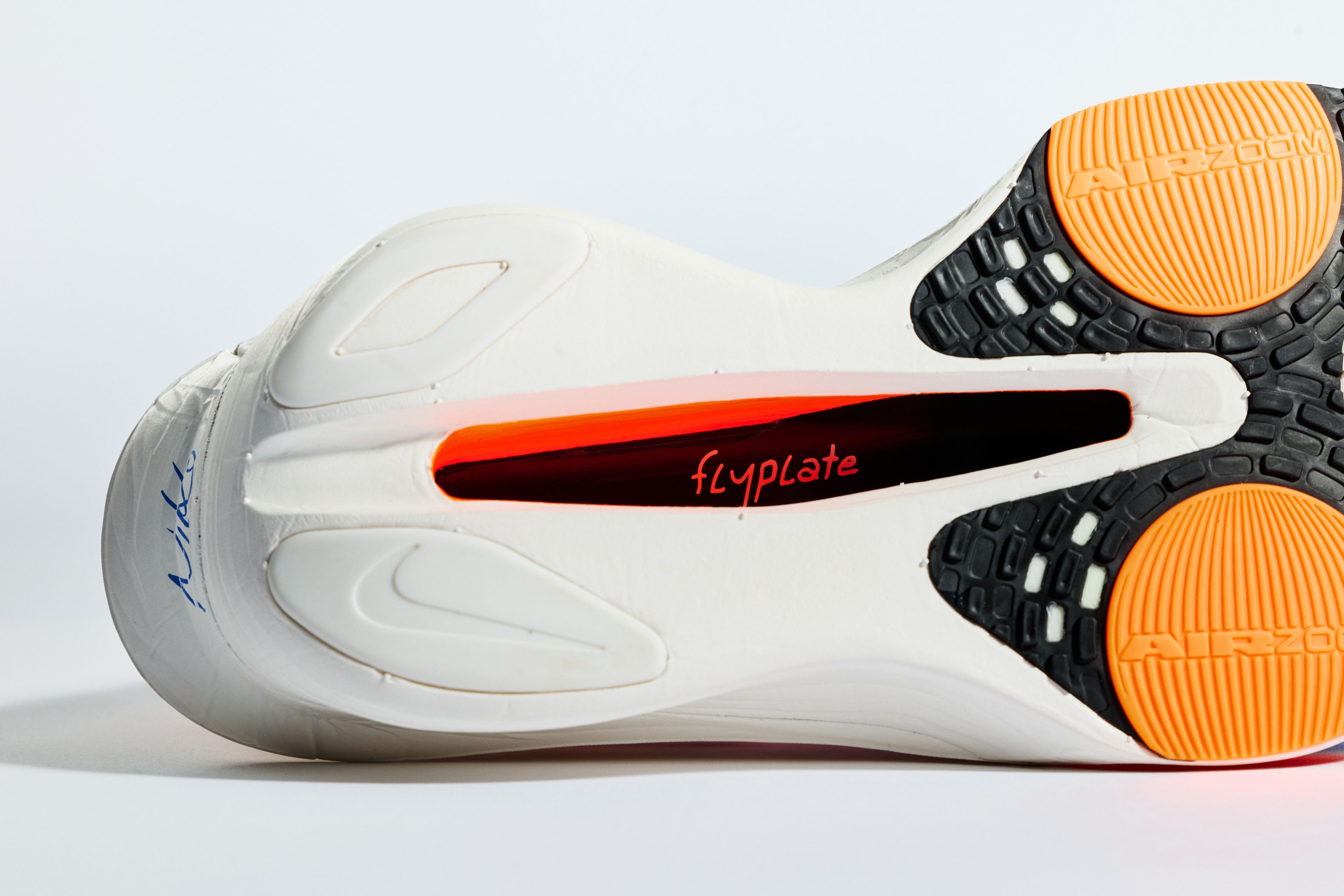
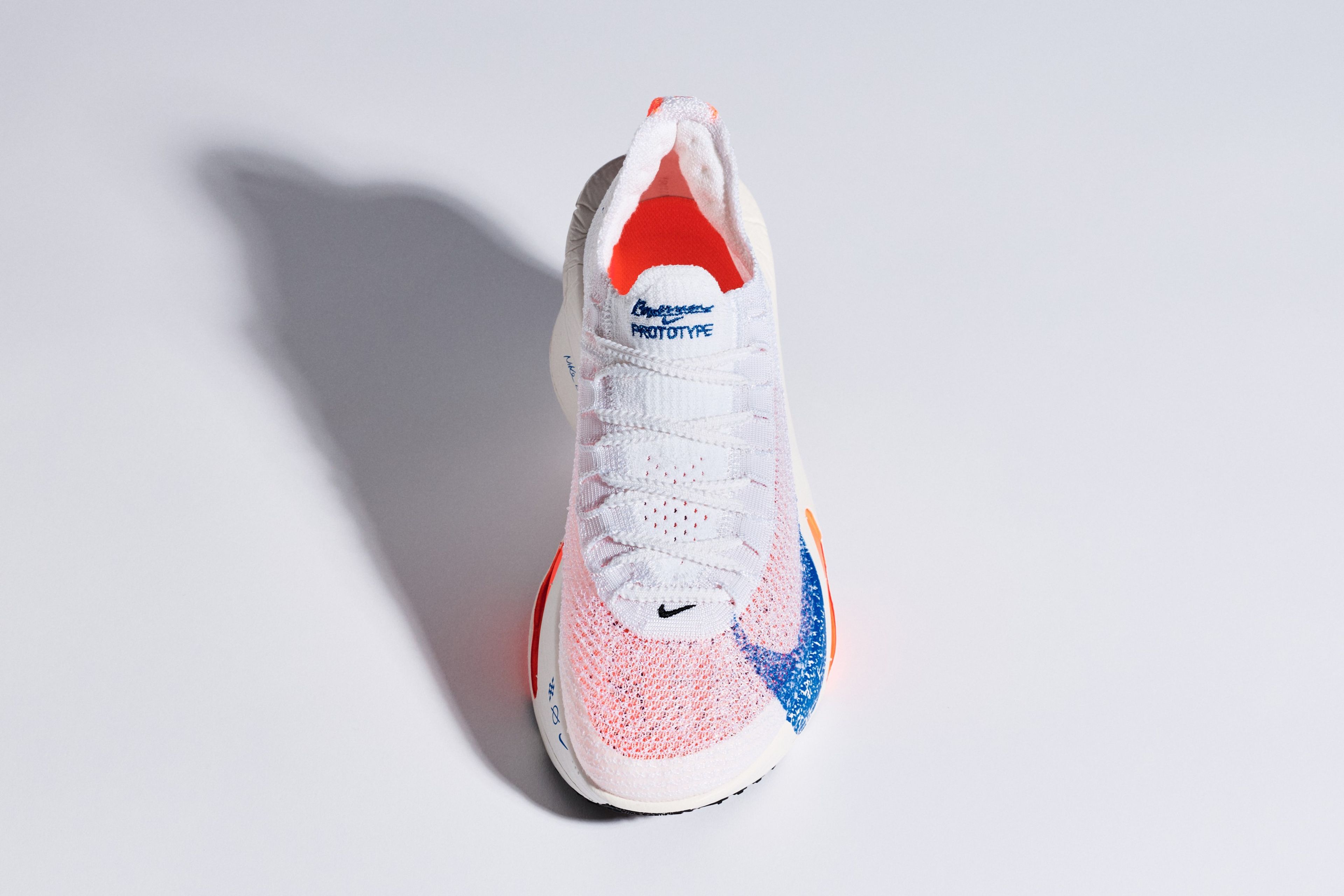
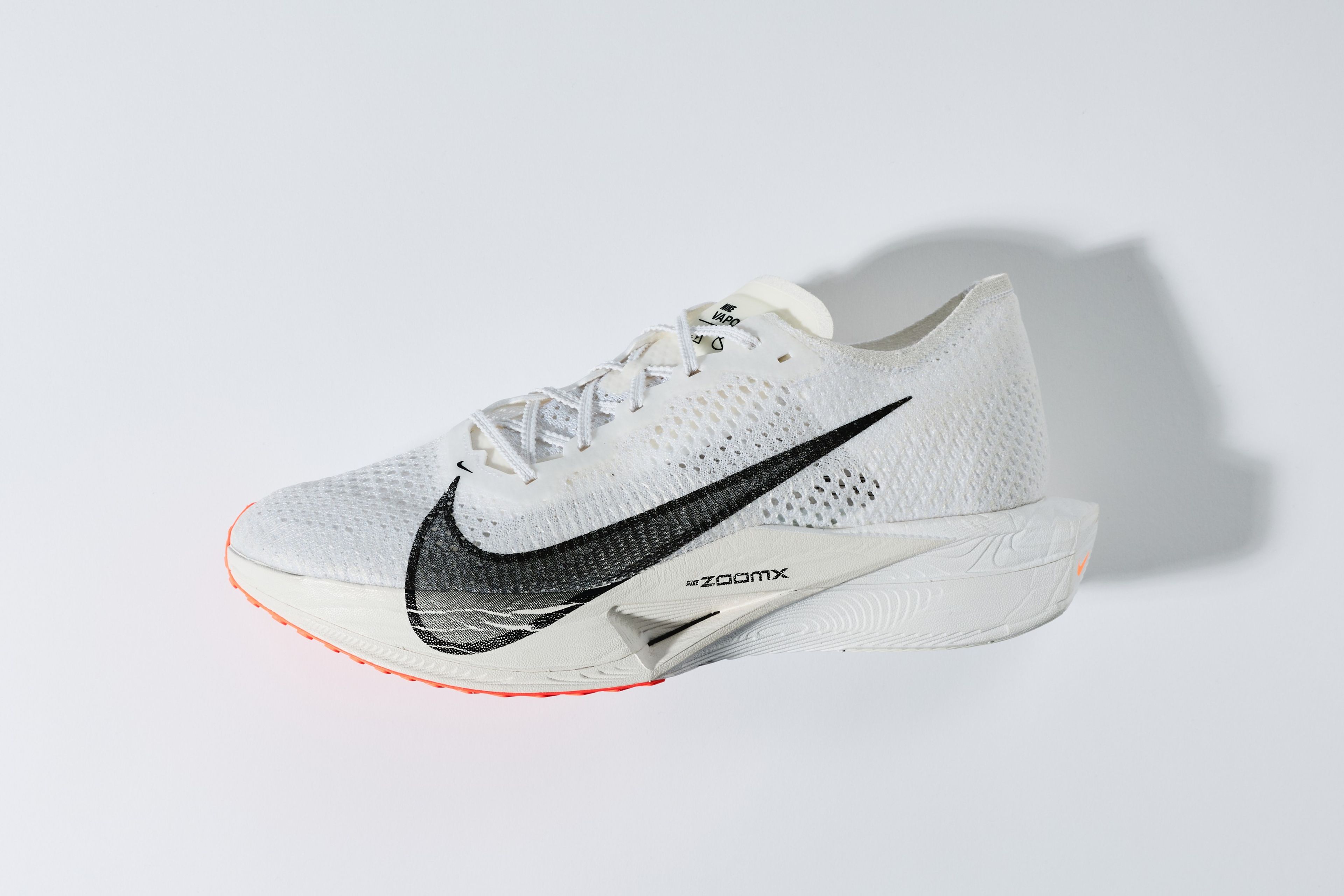
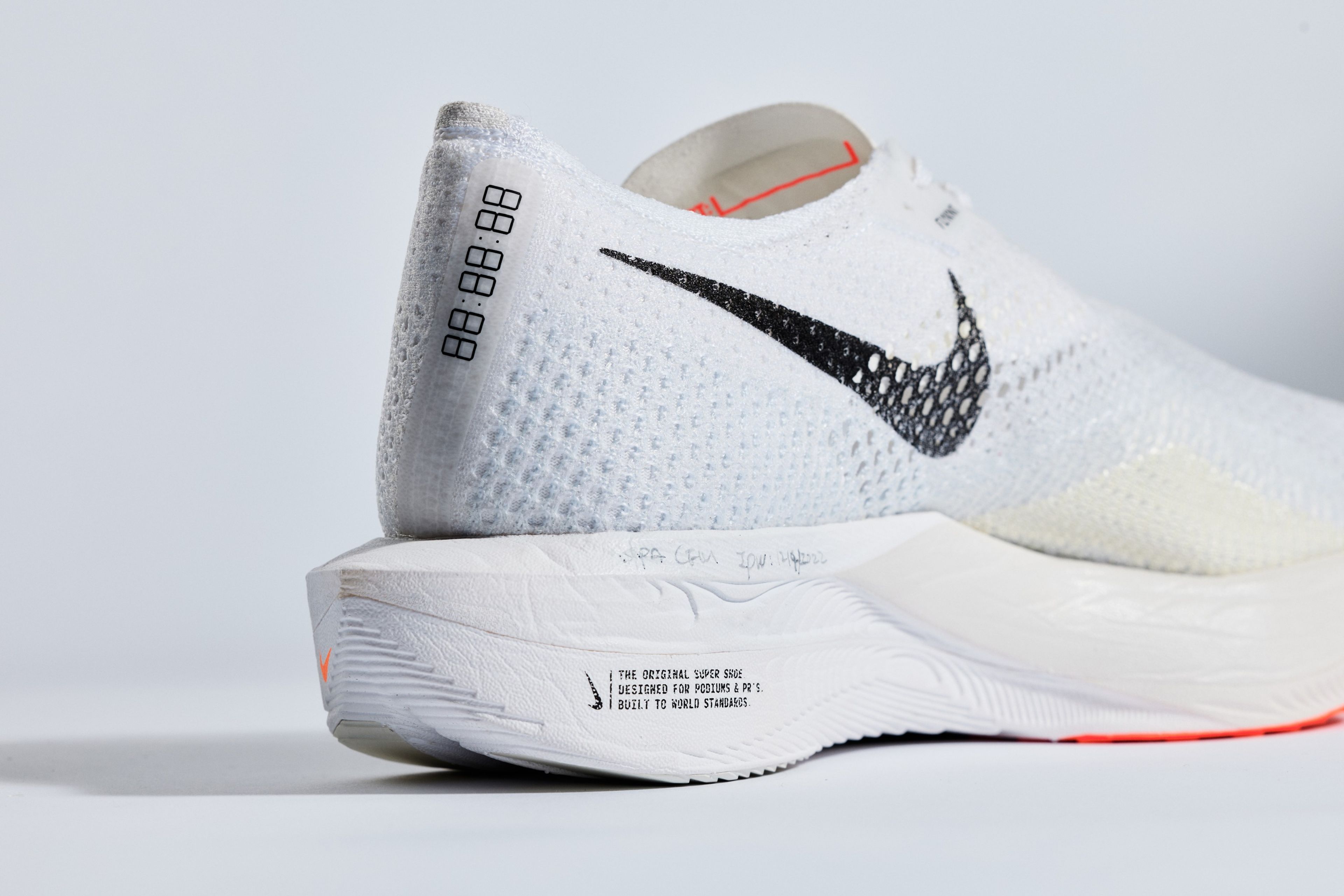
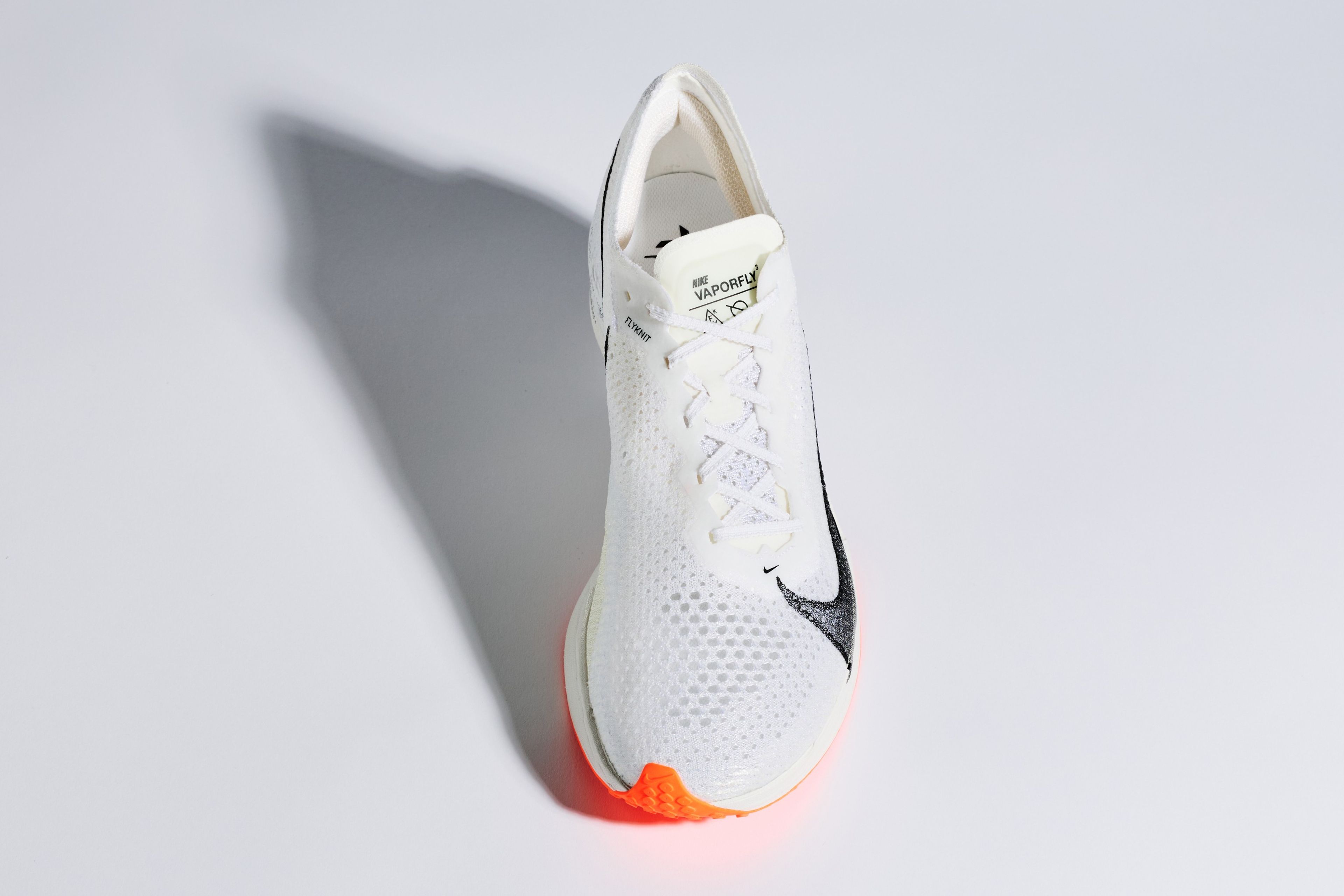
The engine of the Nike ZoomX Vaporfly 3 remained the same as the Vaporfly 2, with the propulsive feel runners love from the pairing of a full-length carbon-fiber Flyplate and ZoomX midsole. The Vaporfly 3’s reductive midsole geometry featured a convex shape around the forefoot, providing a comfortable and stable ride throughout your transition with Nike’s most resilient foam. Graphic text on the midsole nodded to the number of Flyknit upper iterations the team tested (57), and the iconic drop Swoosh against the all-white silhouette paid homage to the first Vaporfly worn at Breaking2 in 2017.
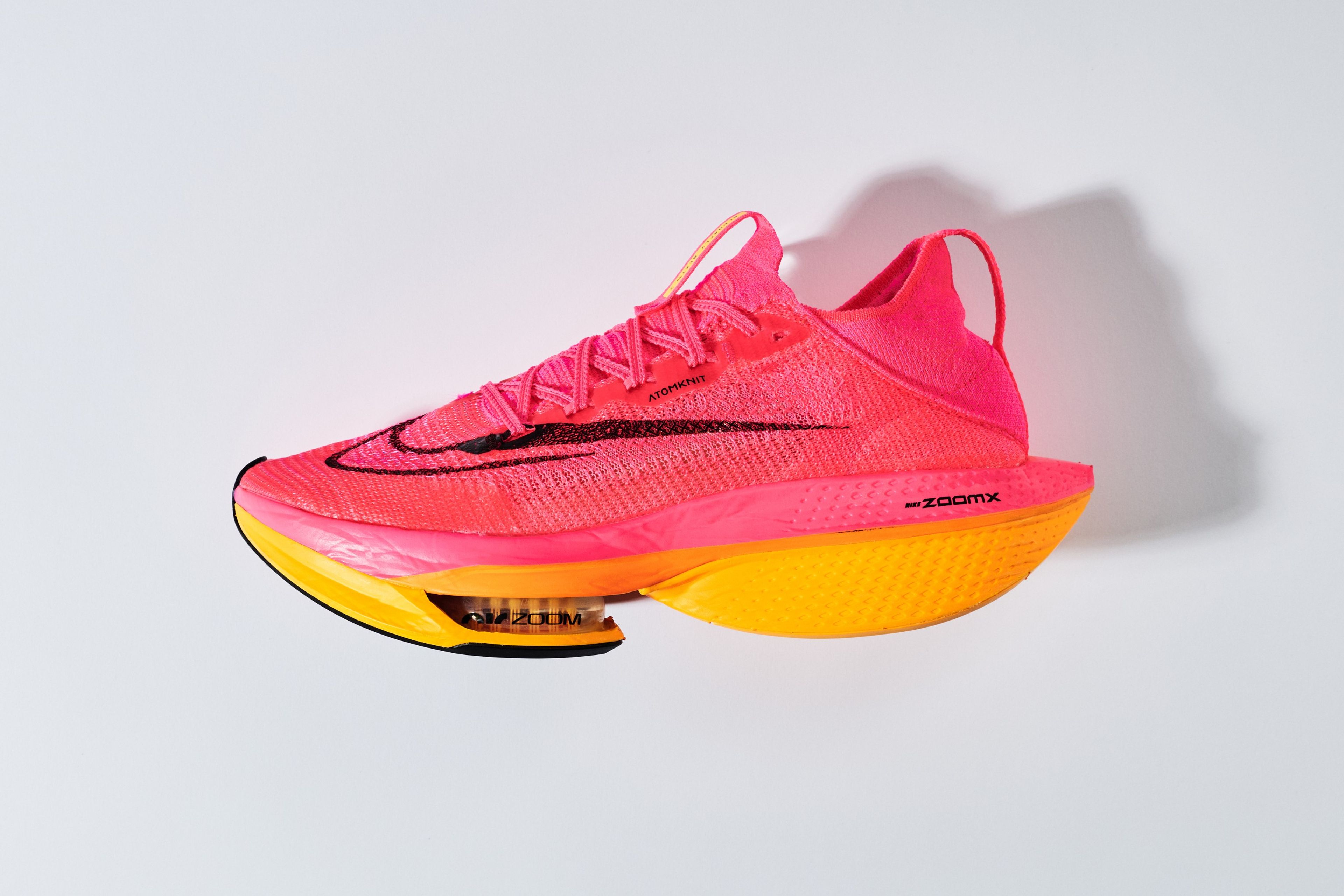
Additional foam was added under the Zoom Air pods in the forefoot of the Nike Air Zoom Alphafly Next% 2, offering more energy return and helping ensure a smooth transition from heel to forefoot as runners go through their stride. A slightly wider heel helped improve stability and transition through changes of pace. The upper featured Atomknit 2.0, engineered for containment in the forefoot, breathability above the toes and comfortable padding under the laces.
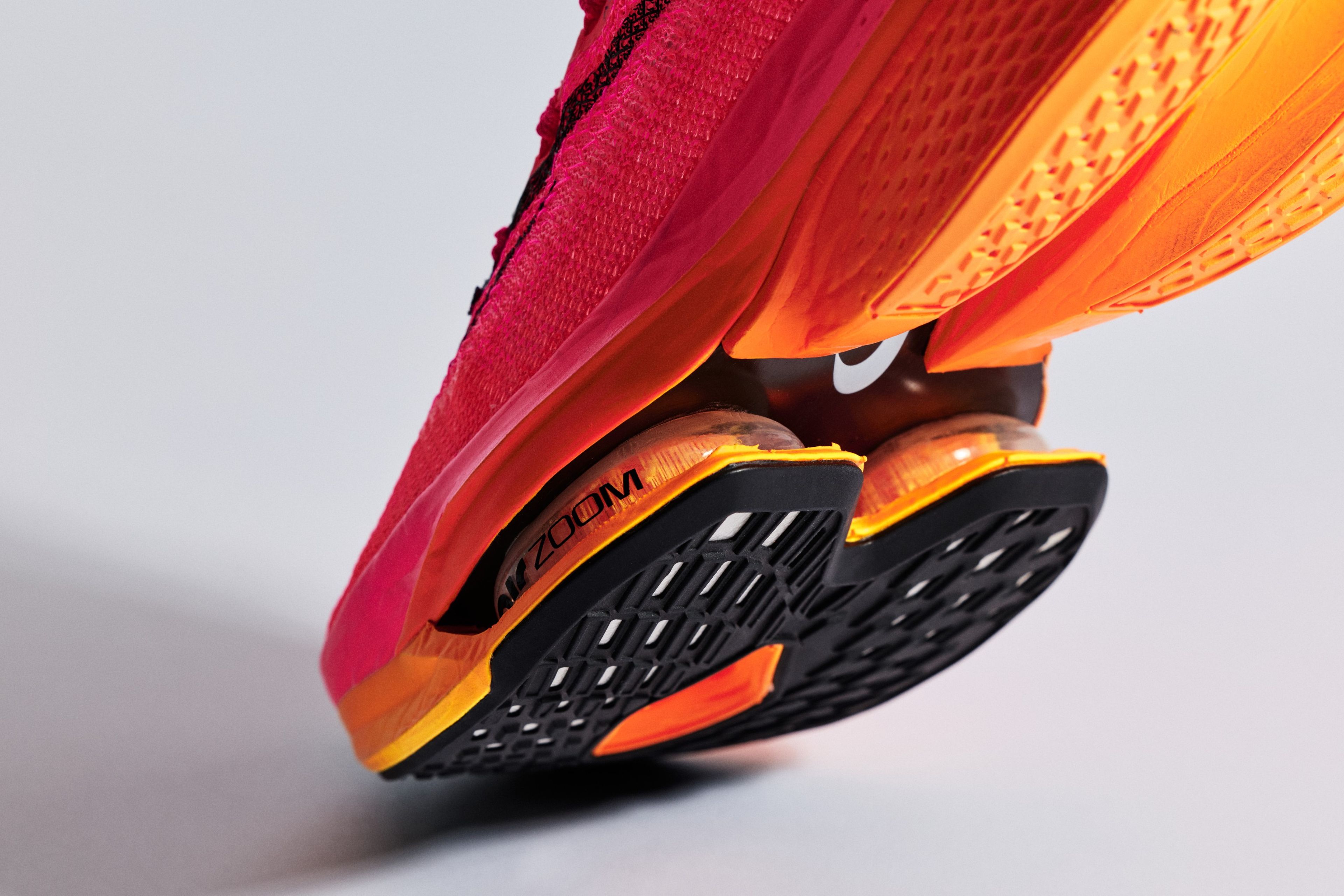
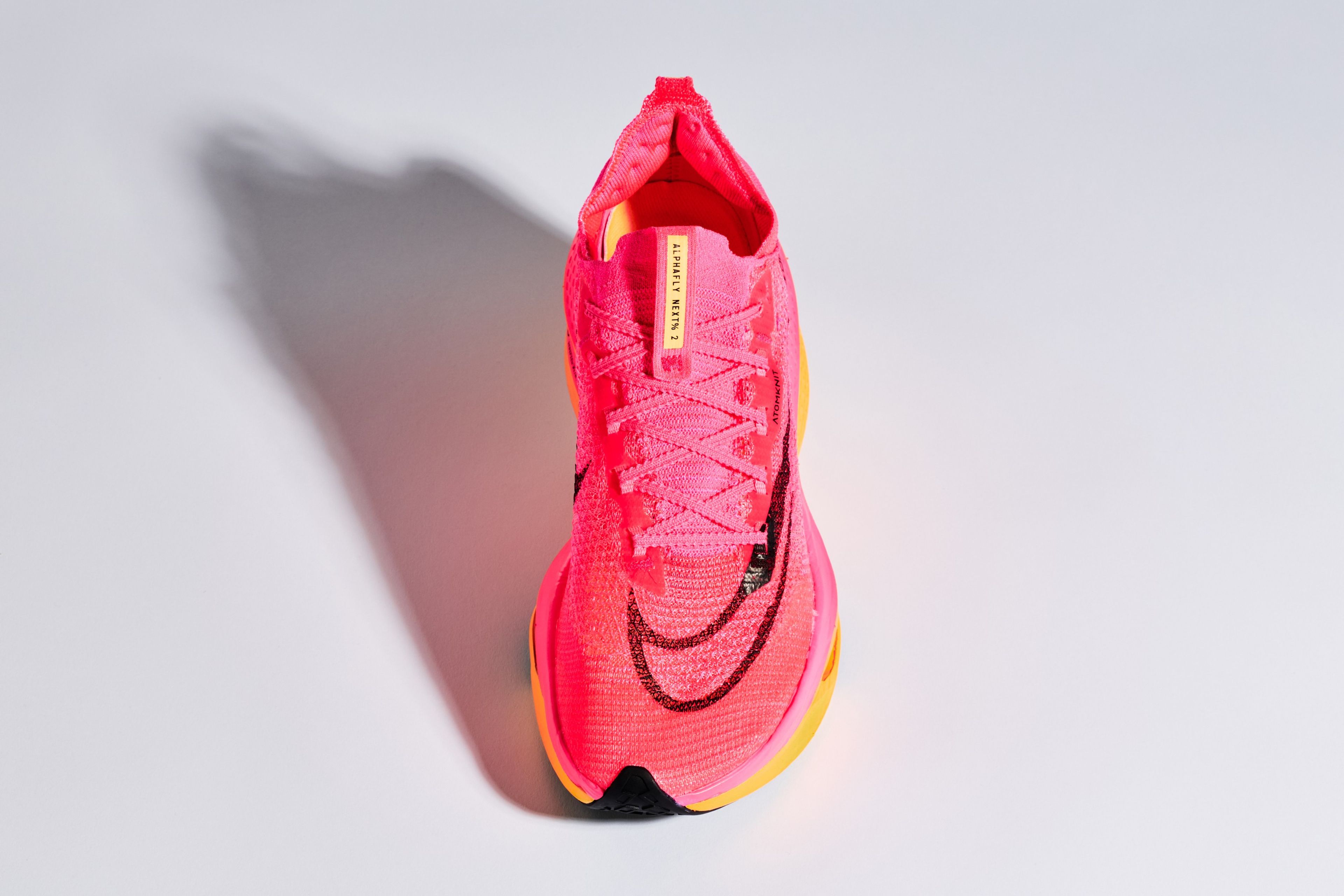
The Nike ZoomX Vaporfly Next% 2 kept the tried-and-true system of ZoomX midsole and carbon-fiber Flyplate to provide snappy responsiveness and fight fatigue.The Flyweave upper was updated with an even more breathable, flexible material to better the fit, and the shoe’s geometry and midsole composition mimicked its beloved predecessor.
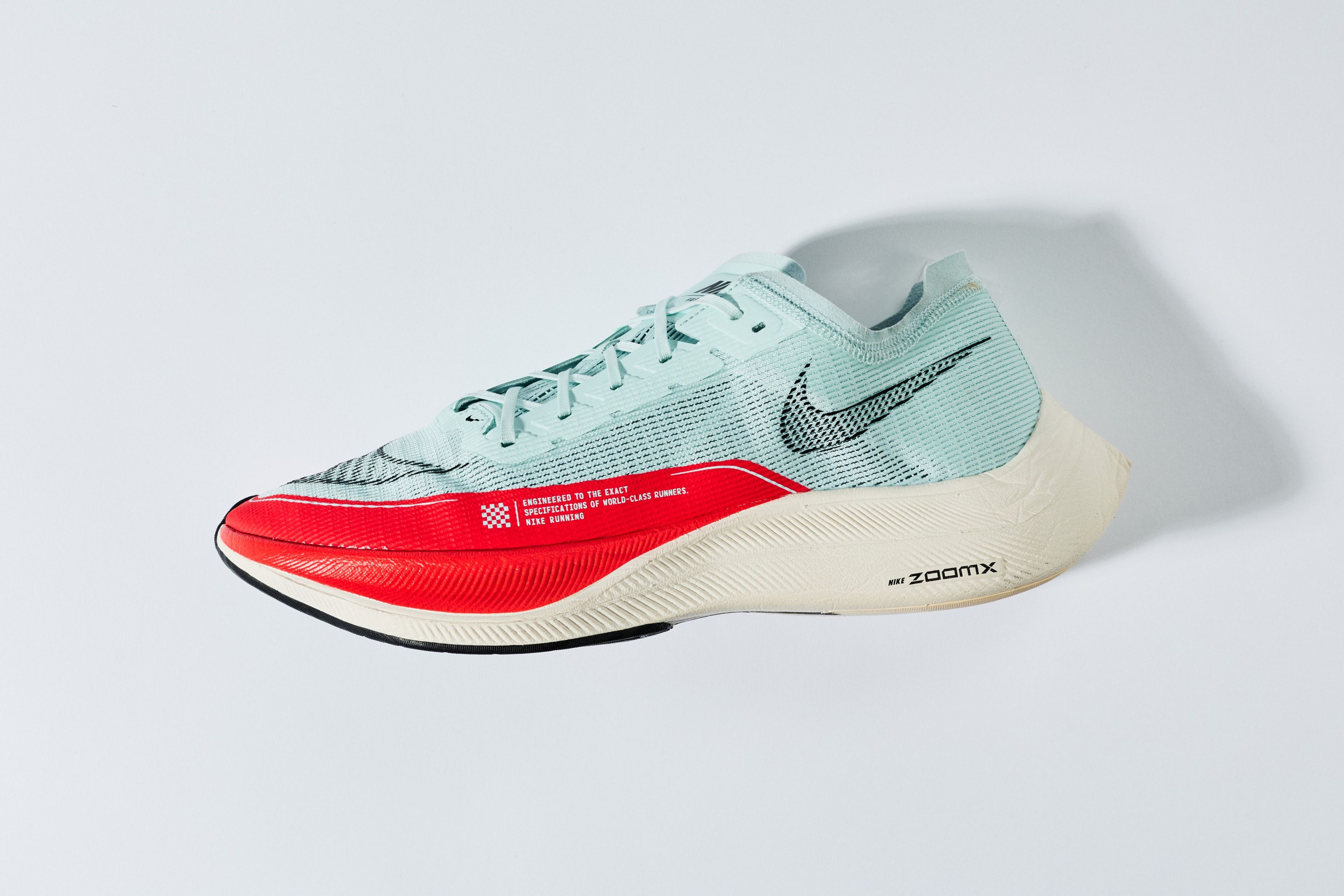
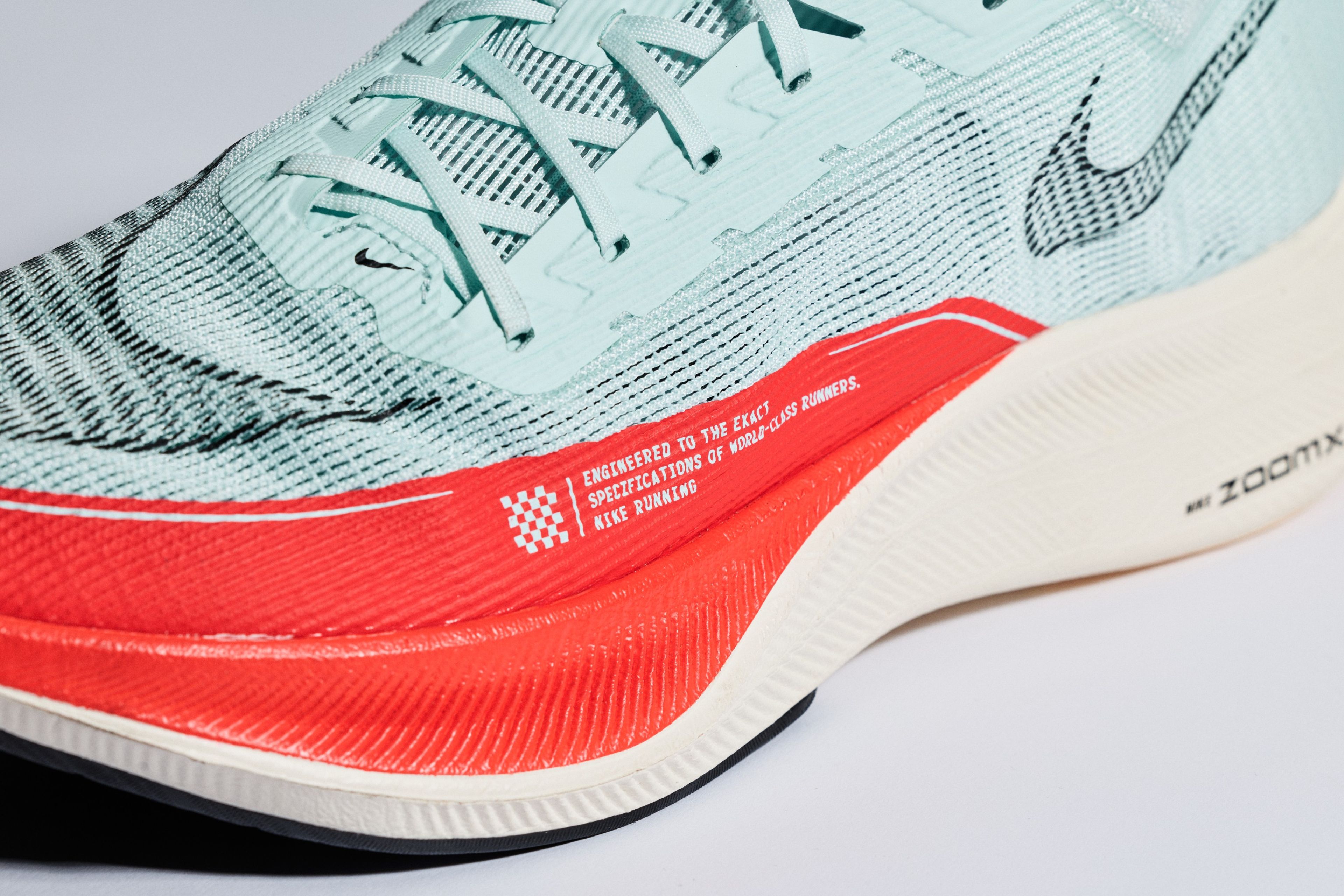
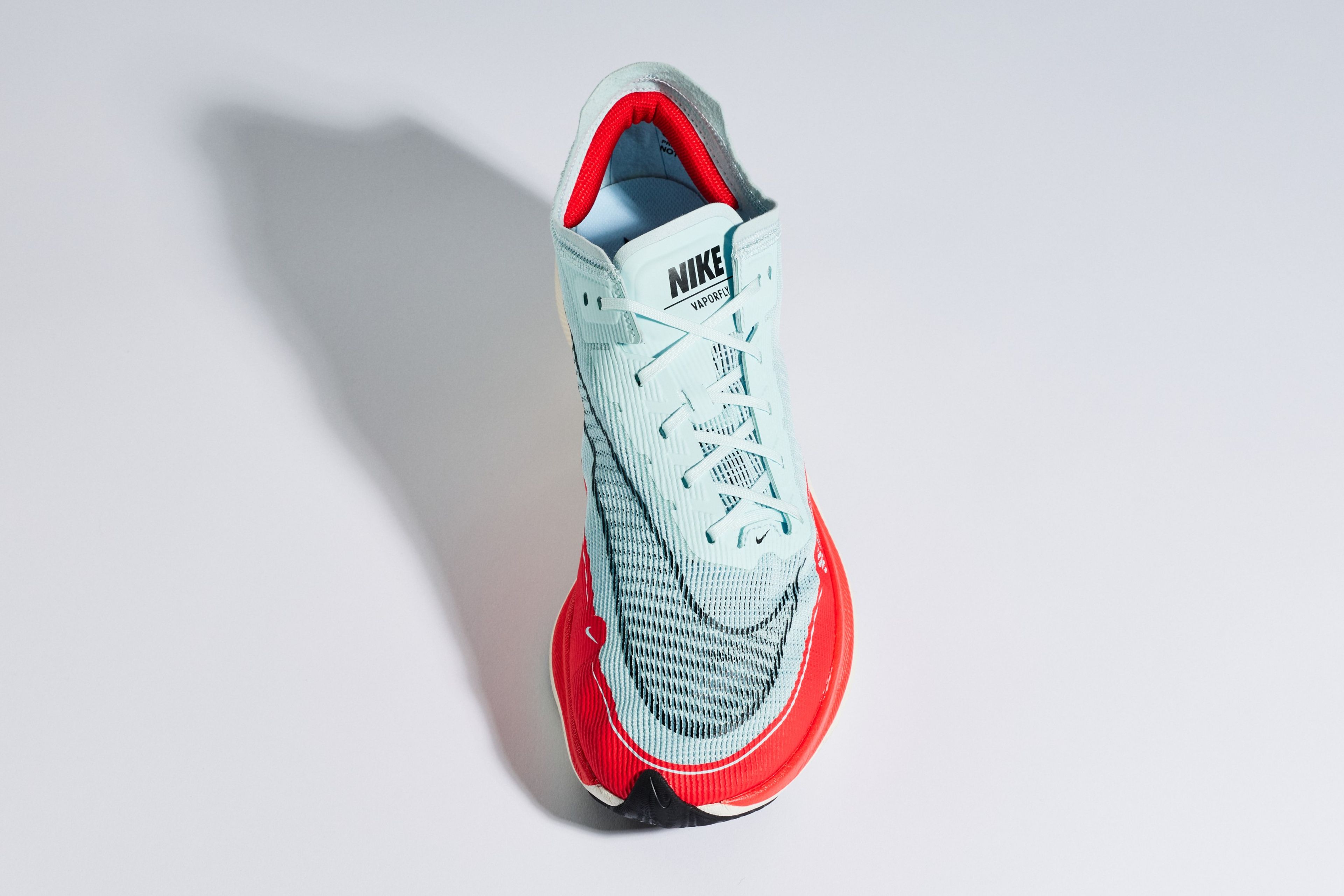
The Nike ZoomX Vaporfly Next% introduced Vaporweave, an upper material construction that’s lighter than Nike Flyknit, breathable and — critically — absorbs far less water from sweat or rain, so it stays airy and dry over the course of a marathon. The shoe added 15 percent more Nike ZoomX foam in the midsole compared to the Vaporfly 4% and received a redesigned traction pattern (thanks to an ask from Eliud Kipchoge after he ran a very wet race in Berlin).
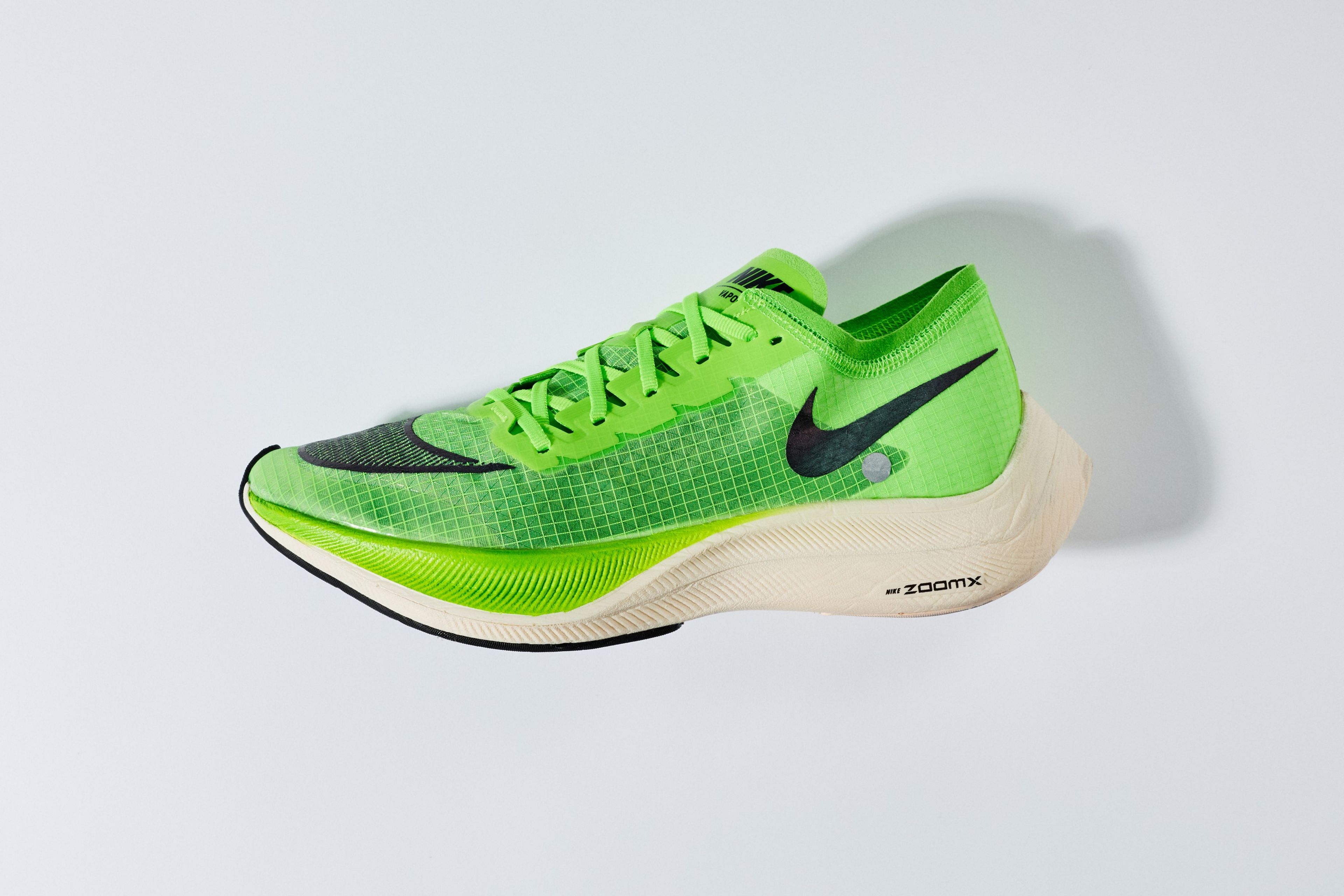
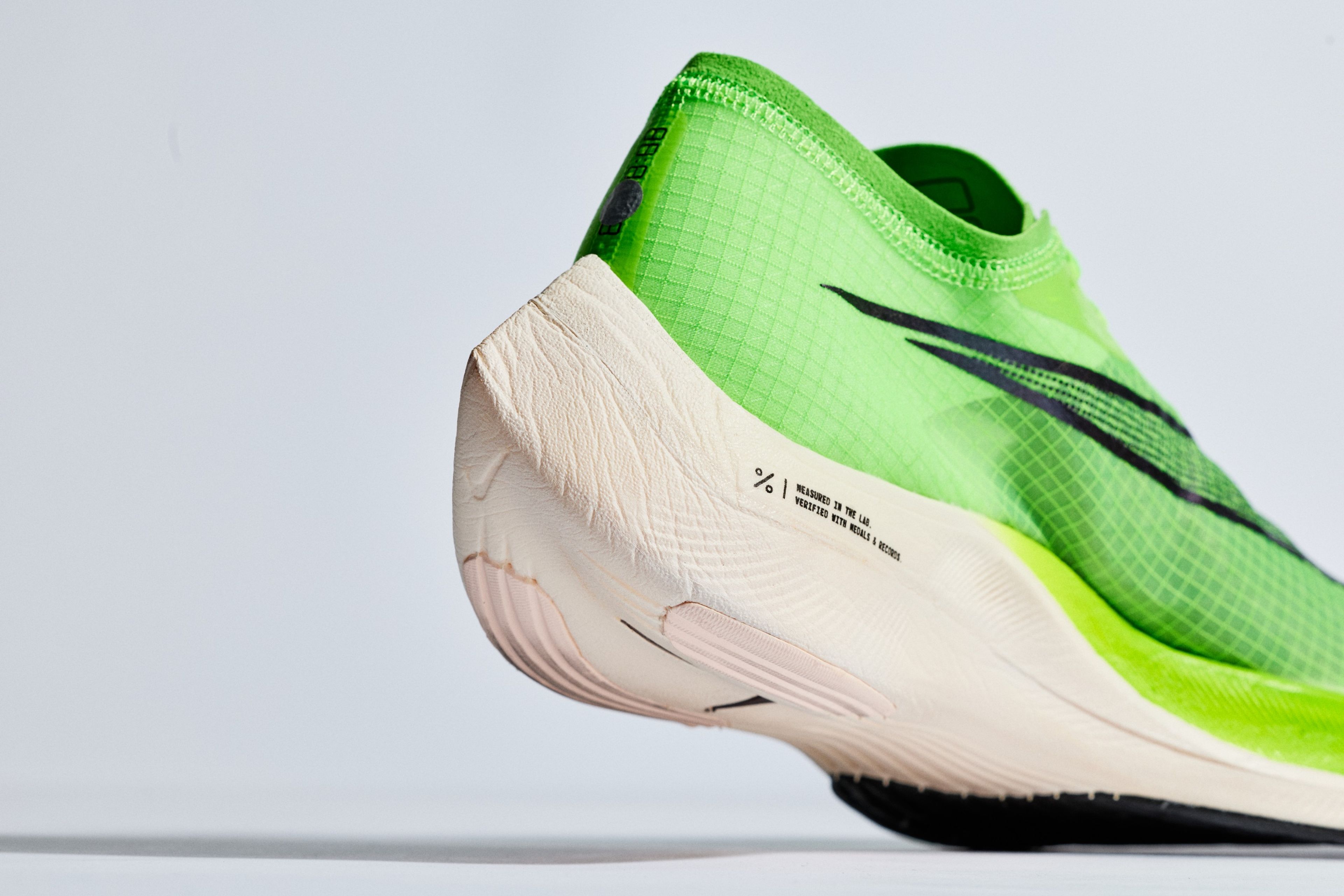
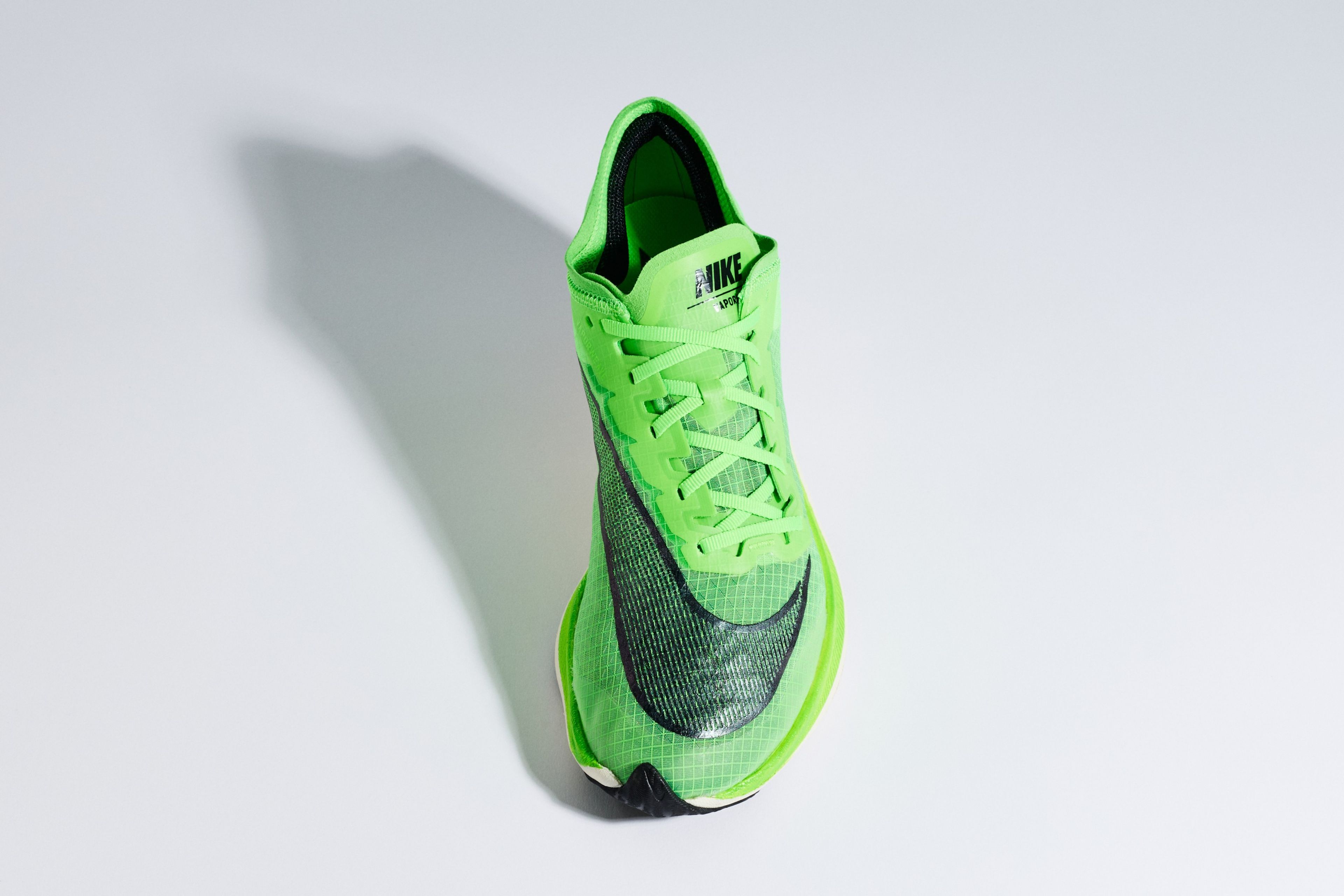
The Zoom Vaporfly Elite began as a concept shoe individually tuned for Eliud Kipchoge, Lelisa Desisa and Zersenay Tadese to attempt Breaking2 in Monza, Italy, in 2017. Complementing the ZoomX foam and carbon-fiber Flyplate was a smooth-fitting, lightweight Nike Flyknit upper, which provided support and containment.
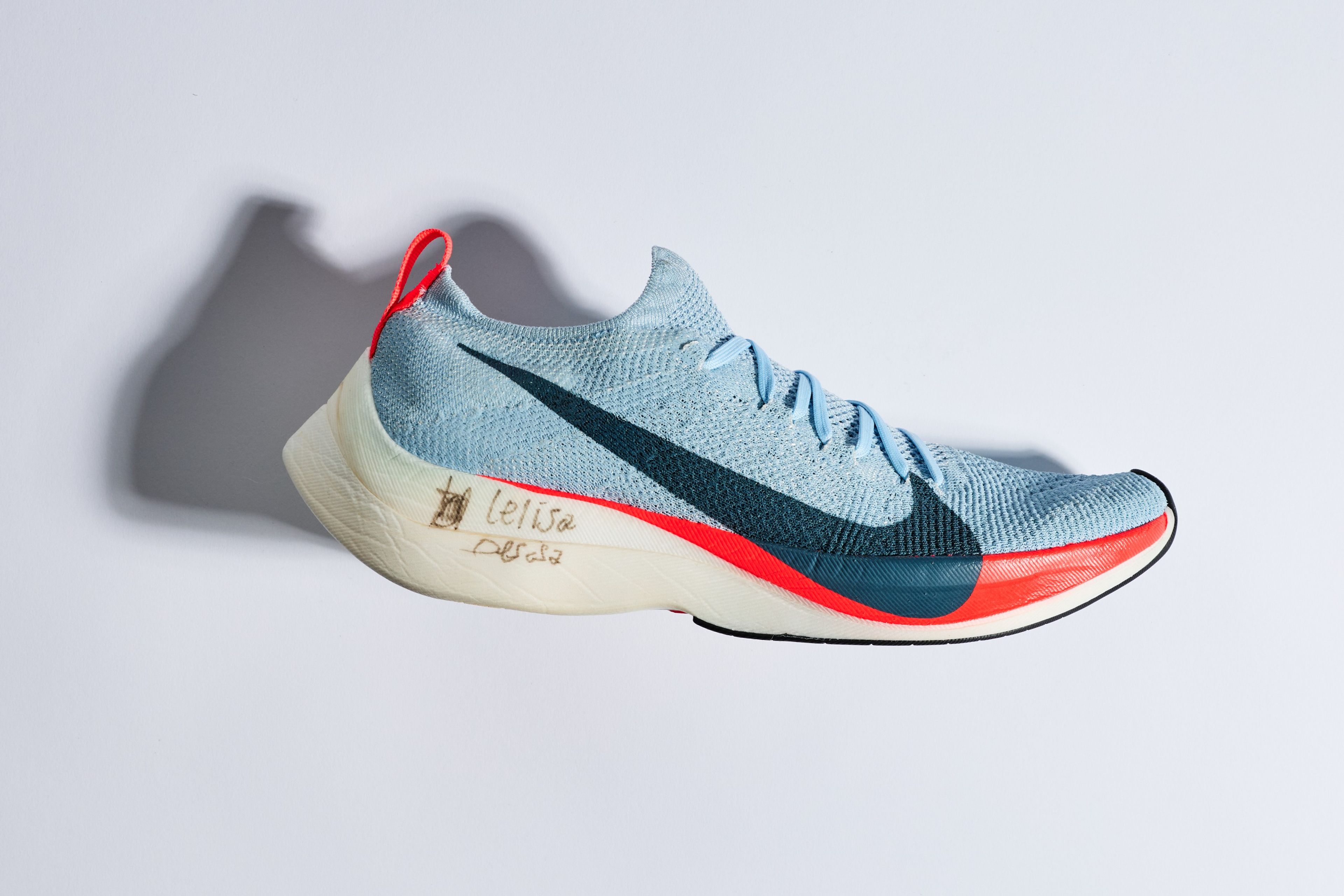
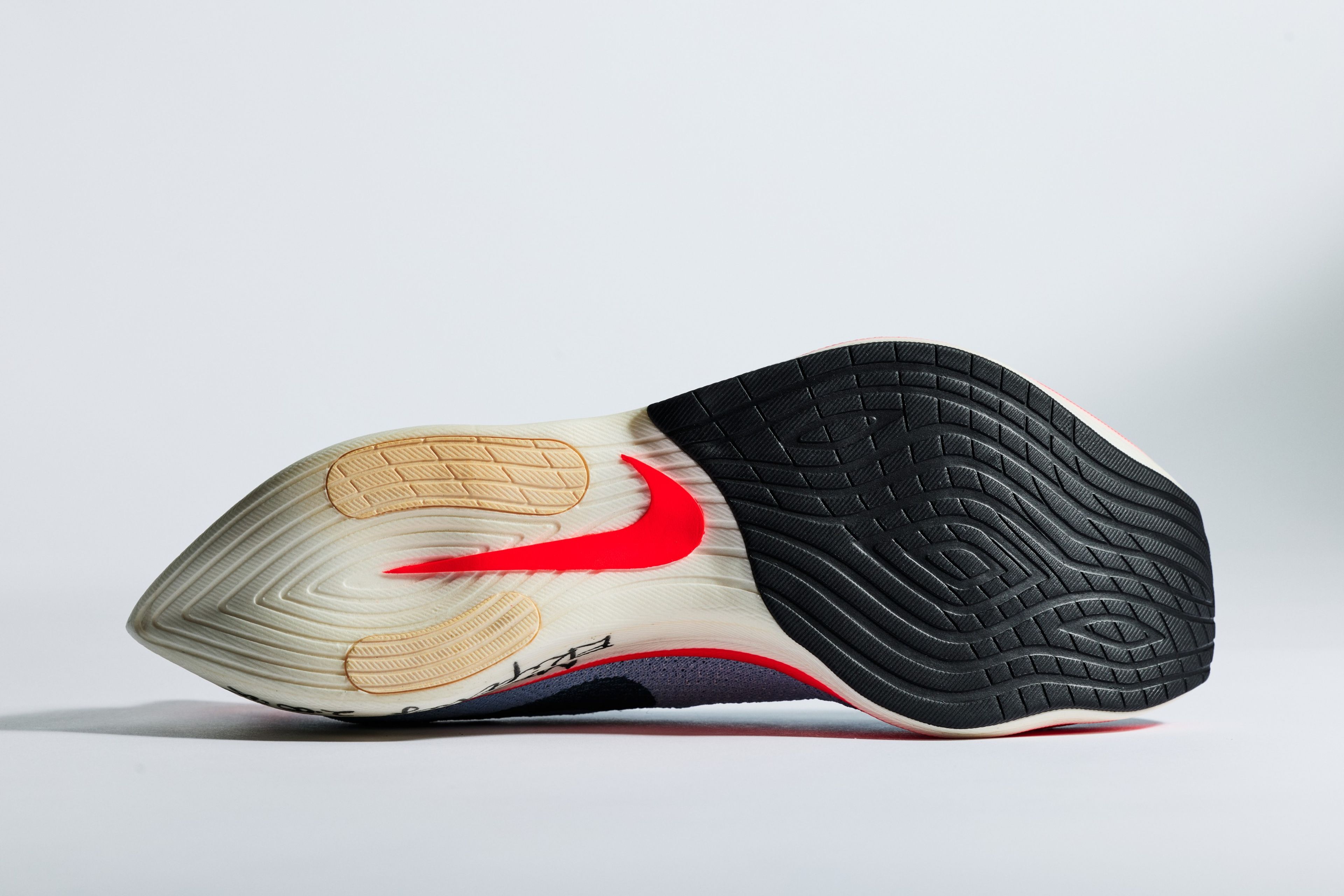
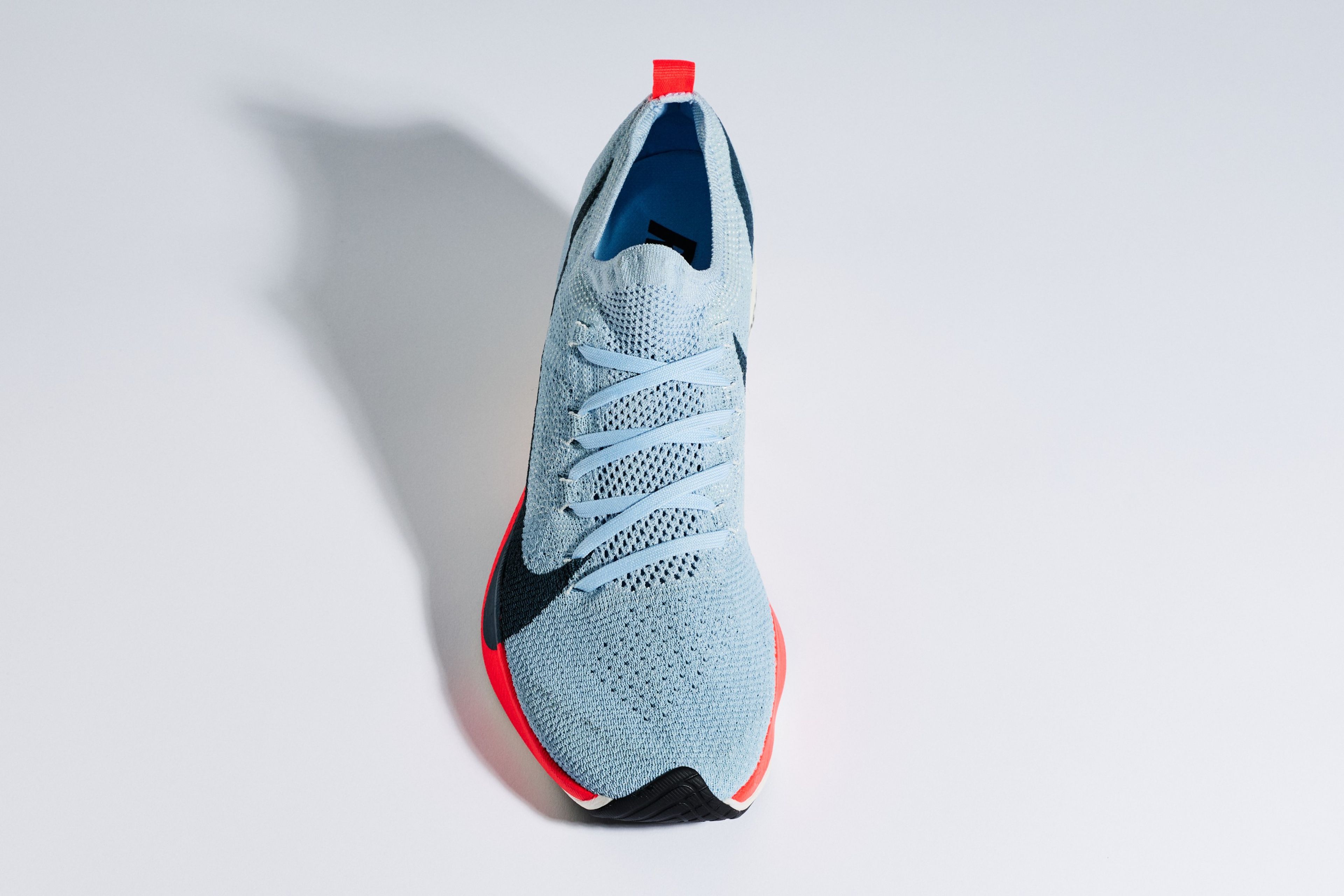
An early sample of the Nike Zoom Vaporfly 4%, the super shoe that changed the way marathon shoes were made. Until this point, conventional wisdom was that marathon shoes must be featherlight and low to the ground. The Vaporfly 4% challenged the norm and presented a new system: stacked, energy-returning foam and a propulsive carbon-fiber plate. When Nike first launched the model, researchers found it delivered an average of 4 percent improved running economy over the brand’s previous fastest marathon shoe, the Nike Zoom Streak 6.
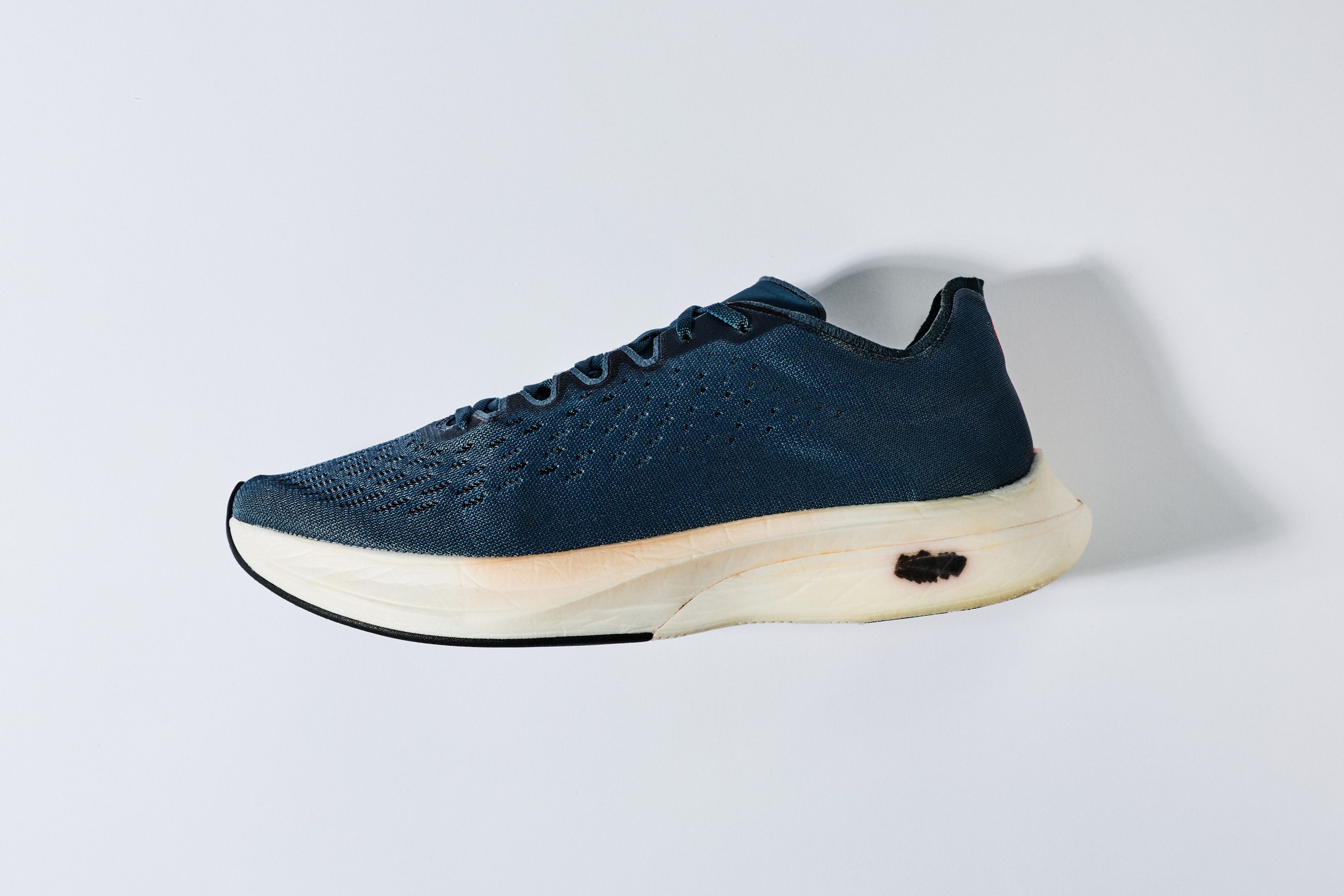
(prototype)