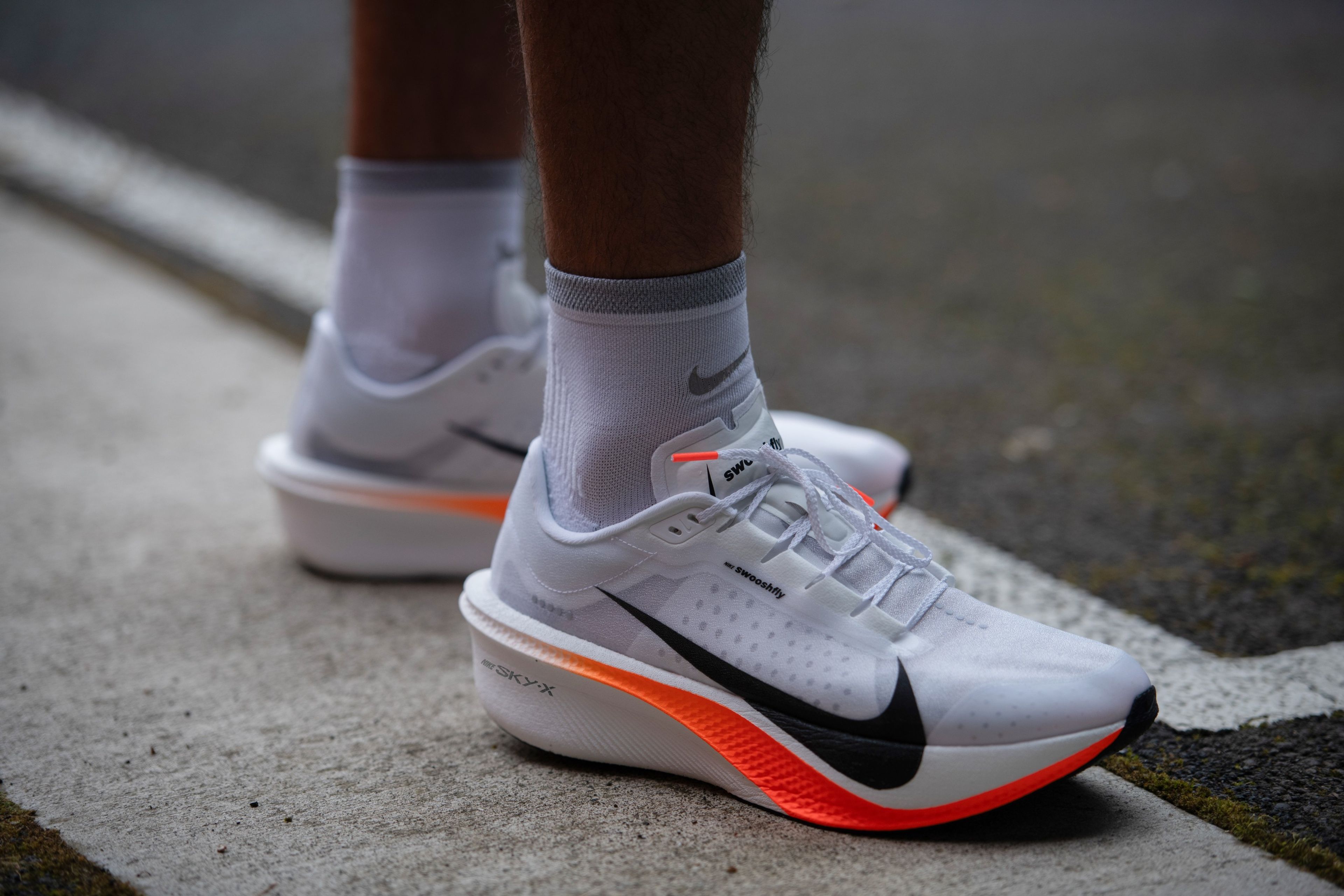
How Nike Designed the Swooshfly, an Invitation to the Marathon Starting Line
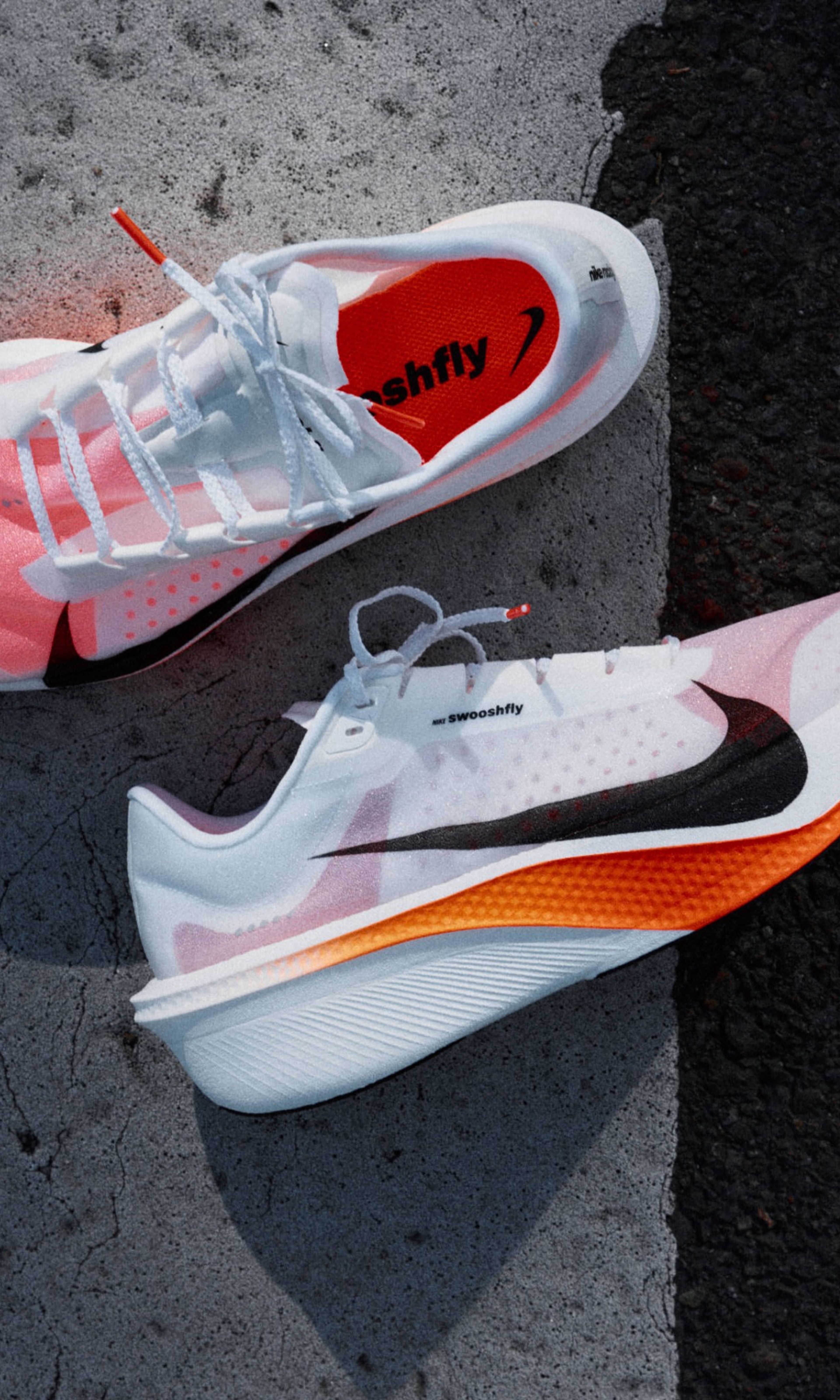
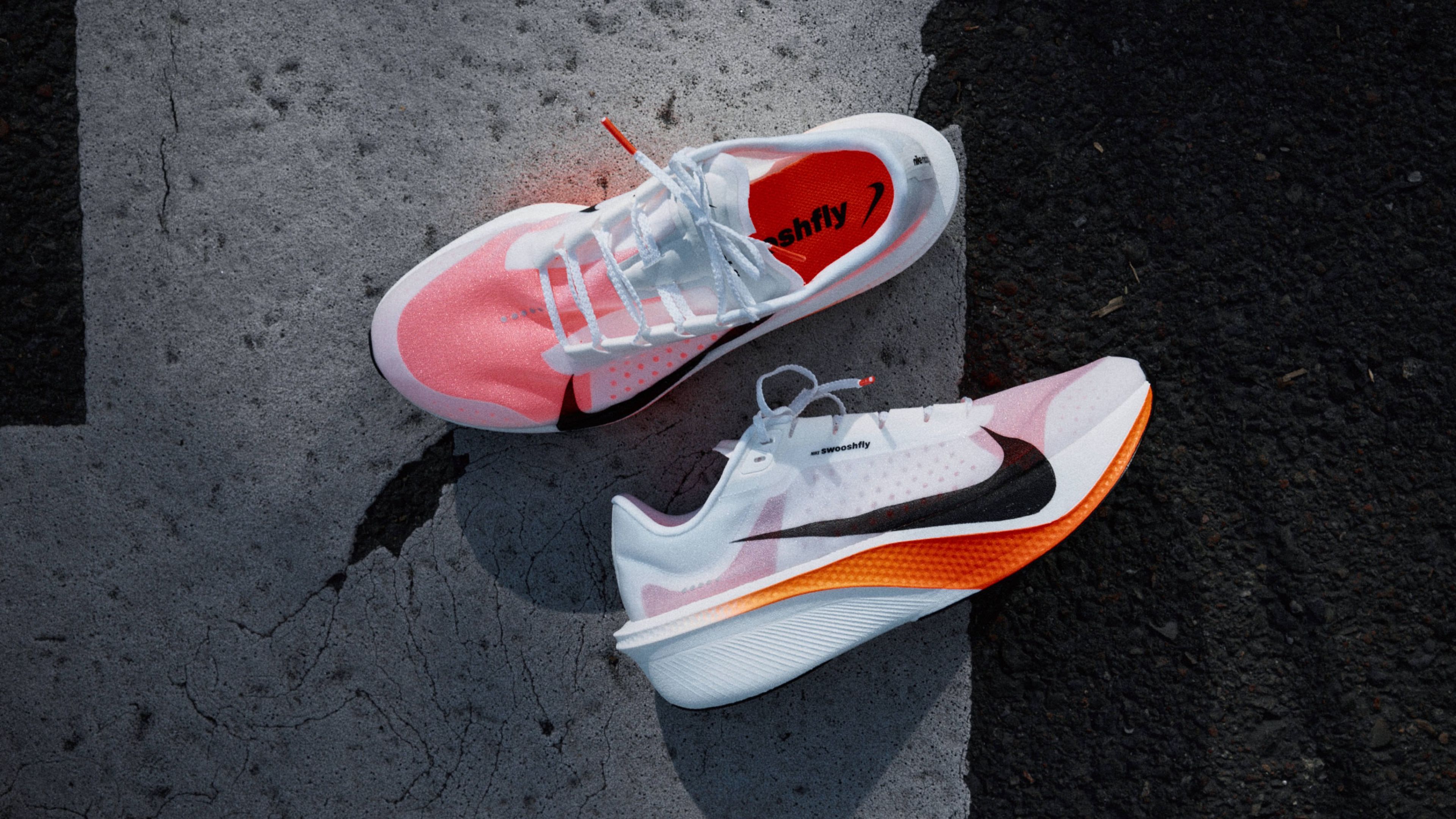
- September 30, 2026
- Words:
From the tangerine-tinted break of dawn to lychee red sunsets, the technicolor streets of Shanghai are inundated with runners. The sheer number in the Enchanted City and across Greater China has not only boomed — it’s evolved. More and more runners have morphed into distance racers regularly ripping through finish lines 26.2 miles at a time.
“Nearly every day there is a different marathon,” says Jean Peng, Principal Product Engineer, who is based at Nike’s world headquarters in Beaverton, Oregon, and regularly visits its Shanghai headquarters for product development. “The runner has become the marathon runner.”
The numbers bear that out. According to the Chinese Athletics Association, in 2014, China hosted 51 official marathons; that number jumped to 749 marathons in 2024, with more than 7 million participants.
This reflects a larger global trend: Worldwide, marathon participation is up 18 percent in the past year. From Chicago to Shanghai, nearly twice as many marathoners will toe the starting line in 2026 compared to just five years ago, many for the first time, and almost all with the same goal: to finish.
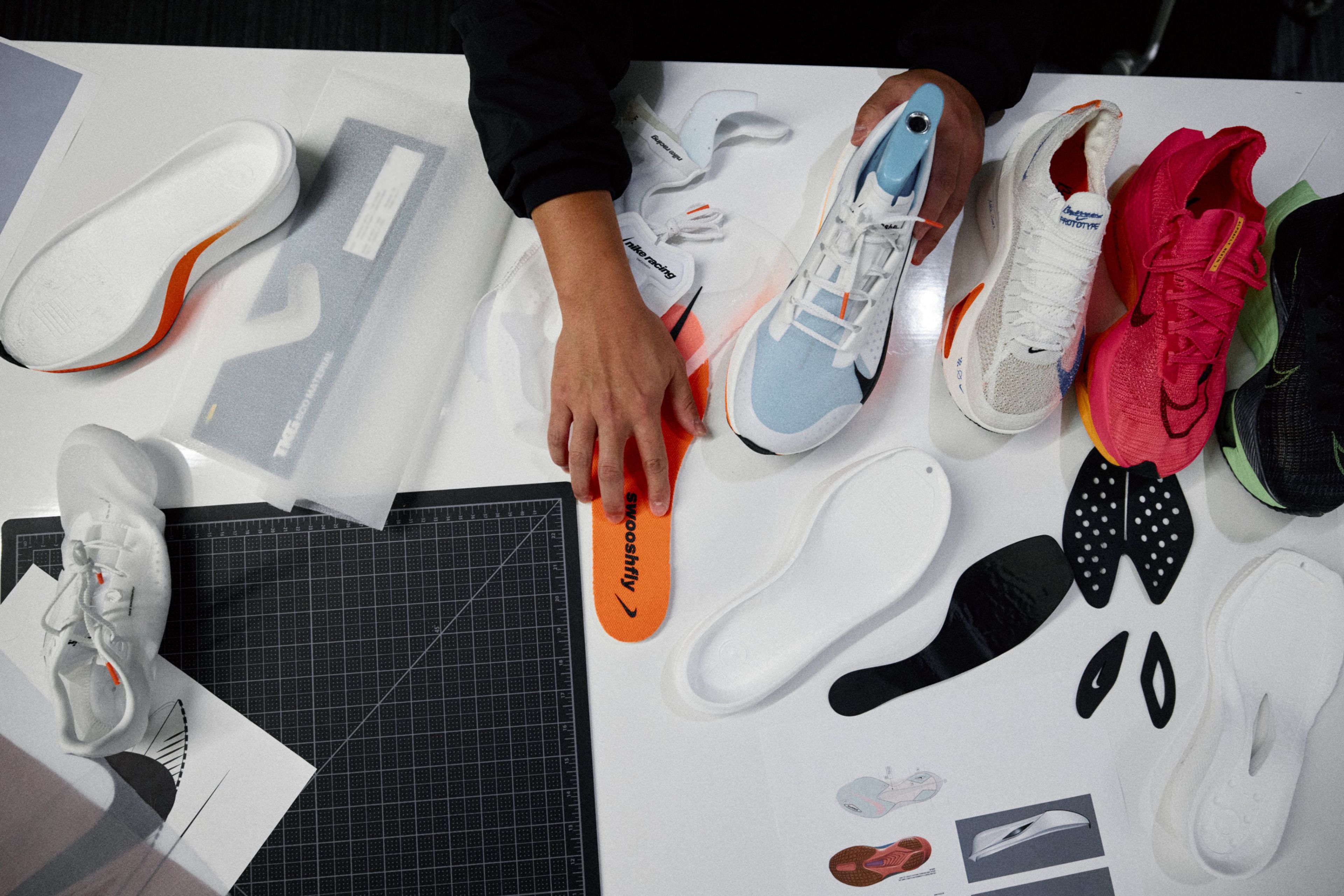
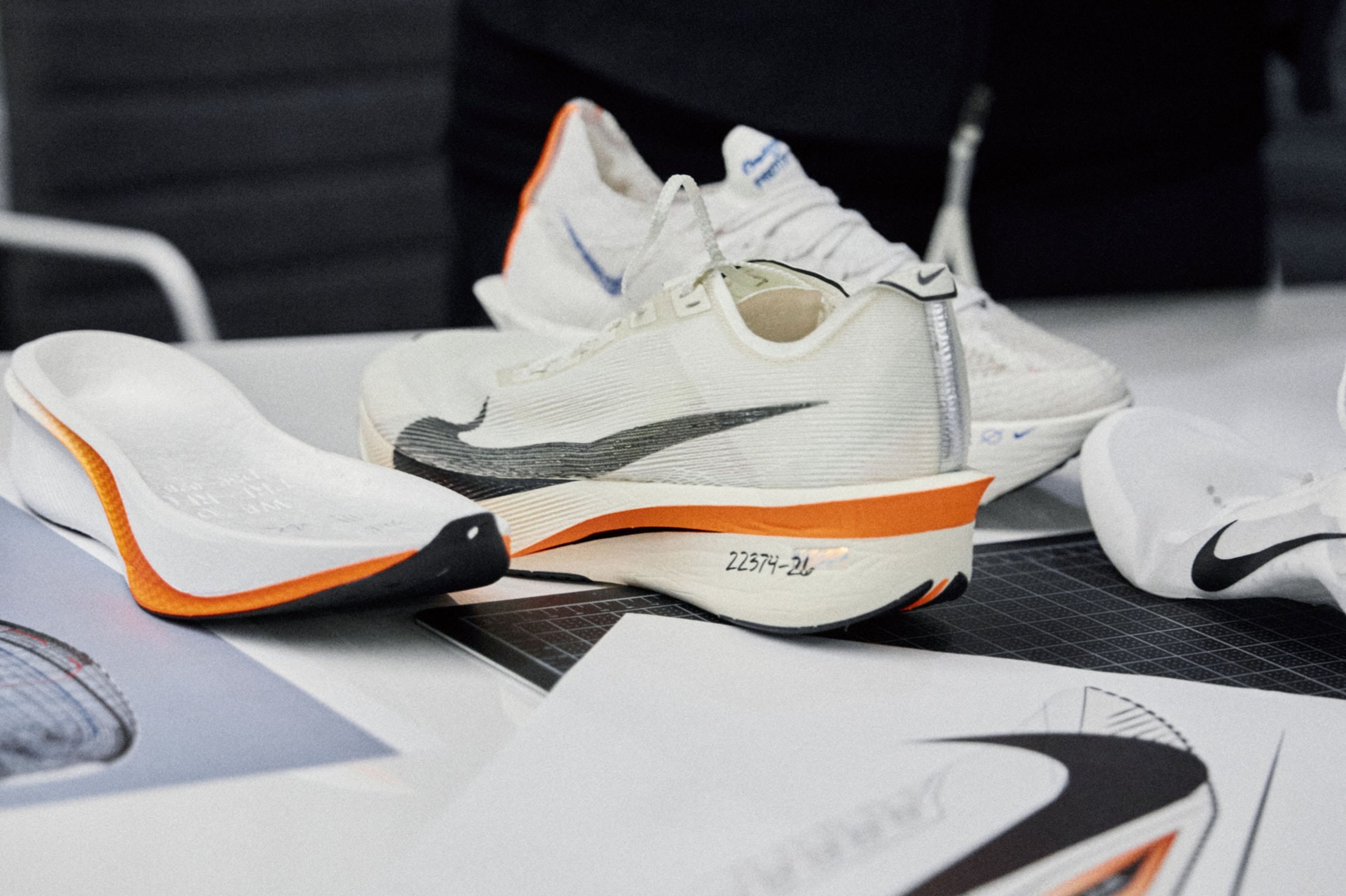
To create a racing shoe designed to hold up to twice the steps at an accessible price, Nike engineers rethought every component, from the last and plate to foam and upper.
“We set out to create an inclusive marathon racer with similar performance to our elite super shoes, and at half the price.”
Jean Peng, Senior Product Engineer
At Nike, decades of sport science research have gone into propelling the top performers on race day. Elite racers like Eliud Kipchoge have sent the term “super shoe” into the modern cultural zeitgeist, attacking and breaking the 2-hour marathon mark with the help of models like the Nike ZoomX Vaporfly 4% and Alphafly prototypes.
While the seven-star finisher strikes the pavement from his toes with the grace of a gazelle and the accolades of a GOAT, Kipchoge exists in extremely rarefied air as a racer who can complete a marathon in 2 hours and some 28,000 steps. The exploding space of road racing includes more than 30 million athletes whose average marathon time is 4.5 hours. Unlike Kipchoge, this marathoner takes roughly 55,000 steps to cover 26.2 miles. And, according to insights Nike’s gathered from participants across the globe, many feel that super shoes — designed to amplify a forefoot strike — can feel too torqued to control, and even look more aggressive than these athletes believe they’re ready for.
“Their requirements are much different,” says Peng of the general marathon racer. This runner wants stability, durability and a shoe that delivers performance benefits but also feels accessible, from looks to cost, he explains. Drawing on feedback from Greater China marathoners, the Nike Running team had an opportunity: “We set out to create an inclusive marathon racer with similar performance to our elite super shoes, and at half the price.”
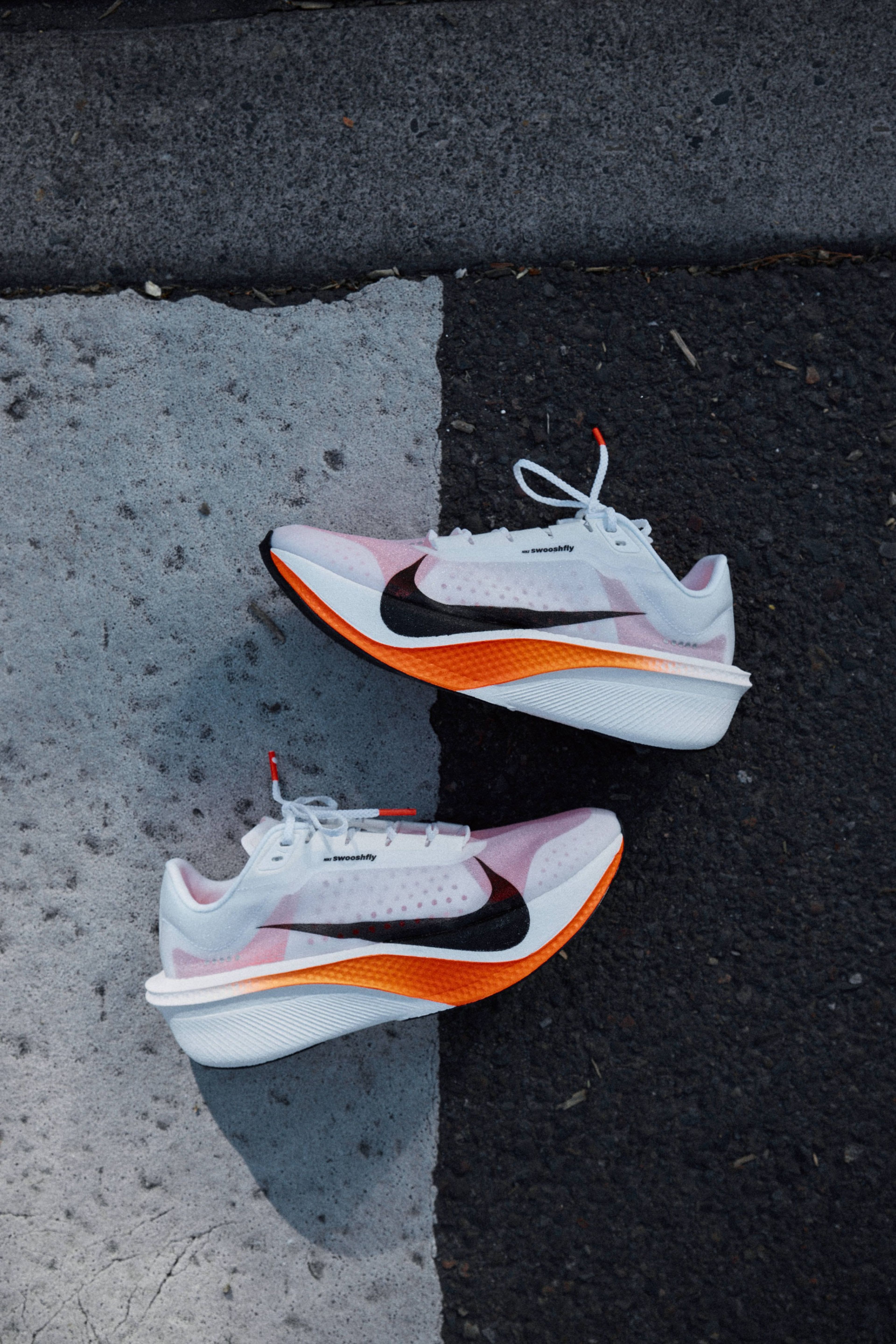
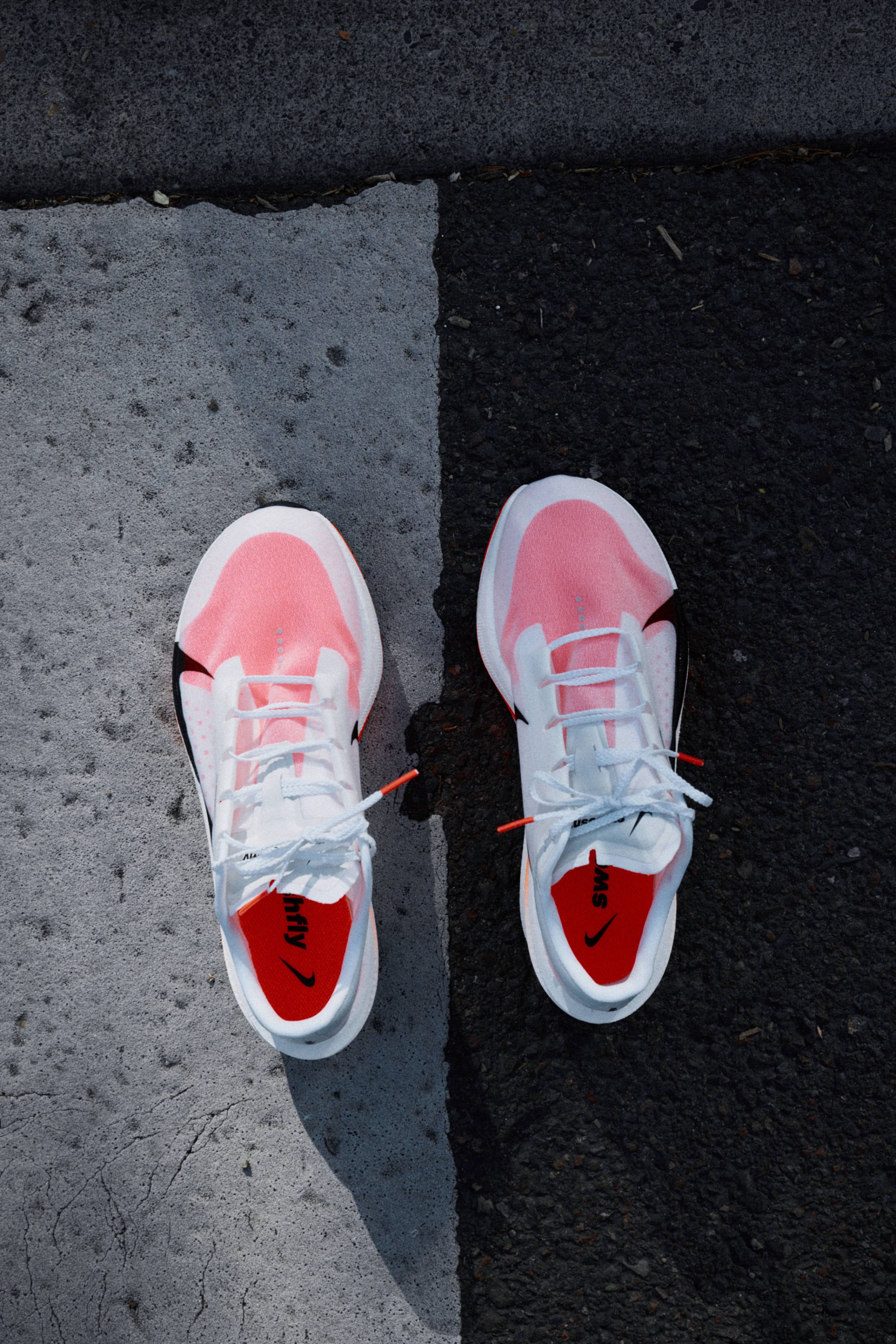
When Running Product Line Manager Ryan Shi was briefed on the need to create a super shoe built for twice the steps at half the cost, he responded bluntly.
“No way,” said Shi, intimately understanding the daunting math-meets-design equation he faced.
For more than a decade, Shi has helped work on the industry-defining race-day footwear made with runners like Kipchoge in mind. In that time, he often heard insights from gen-pop marathoners that, without deep experience wearing a super shoe, “it can feel like the shoe is driving you.” It was clear there was a need for a more approachable model that could stand up to twice the hours of pavement pounding. But how do you get more for less?
The answer was to rethink everything, says Shi. “The Nike Swooshfly is an innovation for the runner who wants the momentum to finish a marathon,” he says. “Everything is new.”
That newness starts at the core of a super shoe: the carbon fiber plate.
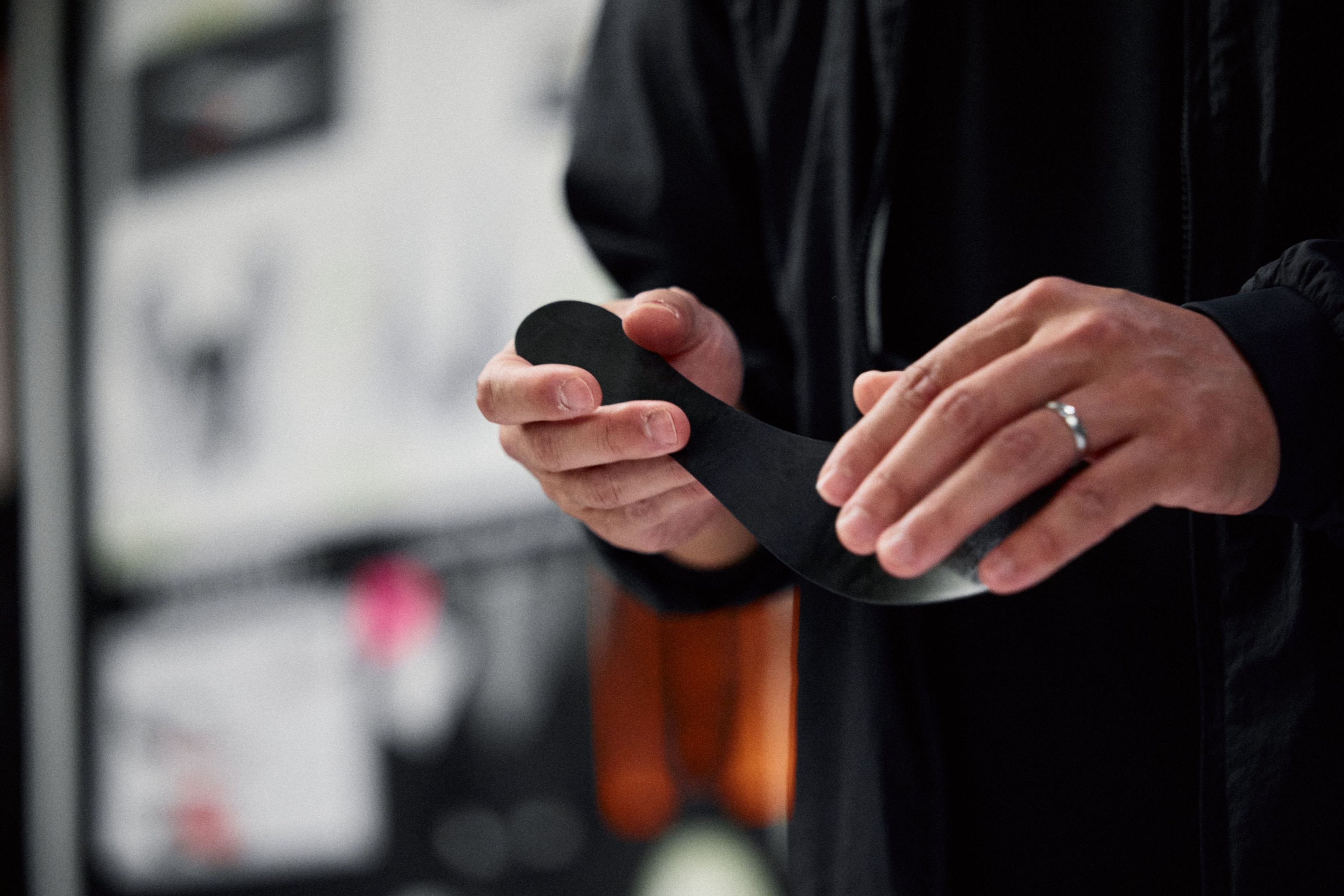
The Swooshfly Flyplate has five layers of carbon fiber, compared to eight layers in the Alphafly 4, to increase flexibility and stability for new marathoners.
Nike super shoe models like the Alphafly and Vaporfly have eight layers of carbon fiber to create a stiff, propelling plate. With the Swooshfly, Shi and team performed repeated tests in the Shanghai Nike Sport Research Lab (NSRL) to see how far they could reduce the number of carbon fiber layers to create more flexibility and stability, but still maintain the amount of stiff spring to propel you forward. Five layers of carbon fiber was the magic number that wear-testers said was the perfect balance of push without sacrificing control. The upshot: This less-is-more benefit also created material savings.
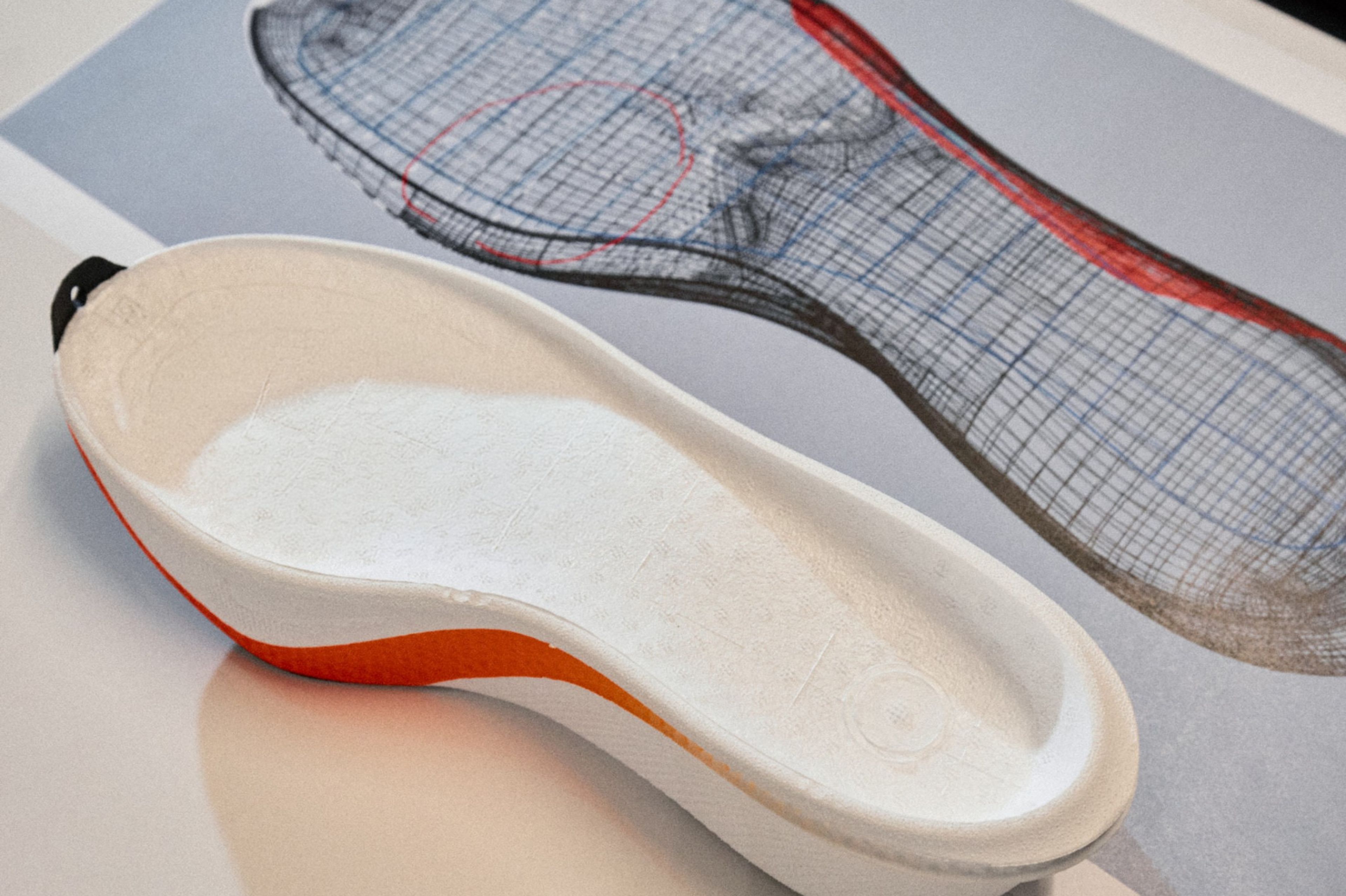
Next up, the shoe’s last — a foot-shaped form that designers use to create every component of a shoe, from the midsole to the upper. Swooshfly broke the mold and has an entirely new last, with a wider midfoot and lower arch to address athlete feedback that racing shoes can feel too narrow and cause arch irritation. In testing, Shi found that the wider last not only made the Swooshfly fit true to size, the shoe’s stability improved too.
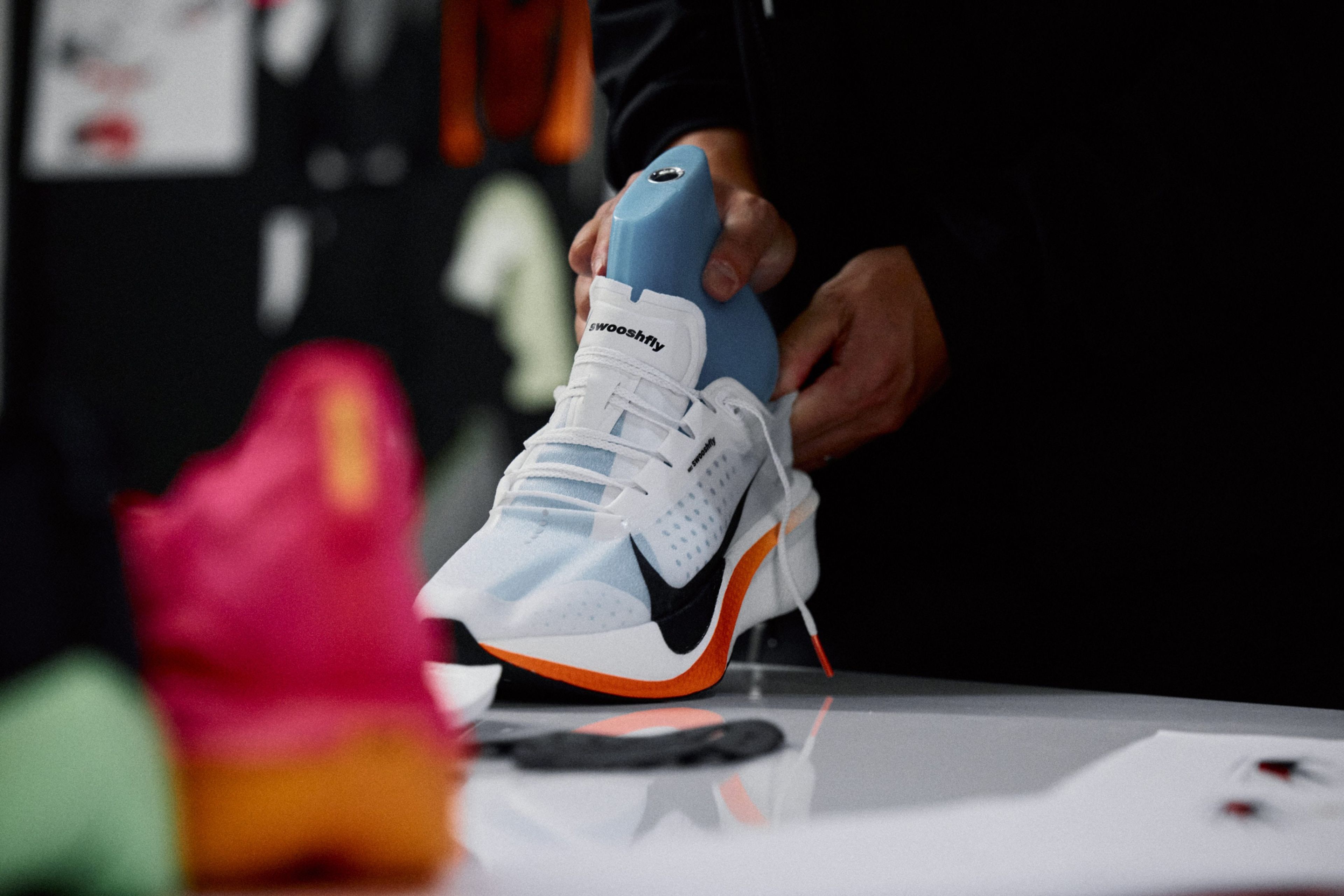
Spurred by athlete insights, Nike engineers used a new, wider last with a lower arch to help create a true-to-size fit and reduce arch irritation.
Then there’s the foam. The Swooshfly debuts a breakthrough: Nike SkyX, a new beaded-foam compound created for the long-lasting energy return that everyday marathoners need.
“Nike SkyX is our most lightweight, durable, responsive and cushioned foam yet, and with a manufacturing process that makes it more affordable,” says Shi. He adds that in testing the team found that “It will last your whole race — and the second race, the third race, and races after.”
“It will last your whole race — and the second race, the third race, and races after.”
Ryan Shi, Running Product Line Manager
With TPU beads steamed to different densities for zonal optimization around the shoe’s heel, plate and forefoot, Nike SkyX foam helps provide a heel-to-toe rocker sensation that urges you forward, and energy return where heel-strikers need it most (similar to the articulated innovation of tuned Air).
Designed to compete and complete, every element of the Nike Swooshfly has been specifically engineered for the everyday marathon racer, right down to the sole. On the forefoot, you’ll find Nike’s new GOATEK rubber to provide increased traction, particularly helpful at puddle-filled water stations, which become far slippier as a race goes on.
All this innovation aligned with the needs of marathon racers aiming to cross the finish line in twice the time and double the steps of Kipchoge — and it's competitive with other Nike super shoes. Testing proves that the Swooshfly delivers 16 percent more energy return than the Nike Vaporfly 4 in a men’s size 10.
But could Nike Swooshfly match the price brief?
“We asked runners in North America what they thought the price was,” says Shi. “Every single one thought it was $200-plus.”
To bring back a Shi idiom: No way. The Nike Swooshfly will retail globally for $145, meeting the moment of a more competitive market and an evolving marathon space.
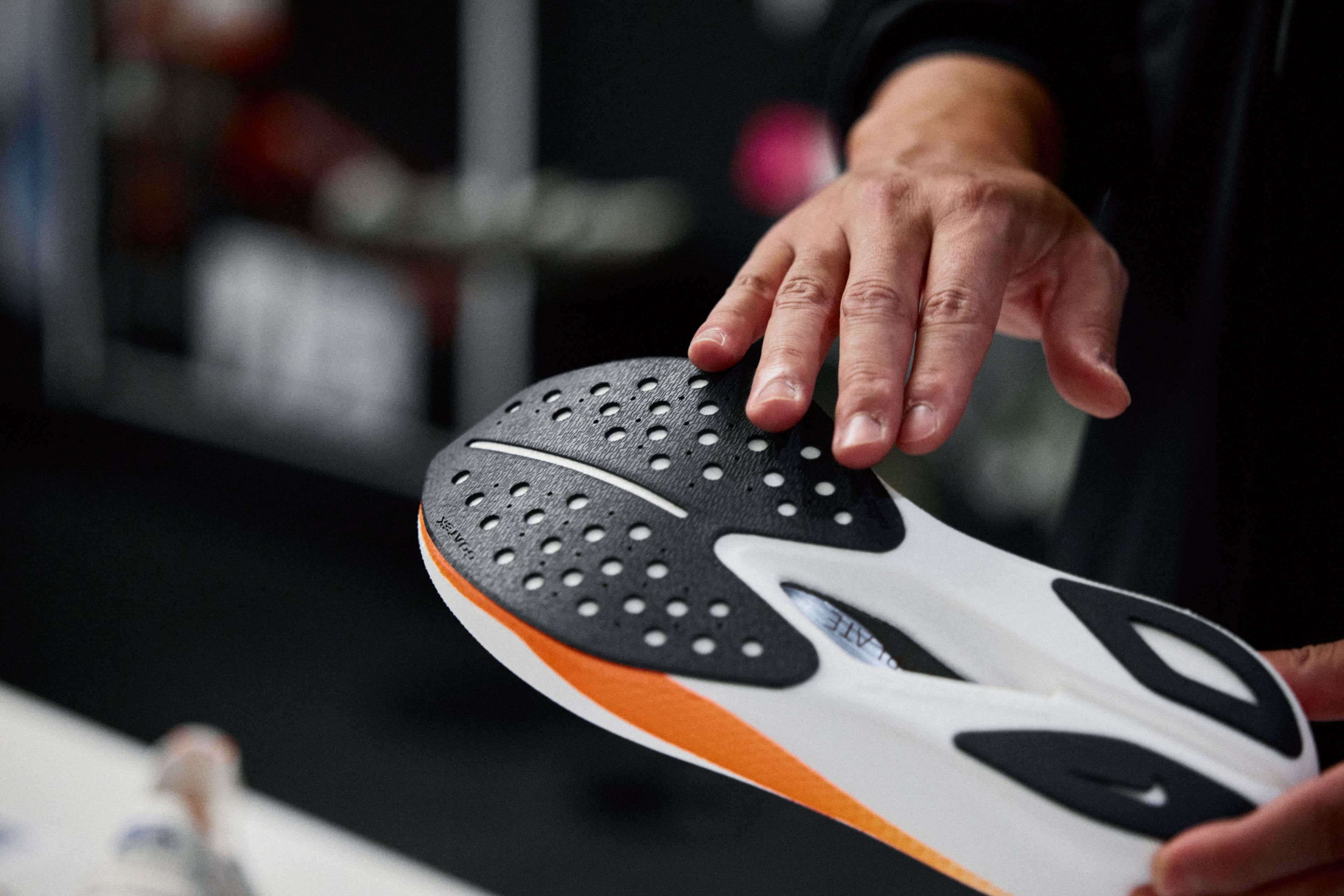
The forefoot features GOATEK on the outsole, giving the shoe grippy traction and durability where runners need it most — which is especially helpful for slippery marathon water stations.
Nike Swooshfly, and its Nike SkyX foam, wasn’t only a solution for runners turned racers. It also catalyzed a brand-wide approach to producing cutting-edge products faster.
“We saw Nike SkyX was ideal in the Swooshfly, and that solution spurred putting the foam in future running shoes without a plate,” says Bret Schoolmeester, Vice President of Nike Running Footwear. “For us, it begged the question: How can we use this as a model to scale innovation quicker?”
Prioritizing tighter teams, leaner logistics and athletes above all, products are already on the way for ACG, Nike Training and Nike Mind categories.
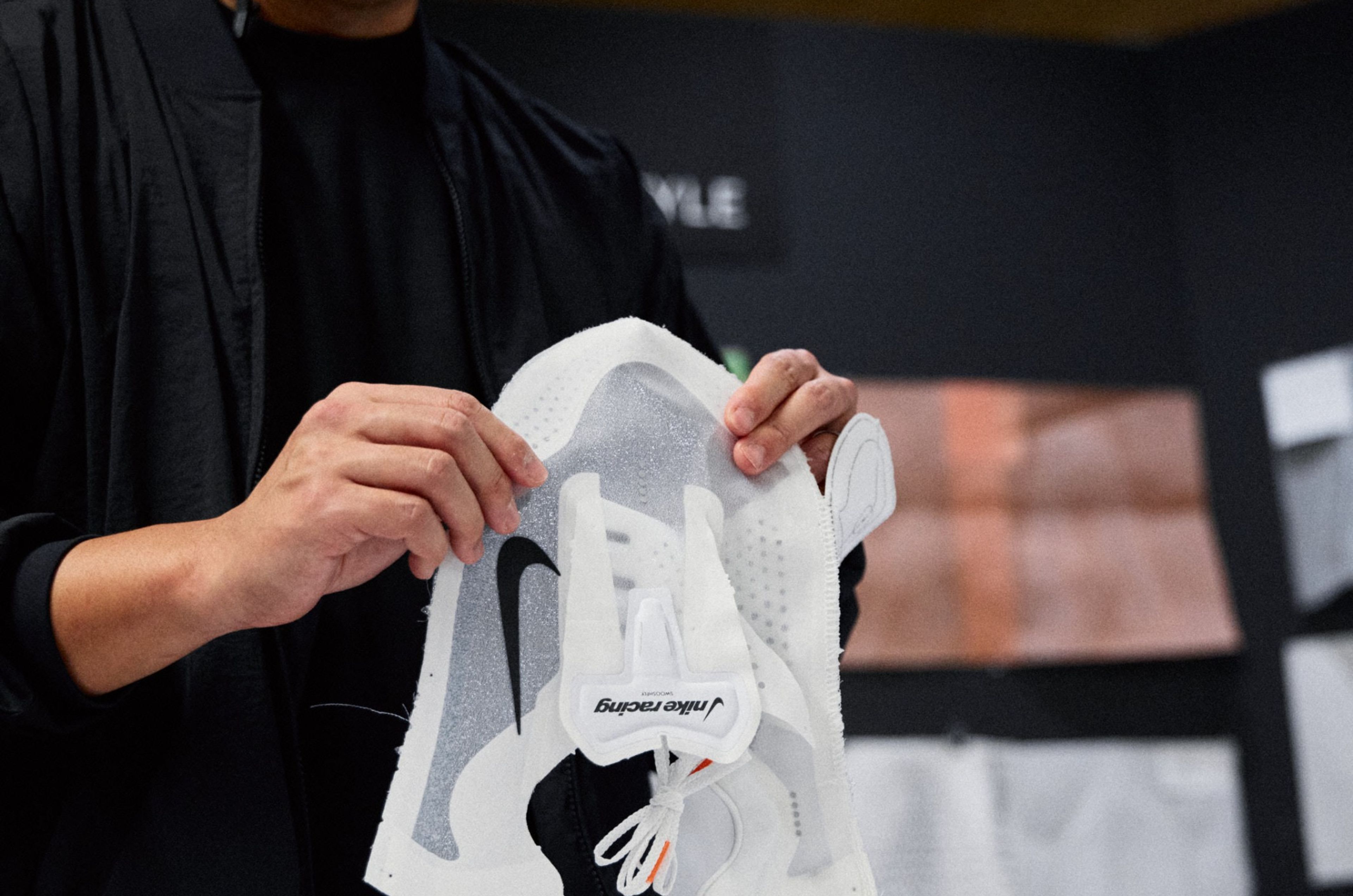
The upper introduces a translucent woven Vaporweave material that keeps the foot feeling contained and allows runners to play with sock color choices for a visual pop.
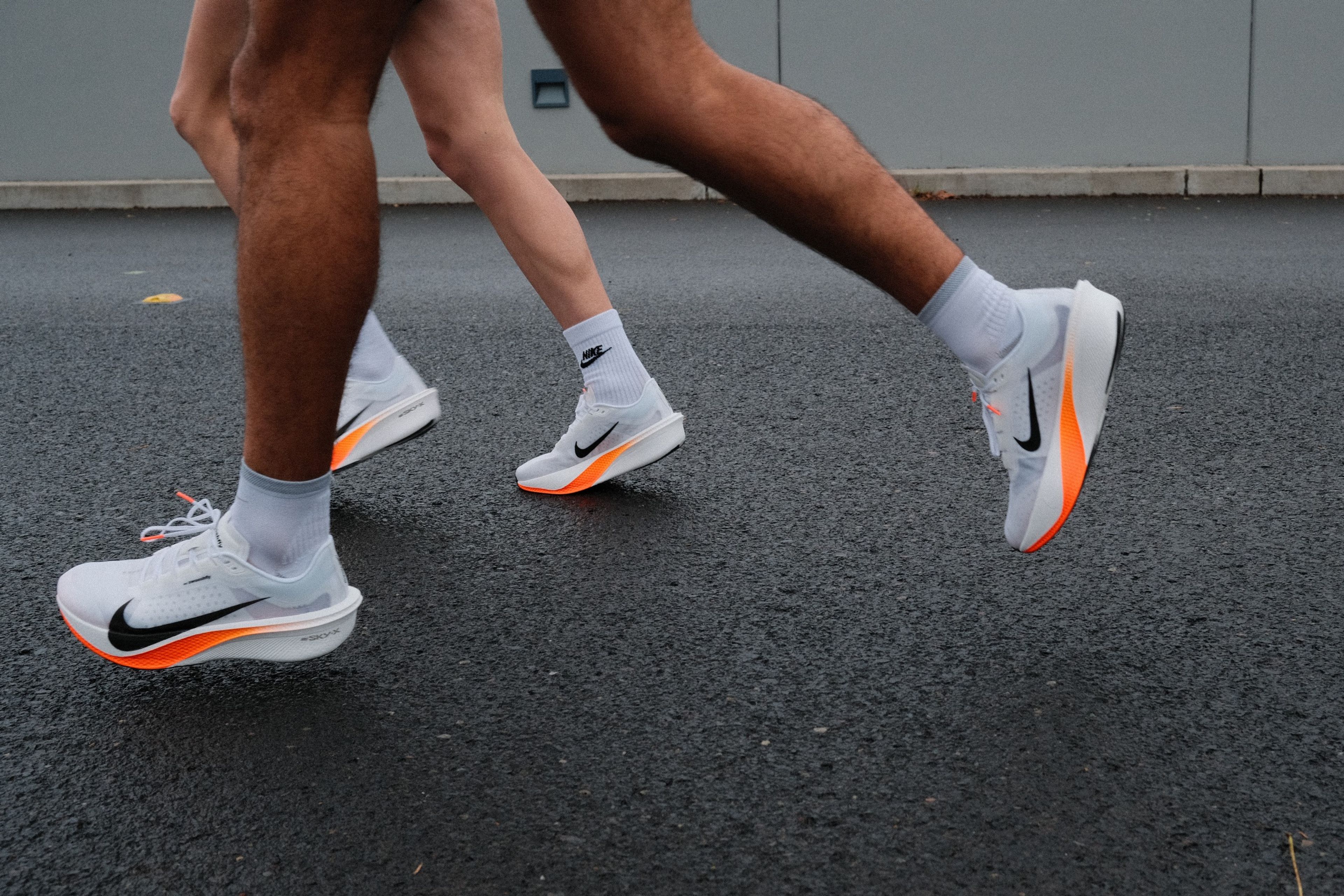
Testing proves that Swooshfly delivers 16 percent more energy return than the Nike Vaporfly 4 in a men’s size 10.
“We’re taking highly calculated risks so that we can get something compelling out to athletes faster than ever, and that’s better for athletes and our business,” says Schoolmeester. As he puts it, speed with intention is always a benefit. And Swooshfly is proof that tight turns, aggressive testing and alignment with factories can create speedy innovation. Peng notes that despite the daunting brief, the shoe took roughly one year to complete — about half the time for a typical new-to-market model.
In mission and title, Nike Swooshfly epitomizes a performance-focused race-day option for a marathoner who may not be breaking 2, but who is breaking a barrier. A shoe that, Shi says, he’s most proud of for “its balance.”
“Runners often think that paying less means you get less,” he says. “But with this shoe, you get everything you need to do more.”