Reducing Value Chain Emissions
At NIKE, Inc., addressing climate change is part of how we serve athletes*, drive innovation and strengthen our long-term business resilience. Across our value chain, we are working to reduce greenhouse gas (GHG) emissions through innovation in materials, manufacturing, transportation and our own operations, while helping build a more resilient future for the people and places that make sport possible.
*If you have a body, you are an athlete.

In FY20, NIKE, Inc. established a set of five-year carbon goals focused on accelerating emissions reductions across our operations and supply chain. In FY25, we achieved the following:
- 77 percent absolute reduction of greenhouse gas (GHG) emissions in owned or operated facilities through 100 percent renewable electricity adoption and fleet electrification, surpassing our goal of a 70 percent reduction.
- 47 percent absolute emissions reduction in manufacturing and transportation, surpassing our goal of a 0 percent change in absolute emissions.
- 0.89 million metric tons emissions reduction through 51 percent environmentally preferred materials (EPM).*
*Footwear EPMs: recycled polyester, recycled rubber, leather that reduces NIKE, Inc.'s enterprise carbon impact; currently includes synthetic leather and NIKE, Inc.'s non-leather substitute for leather, Flyleather.
*Apparel EPMs: recycled polyester, organic cotton, recycled cotton, third-party certified cotton.
NIKE, Inc. also has near-term emission reduction targets validated by the Science Based Targets Initiative (SBTi). NIKE, Inc.'s emissions targets were first validated in 2019 against a 2015 baseline and called for a 65 percent absolute emissions reduction in NIKE, Inc. operations (Scopes 1 & 2) and a 30 percent emissions reduction in supply chain (Scope 3) by 2030.
In FY25, NIKE, Inc. achieved the following emissions reductions against these targets:
- 80 percent absolute emissions reduction in NIKE, Inc. operations (Scopes 1 & 2)
- 20 percent absolute emissions reduction in supply chain (Scope 3)
In 2026, NIKE, Inc.'s 2030 emission target underwent SBTi’s mandatory five-year review and was updated and validated against their latest guidance. The re-validation shifted our target baseline from FY15 to FY20 in accordance with SBTi standards and incorporated improvements that better reflect the latest climate science, methodological updates and material business changes. Our updated 2030 emissions reduction targets are now as follows:
- 75 percent reduction in emissions from NIKE, Inc. operations (Scope 1 and 2)
- 35 percent reduction in emissions across our extended supply chain (Scope 3) by 2030 from an FY20 baseline.
We’ve made strong progress driving down emissions from our operations by 77 percent and in our supply chain by 35 percent in FY25 against a new 2020 baseline. Our strategy remains prioritized against the value chain areas where emissions reductions can make the greatest impact: materials, manufacturing, transportation, and operations. These four segments account for over 80 percent of our emissions footprint. For each one, rigorous governance, strategic investment and consistent accountability are in place to support targeted action.
This chart illustrates the percentage breakdown of NIKE, Inc.'s FY20 baseline year of NIKE, Inc.'s restated Science-based target. As of 2026, our restated FY20 Scope 3 Baseline has an updated boundary that includes additional value chain emissions activities, per SBTi guidance.*
*MMTCO2E: Million metric tons of carbon dioxide equivalent
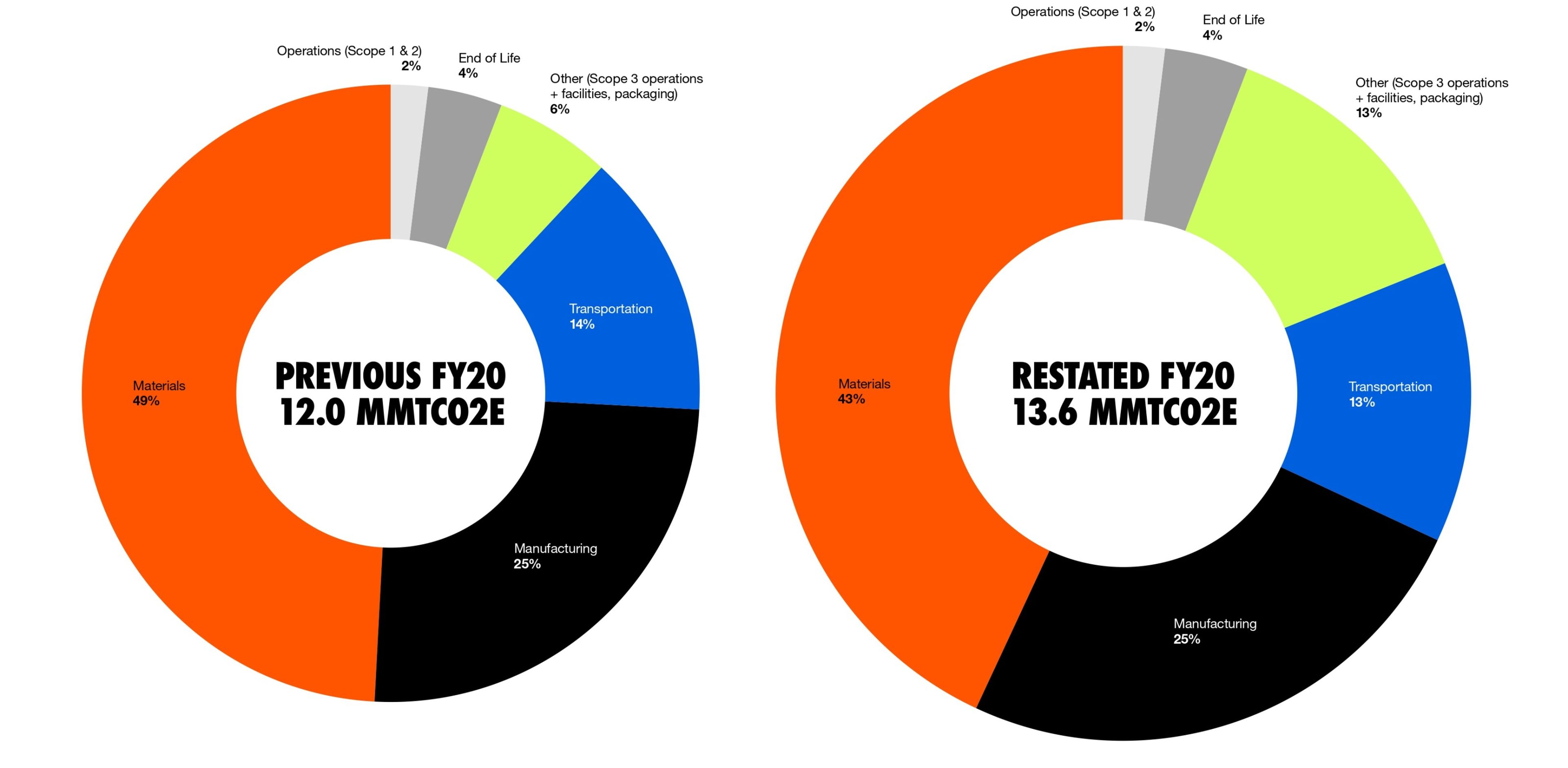
We’re strategically focusing our actions on the following four value chain segments, accounting for 83 percent of our emissions footprint:
- Materials. Emissions from the raw materials and processing of raw materials used in our products.
- Manufacturing. Emissions from finished product and component manufacturing.
- Transportation. Emissions from how we move our products around the world.
- NIKE, Inc. Operations. Emissions from our owned and operated facilities.
The remainder of our footprint includes emissions from sources outside these categories, such as packaging, end-of-life product disposal, professional and technology services, and non-owned retail partner stores. We seek to reduce emissions in these areas by adopting lower-carbon alternatives and advancing circularity solutions, where feasible.
Materials are critical to achieving our near-term science-based target, accounting for over 40 percent of our baseline emissions. Guided by performance and sustainability, we are integrating lower-carbon materials and design innovation throughout product development. Our focus is straightforward: create products that help athletes perform at their best while reducing environmental impact.
To do this, we are shifting toward high-performing, lower-carbon material alternatives. We are advancing textile-to-textile recycling pathways and increasing our use of recycled, organic and regenerative cotton where it meets our standards for quality and performance.
By the end of FY25, 66 percent of polyester used in our products is recycled. To advance this strategy for recycled polyester, we have signed multi-year agreements with textile-to-textile recycling startups, like Syre and Loop Industries, to replace virgin polyester and traditionally bottle flake recycled polyester with circular, recycled polyester. Partnering directly with raw material innovators reflects a more resilient and forward-looking supply chain model, helping accelerate circular solutions where they can have the greatest impact.
At the same time, we continue to invest in material and manufacturing innovation. We are exploring and scaling new approaches, including advanced recycling technologies, bio-based materials and additive manufacturing, that have the potential to reduce impact while unlocking new performance benefits. These efforts support the development of more adaptive products and materials designed to perform in a wider range of conditions.
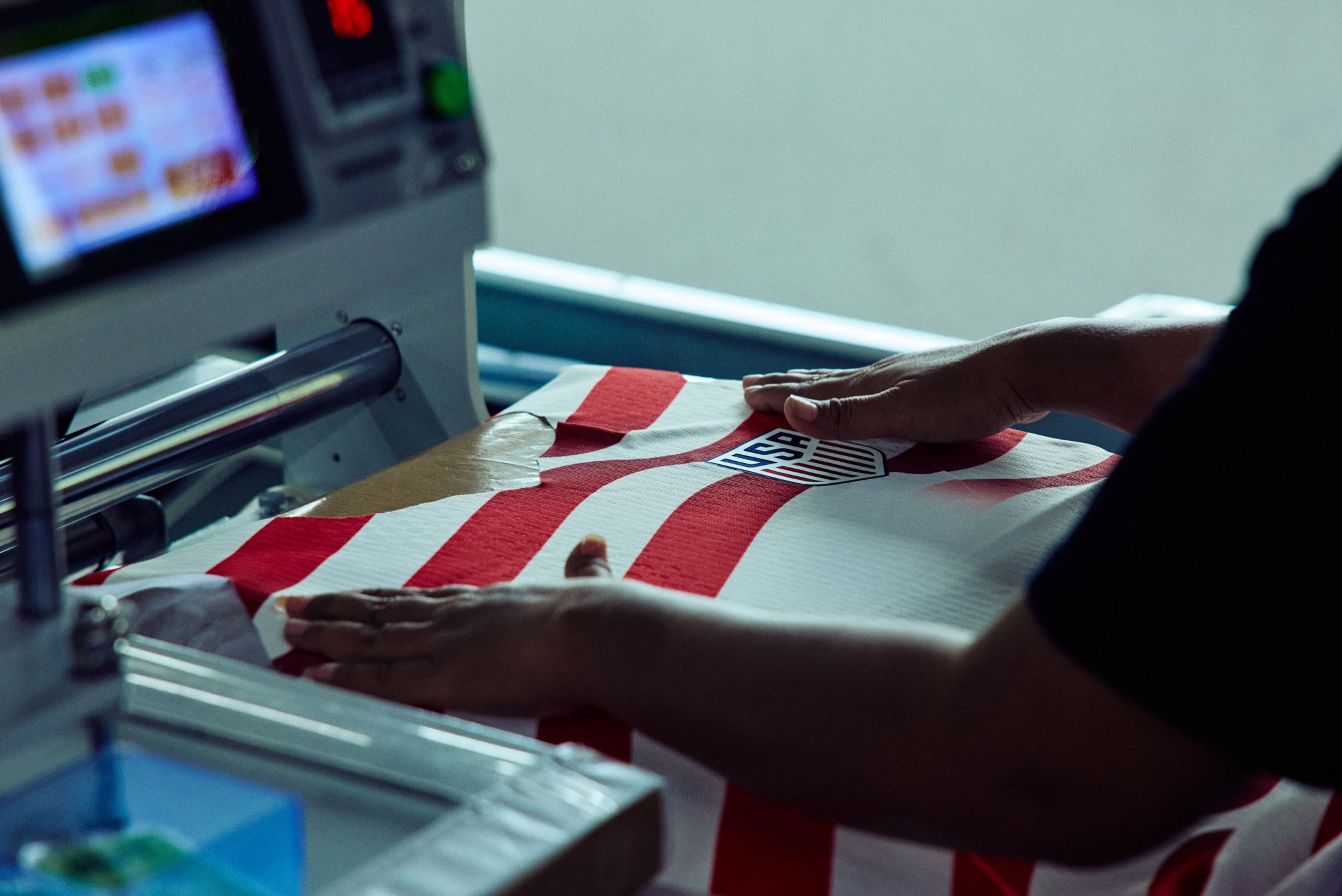
Examples of higher performing, lower carbon materials include ReactX and Aero-FIT. Using ReactX foam in our footwear provides an extra 13 percent energy return for athletes compared to standard EVA and reduces carbon emissions by 43 percent per pair of midsoles. Aero-FIT is a performance apparel material engineered from 100 percent recycled textile waste that optimizes breathability, stretch and sweat management. This technology made its global debut in the Nike football kits used during the world's greatest football tournament in 2026 and is now being extended across product lines, bringing airflow-first innovation to more athletes around the world.
We collaborate closely with our suppliers to advance lower-carbon manufacturing across our supply chain. We work with them to set near-term and longer-term goals aligned with our climate strategy, and to build the capabilities needed to deliver against those goals. To support decarbonization in practice, we are helping suppliers improve energy efficiency across operations and better track energy use and emissions. These insights enable more informed decision-making and help measure progress toward shared goals.
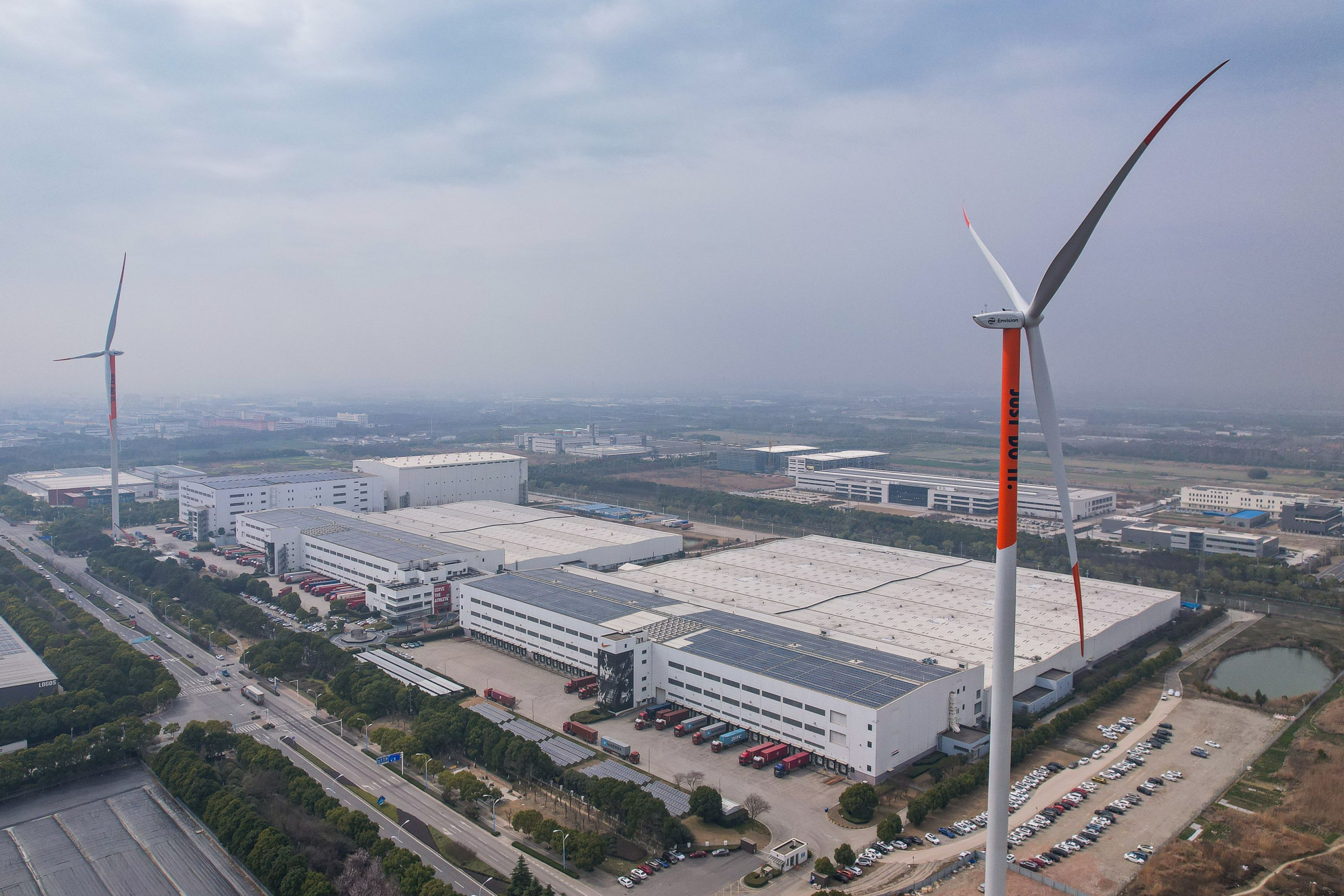
A key priority is supporting the transition to renewable electricity across our supply chain. We work with suppliers to increase energy efficiency while expanding their use of renewable power, and we encourage collaborative engagement on energy policy particularly in key manufacturing countries and regions such as China, India, Indonesia and Vietnam. From FY20-FY25, the percentage of renewable electricity procured by our strategic suppliers has grown from less than 1 percent to almost 40 percent.
To help accelerate progress beyond our own supply chain, we partnered with other leading brands to establish the Asia Clean Energy Coalition, which brings together clean energy buyers, project developers and financiers to help advance renewable energy policy and expansion across Asia Pacific. We also co-founded the Clean Energy Procurement Academy, which equips suppliers with the skills needed to procure renewable electricity. Together, these initiatives reflect our belief that scaling renewable energy requires collaboration across industries, helping build the capabilities, market conditions and policy environments needed to accelerate the transition beyond NIKE, Inc. and the footwear and apparel sector.
We are also working with suppliers to reduce reliance on coal in manufacturing processes and have eliminated coal from over 80 percent of the energy used in core materials suppliers* and 100 percent of core finished goods suppliers. This work includes collaborating with groups such as the Renewable Thermal Collaborative (RTC) and Apparel Impact Institute (Aii) to expand solutions that reduce the emissions from heat generation in manufacturing. Alongside other leading brands, we plan to accelerate the cost-competitiveness and scalability of electric heat pumps, making them viable decarbonization solutions for our materials suppliers.
*Core Materials Suppliers: Tier 2 Materials Suppliers representing 80 percent of NIKE, Inc.'s production volume.
We are improving how we move products across our global network to reduce emissions while continuing to serve athletes reliably and efficiently.
Our transportation network spans the movement of products from supplier facilities to distribution centers, and from those centers to NIKE, Inc. stores, retail partners and directly to consumers. Emissions within this network are primarily driven by air and ocean freight, making these areas a key focus for reducing our transportation footprint.
A central priority is reducing reliance on air freight due to its high emissions impact and cost. Since 2020, we’ve reduced inbound air freight by nearly 85 percent, and in FY25, only 0.6 percent of our inbound volume was shipped by air. By strengthening production planning, expanding regional distribution capabilities and improving order fulfillment, we are working to move more product through lower-emissions transport modes. These efforts help reduce emissions while also supporting more efficient, resilient delivery across our network.
We are also working with logistics service providers to expand the use of lower-carbon fuels across transportation modes. This includes increasing the share of ocean freight powered by sustainable fuels and supporting the transition of trucking fleets toward electric vehicles and other lower-carbon alternatives. In FY25, NIKE, Inc. participated in six of our logistics carriers’ sustainable ocean fuel programs, matching the equivalent volume of 28 percent of our global inbound ocean shipments. Broader collaboration across the transportation ecosystem is also important, as scaling these solutions depends on continued progress in fuel availability, infrastructure and policy alignment.
We are reducing emissions across our own operations by improving energy efficiency and transitioning to lower-carbon energy sources.
Our facilities, including retail stores, distribution centers, headquarters and AirMI sites, represent a smaller share of our overall footprint, but they are areas where we have direct control. This allows us to take targeted actions to reduce emissions from energy use, fuels and refrigerants, which are the primary drivers of our operational impact.
In 2015, NIKE, Inc. became one of the first companies to commit to the RE100 Initiative with a focus on procuring 100 percent renewable electricity for our owned and operated spaces. Having passed this milestone in FY25, we aim to maintain this performance from year to year, as we navigate challenges including local market availability of renewables.
While we continue working to match electricity use with renewable sources, we also focus on improving energy efficiency to reduce overall demand. In parallel, we are transitioning building systems such as heating, ventilation and cooking equipment toward electrification where feasible and exploring lower-carbon fuel alternatives in markets where electrification is not yet viable.
We are also strengthening the environmental performance of our buildings across the portfolio. By increasing the number of facilities designed and operated to recognized efficiency standards, including LEED certification, we aim to reduce both operational and embodied emissions over time. By the end of FY25, 44 percent of NIKE, Inc. owned and operated retail spaces were LEED certified, along with nine corporate facilities. These efforts are complemented by ongoing work to improve building efficiency, reduce reliance on fossil fuels and manage refrigerants more effectively.
We engage with partners to help accelerate emissions reduction across our value chain and the broader industry. Our partnerships focus on pre-competitive collaboration with key climate organizations focused on pre-scaling solutions, and engagement on policy and market development. This includes working with groups such as the World Wildlife Fund (WWF), World Business Council for Sustainable Development (WBCSD) and CDP to inform our approach and support transparency and alignment.
We also collaborate with industry initiatives—including Cascale, the Zero Emission Maritime Buyers Alliance (ZEMBA) and RE100—to help scale solutions such as renewable energy, lower-carbon manufacturing and sustainable fuels.
In parallel, we engage with coalitions and institutions such as the Asia Clean Energy Coalition (ACEC) and Renewable Thermal Collaborative (RTC) to support the policy and market conditions needed for decarbonization in regions critical to our business. Through these partnerships we extend the impact of our own actions and support broader system-level progress.