5 Questions With Renegade Founder Victor Diaz

- March 24, 2026
Running is one thing. Running a running store is another.
Victor Diaz knows both. A former public school educator turned founder, Victor built Renegade in Oakland, California, as more than just a retail space. From the beginning, Renegade has woven community into its DNA, spending that extra time with customers, organizing runs, hosting conversations, building the Renegade Elite Team that supports BIPOC athletes competing in marathons, and expanding to Los Angeles in 2024.
Along the way, Renegade has made contributions to the running industry and garnered success that reflects a broader shift in the sport: turning away from overconsumption and toward expertise, quality, intention, rarity and belonging, the elements that make a brand feel special and personal.
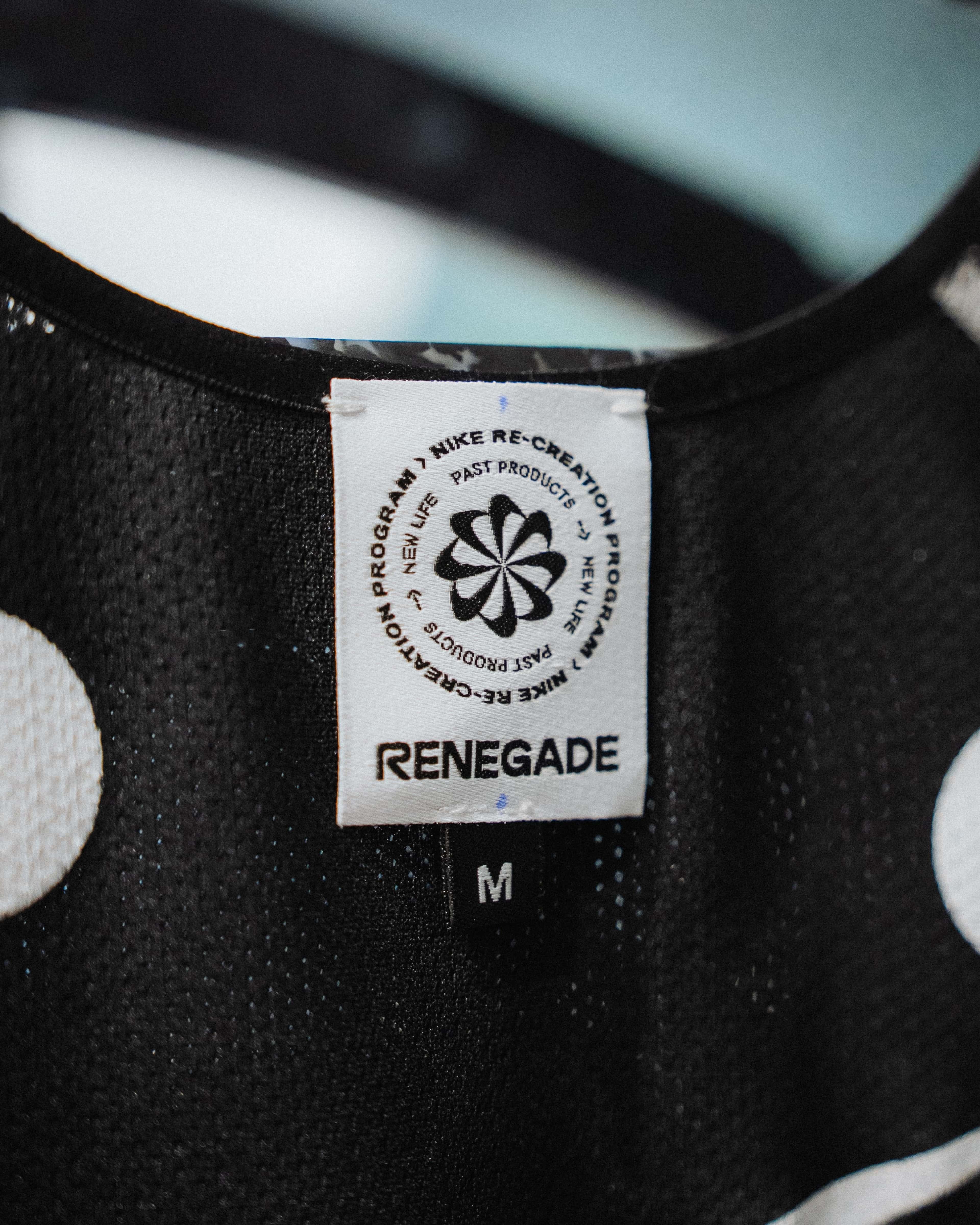
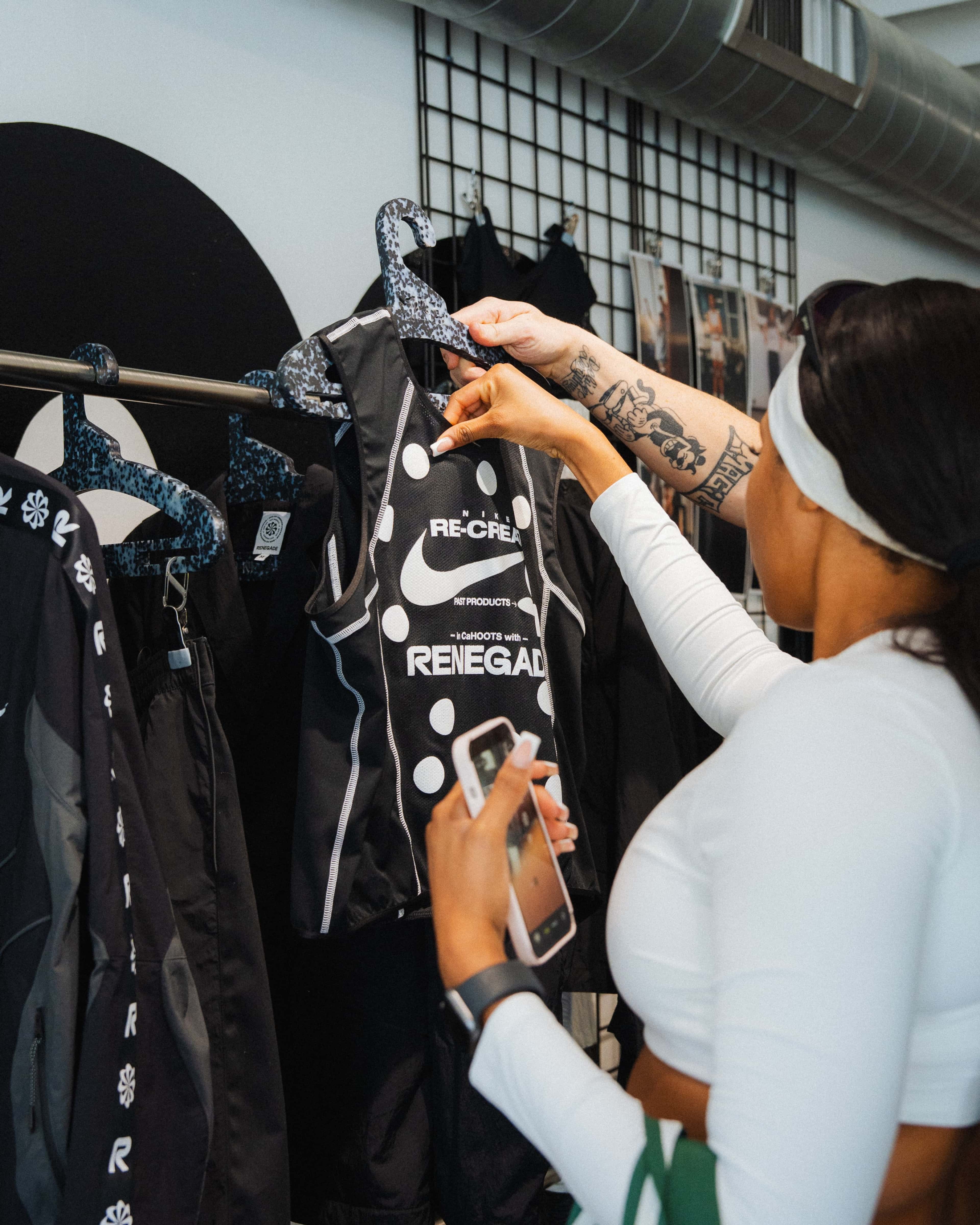
Now, Renegade enters a new chapter through its partnership with Nike for two unique co-creations. With Nike Re-Create, the experimental circular design program, Renegade has transformed vintage and leftover materials into small-batch garments. Nike Re-Create is tapping into high performance running–inspired silhouettes for the first time with this collection, which is shaped by Diaz’s perspective on culture and fashion, symbolism and heritage.
In addition to the Re-Create collection, Renegade will become the first Run Specialty Group account to partner with Nike Running for a footwear collection. The two-shoe pack includes the maximum cushioning road runner, Vomero Premium, and the original supershoe, Vaporfly 4. Here, too, Victor pays homage to his Mexican heritage and Renegade’s rebellious spirit through the designs.
Below, we speak with Victor about his sport and design obsessions and the path that brought him here.
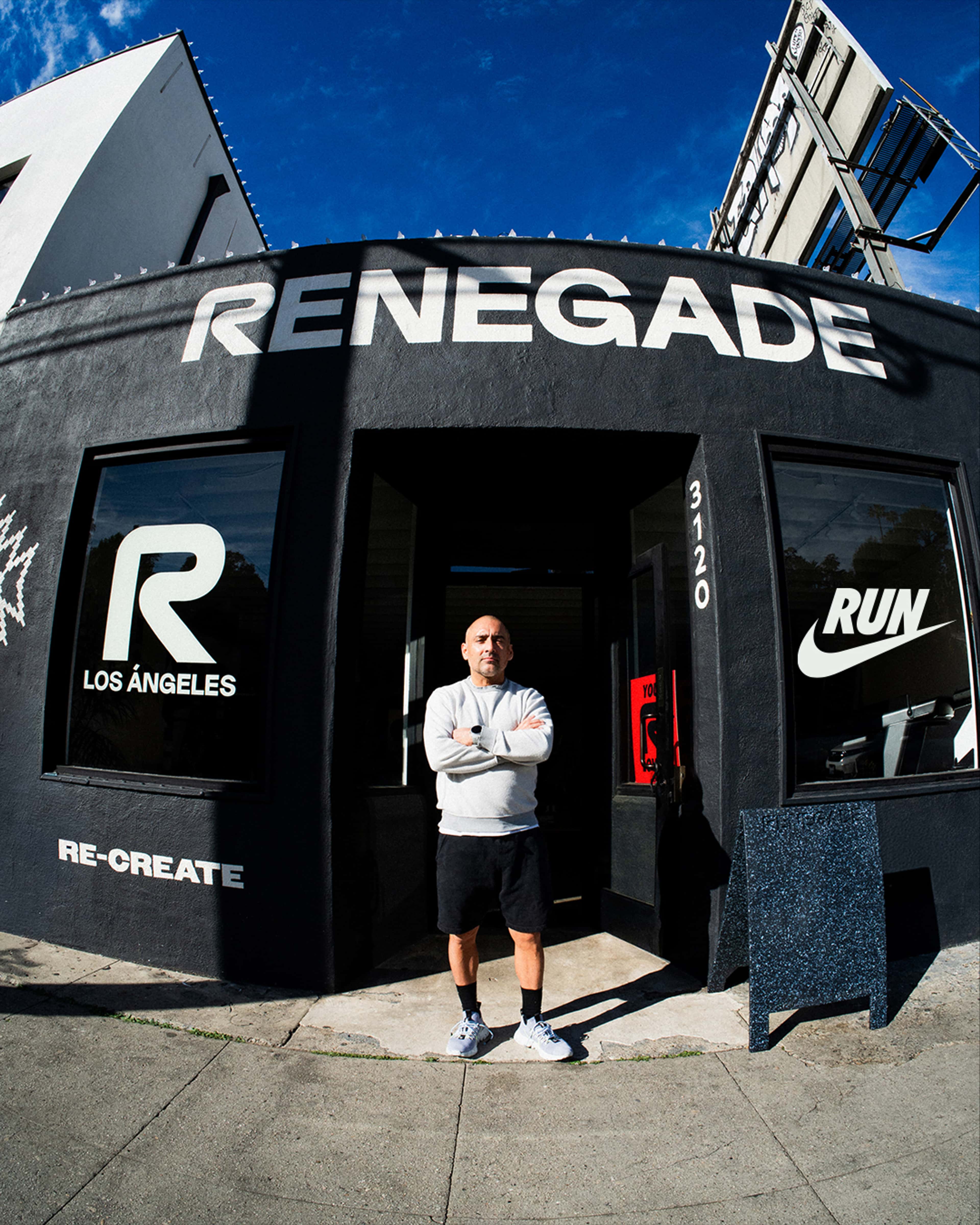
Victor Diaz outside Renegade Los Angeles, the second outpost of the Oakland-born running community he founded.
You’re not only a runner and a shop owner, you’re a community leader in Oakland. What’s important to know about you and your background that led you to create Renegade?
Number one was my love for sport and competition. I grew up playing team sports, mostly football. I played football for more than a decade. Renegade was the name of my team, and that’s where the store name comes from.
The second big influence was watching Mexican marathoners win on the world stage in places like New York and Chicago. That was the first time I saw someone who looked like me and thought, That’s what I want to do. If they can do it, maybe I can do it.
What shaped Renegade as a retailer was high fashion and cycling. I was drawn to designers, especially avant-garde designers who were obsessed with textiles, construction and fit. Fashion designers were just really bending form, shape, and fabric in ways that nobody else was. At the same time, I was racing bikes. Cycling was pushing technology forward in ways running wasn’t. Lightweight fabrics, aerodynamic helmets, wraparound sunglasses, bold graphics. Everything was about performance and innovation.
Those two things inspired me to think differently about running apparel.
Running apparel is usually built for consistency and performance at scale. A lot changes when you are working on a product that‘s a one-of-one garment made from vintage and deadstock materials. How did that influence the way you thought about design?
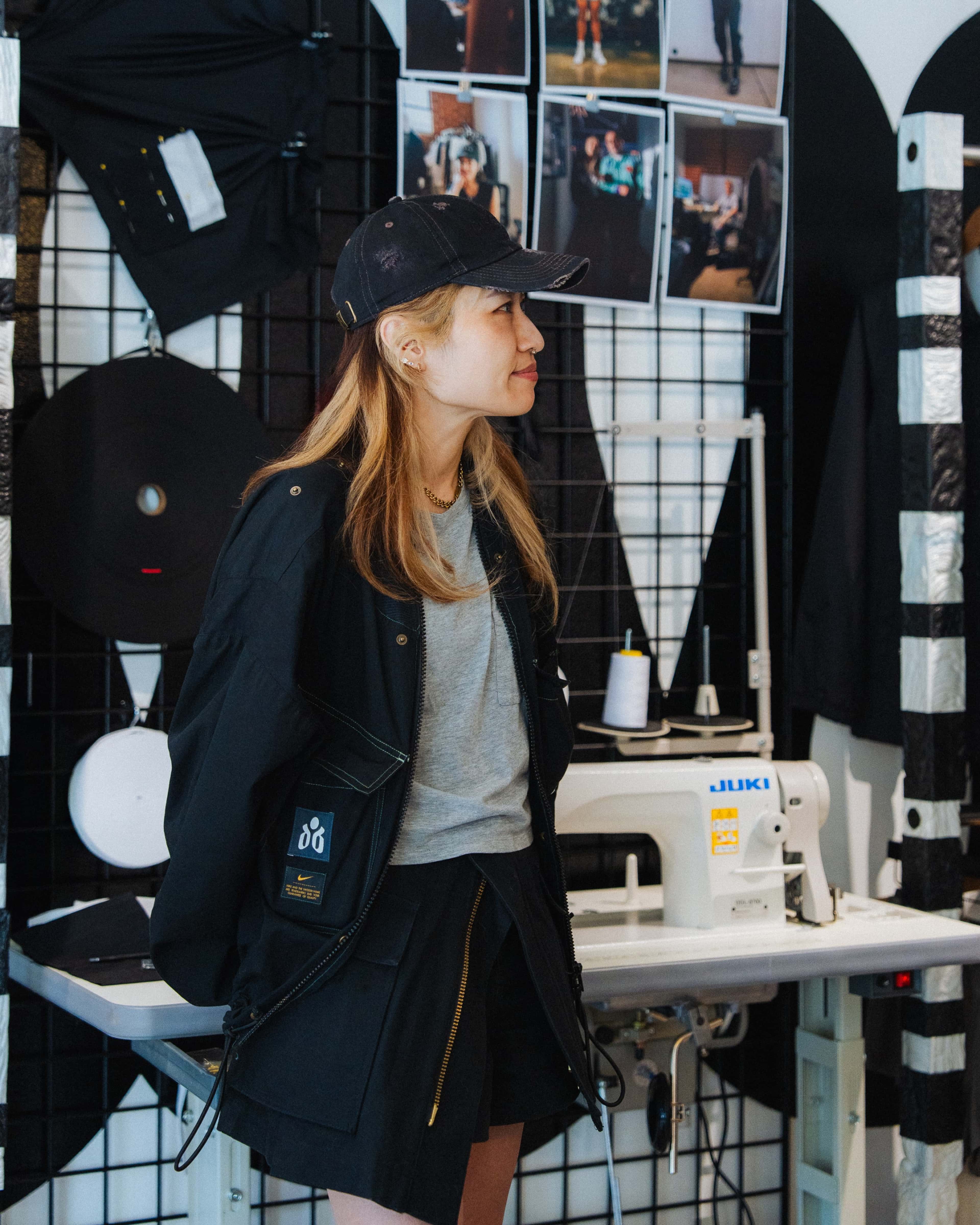
In the beginning, I didn’t think about the constraints at all. I was just throwing out ideas. The Nike Re-Create designers had to translate that into reality. They understand that you’re working with existing garments that have specific shapes and limitations. They were constantly figuring out how to reshape and reimagine those pieces while I stayed in the creative lane. In the beginning, I had no idea how they were going to make it work.
At one point I wanted to make a singlet that replicated the one worn by Nike's greatest triathlete, Mark Allen. I kept saying, “I want that.” They were thinking, We don’t have the stretch fabric to hold that shape. If I get to do this process again, I’ll start differently. I’ll begin inside the archive of deadstock itself. Look at 500 old jackets and ask: What could this become?


How does your Indigenous and Mexican heritage shape the way you think about garments as symbols, and where does that perspective show up in this collection?
The first piece I knew we had to make was a poncho. If you understand the poncho beyond the tourist version, it’s a heroic garment. It’s mythological. You know, it’s like the American kids growing up with the cape as their superhero iconography thing that you tied around your neck and you had this cape flowing. Well, ours was the poncho. It represents labor, battle and dignity. That battle could be picking strawberries for 14 hours in the Central Valley. It could be political struggle. It could be survival.
For me, it was intimidating. Am I Mexican enough? Have I paid enough dues to reinterpret this? I’m still not 100 percent sure. But in the spirit of the poncho, you put it on and you step into the arena. The poncho is an homage to my heritage.

What’s the story behind the Vomero and the Vaporfly colorways?
A lot of my political consciousness comes from studying the Black liberation movement of the ’60s and ’70s. “Black is beautiful” was a counter-narrative to constant negative stereotyping. The Mexican-American Chicano community learned a great deal from that. So, of course, there’s Brown pride and “Brown is beautiful.” This color represents us, our community, our skin tone, our experiences and [how] they deserve a place in that larger narrative. It’s paying respect to that same liberation movement.
The 3M reflective is just a cool hit, and then that red orange is everything that the desert and fire represent.
There’s a message on the left heel of the Vaporfly: Barrios Unidos. What does that phrase mean to you, and why was it important to include it?
Barrios Unidos means “Neighborhoods United.” I haven’t said this out loud, but I benefited from a lot of nonprofits and community-based organizations that supplied food when we didn’t have it at home or mentorship when we didn’t have it in the schools. I grew up being the child of that. I wanted to pay respect to all of the community-based organizations putting in the hard work. The work matters.
And it also reflects where we are now. Running crews, different cities, different brands, we’re often set up to compete. For me, it’s about coming together.
Contributing photographers John Garduno & Miya Hirabayashi