Skaters, Yachters, World-Class Athletes: The Sneaker That Unites Them All
- August 24, 2026
- Words:
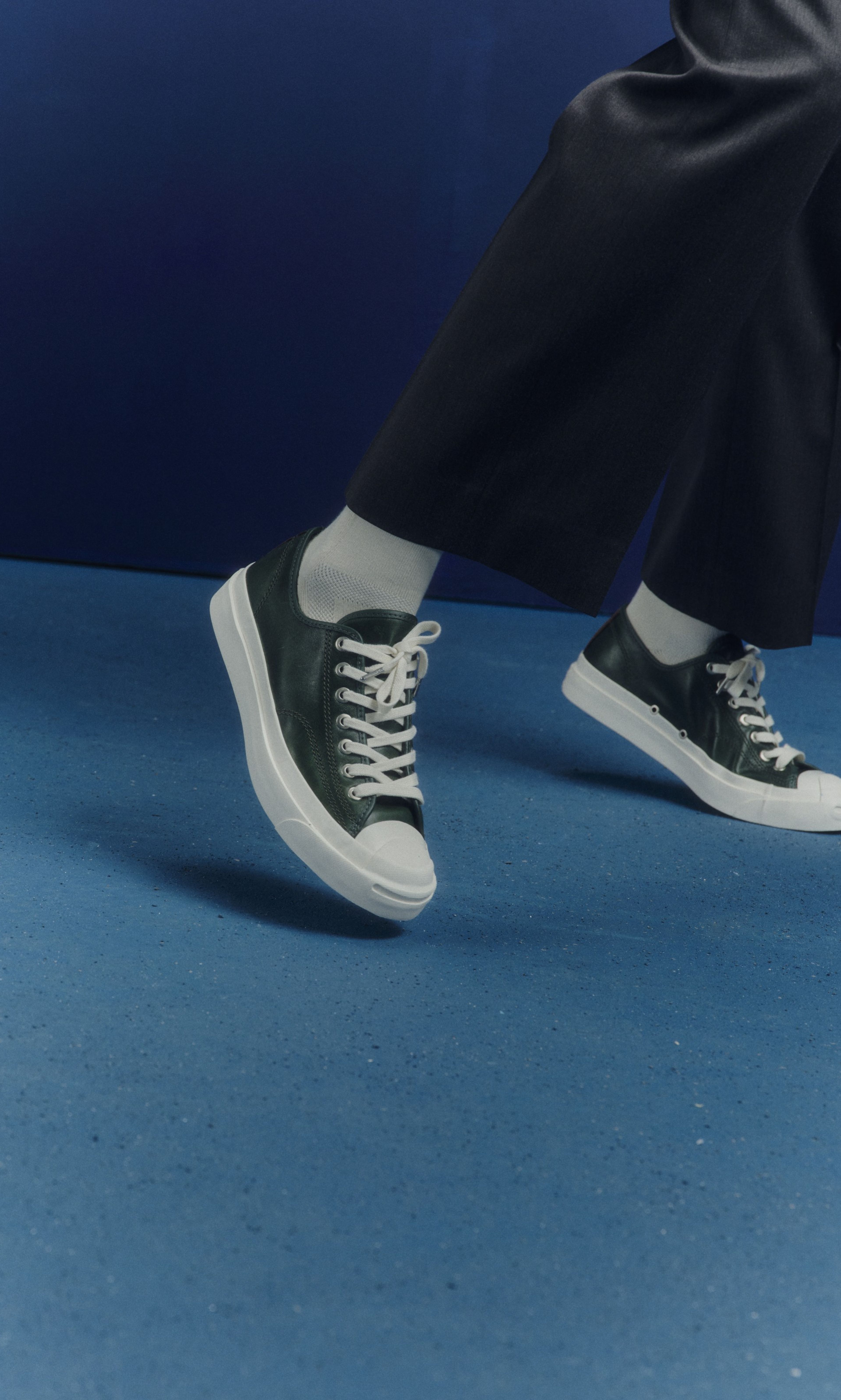
Look closely at the front of a Jack Purcell shoe and you’ll notice a small detail that sets it apart. Unlike its big brother — the Chuck Taylor, defined by its signature white toe cap — the JP carries a stripe of color, a thin rubber inlay set into the toe. Lean in, and its corners curl upward, revealing something unexpected: a cheeky grin.
It’s a nod to the man who designed the shoe, Jack Purcell, a world-champion badminton player known to nearly everyone as “the Smiler.”
A shoe most people know without knowing they know it, the Jack Purcell is Converse’s second-oldest icon, quieter than its more famous sibling but no less enduring. Since 1933, it has moved through nearly a century of reinvention, from badminton courts to country clubs, Hollywood sets to grunge and skate culture, each generation finding its own meaning in the sneaker’s unmistakable smile.
Now, once again, the shoe that never quite fit into one box is getting a new look. The second silhouette in Converse’s First String program — following the Chuck Taylor in 2025 — it pulls details from across its long history and filters it through a contemporary, soft-luxury lens, with premium materials and craftsmanship at the forefront.
The fresh model has already made its way onto the feet of a new generation of tastemakers, including this spring’s Italian Open champion, Jannik Sinner, who showed off a handmade, one-of-one pair after his win, offering an early glimpse of where the 90-year-old sneaker is headed next.

The Man Behind the Smile
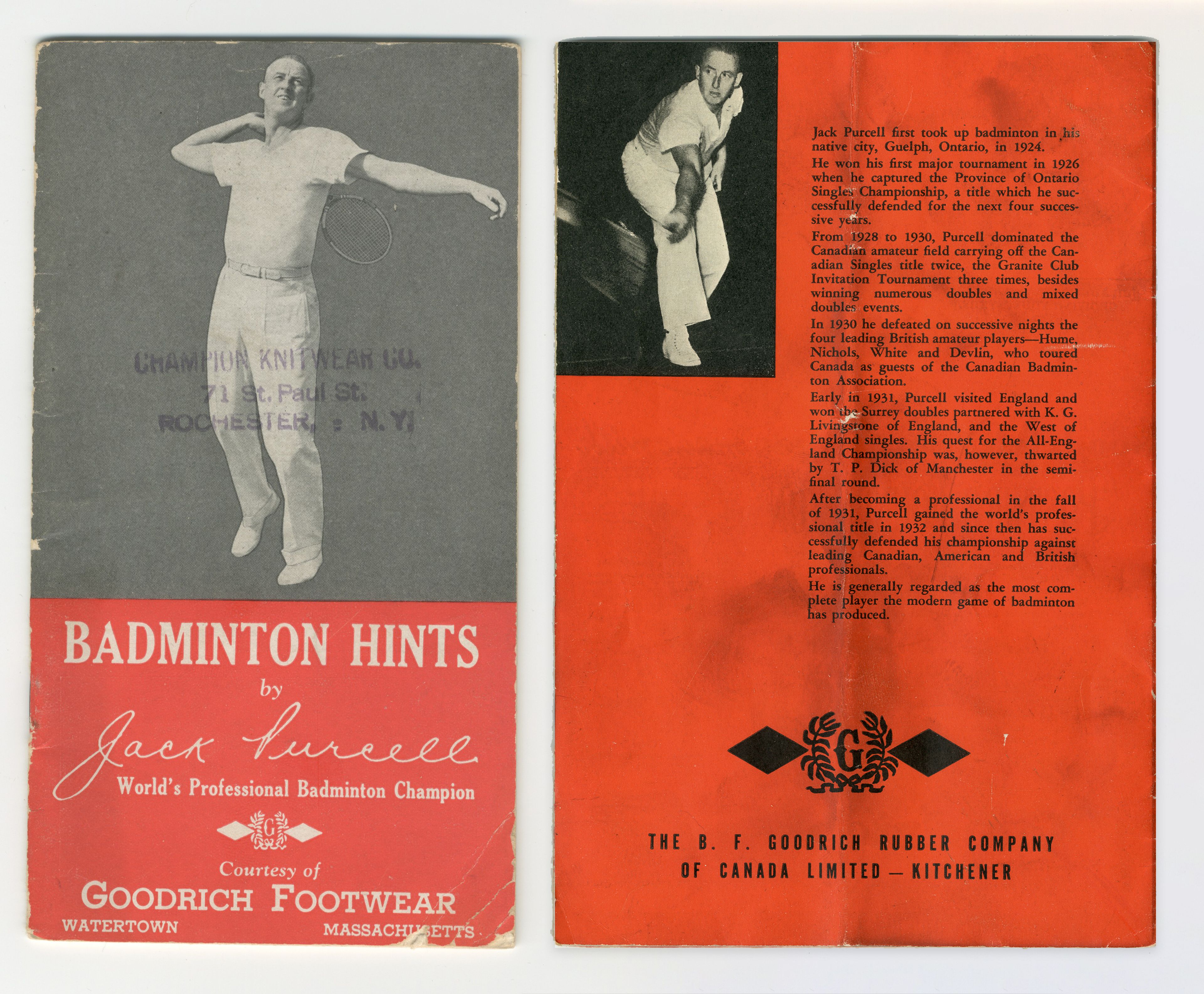
The story of the Jack Purcell didn’t begin with the shoe. Before the grinning toe cap, there was a grinning man — a world-champion badminton player from Guelph, Ontario, known for his gregarious smile.
In the days before nine-figure endorsement deals, top athletes still had to do side hustles to make a living, even the best athletes in the world. To help pay the bills, Purcell took a job in promotions at the sporting-goods company A.G. Spalding, where he was assigned a project examining the rubber used in the center of golf balls. Through this, he came into contact with the B.F. Goodrich Company.
“He wasn’t just like, ‘Yeah, sure, slap my name on it.’ He was the best badminton player in the world, and he had very specific thoughts around designing the Jack Purcell shoe.”
Sam Smallidge, Converse Archivist
The tiremaker was producing canvas court shoes at the time and looking to expand its racquet-sports business. In Purcell, Goodrich saw an opportunity to put the name of a world-champion badminton player behind one of its shoes and suggested a signature sneaker. But Purcell wanted more.
“He wasn’t just like, ‘Yeah, sure, slap my name on it,’” explains Converse Archivist Sam Smallidge. “He was the best badminton player in the world, and he had very specific thoughts around designing the Jack Purcell shoe.”

Jack Purcell in 1931 at the All England Badminton Championships in the Royal Horticultural Hall in Westminster.
“Not many professional sporting shoes carry that level of identity from its original creator.”
Matthew Sleep, Converse Global Design Director
Ordinary rubber-soled sneakers weren’t built for the game, he’d told people at the time. Too stiff, too flimsy, they couldn’t handle a sport that demands quick footwork and confidence underfoot. Purcell wanted a shoe that was comfortable and flexible enough for competitive play yet tough enough to survive it.
The first Jack Purcell was built around its namesake’s vision: a functional court shoe designed for competitive badminton. Performance wasn’t the only thing that set the original Jack apart. On the front was the now-famous smile, a piece of Purcell’s personality stitched onto the shoe that bore his name.
“Not many professional sporting shoes carry that level of identity from its original creator,” says Matthew Sleep, Converse’s Global Design Director.
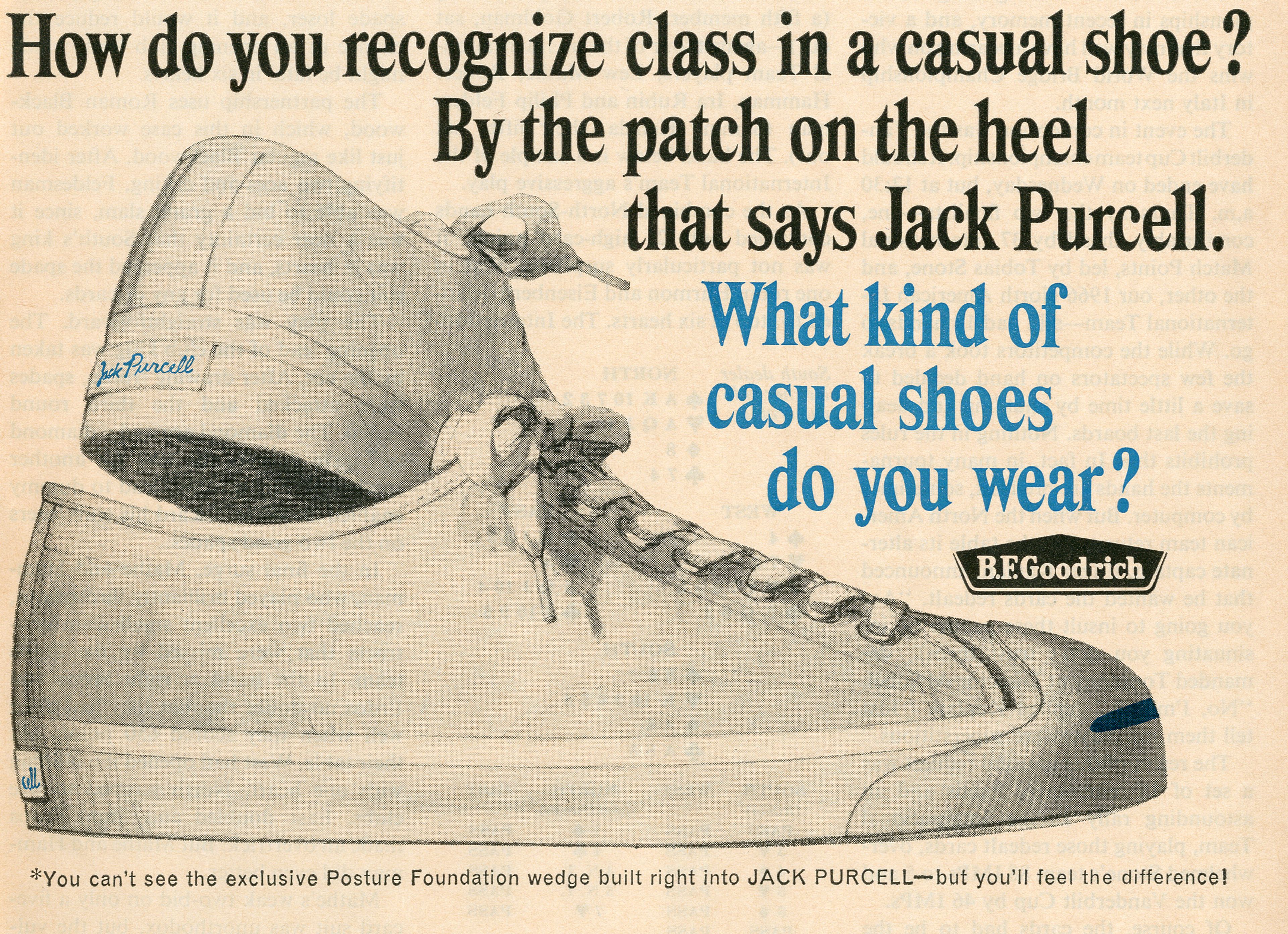
A 1965 advertisement for the Jack Purcell.
A Sneaker With Many Lives
The shoe found a following fast within badminton circles. A true piece of performance footwear, the low profile and reinforced toe kept it nimble yet sturdy on hard surfaces. But it didn’t stop there. Soon, the Jack Purcell began appearing on tennis and squash courts, where the same features that made it effective for badminton proved useful across a range of athletics.
“If it’s good for one playing court surface, it’s good for a variety of applications on racket courts,” explains Smallidge.
By the 1950s, B.F. Goodrich had expanded the line beyond the court, introducing versions for golf, boating and sailing. “It had really grown into this lifestyle brand,” says Smallidge. “Whether it was boating, badminton or yachting, it became associated with these country club–like activities that appealed to a high-end consumer.”
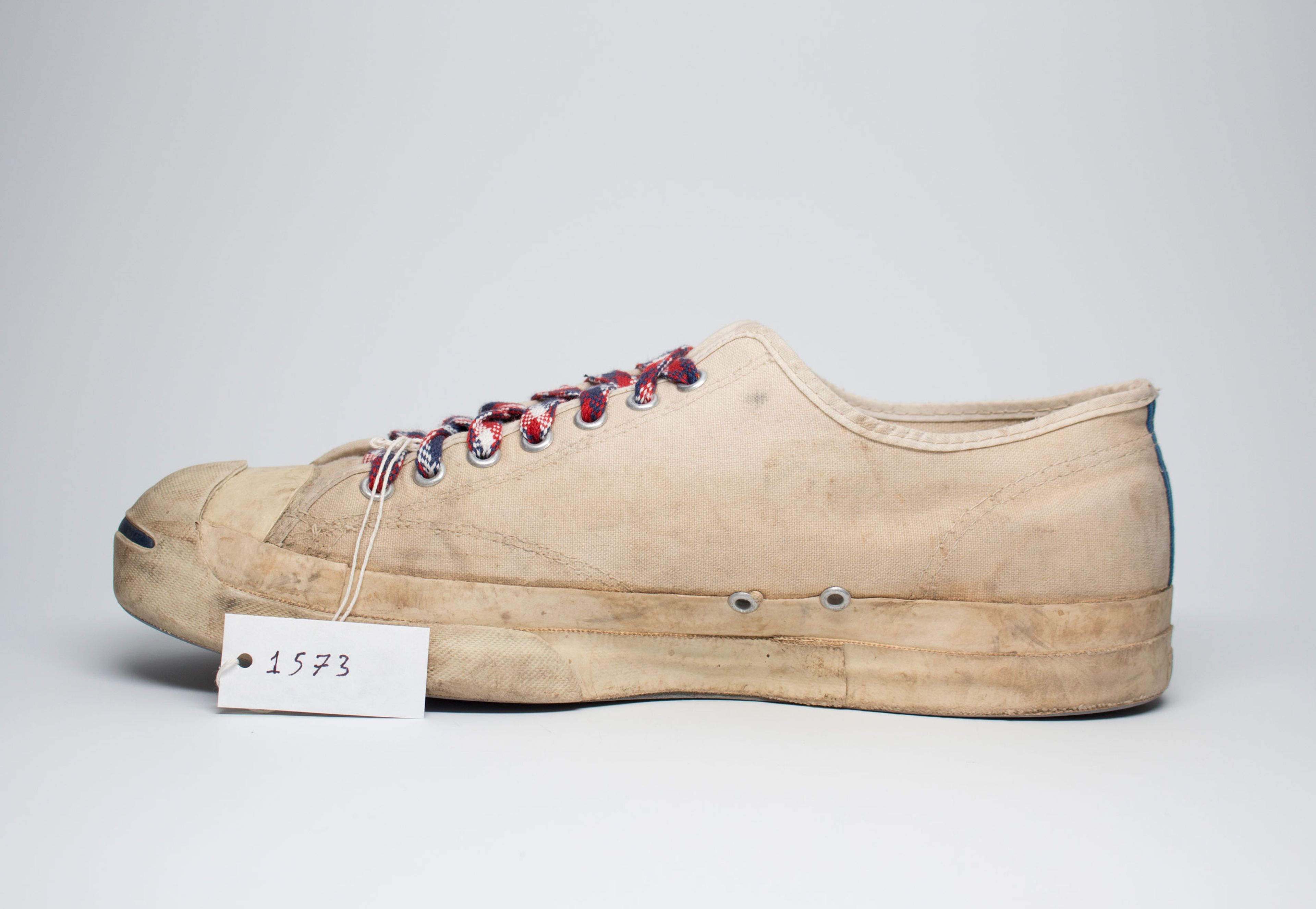
A vintage Jack Purcell from the Converse archive collection.
From there, the shoe’s crossover into popular culture accelerated. In 1955, celebrity photographer Phil Stern photographed James Dean styled in the canvas sneakers on the set of Guys and Dolls. The iconic photos would eventually become part of Converse advertising decades later, further cementing the shoe’s place in the visual language of midcentury cool.
As it found its way into more corners of American life, the Jack Purcell became a staple of Hollywood and postwar casual style, worn by stars including Elvis Presley, George Harrison and Steve McQueen.
The combination of style and practicality made it a natural choice for everyday wear too.
“If you were a parent sending your kid to school, you needed to put them in something that’s mildly athletic but can also function to get them through the rest of the day,” explains Smallidge. “Generally, canvas shoes would fit that bill.”
A New Chapter
In 1972, Converse acquired the Jack Purcell line from B.F. Goodrich, ushering the shoe into a new era. Early advertising leaned into the sports-car aesthetic of the decade, giving the Jack Purcell a sleek, aspirational edge. By the time the decade came to a close, that edge had sharpened.
“As you move into the ’80s, this New England nautical vibe came into the influence of the shoe,” says Sleep. “Very clean, Ivy League, slightly preppy. It gave the Jack Purcell a slight pomp and circumstance, which elevated it above other shoes.”
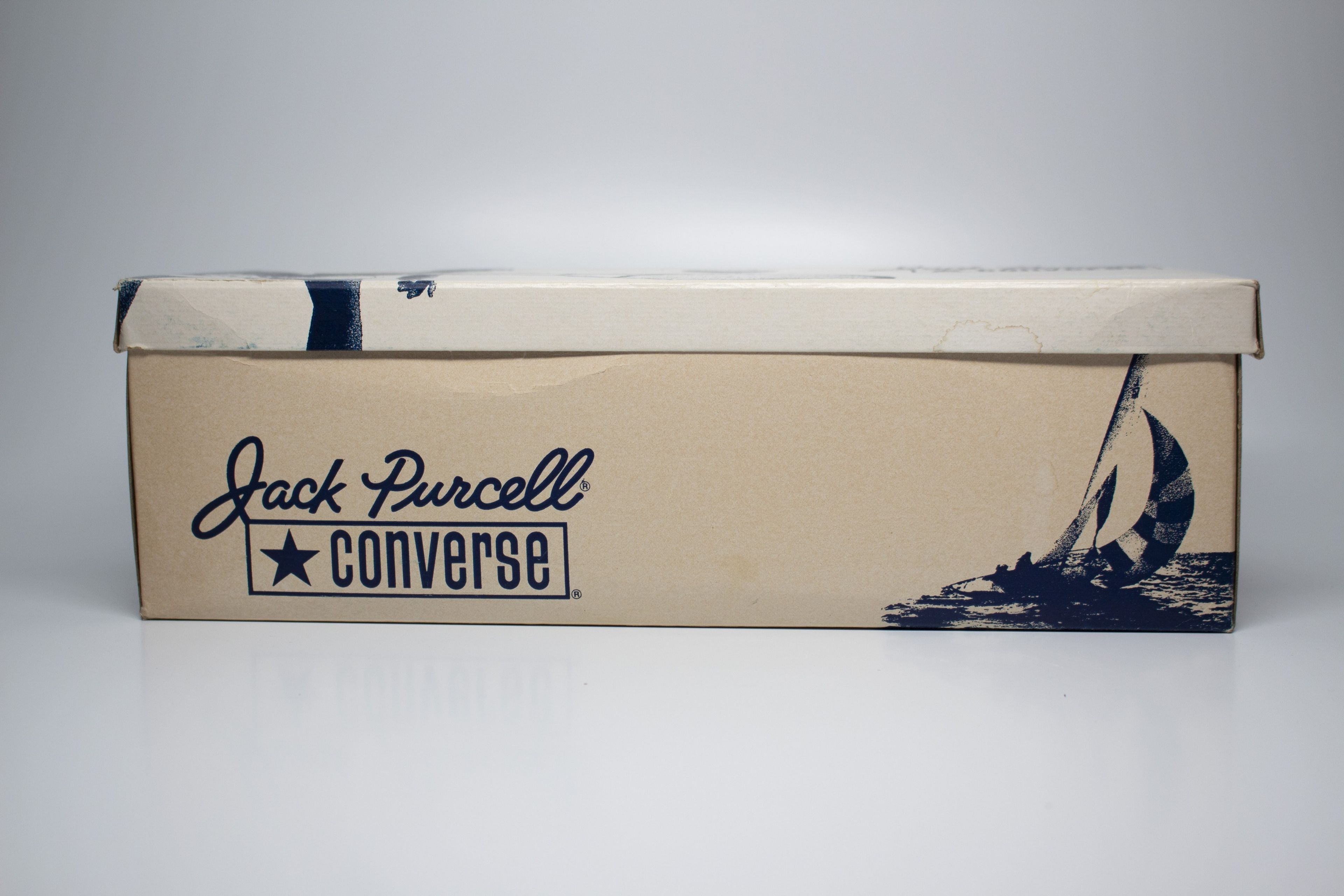
The sneaker’s polished image carried all the way into the 1990s, at which point it found an unexpected audience among skateboarders and the counterculture.
“Grunge music is one of the big reasons the Jack got skate pickup,” explains Sleep. Singers such as Kurt Cobain were photographed wearing the shoe, Sleep says, and it was bands like Nirvana that led to the broader cultural adoption of the product.
“Grunge music is one of the big reasons the Jack got skate pickup. That’s what these countercultures do. ‘Let me take something that’s not made for me and put it into a new context.’’
Matthew Sleep, Converse Global Design Director
The juxtaposition of the preppy, elevated look with a punk and grunge aesthetic is exactly what made the shoe so primed for reinterpretation — what Sleep calls the “apex of counterculture.”
“That’s what these countercultures do. That’s the biggest subversion,” says Sleep. “‘Let me take something that’s not made for me and put it into a new context.’ Now it’s not that guy in the chinos with one fold down the middle, buttoned down and tucked in. Now it’s paired with that ripped plaid flannel, leopard fur, crazy glasses. That’s the root of what we call streetwear. Taking the thing that’s not meant for that use and putting it deliberately into another perspective.”
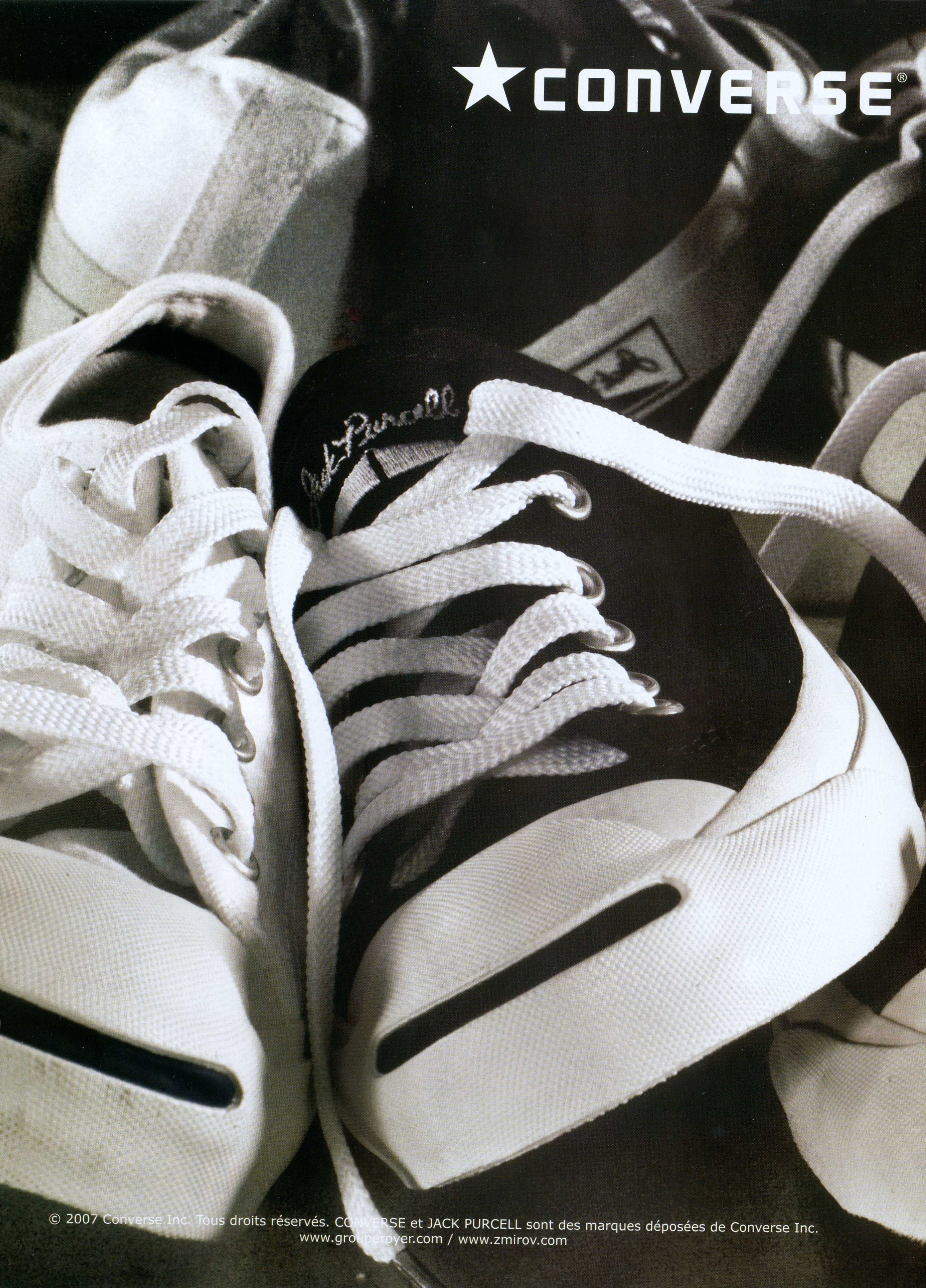
Skaters were drawn to the JP for its style but also because the same construction that makes it powerful on the badminton court also offers performance benefits on a skateboard.
“In badminton, you’re always on your forefoot. You’ve got a double toe cap that reinforces the area,” says Sleep. “The same thing applies to skate. Most of the wear from doing tricks happens across the bridge of your foot, or up in the forefoot area.”
Still Smiling
Ninety years on, the Jack Purcell is getting rebuilt from the ground up, not as a single throwback but as a composite of everything it’s been before. The premium First String edition is scheduled to drop globally on September 3 for $250, with an inline release to follow in 2027 at a classic $90 price point.
“It’s about curating the best of all the eras,” explains Sleep. “It’s not one specific decade or one specific year.” The new iteration brings that approach to the materials too, with premium leather sourced from Montebelluna, Italy, a longtime center of luxury shoemaking. The materials and craftsmanship give the new silhouette a softer, more refined expression without losing the simplicity that has always defined it.
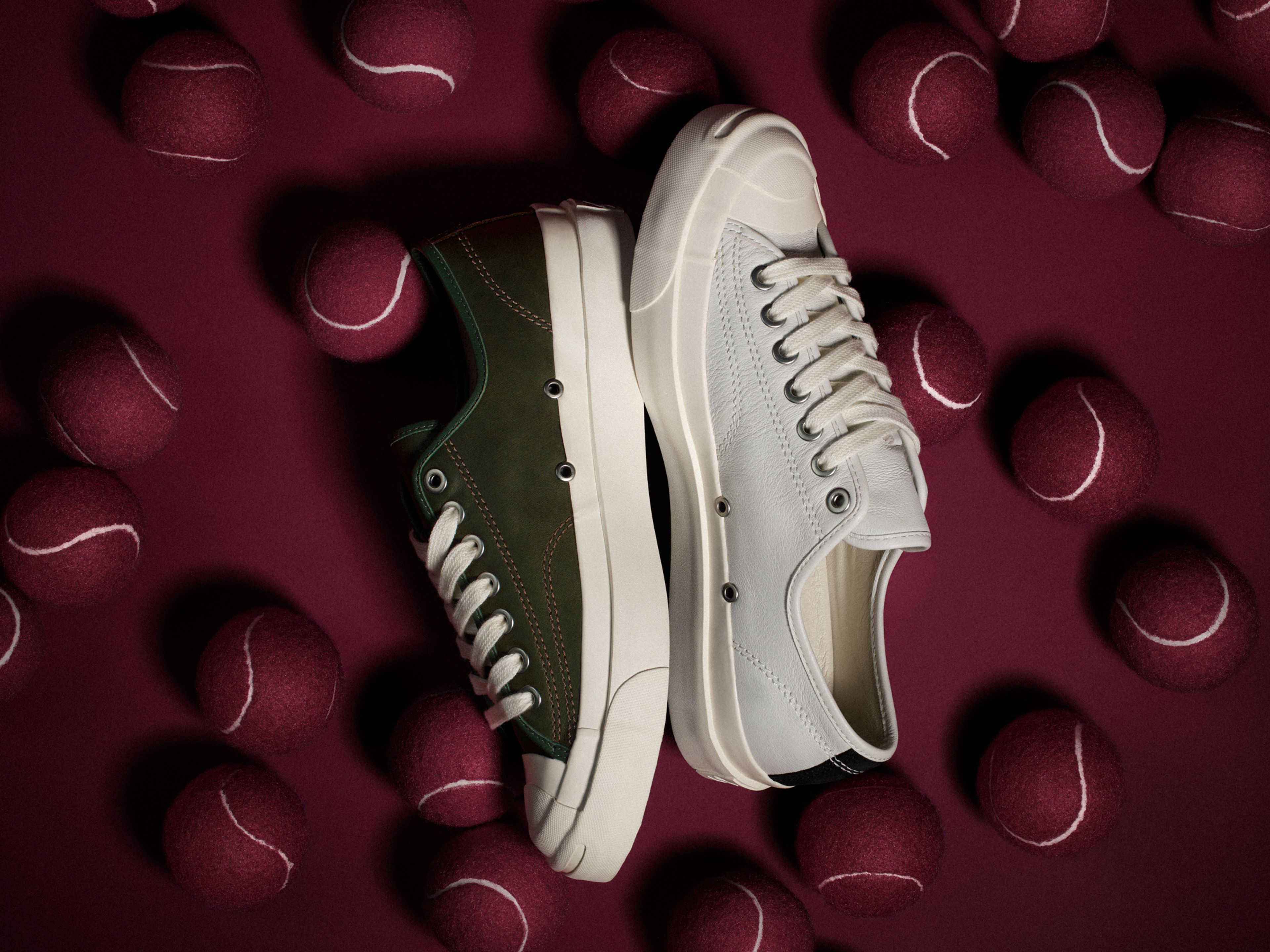
“How many products, not just shoes, express emotion, even when they exist in their simplest, plainest form? The Jack Purcell is the quintessential emotive sneaker.”
Matthew Sleep, Converse Global Design Director
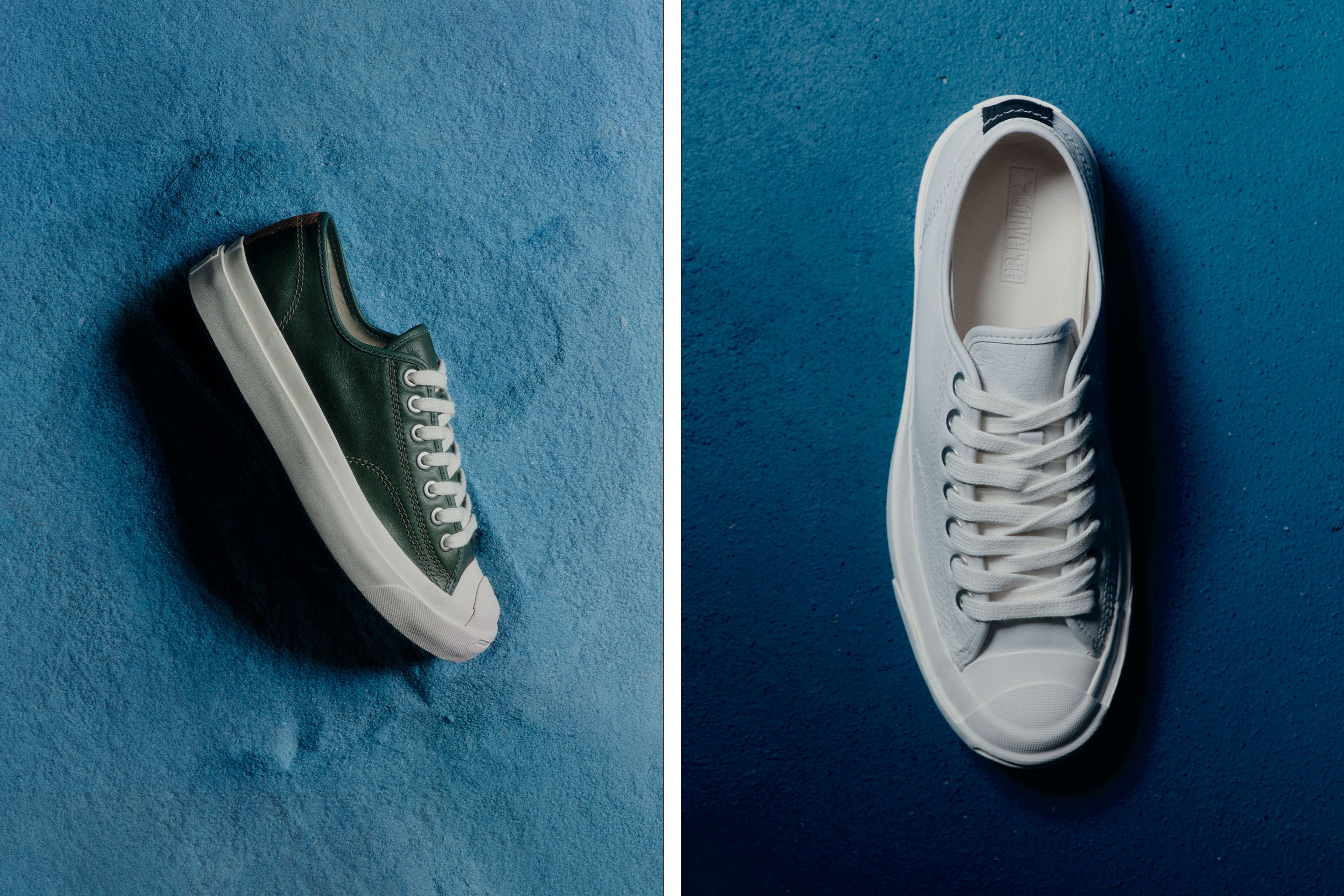
For Sleep, the appeal goes beyond just materials to the legacy of the shoe.
“How many products, not just shoes, express emotion, even when they exist in their simplest, plainest form? The Jack Purcell is the quintessential emotive sneaker.”
The emotion comes from all everything that’s accumulated around the sneaker over the years: the athletes who wore it, the celebrities who made it visible, and the subcultures that gave it new meaning.
“It’s a shared history,” says Sleep. “That’s the beauty of these things. And that’s why I continue to be here at Converse and want to work on this. What an amazing universal translator.”