Savy King Is Playing for a Bigger Team Now
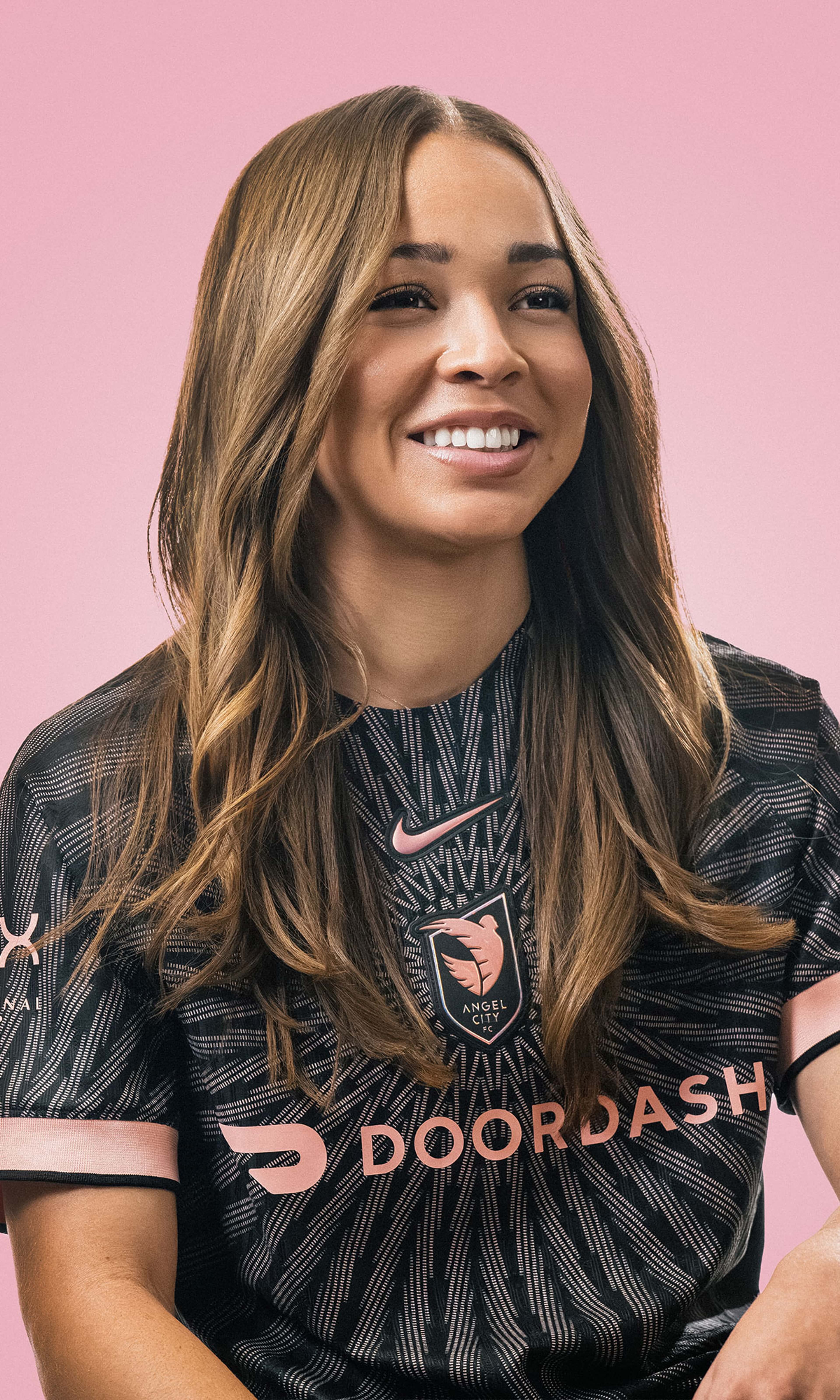
- March 10, 2026
On May 9, 2025, in the 74th minute of play, Savy King folded onto her back, heaving deep breaths. It was a regular-season game pitting her LA-based Angel City FC squad against the Utah Royals. Medical teams gave her chest compressions and CPR for 10 minutes, then she was rushed to Cedars-Sinai Medical Center, stabilized and responsive. She had narrowly survived an episode of cardiac arrest. She underwent open heart surgery four days later to treat what doctors concluded was the cause of the scare, a rare congenital heart abnormality.
Last month, the NWSL defender returned to training with her team for the first time. In Savy’s life, nothing — not a freak health incident, not a corner kick beaming like a laser toward the goal — has pushed her off course. Her rise as one of the world’s most talented defenders has brought her back to her hometown of Los Angeles.
We caught up with Savy from her home in LA and asked about her full-circle return to the City of Angels.
The Record: When did you realize you had a real talent for soccer?
Savy King: During my first year playing rec center ball, coaches would walk up to my parents and say, “Are you sure this is the first time that Savy’s ever played?” The crazy thing was, no one in my family had ever played soccer before. My parents didn’t know much about the game at that point, so they were just being honest when they said I had never played. They didn’t even know what offside was. I scored an unreal number of goals my first season, around 10 years old, and I ended up getting scouted immediately to play for a club, which was Real So Cal, based in Woodland Hills. I’ve always felt confident and comfortable with the game. But it was a few years later, when I was about 13 or 14, when it clicked for me that I could turn soccer into my future.
TR: Ten years old is pretty late for picking up soccer. But you come from an athletic family, so maybe it was just a matter of finding the right sport?
SK: My twin brother and I did every sport together. Flag football was first, then baseball, then basketball camps. I have two moms, and one of them played basketball in college, and the other was a professional runner and cyclist, so they both knew the amount of work it took to be a pro athlete. They put me and my brother through intense workouts at a young age, which I think helped us develop as athletes, especially on the mental side. Early on, I learned a kind of emotional maturity, how to navigate the ups and downs of being an athlete. But there was a lot of competitive pushing in our family, and we ultimately found our own thing. It was soccer for me. For my brother, that’s running.
TR: You set a couple of track and field records at Agoura High School.
SK: Yeah, in the 200-meter and the 400-meter.
TR: When you’re playing sports alongside a brother or sister who’s close in age, sometimes there’s this unspoken feeling to occupy your own lane in your specialty sport instead of drafting off something that your siblings are doing. Was that the case for you?
SK: Yeah, I think there was some of that. But it was more of a pull toward soccer, less of finding something different from my brother. I had a love-hate relationship with track [laughs]. In high school, I didn’t need to train for it, I would just go out and race. It’s an interesting time at that age to be discovering new sports when I found all this success in something I wasn’t training for.
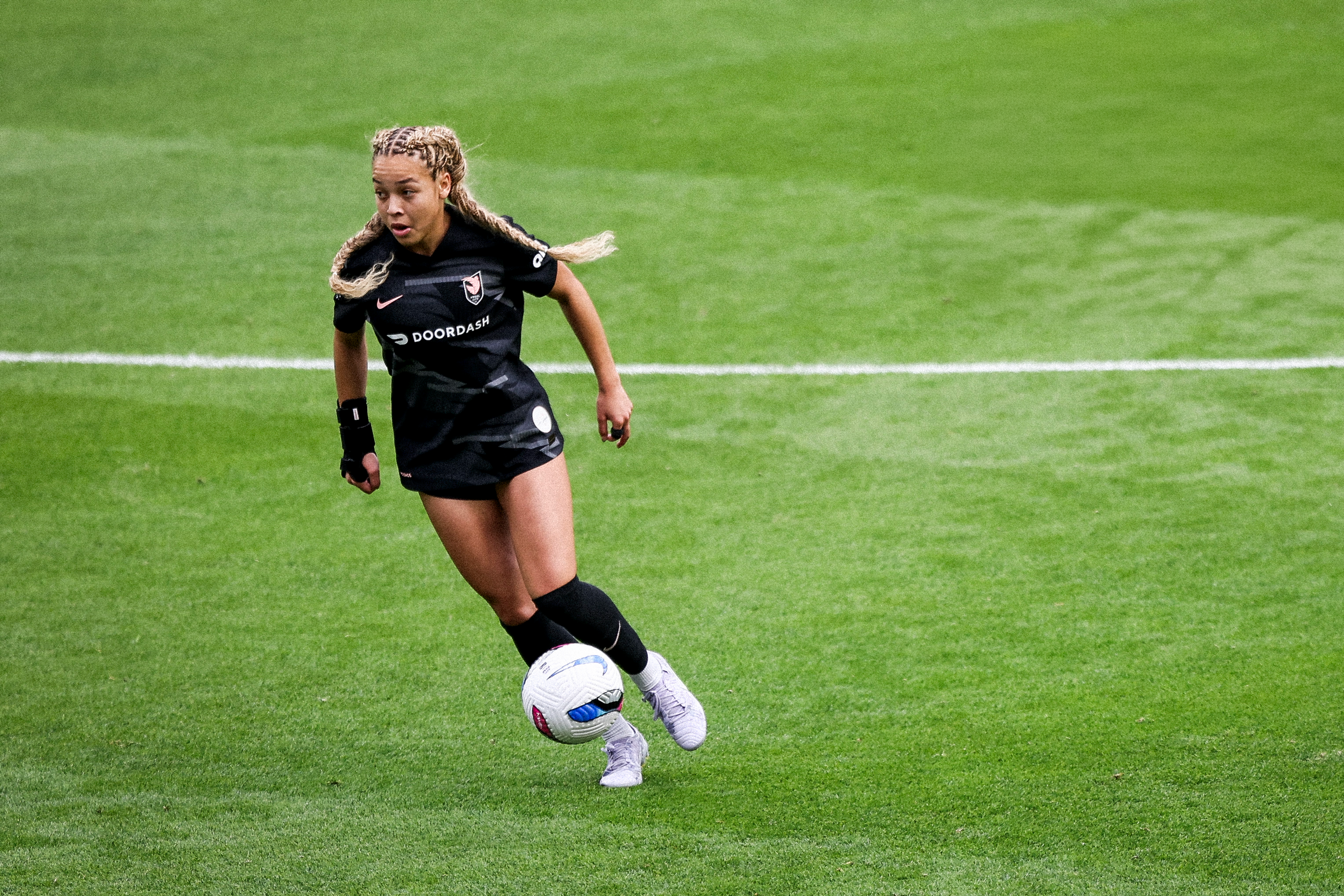
One of the highest-ranked left backs in her graduating class, Savy signed an NIL deal with Nike before she entered college.
“Early on, I learned a kind of emotional maturity, how to navigate the ups and downs of being an athlete.”
Savy King
TR: Luckily running is at the center of so many other sports. You weren’t doing wildly different things.
SK: When I’d race against my brother, I’d get excited thinking how it would translate to all that speed on the soccer field [laughs].
TR: What was your transition like into club soccer? The club scene for any sport, but especially soccer, is brutal. The schedule is grueling compared to a typical high school calendar, when you’re playing maybe three months out of the year.
SK: When both me and my parents were new to the sport, it was definitely nerve-wracking. We were all learning as we went along. I mean, Southern California is one of the best areas for soccer in the country. I was playing against a lot of girls who had been playing since they were little, who’d known each other and had been used to the club schedule for longer than me. Once you decide you want to enter that level of competition, though, the sacrifice of your time is a choice that you have to make. You have to decide if that’s something you want to pursue, because there are trade-offs.
TR: For you and your whole family, I’m sure.
SK: Countless hours at the field, countless drives for practices. Every weekend was pretty much taken up with games, and this was on top of training for at least four days during the week. Soccer can easily become your lifestyle. I was ready for it, my parents were ready for it, but it was a choice.
"Success and gratification are closely connected for me now. I’m so thankful that I’m even here, alive.”
“I want to be the kind of leader who’s there for my teammates who feel like outsiders to LA.”
Savy King
TR: Your path across the country has given you a look at different soccer cultures nationwide. You went to UNC to play for a storied program, and you got a taste of ACC soccer.
SK: Growing up in SoCal was a great place to prepare for competition all over the country. There was never an easy game in SoCal. I didn’t ever remember teams having this wide gap of talent from one team to another. That’s exactly how it felt in the ACC. It’s one of the best conferences in the country. Every game was a battle. Going in as a freshman, I felt confident because of how LA prepared me.
TR: You probably start to pick up on how different areas of the country play the game. Like, when you traveled overseas for international play, did you see little differences in how national teams play?
SK: A lot of teams like Japan and Spain, I’ve found to be very technical. Those are the hardest kind of teams I’ve found to play against. Some teams are more direct, like Nigeria. Germany is very physical. The U.S. is a nice mixture of technique and physicality.
TR: You’ve had the chance over your career to play with clubs that are characterized by their togetherness. You think about U.S. Soccer, but then you think about a legacy program like UNC, and now for Angel City, you’re building a new culture of togetherness for a pretty new team.
SK: The USA team we had during the U20 tournament in Columbia was one of my standout international experiences because of how unified we all were. We essentially played three 120-minute matches back to back to back, and every single game was a battle. It was crazy. It took blood, sweat and tears to pull out a bronze medal.
That culture to do whatever it takes is superimportant. Everyone on that squad put the team before themselves. You need people who want to be as great of teammates as they are individuals. And that starts with relationships off the field, getting to know them, connecting with them, strengthening ties with them. We’re around our teammates more than our own families. For people who aren’t from LA, it’s easy to feel alone in a brand-new, huge city. I want to be the kind of leader who’s there for my teammates who feel like outsiders to LA.
TR: What does it mean to you to be back training with Angel City again?
SK: It means the world. It’s been a crazy journey trying to get back here. I wouldn’t have believed you if you told me eight months ago that I’d be playing again so soon after having open heart surgery. I learned it was hard for me in knowing how much my scare affected other people, like my family, my friends, my teammates. It eases my mind knowing that the people I love can see me back out on the pitch again, because there are only so many ways I can verbalize that I feel great. Them seeing me play is the proof.
TR: Do you feel like your experience has added to your definition of what success looks like? For someone as competitive as you, there’s the literal winning at the highest level, like winning a title, winning gold — all of those are still true. But hearing you talk, you seem to care just as much about the person who was influenced deeply by your story.
SK: Success and gratification are closely connected for me now. I’m so thankful that I’m even here, alive. When you’re an athlete, it’s easy to take wins and victories for granted. You can get lost in the routine of what’s turned into a career. The thing you used to be happy about, winning, can turn into complacency. Now that I’m back, success is much more broad. If your happiness is only being determined by the big wins you want to accomplish, you miss out on the little things that make the journey so special.