Frozen in Time: How Nike Designers Created the Cryoshot
- May 21, 2026
- Words:
Tucked away in a factory in northern Italy, you’ll find a pivotal room for the sport of football; it’s a space just large enough for a few of the 27 technicians who create the world’s most beautiful football boots. In a setting like this — the building where boot design at Nike took off in the mid-’90s — it’s hard not to be swept up in nostalgia. The creative tension between honoring the past and designing for the present is most visible right here, looking at a near replica of Ronaldo’s famous Mercurial from 1998, its brilliant blue and silver undulations streaking through the upper, made real for a shoe today.
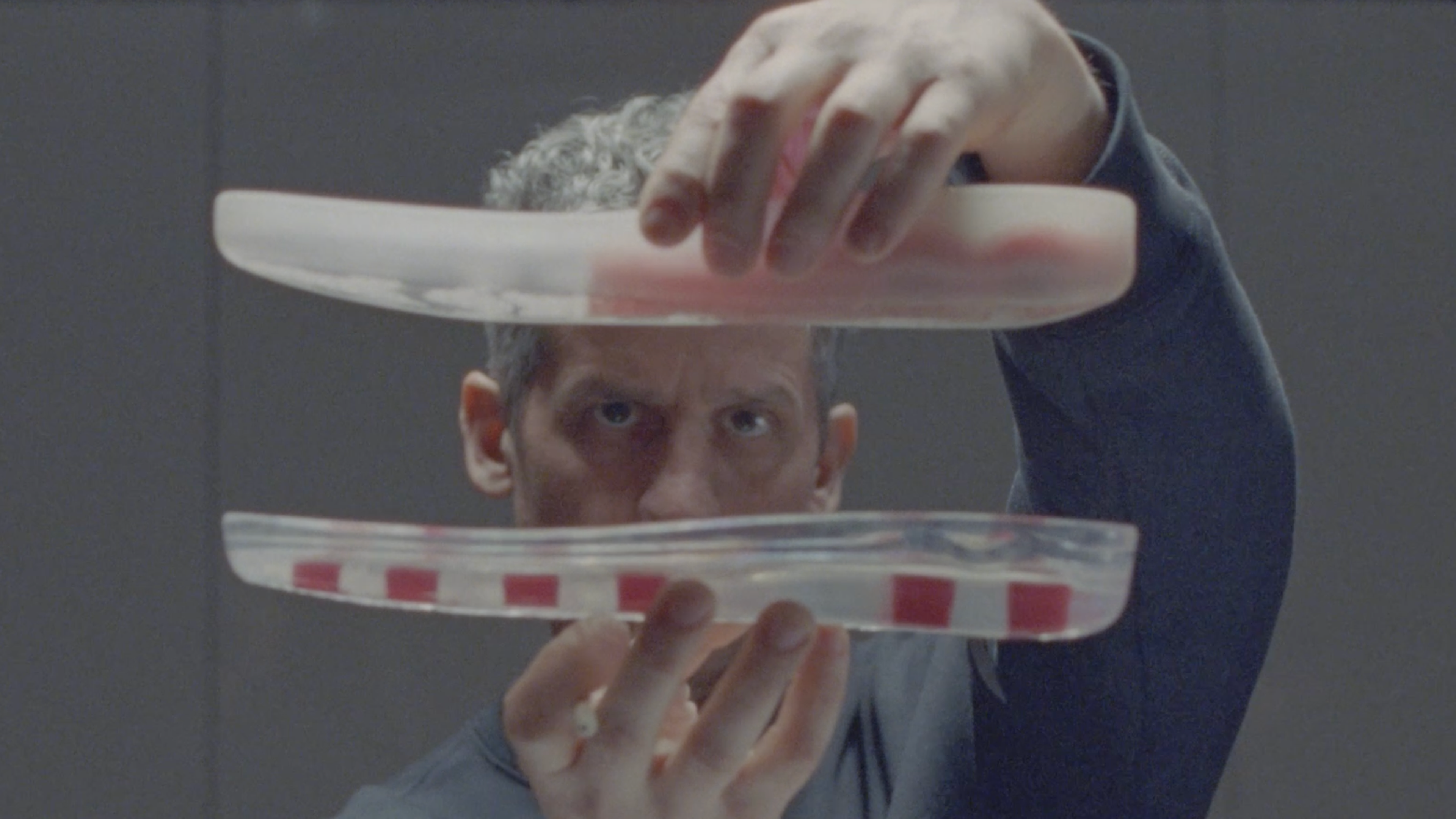
But in this scene, a modern incarnation of the boot lies sole side up on a table. Surrounding the boot’s studs are a crystal-clear TPU housing clip. Picture a block of ice. It’s a window through which to see the shoe’s inspiration as an on-pitch performer, but it’s also a technical feature that transforms the shoe into a comfortable everyday shoe off the pitch.
Cryoshot is the franchise where football boots become wearable symbols of the here and now, preserving the integrity of historic football boots while breathing fresh life into them as modern streetwear. Nike’s partnering Italian factory in Montebelluna helped inspire the creativity that went into making Cryoshot a reality.
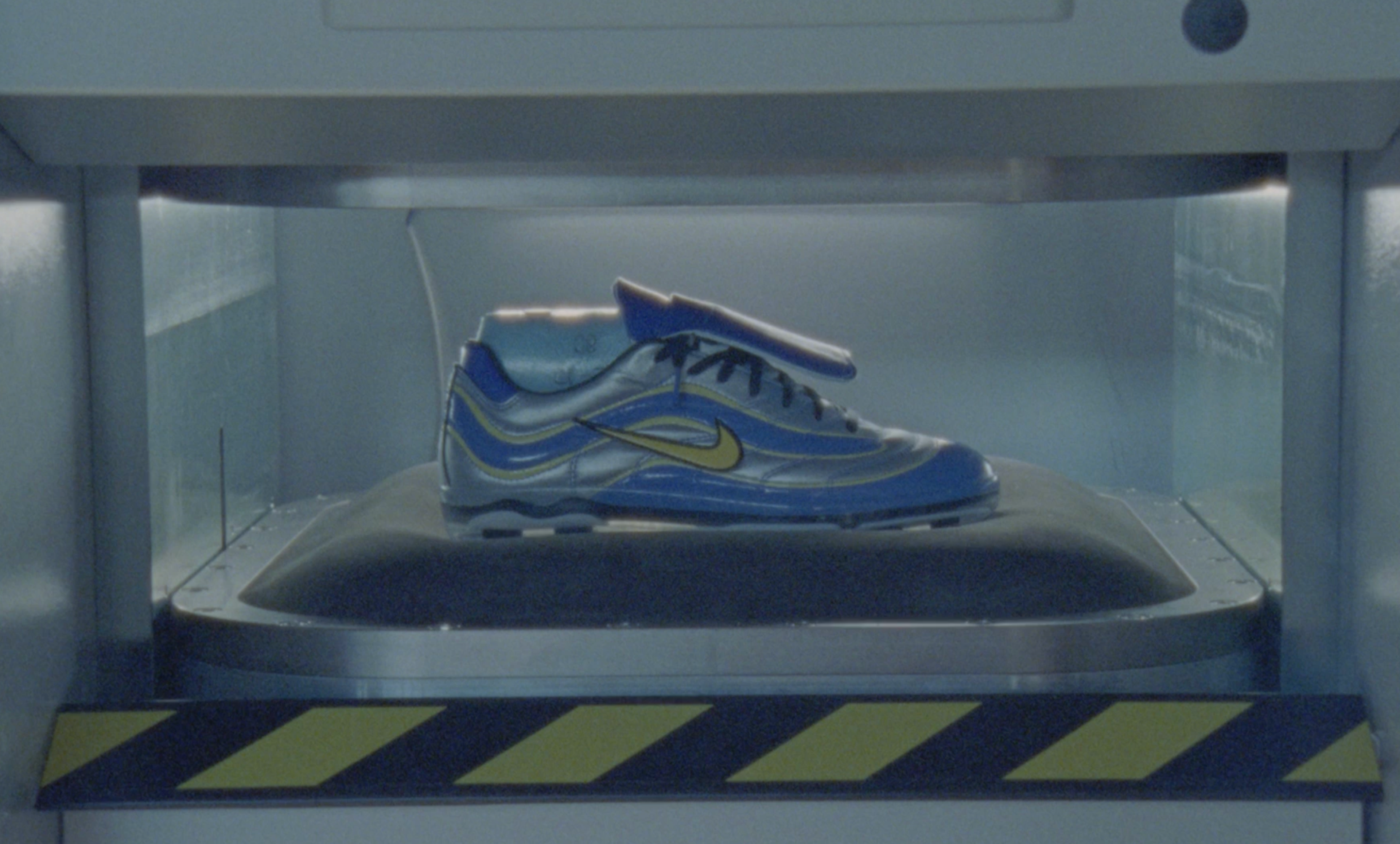
Over time, iconic boots like R9’s Mercurial transform from on-pitch performer to timeless artifact.
“I’ve been around the cultural power of football boots for much of my career as a developer. But to be in Europe and to watch it firsthand...that’s when you really feel the impact of a project like Cryoshot.”
Harry Sun, Manager for Nike Sportswear, Footwear Development
“I’ve been around the cultural power of football boots for much of my career as a developer,” says Harry Sun, Manager for Nike Sportswear, Footwear Development. “But to be in Europe and to watch it firsthand in Montebelluna, where you see the attention to detail from our technicians and you experience the memories that our boots have, that’s when you really feel the impact of a project like Cryoshot.”
The question Cryoshot designers asked: What if there was a way to create a new injection process that shows the tooling of famous boots like R9’s Mercurial from 1998, including the studs underfoot?
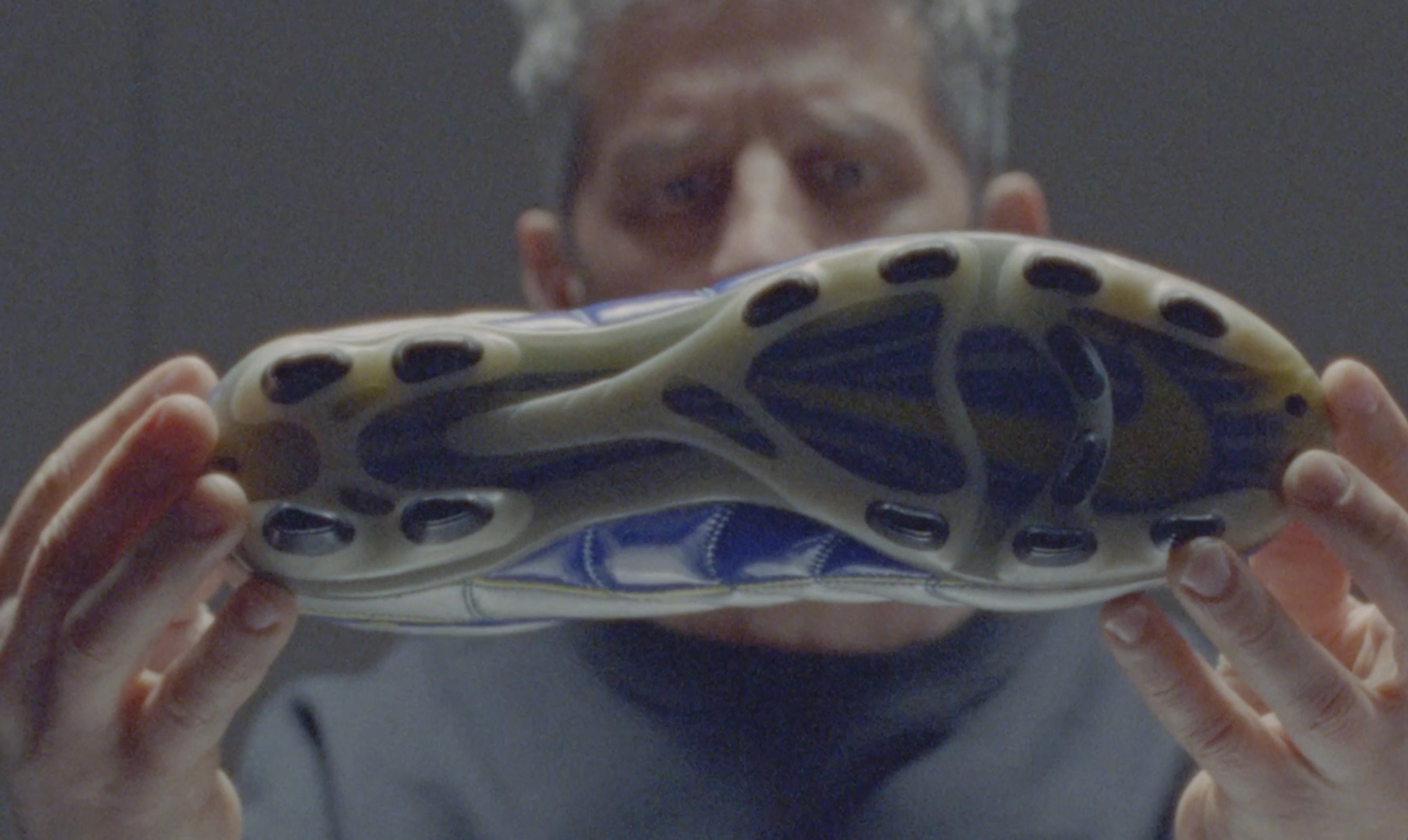
"For me, Cryoshot represented a chance to celebrate a pivotal moment in Nike’s design history that established its football identity."
Enrico Carbonere, Expert Designer at Nike
“Football boots exist on this interesting spectrum of memento and performance equipment,” says Michele Galasso, Nike Lead Footwear Developer, Italy (and born in Montebelluna). “It’s reserved for the pitch. Over time, once you stop playing, it turns into a beautiful piece of memorabilia, like a museum piece. We wanted it to be possible to wear these boots every day.”
The engine of that idea is the shoe’s transparent midsole. It’s inspired by the process of cryogenic preservation. That’s when structurally intact DNA can be preserved for long periods of time at low temperatures. The Cryoshot’s transparent midsole reveals tooling from the past. But achieving the right midsole was a goal that’s easier said than done.
To create components like soles and insoles, you need to inject molten-hot materials like TPU into a mold, and the components are then seamlessly bonded to the upper. When you use ideal material compounds, injection molding helps the shoe to be more flexible and comfortable. But achieving the clear, window-pane glassiness the designers wanted for Cryoshot is a challenge. The clearer the material compound, the stiffer the shoe gets. There’s also the reality that the shoe needed to keep the geometry of the studs underfoot to be a true homage to its forebearer.
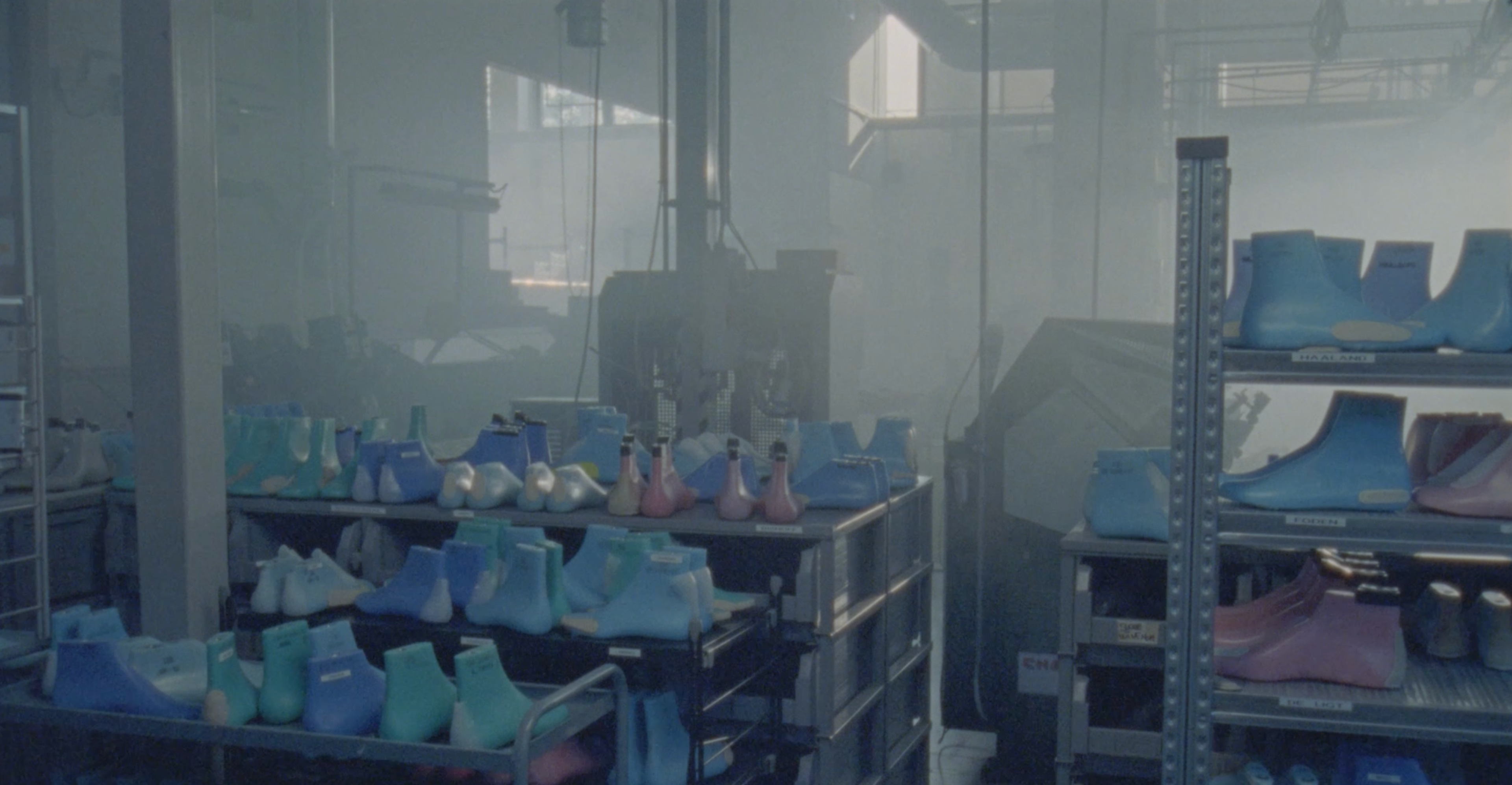
For designer Enrico Carbonere, Cryoshot represents “the creativity and the capacity for excellence that Montebelluna helped bring to Nike Football in the mid-’90s.
Long the home of expert bootmakers for hikers, bikers and skiiers, Montebelluna was the perfect setting to help inspire a solution. Nike partnered with an R&D factory there in the mid-’90s as the brand focused its attention on rigorous football boot design. This was after a glaring rollout with the Air Rio in 1995, a forward-thinking, innovative boot that still missed the mark with players on comfort. Nike leaders knew the company needed to get closer to the Italian epicenter for fine bootmaking to create boots that delivered on both performance and comfort. In many ways, Nike Football’s push into its new era took off with the Mercurial R9 in 1998, but it began with the first boot constructed completely in Montebelluna, the Air GX, in 1997.
“For me, Cryoshot represented a chance to celebrate a pivotal moment in Nike’s design history that established its football identity,” says Enrico Carbonere, an expert designer at Nike and one of Cryoshot’s lead designers, who was born in nearby Treviso.
For the better part of a year, Carbonere joined Nike’s globally-based designers, developers and engineers to find the ideal translucent midsole material. They experimented with different compounds, but all led to dead ends. The visibility was too murky. The midsole was too heavy. They tried more pliable compounds, but once injected into the mold, they weren’t achieving that desired icy-clear visibility through to the studs. At one point, the teams discarded the idea of a uniform midsole and toyed with using a hollowed, completely cored-out version of the midsole, but the result still wasn’t satisfying.
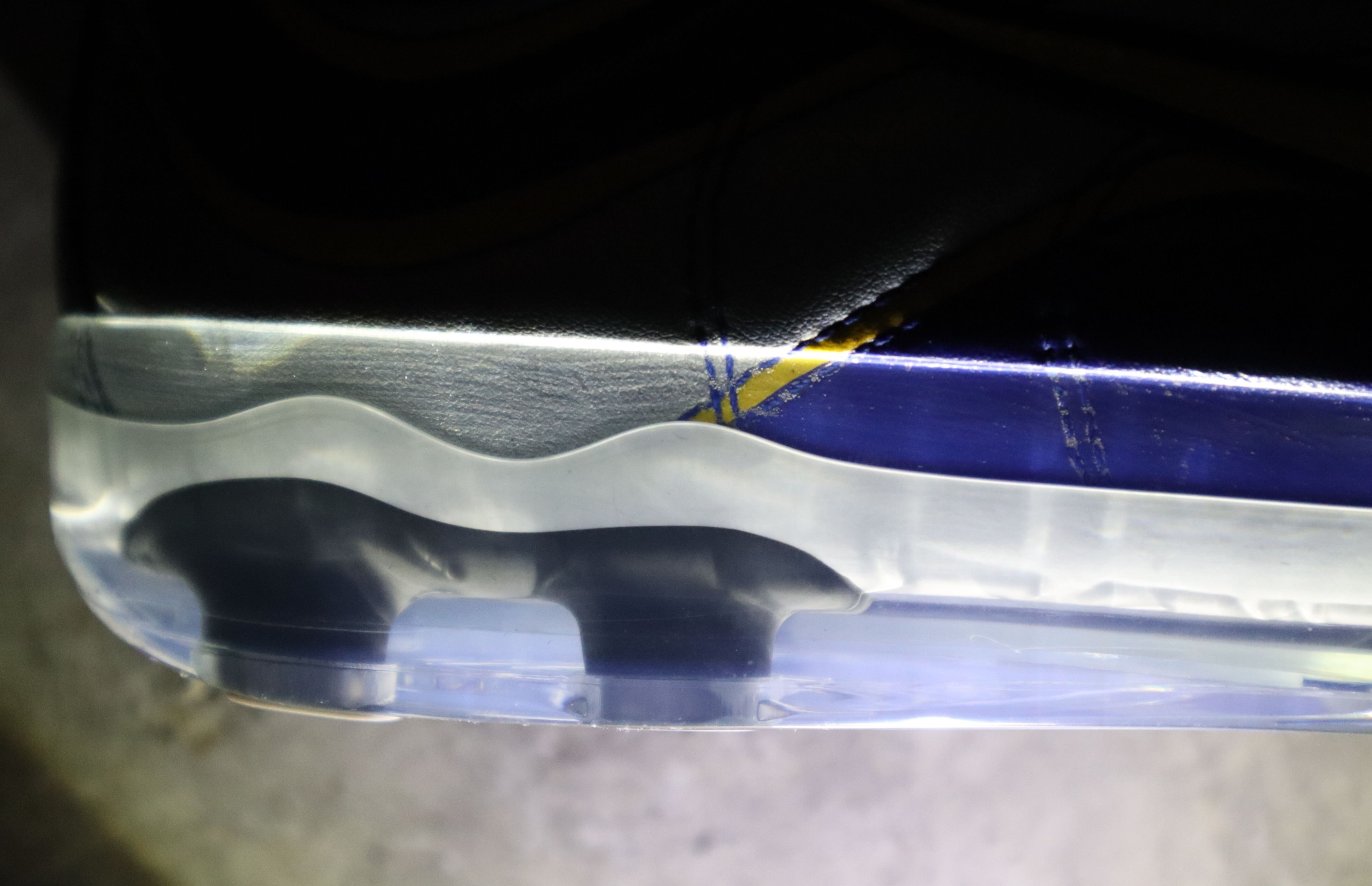
The clear midsole was a challenge in how uncompromising its goal was. There could be no blemishes in the injection mold preventing you from seeing every important detail of the original studs.
Then, over time, the injection processes inched closer to both the aesthetic and the comfort the team was after. Sun remembers when they received the sample that suggested they were on the right track.
“It felt almost like an unboxing,” says Sun. “The whole design team stood around it. As soon as I pulled it out of the box, everybody was like, "'Woah.' It was a crystal-clear TPU housing. Exactly what we wanted.”
The rest of the Cryoshot’s parts form a cohesive system around the housing. Designers chose a drop-in midsole with a heel Zoom unit for comfort. The opaque TPU plates, inlays and 360-degree housing show the studs from the original boot designs. Rubber lugs on the shoes, added for traction, complete the outsole.
Each model in the Cryoshot collection was treated with painstaking attention to detail, whether it was the Nike Striker, the Tiempo 94 or the Zoom M9. The team made every effort to recreate the stitch-for-stitch quality of the originals so that when you saw the Cryoshot out in the wild, you’d be transported in time — both backwards and forwards.
“A beautiful thing about Cryoshot is how its roots in Montebelluna honor an important era of the brand and carry over that inspiration to a younger generation,” says Carbonere. “We loved how the freezing aspect is about transparency as much as it is about preservation. We wanted footballers to see in full view every beautiful detail of these boots. ‘Preservation’ is how we made sure those boots could be worn into a new era.”
Collaborator expressions of the Cryoshot will be available this summer. The in-line Cryoshot collection will be available later this year.