The Future of Women’s Basketball is Limitless. Napheesa Collier is Busy Building It
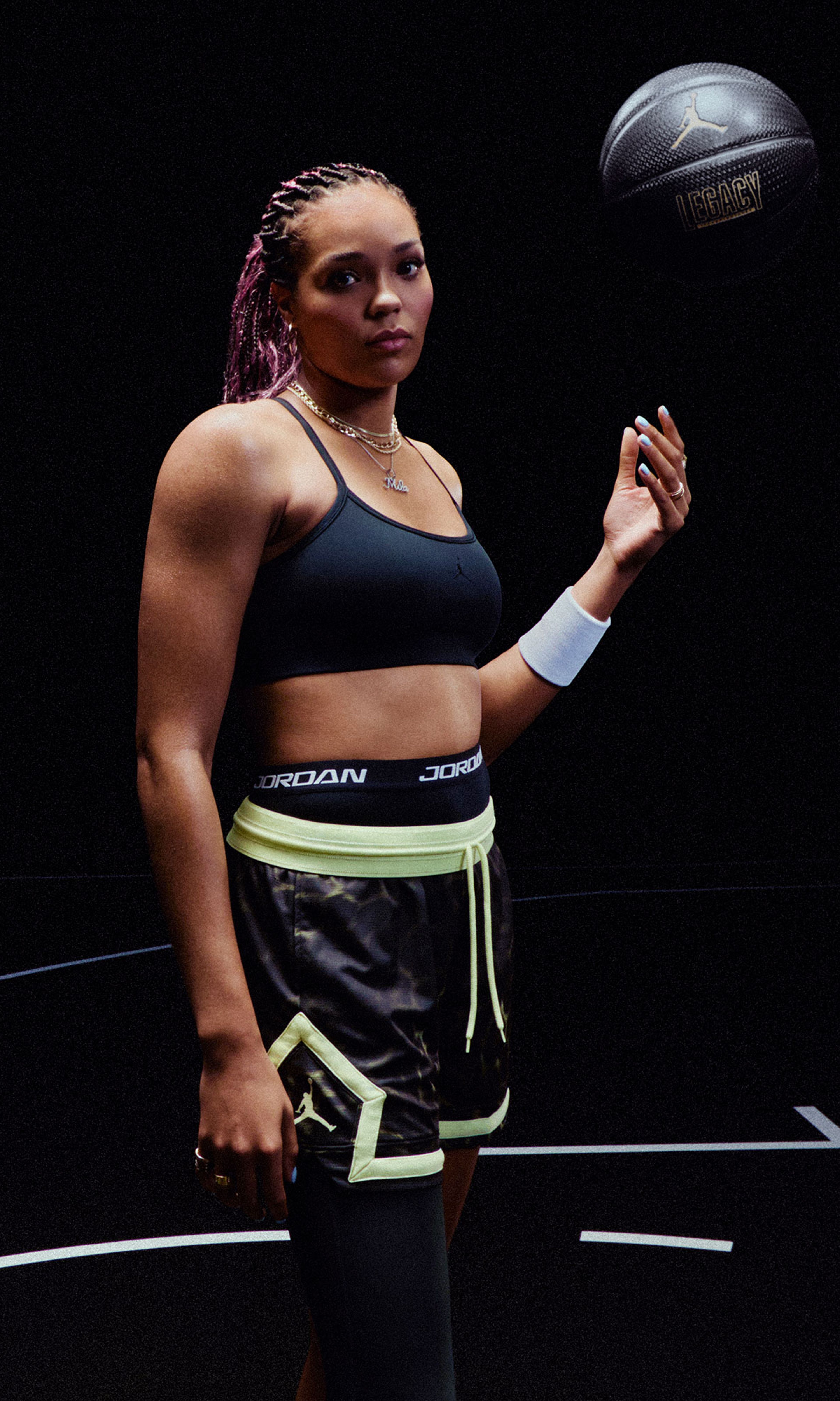
- February 10, 2026
In June of 2024, the Minnesota Lynx won the WNBA’s in-season tournament and the Commissioners Cup. Standing at center court to accept the championship MVP was Napheesa Collier. That the all-star forward would tally another award that season was almost a foregone conclusion. She’d go on to post historic stat lines (in a regular season game versus the Aces, she became only the third player in WNBA history to individually outrebound the entire opposing team, her 18 boards to their 17), bring home national glory with another gold medal in the Paris Olympics, and win the league’s Defensive Player of the Year. What was one more award for the mantle? Still, when she was announced as the tournament’s MVP, she was visibly confused, and what could’ve been an acceptance speech turned into an honest, humble deferral to her teammate, forward Bridget Carleton, who’d go on to earn the league’s Most Improved Player award that season. “Honestly, I think Bridget deserves this. She had an outstanding game,” she said into the arena microphone.
The Jordan Brand athlete, who's also the face of the new Heir Series 2, knows that excellence is never an accident. It’s the product of creating strong, stable infrastructures among teammates over time; building a culture that can withstand pressures of all kinds; lifting up others when they are deserving, like during that tournament victory, and encouraging one another to aspire for more than they thought possible. That’s true for the Lynx. That’s true for the W. That’s true for Unrivaled, the innovative 3x3 league co-founded by Collier. Building excellence takes a blueprint. Here, Collier shares about the people, places and values that have shaped her status as one of basketball’s great architects.
My sense of home always starts with family. Jefferson City, Missouri was a great place to grow up. It’s a small town in the middle of the state, very Midwestern. But my family is the most important thing in my life. My dad’s from West Africa, but we have a huge Sierra Leonian community in Jeff City, and my mom’s whole side of the family grew up running one of the city’s dairy farms, so I had two very culturally different families. Being surrounded by so much family, I’ve always been a very family-oriented person. It gave me an early look at what healthy dynamics among groups of people looks like.
Maya Moore was my Michael Jordan. She was the first athlete I really followed, and she’s actually from Jeff City, too. When I was 10 or 11, I remember watching her games when she was at UCONN. I have a snapshot in my mind of how athletic she looked, how she made everything look so easy, so skilled. Even the way she did her layups — I can’t even explain it, it was just perfect, just so unique to her. Watching her was a core memory for me as a kid.
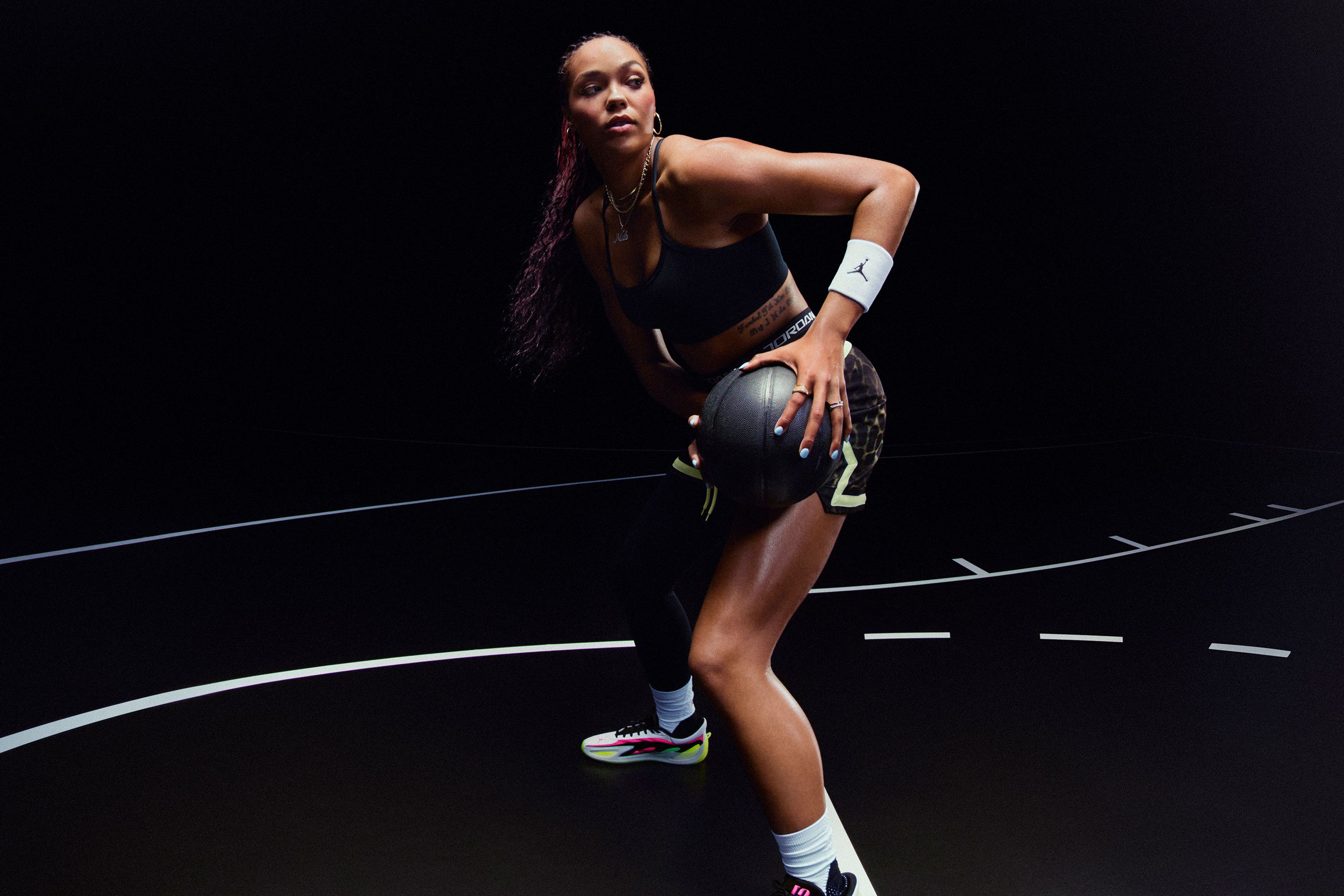
In 2025, Collier became just the second player in league history to join the illustrious 50-40-90 club.
The pressure of excellence is what makes you great. I’ve been really lucky with the teams I’ve played on, where they all expect excellence from their players. Even my high school coach at Incarnate Word reminded me a lot of Coach Geno Auriemma at UCONN (Editor’s Note: As of this writing, Incarnate Word Academy holds the all-time high school basketball winning streak). UCONN was the first time that I walked in the arena and I could feel the excellence that came before me. I mean, so many incredible Hall of Fame players who came before me. If you don’t win a championship at UCONN, it’s a bad year. You do feel that pressure to measure up. But I perform my best under pressure. It challenges you to be your best. You’ve got to decide how you’re going to step up.
Experience is the best teacher when responding to setback. I had a great rookie season with Minnesota in 2019. But when I arrived before that season kicked off, I had a horrible training camp. I had two preseason games, and I might’ve had five points between the two games. I remember that sinking feeling so vividly, because it brought me back to my freshman year at UCONN, where I felt like I had a really bad freshman season. When I felt myself drifting back into that dark space, I told myself, ‘I’m never going to do that again.” And after my freshman year, I was working out twice a day, every day, because I resolved to never feel that feeling again. I wasn’t going to repeat the past.
It’s so important for young players to step into a franchise where their veterans are supportive. You’re the top dog when you’re a senior in college, but then you get to the W, all of a sudden you’re at the bottom of the totem pole again, surrounded by hall of fame players. Seimone Augustus and Sylvia Fowles were the first ones to embrace me. Syl is the most motherly person I’ve ever met. The first time I met her, she’s like, “Baby, if you ever need anything, you give me a call. I’ve got you.” My vets had my back from day one, which really allowed me to blossom into my role from the beginning.
"I perform my best under pressure. It challenges you to be your best. You’ve got to decide how you’re going to step up."
Napheesa Collier
When you’re not worried about team dynamics, you can focus on becoming the player you need to be. When I joined the Lynx, I didn’t have to worry about team dynamics. I knew they supported me no matter what, so I could focus on what I needed to do on the court, all while trying to be a good teammate. I don’t take that privilege I had for granted. That’s why I try to pay it forward to the rookies and the young players now, making sure they feel welcome when they’re on the team, making sure they know they can come to me if they need anything, because I know how huge that was for me when I first came into the league.
Vocal leadership and leading by example can exist at the same time. When I arrived as a rookie, I think my style was more to lead by how I played on the court. I was the hardest working person, but I was uncomfortable with being vocal. My coach, Cheryl Reeve, put me as a captain from the jump, and she challenged me to be more vocal, to speak up. Eight years later, I’ve gotten way more comfortable with leading with my voice, in part because I’m doing it on behalf of our league’s younger players, too. I want to give the league’s young players the knowledge they need to be successful, because everyone’s fighting for a roster spot and is looking for any advantage they can find. This is our careers and our livelihoods at stake. I’ll do anything I can to help young players grow in their game. I remember how grateful I felt when my vets did that for me. I want young players to know they don’t need to feel lost. They can find a sense of belonging, a sense that players like me will be by their side.
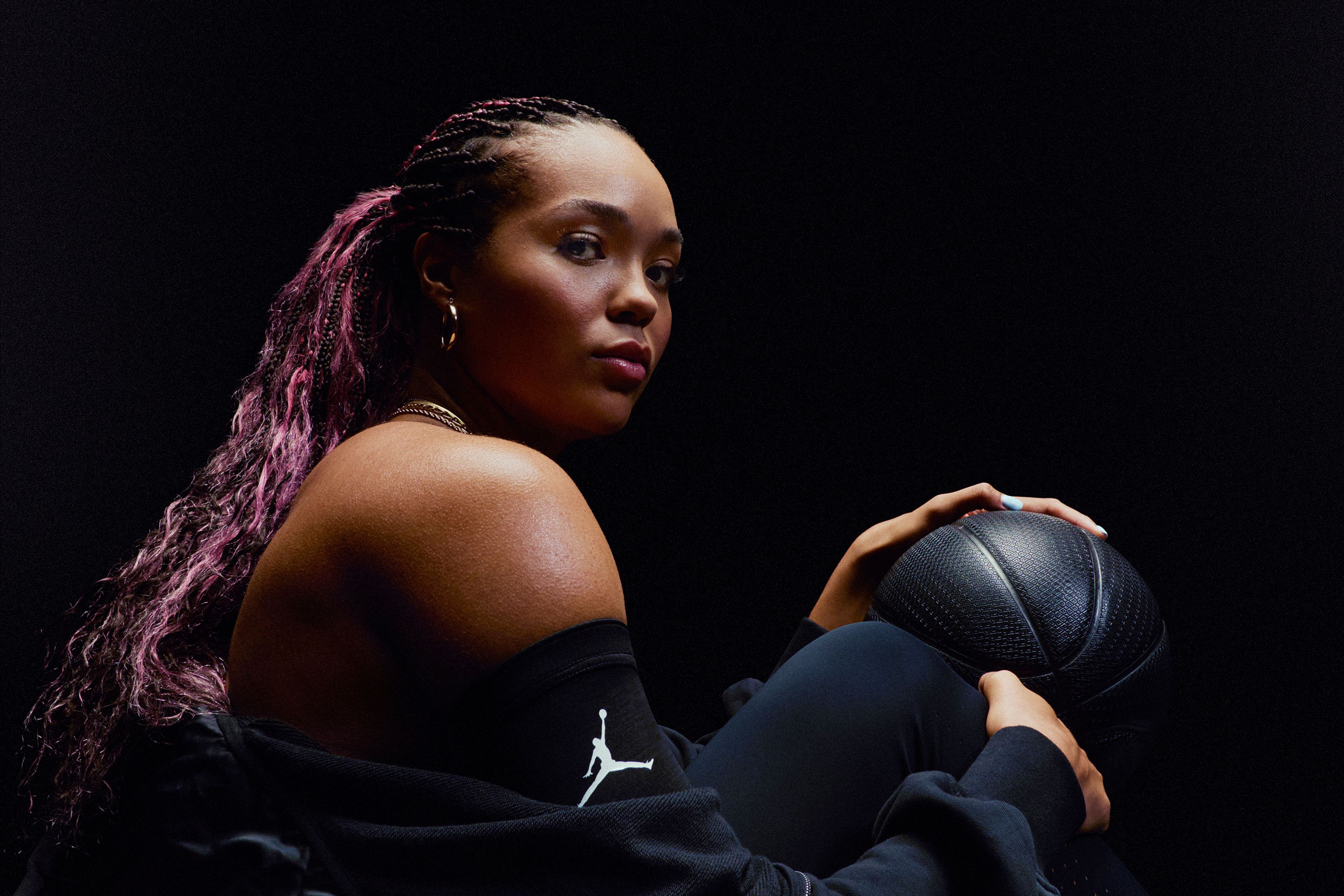
"I joined Jordan Brand because I wanted to be surrounded by greatness," says Collier. "It’s starts with Michael Jordan himself. He’s the standard of greatness."
There are moments in a season that hinge on whether you can look past your own self interests. Last year, I hurt my ankle badly in an early season game against Vegas. I really wanted to come back, partly because I was a front runner for MVP at the time, and I wanted to start playing again as soon as possible so I could hold my spot. But at the end of the day, I wanted to win a championship. If I rushed back early, I could’ve hurt our team’s chances at a title. So I really tried to make sure my ankle was as healthy as possible so I could be ready for the playoffs, even if that meant sacrificing a possible MVP title for that year. It wasn’t a “win” in the traditional sense, but it was a win for our team, and that’s what mattered to me.
Generational Greatness means upholding the work of those who came before you. I joined Jordan Brand because I wanted to be surrounded by greatness. It’s starts with Michael Jordan himself. He’s the standard of greatness, he changed the game forever. We’re in his brand, competing in his name, and I want to make sure I’m doing everything I can to honor the standard he’s set for us.