Nike Pegasus: The Origin of a Running Workhorse
- February 24, 2026
- Words:
This is, obviously, a running story.
But the story of the Nike Pegasus is also something more specific — a case study in how restraint, clarity and attention to fundamentals can produce lasting success. Launched in 1982, the Pegasus would go on to become Nike’s most consistent and popular running shoe of all time, a franchise that has endured across eras, innovations and shifting footwear philosophies. “There’s no modest way of saying this,” said Sebastian Tesche, Product Line Manager of the Pegasus 35. “The Peg is the single biggest and best running shoe in the world. It’s bigger than many of our competitors.”
It wasn’t designed to be an icon. It was designed to solve a problem.
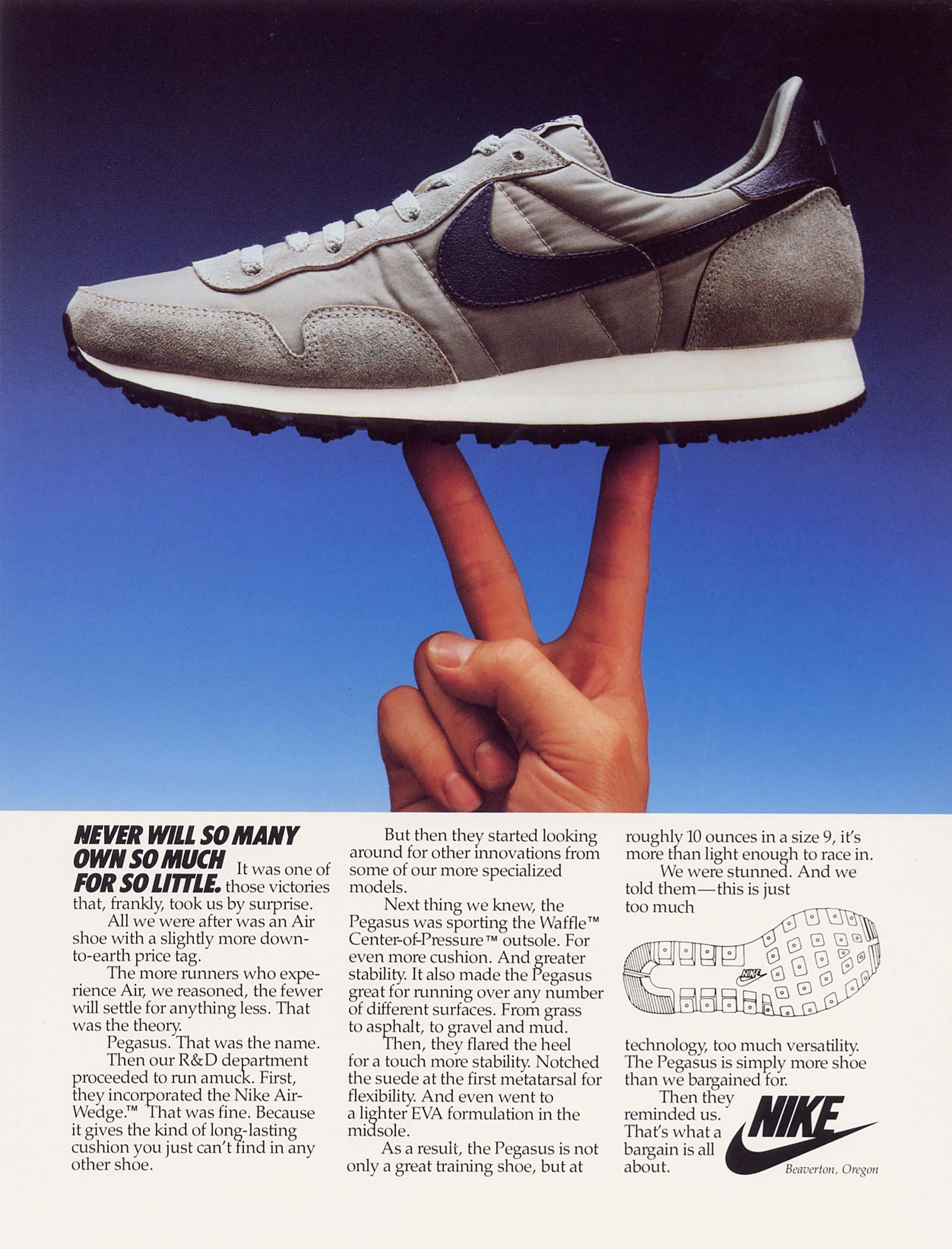
In 1983, Nike introduced the Pegasus as practical performance: Air cushioning where it mattered most. This early ad featuring the heel Air declared: “Never Will So Many Own So Much for So Little."
In the late 1970s, Nike’s earliest experiments with Air were full of promise but hindered by the realities of the technology. The 1978 Tailwind introduced Air to running yet it introduced stability issues that the company would spend the next several years trying to fix. The Columbia and Aurora that followed solved some of those problems but felt stiff at a time when runners wanted something livelier underfoot. Fortunately, Nike knew Air was a long game.
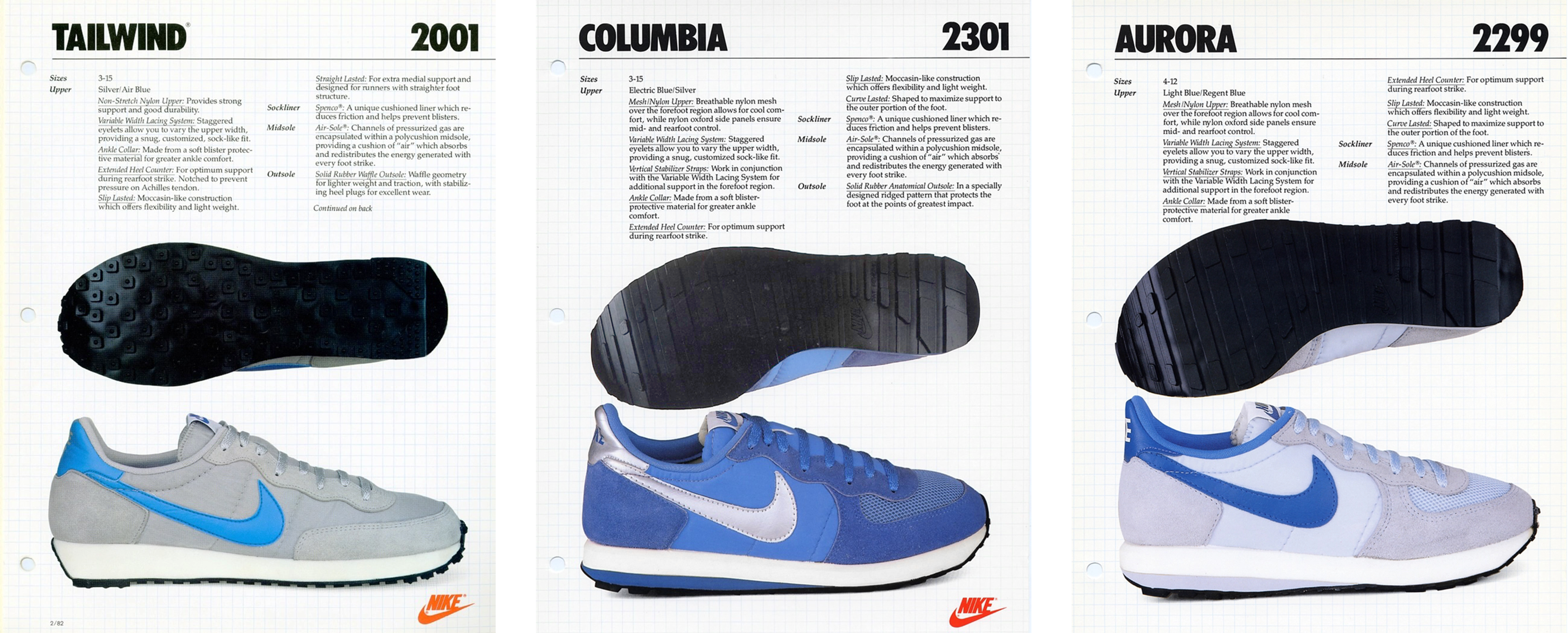
Before the Pegasus, models like the Tailwind, Columbia and Aurora explored Air cushioning — early experiments that shaped Nike’s next breakthrough.
"The great thing that we always thought about Air at that time — and it’s still true — is that it doesn’t lose its cushioning properties hardly at all through time.”
Howard Banich, Running Product Director, 1982
The great thing that we always thought about Air at that time — and it’s still true — is that it doesn’t lose its cushioning properties hardly at all through time,” said Howard Banich, who oversaw running product in 1982. “Jeff Johnson, Nike’s first employee, always wanted us to do an ad that showed a person coming back to the shoe store with just the Air bag from their shoe and saying, ‘I would like another shoe around this please.’ Because the Air bag was still going strong.”
Still, the question remained: how do you put Air where it matters without making the shoe too expensive or too complicated?
One solution came from an ongoing innovation project led by former Nike CEO Mark Parker. Known internally as the Air Wedge Trainer — the concept that would ultimately become the Pegasus — it borrowed an Internationalist upper and outsole, added a heel Air unit encapsulated in polyurethane and positioned Air right at heel strike. It was essentially a simpler, cheaper expression of Air and it tested well.
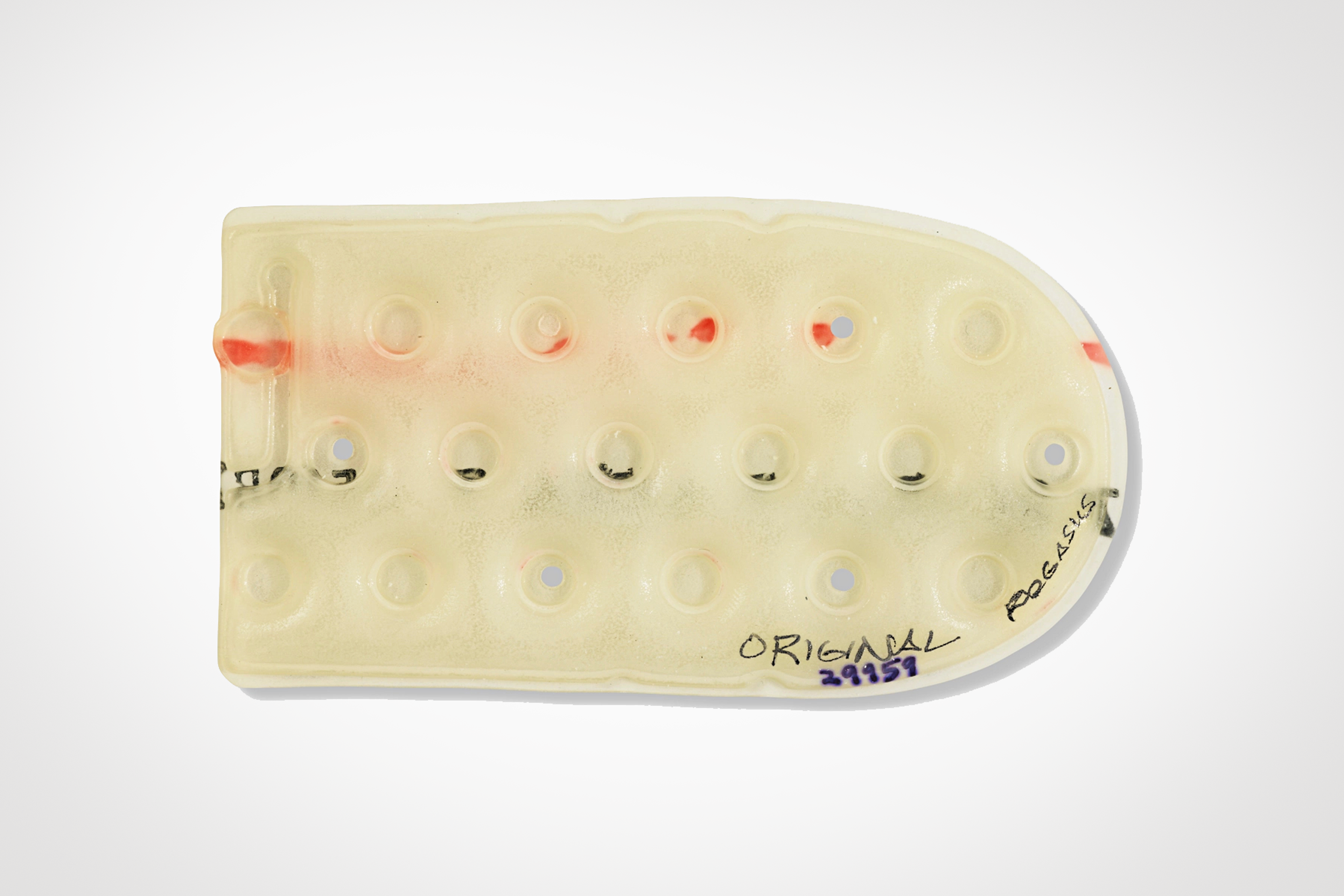
The original heel Air wedge used in the 1983 Pegasus was a smaller, more focused Air unit that delivered cushioning at heel strike without the cost of full-length Air.
“A heel wedge still provided the benefits of Air where it was needed the most — under the heel at heel strike — but it was less expensive because it was really only a third of the size of the full-length Air-Sole that was used in the Tailwind,” Parker said.
At the same time, New Balance had just released the 990 with a provocative tagline: “At a suggested retail price of $100, is the 990 too expensive or too inexpensive?” The price point shocked the market and galvanized Nike. If the competition was willing to push upward, Nike saw an opportunity to create a shoe that delivered performance at a more approachable cost.
The Air Wedge Trainer, with its strong test results and modest bill of materials, suddenly looked like the perfect platform.
With the Air Wedge Trainer as a foundation, development for the Pegasus took place at Nike’s facility in Exeter, New Hampshire, where the heel Air wedge concept was built into a fully realized running shoe. Bill Peterson designed the outsole. Bruce Kilgore, deep in Air Force 1 development, offered design input. Parker integrated those ideas into a simple, functional upper: gray, with dark navy accents — a look one European sales rep later described as “a rainy day.”
Nike also made a strategic shift to hit its target price of around $50: manufacturing moved to Korea, to the Poon Young factory. Very few running shoes were being produced in Korea at the time. Components had to be imported — Air wedges from the U.S., nylon from Germany — and Nike developers scrambled to refine techniques. “The Air unit didn’t fit correctly in the shoe at first,” recalled footwear innovation veteran Steve Roth. During a vacation back in the U.S., he spent two weeks in Saco, Maine resizing Air wedges by hand so they would sit properly in the midsole.
Still, the project moved fast. In only about four months, Nike had a completed shoe — one built around Air and a carefully selected set of core features: A new EVA foam called Tomilite offered a resilient ride. A waffle outsole, with lugs oriented for motion, gave runners better ground contact and stability. The upper was simple, lightweight and unpretentious.
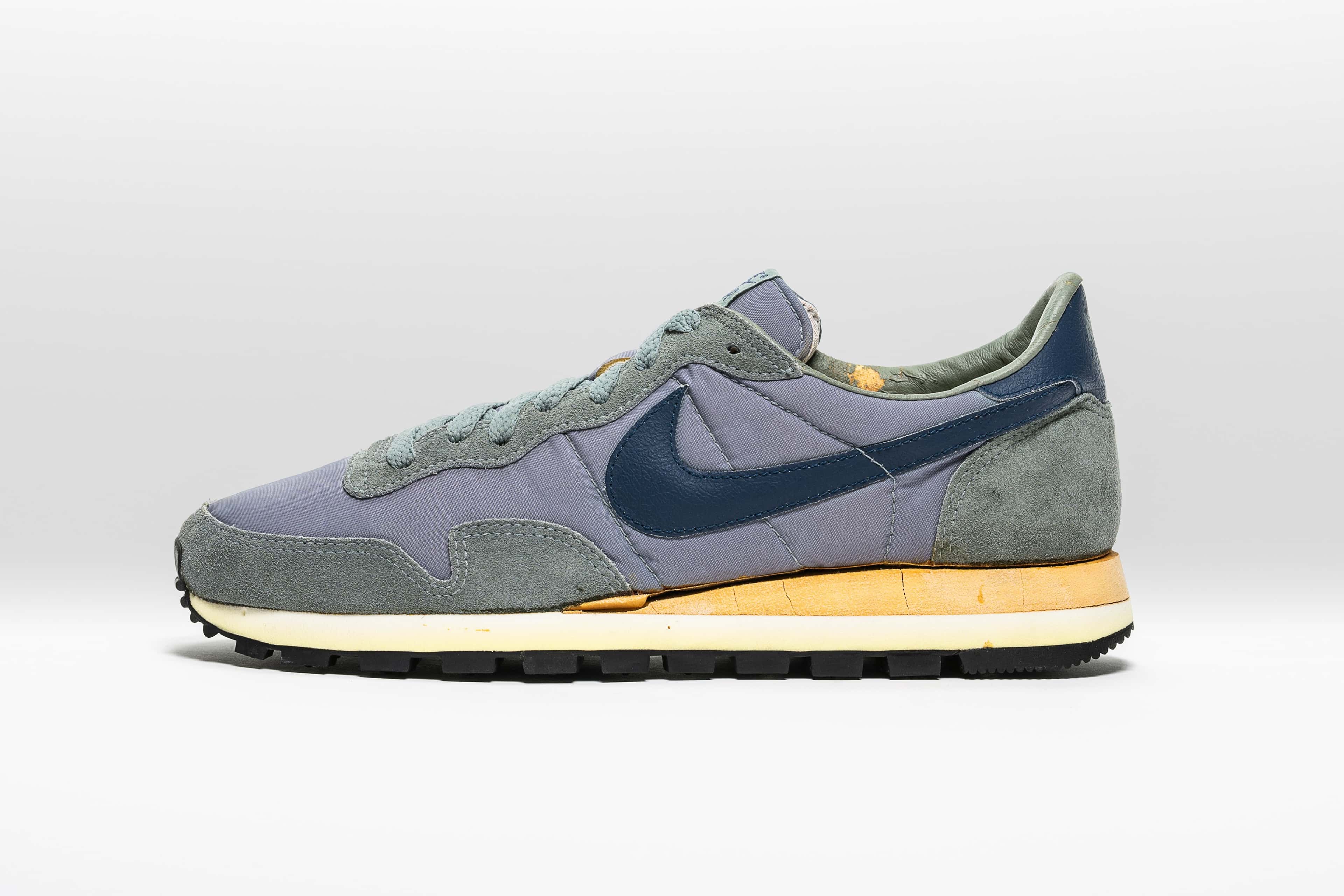
The original men's Pegasus from 1983 was a practical running shoe built around heel Air, a resilient EVA midsole and a clean, unpretentious upper.
“The Pegasus was essentially our ‘best practices’ shoe. It had Air, yes, but it was mostly about: what are the best features we can put in a product that hit the sweet spot of the market?”
Steve Roth, Nike Footwear Innovation
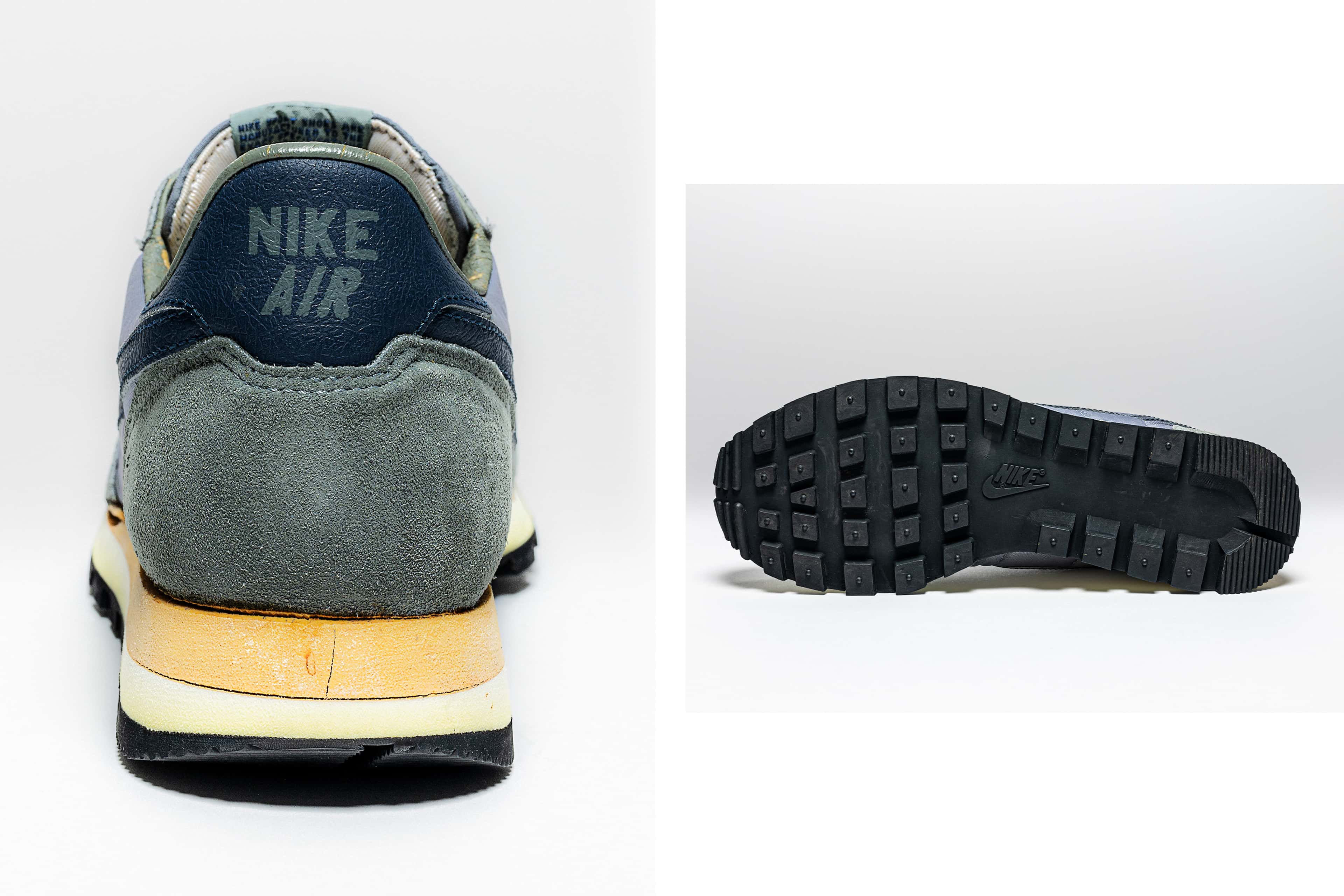
The 1983 Nike Men's Pegasus 1, which was completed in roughly four months, the shoe distilled Nike’s Air experiments into a balanced, market-ready runner.
“The Pegasus was essentially our ‘best practices’ shoe,” Roth said. “It had Air, yes, but it was mostly about: what are the best features we can put in a product that hit the sweet spot of the market?”
It wasn’t the flashiest running shoe in the line, nor was it meant to be. It was designed to work.
Nike’s confidence in the Pegasus showed in the small details. The company had begun releasing “owner’s manuals” with its higher-profile footwear to help runners understand new technologies and the Pegasus received one, too. It walked consumers through Air, Tomilite and the shoe’s geometry. The transparency helped reinforce the Pegasus as a shoe built on clarity, usefulness and trust.
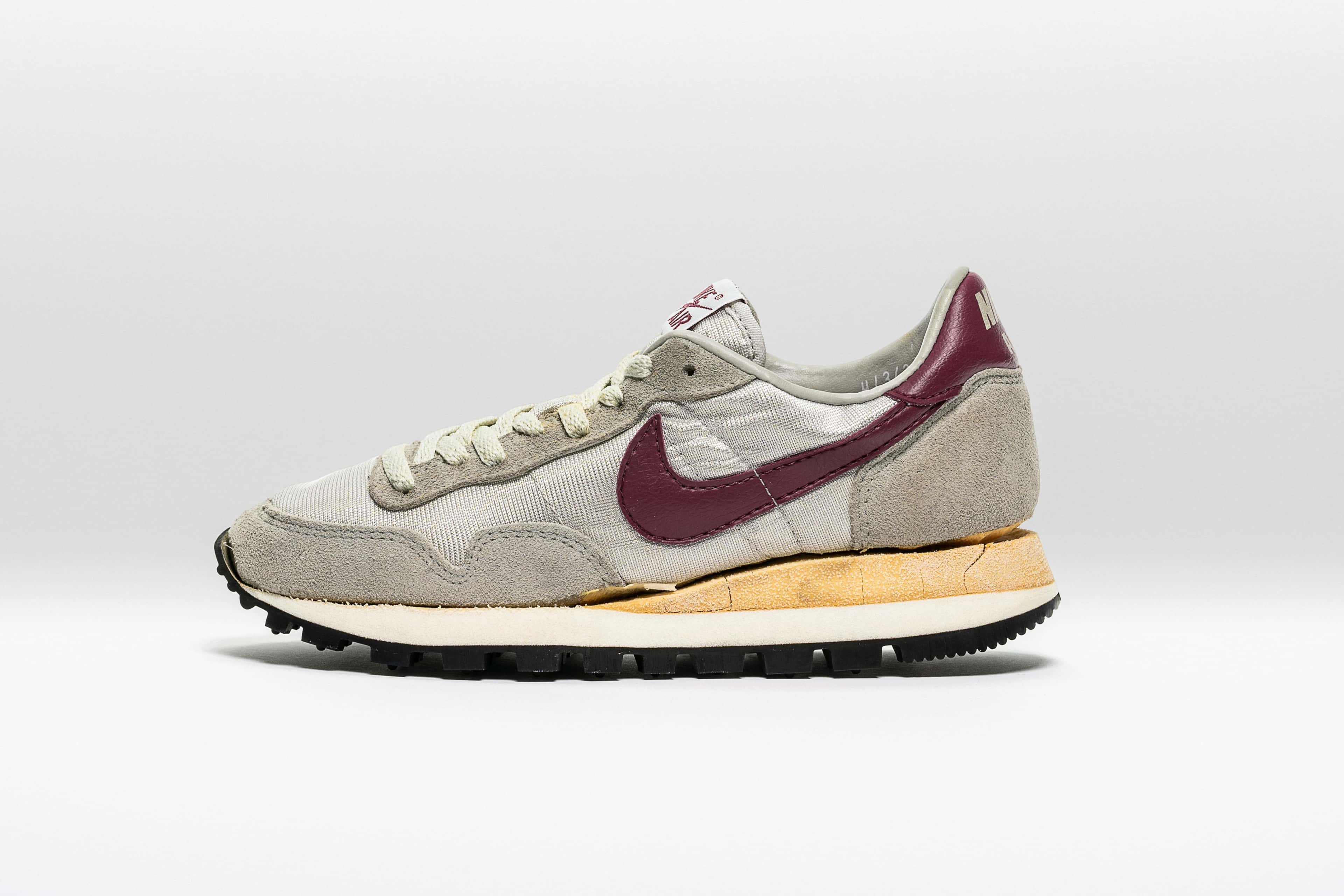
Built on the same practical formula as the men's version, Nike Pegasus 1 Women’s brought heel Air cushioning to Nike’s growing women’s running line.
“The Pegasus was essentially our ‘best practices’ shoe. It had Air, yes, but it was mostly about: what are the best features we can put in a product that hit the sweet spot of the market?”
Steve Roth, Nike Footwear Innovation Veteran
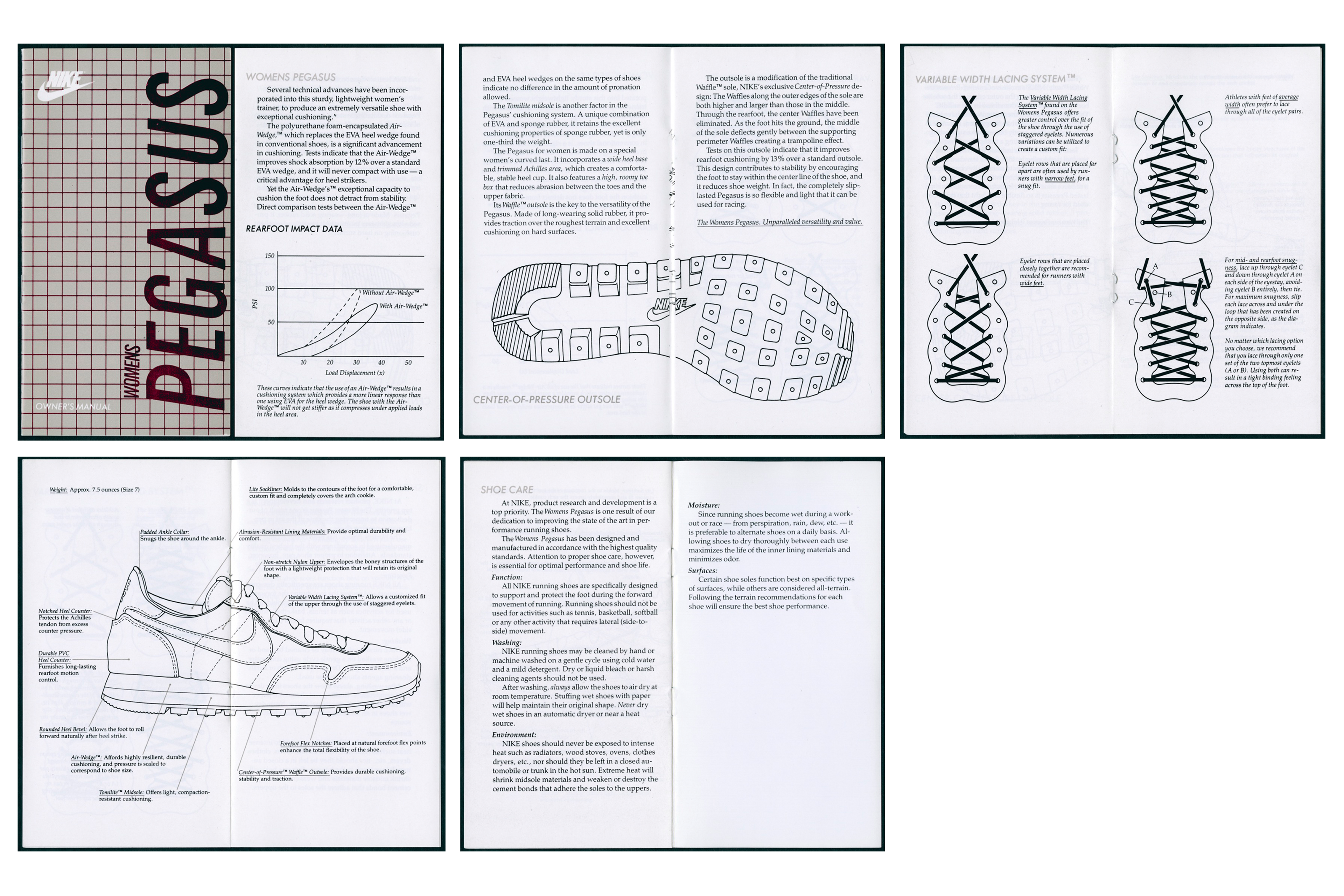
The Pegasus owners manual was a printed guide included with the shoe that detailed Air cushioning, outsole design and lacing system.
Today, many assume the Pegasus name came from the idea of a half-horse, half-winged creature, an allusion to the balance of EVA and Air in the midsole. But the real story is far simpler.
To name the shoe, employees dropped suggestions into a bowl. Several slips of paper read Pegasus, including one from Mark Parker. Nike had been playing with mythology themes — Odyssey, Valkyrie — and Pegasus fit the family. “Names were a lot easier back then,” Parker said.
The name stuck. And with it came the beginnings of what would become Nike’s most beloved running shoe.
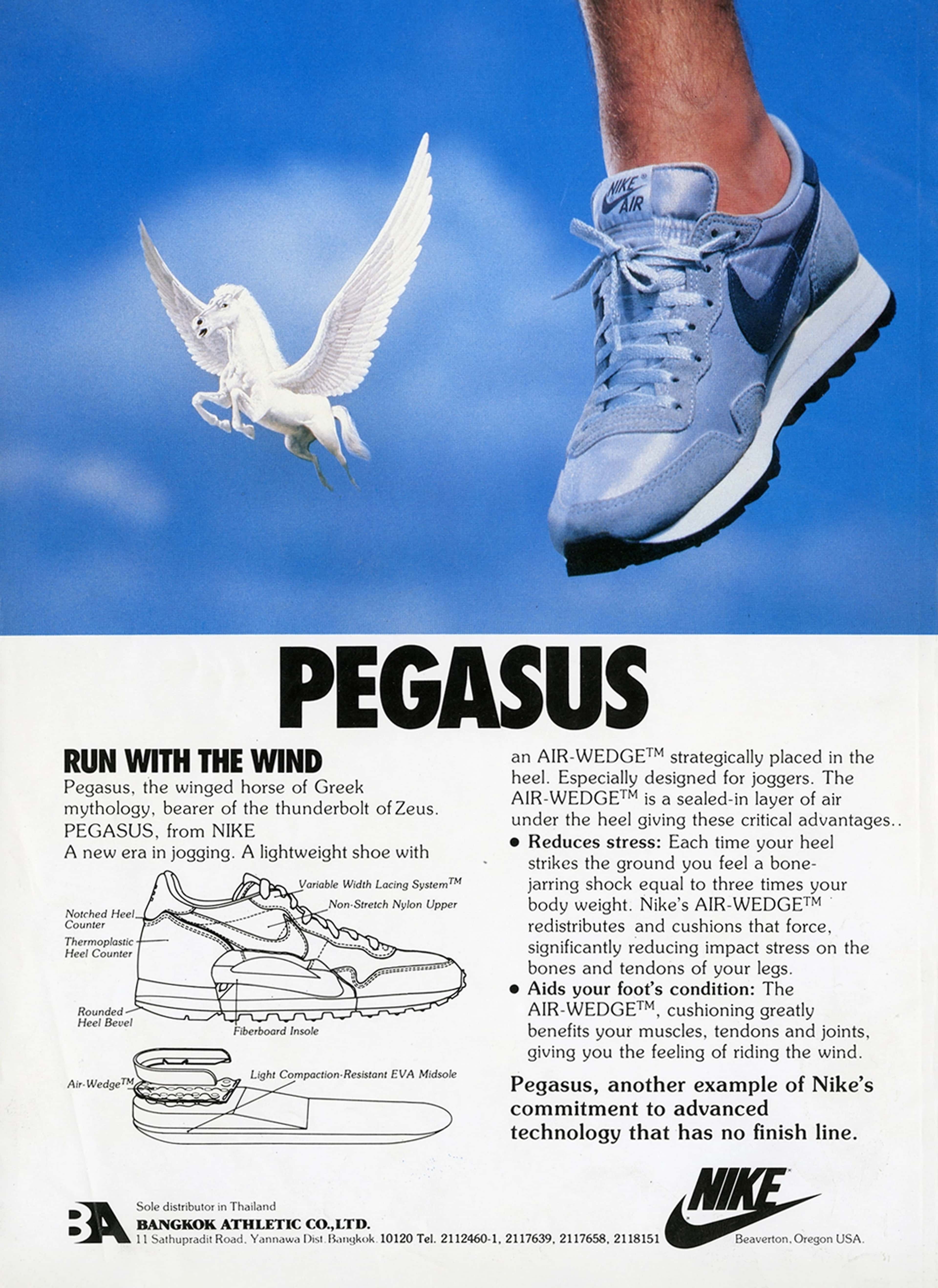
Early Pegasus advertising, as seen in this 1983 “Run With the Wind” ad, used the winged horse to visualize the light, lifted feel of heel Air.
Nike introduced the Pegasus at the 1982 New York City Marathon. While Alberto Salazar powered to his third consecutive win in a pair of Mariahs, the men’s Pegasus debuted in limited quantities as part of Nike’s technical running line. It launched to select dealers and quickly posted strong early sales: nearly $200,000 in under a month, with roughly 8,000 units sold. By December, that number had climbed to more than 35,000 pairs.
When the Pegasus rolled out more broadly in early 1983, the reaction was immediate. “The initial reaction to the Pegasus was very good,” said Jim Docherty, who began his career as a Nike EKIN that year. “When the Tailwind hit the market, some consumers thought it was too soft because most midsoles were fairly firm at that time and the Tailwind was a big change from the norm. The Pegasus with heel Air bridged the gap between old EVA midsoles and total Air.”
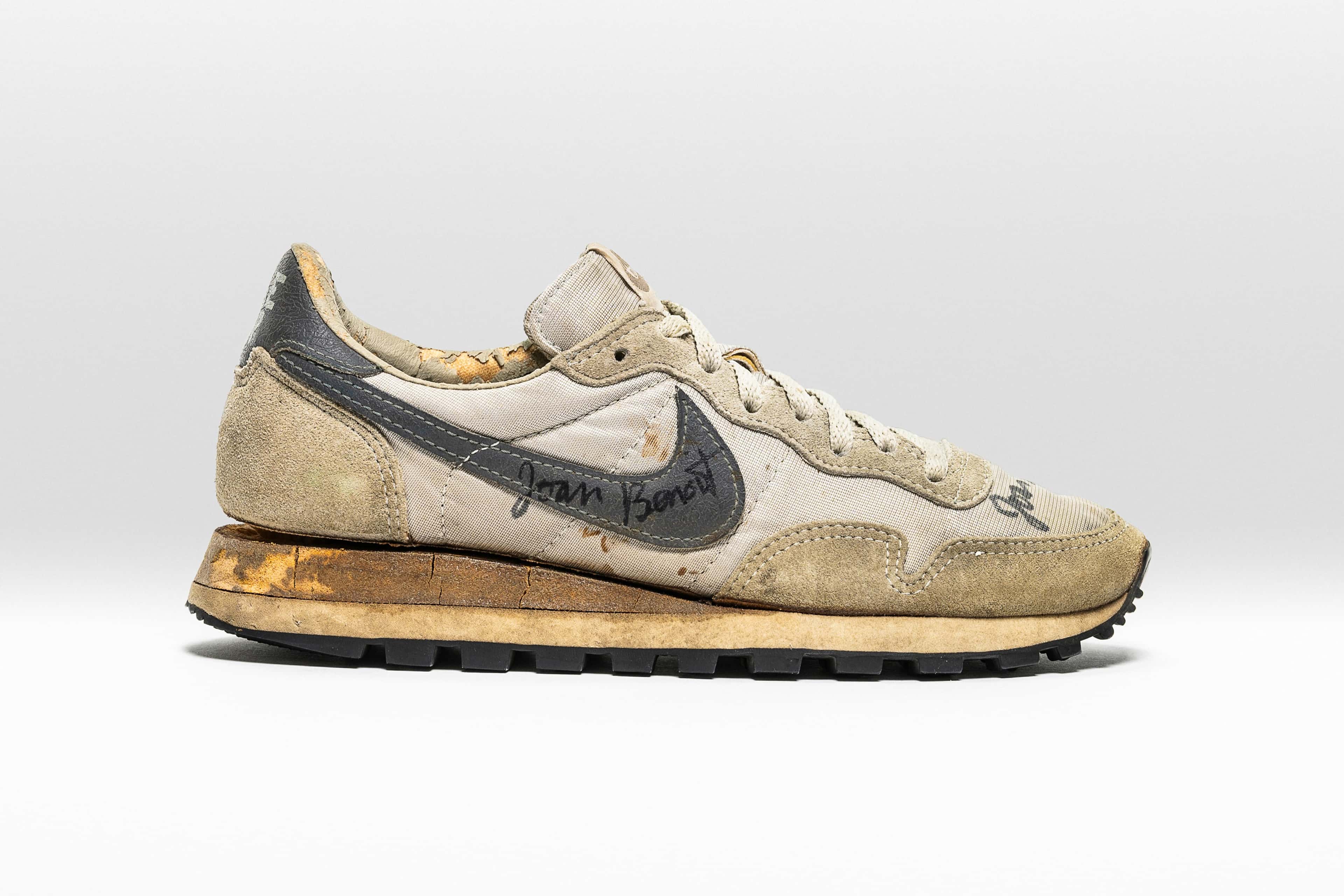
This Pegasus was autographed and worn by Joan Benoit Samuelson in 1984, the same year she won the first-ever women's Olympic marathon.
For young runners and store employees alike, the Pegasus quickly became the reliable choice — the shoe you knew you could recommend.In 1983, long before he became a Nike Running veteran and future Pegasus PLM, Tim Slingsby was working in a running store as a high schooler. “The Pegasus was your go-to shoe when someone would come in, you would sell them,” he said. “As a high school kid, you knew it would work, it would perform, and it was a great price. It had everything.”
Within six months, Nike had sold nearly 300,000 pairs, generating $6.4 million in men’s sales alone.
The formula worked.
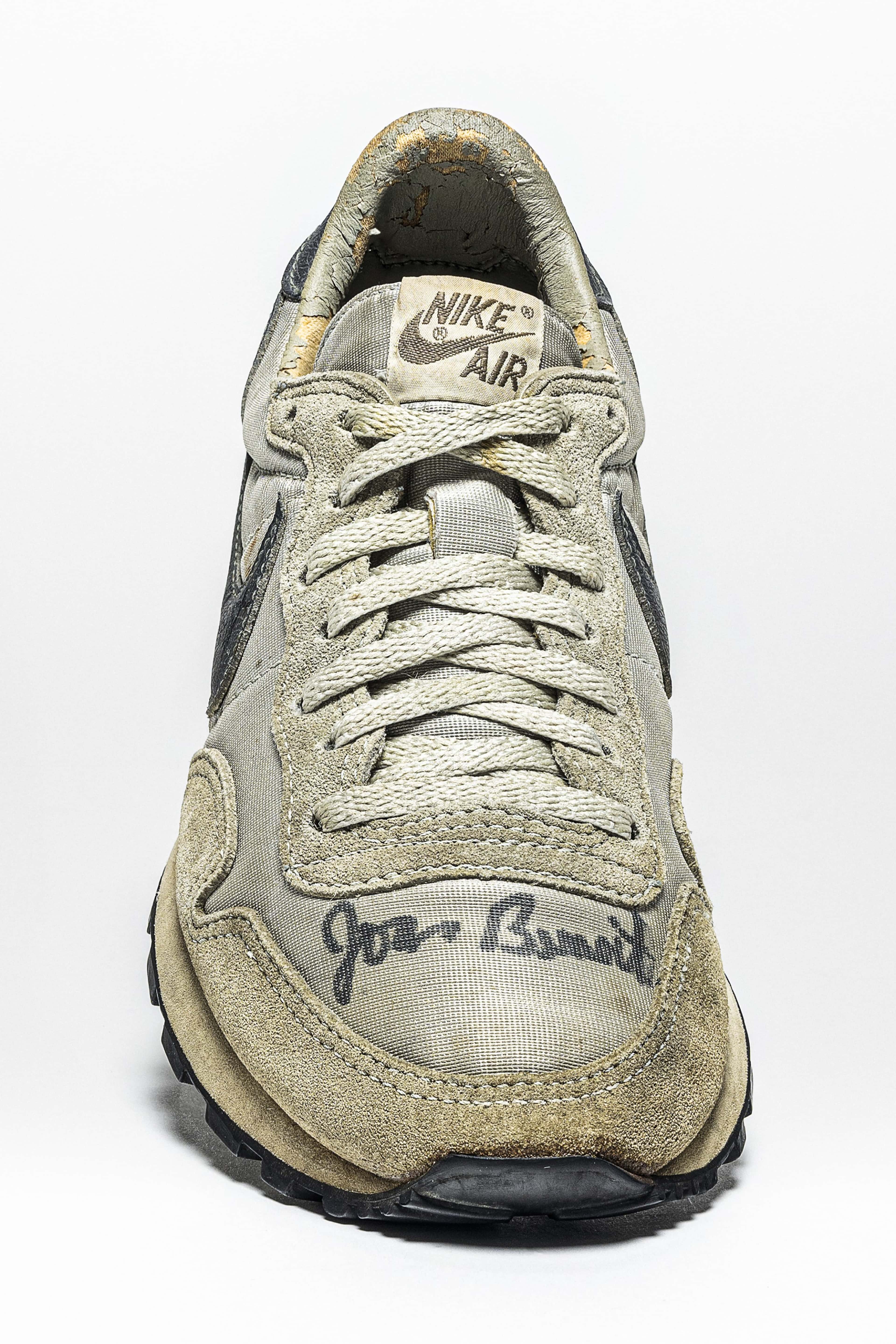
Broken in and signed by Joan Benoit Samuelson, this Pegasus reflects the early devotion the model inspired — a shoe runners trusted and recommended.
By 1985, Pegasus sales had reached 2.5 million pairs. Nike had found its lane and owned it. Longtime Nike designer Bob Lucas compared the shoe to an automotive staple: “To use an automotive analogy, auto manufacturers have their Pegasus in their lines: a Honda Civic, the Toyota Corolla. … that kind of product line where it’s a value-based proposition.”
Over the next several years, Nike made only modest adjustments to the shoe — incremental material updates, seasonal color changes — while leaving its core intact. That restraint became part of the Pegasus’ identity. “I think everybody always knew it was one of those things where you didn’t want to change it,” said Clare Hamill, a leader at Nike Running in the mid-1980s. “That was the biggest challenge — how to make it better without changing it.”
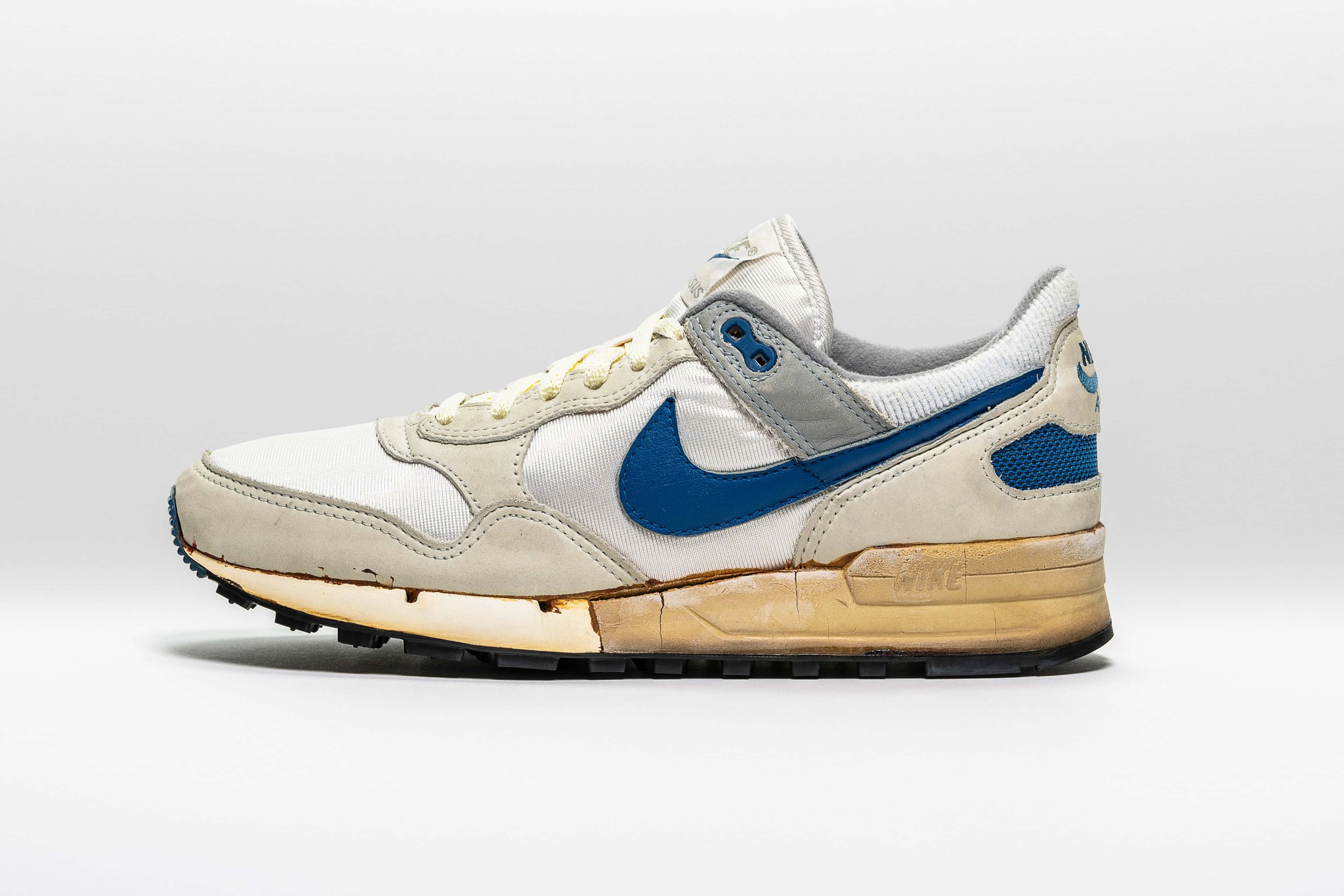
By 1987, the Pegasus had evolved with subtle updates, refining materials while preserving the balanced formula that made it a hit.
At the heart of the early Pegasus was a simple principle: don’t complicate it. The midsole, upper and outsole were all guided by what Hamill described plainly. “The core philosophy of the Pegasus was, keep it simple. No junk. Give people what they need and don’t overbuild.”
Runners felt that clarity. By the late 1980s, the Pegasus had become a dependable constant in an increasingly crowded running landscape, one defined less by flash than by trust. The 1989 Air Pegasus, built on existing tooling with a soft poly-pag and synthetic suede upper, would later be remembered as a high-water mark. “If you asked loyal Pegasus wearers through the years what their favorite version has been,” said former Nike Running leader Kevin Paulk, “I would be willing to bet a lot of people would say the Peg ’89. It had a nice soft upper and fit like a glove.”
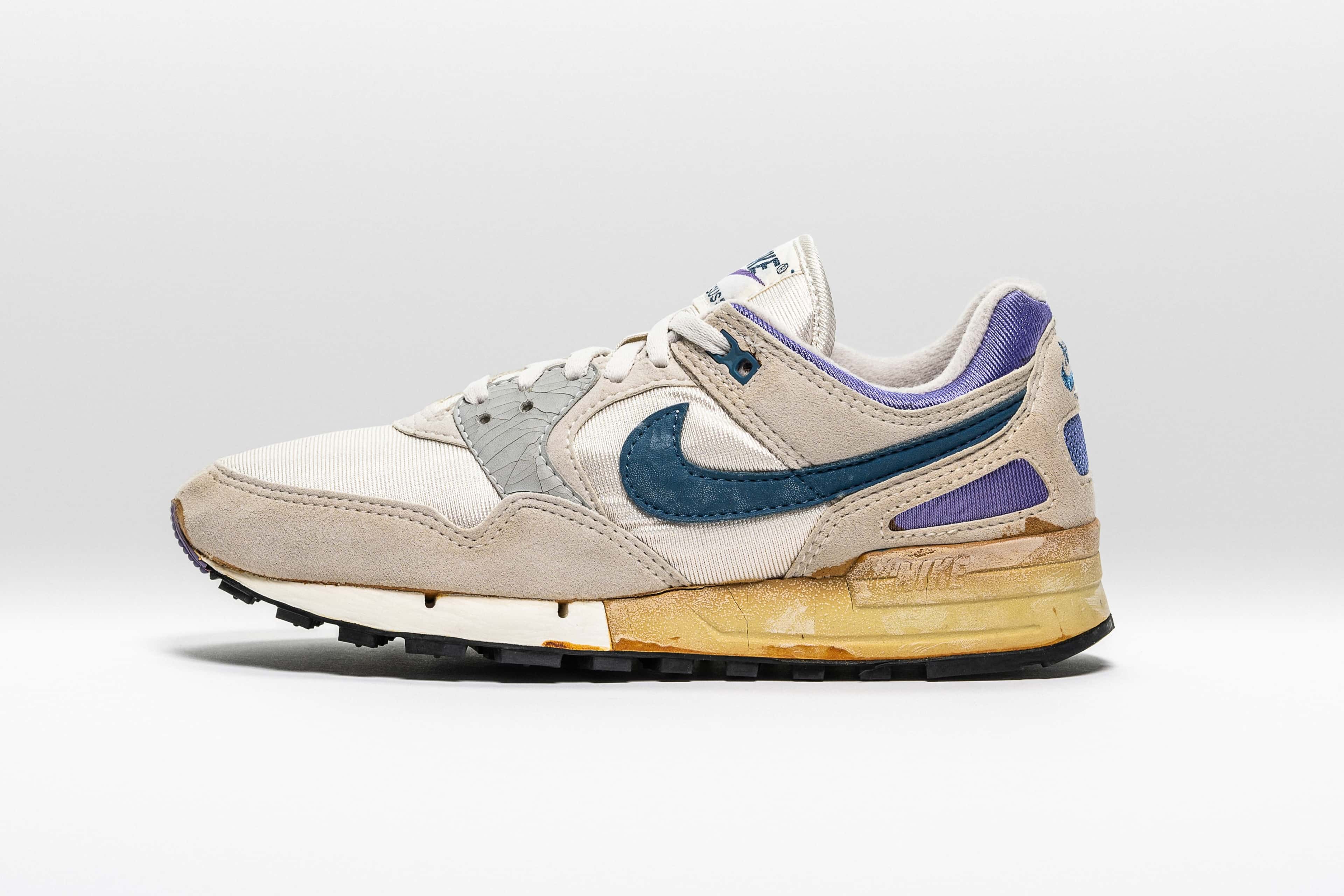
Nike Air Pegasus ’89 — often cited by longtime wearers as a favorite, is remembered for its soft upper and glove-like fit.
“If you asked loyal Pegasus wearers through the years what their favorite version has been, I would be willing to bet a lot of people would say the Peg ’89. It had a nice soft upper and fit like a glove.”
Kevin Paulk, Former Nike Running Leader
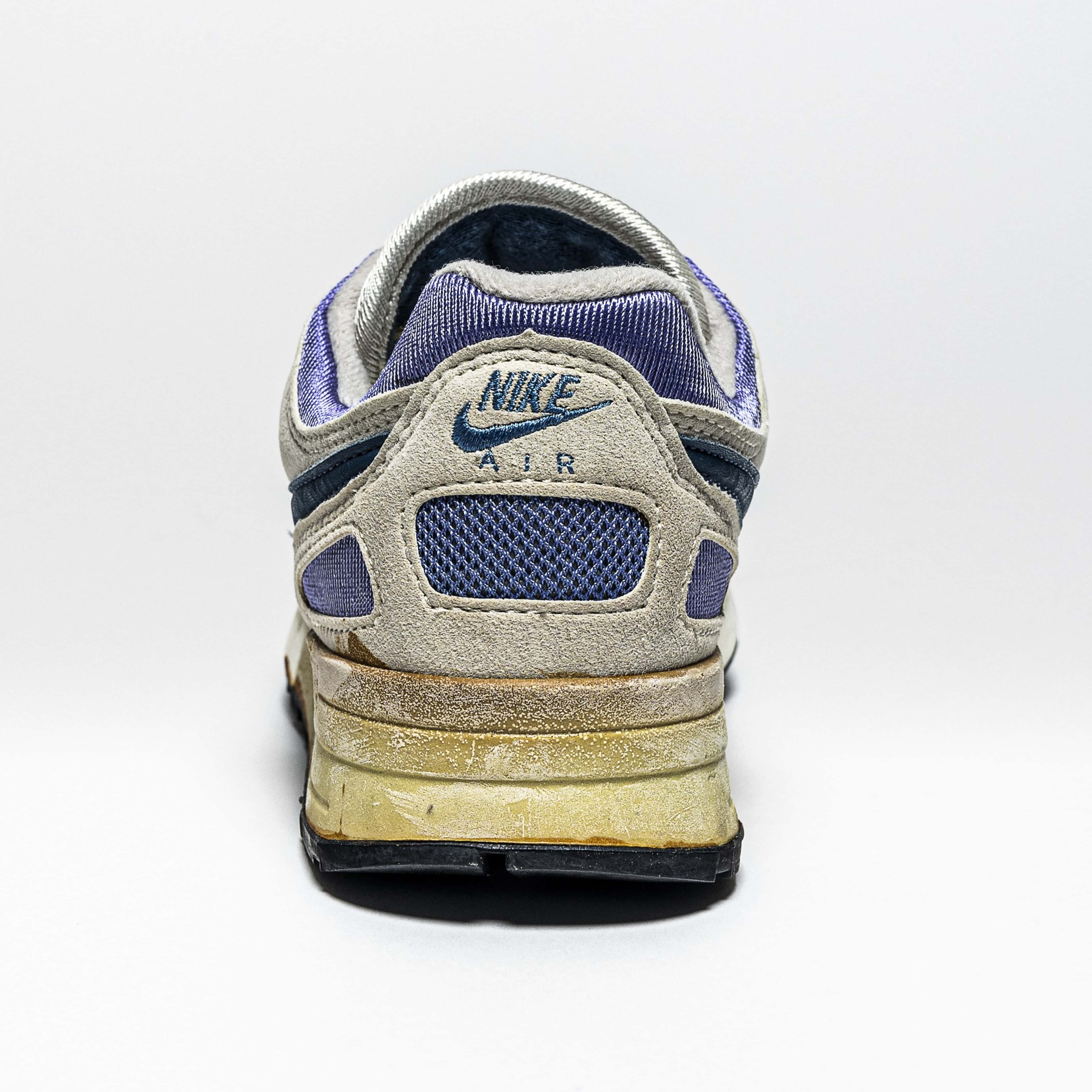
By the late 1980s, the Pegasus had become a trusted constant, evolving in materials while preserving the formula runners relied on.
From its earliest years, that has remained the draw of the Pegasus: a running shoe built not to chase trends but to earn loyalty, mile after mile.