How the World’s Fastest Runners Shaped Nike Apex — and the Brand’s Next Racing Shoes

- October 04, 2026
- Words:
- Images:
A summer sun is coming up over the Rift Valley as the runners begin to gather.
In Eldoret, Kenya, on the roads and trails that have carried generations of world-class runners over clay, grass, rock and pavement, a group of nine athletes laces up for an early-morning session at the Lornah Kiplagat Sports Academy. By the time morning light reaches the track, the work is already underway.
Huddled at the edge of the track is a team of Nike Running experts closely watching the athletes, who include some of sport’s top runners. Among them: Jacob Kiplimo, a half-marathon world-record breaker and Brigid Kosgei, an Olympian and marathon world-record setter.
During the next few days in late July, these athletes — along with Eliud Kipchoge, the first man to run a sub 2-hour marathon distance, and Faith Kipyegon, the world’s fastest female miler — will run in shoes the rest of the world hasn’t yet seen, testing prototypes; comparing them with previous versions; and sharing feedback with product, sports marketing and performance specialists who have traveled thousands of miles to hear what they have to say.

World-record setter Brigid Kosgei and her team of pacers test Nike’s newest prototypes at a training facility in Kenya.
As the athletes try on the latest prototypes, they don’t mince words. They say what they think: what feels good and what doesn’t; where a shoe rubs or shifts; whether it’s too soft or too heavy; what they would change.
It’s an openness that’s been built over time and with earned trust: These elite runners know the Nike team didn’t travel across two oceans and nearly 9,000 miles to collect compliments. They’re here for honest feedback, the kind that’s helped the brand push the limits of speed in racing footwear for decades. It is understood that what they say today will shape what they see the next time around — and that their insights will make the shoes better.

Feedback provided by the fastest runners alive helps shape Nike’s racing footwear and push the limits of speed.
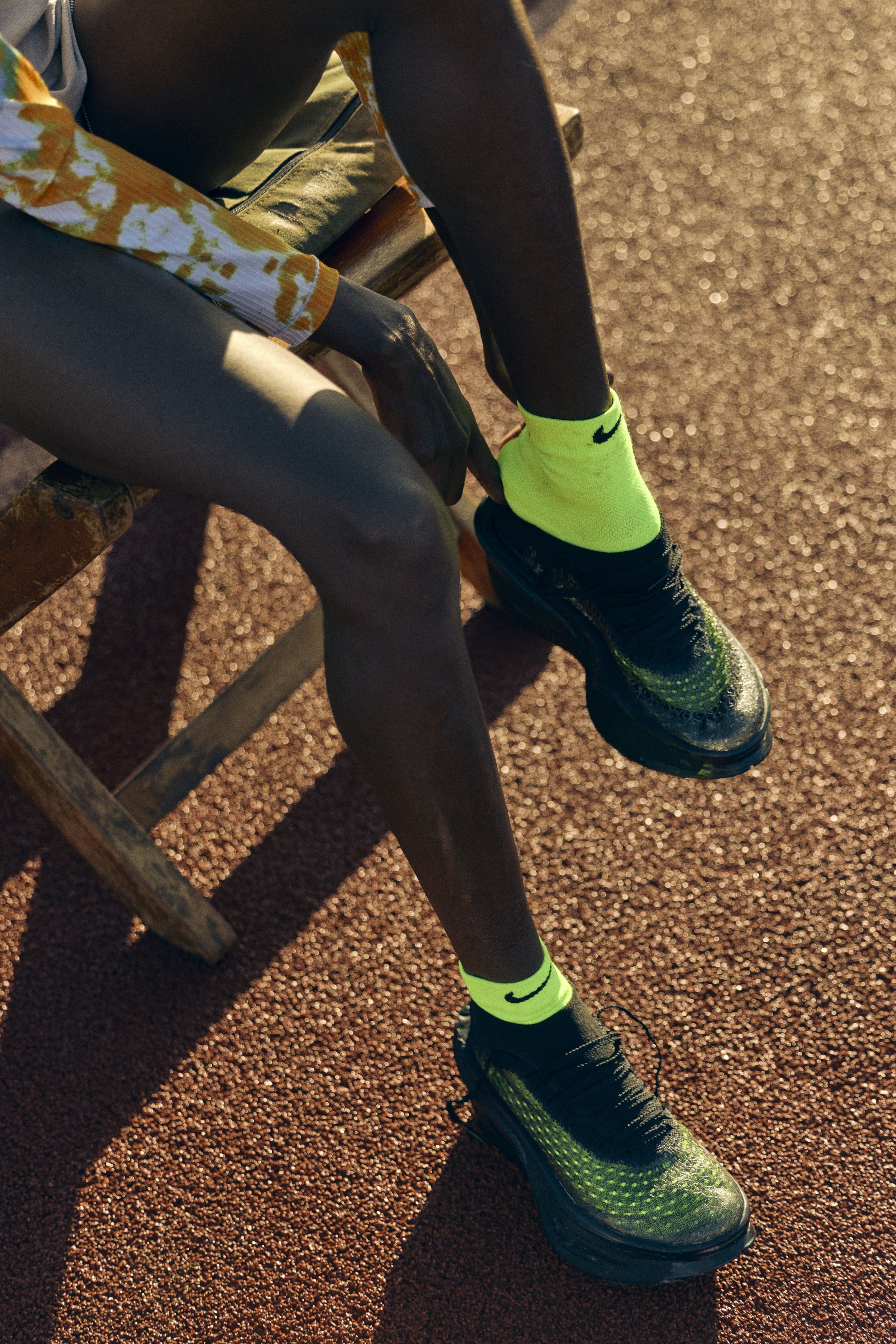
For Kiplimo and Kosgei, the next time is coming soon. Both are preparing for the Chicago Marathon, and they’ll have Nike’s latest elite super shoe prototype.
“These are our top athletes in the marathon,” says Chris Cook, Nike Development Director for Race and Track & Field. “Jacob is our fastest male marathoner. Brigid is a former world-record holder. We want to make sure they have everything they need to perform at their best when it matters most.”
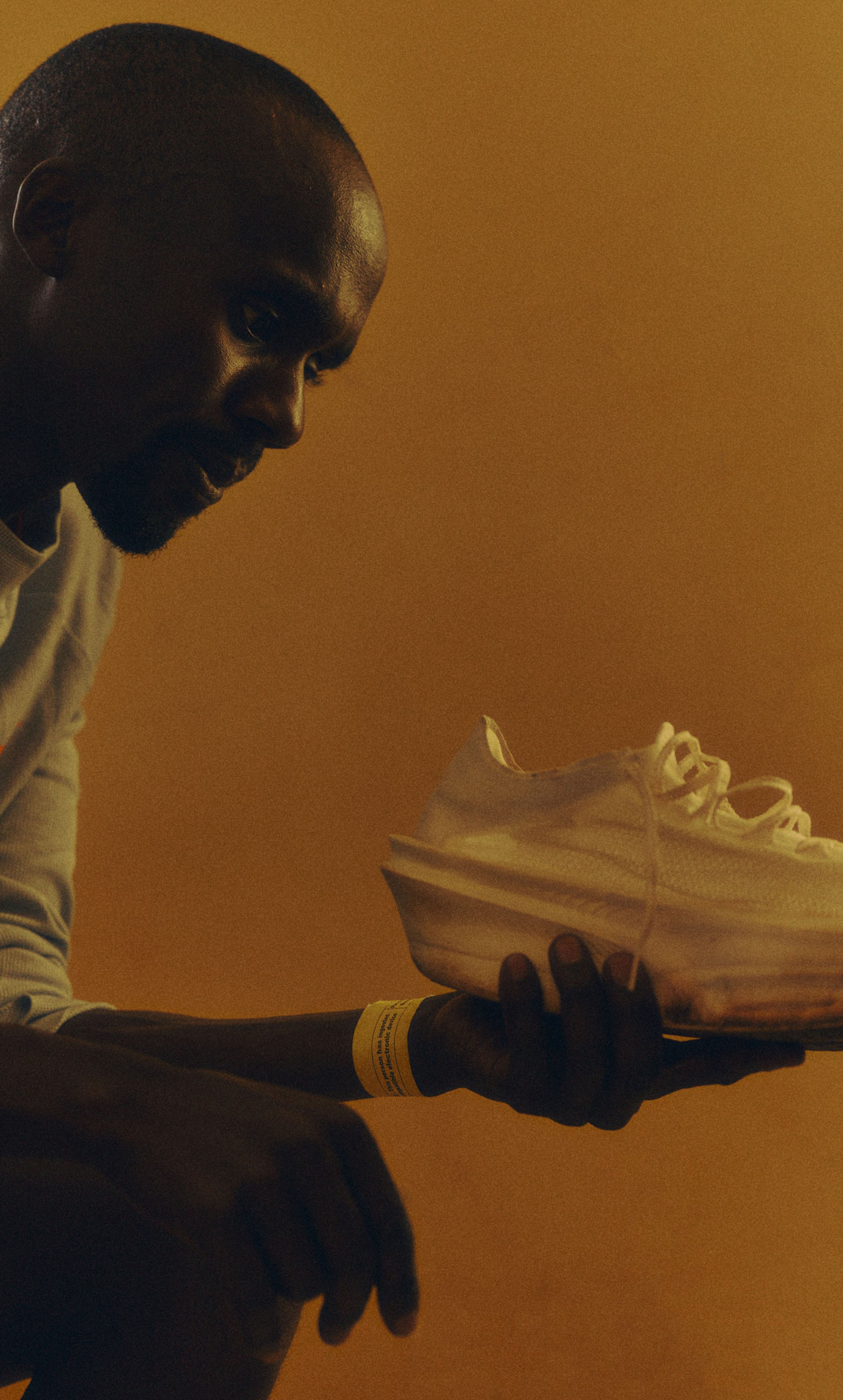
During Kiplimo’s first fitting, the team brings out shoes he’s already raced in, including the pair he wore at the London Marathon earlier this year, to provide a baseline. He’d previously told Nike product specialists his foot sometimes moved inside the shoe around corners, so the designers were looking to improve the lockdown and make the shoe lighter without sacrificing bounce or cushioning.
“We used this shoe as the starting point,” says Elliott Heath, Nike Running Lead for Sport Innovation Studio. “We knew what we had, and the goal was to make it better.”

“Making performance products is always a balance of athlete feedback and testing in the lab,” says Elliott Heath, Nike Running Lead for Sport Innovation Studio, seen here with Geoffrey Kamworor.
By the time Kiplimo tries on the new prototypes, the team has already iterated on his feedback, using the London shoe as a jumping-off point for several new concepts. His task now is to narrow down what he could race in at Chicago.
He works through several versions. One uses an experimental cushioning system he likes but says causes some irritation underfoot. Several others make the final cut, and the team sets them aside for the following morning’s workout.
Kosgei goes through a similar process, trying her own versions of many of the same prototypes. She compares different weights, fits and constructions, looking for something lighter without giving up the stability and grip she needs, particularly on wet pavement. With several promising options, she elects to test all four.
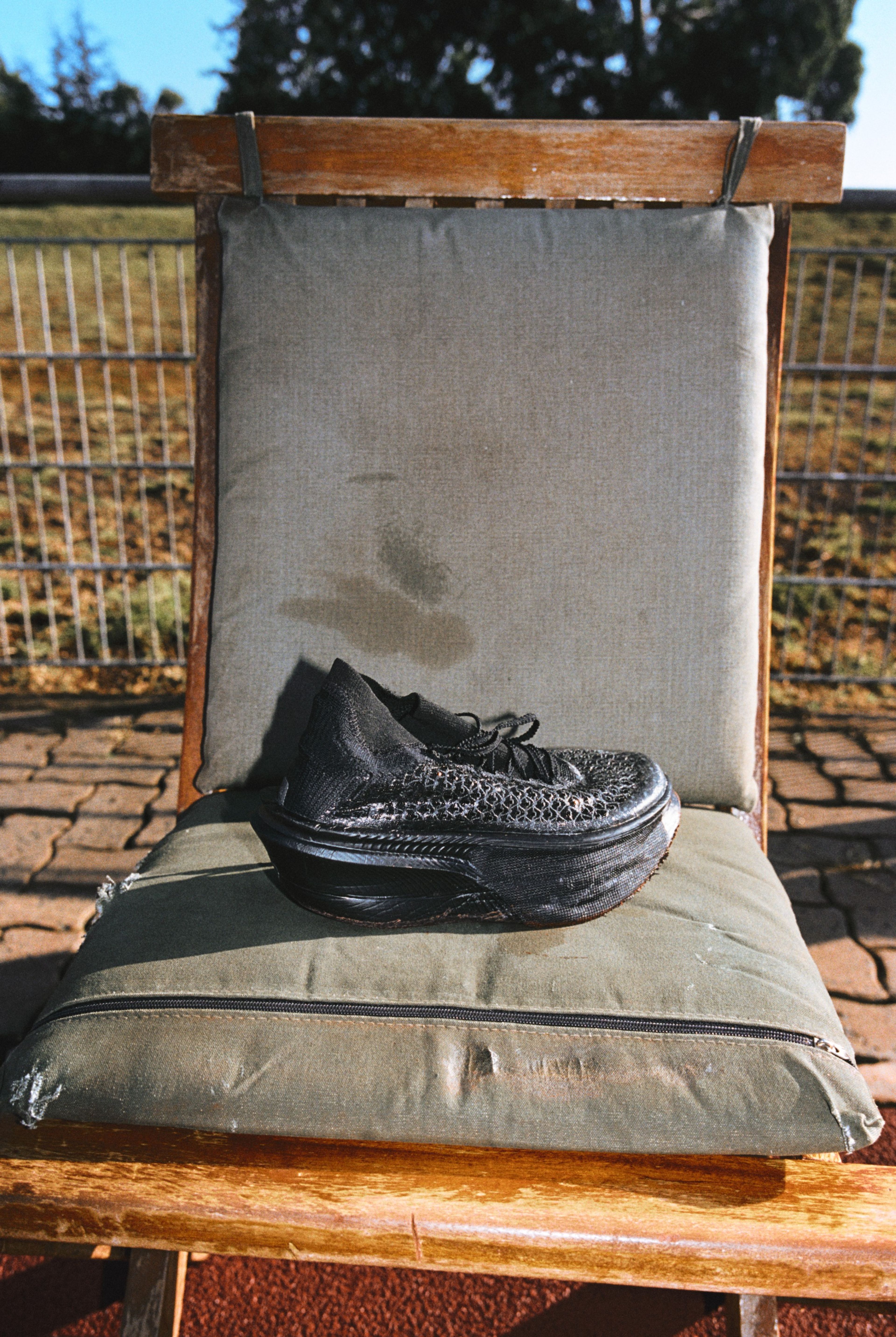


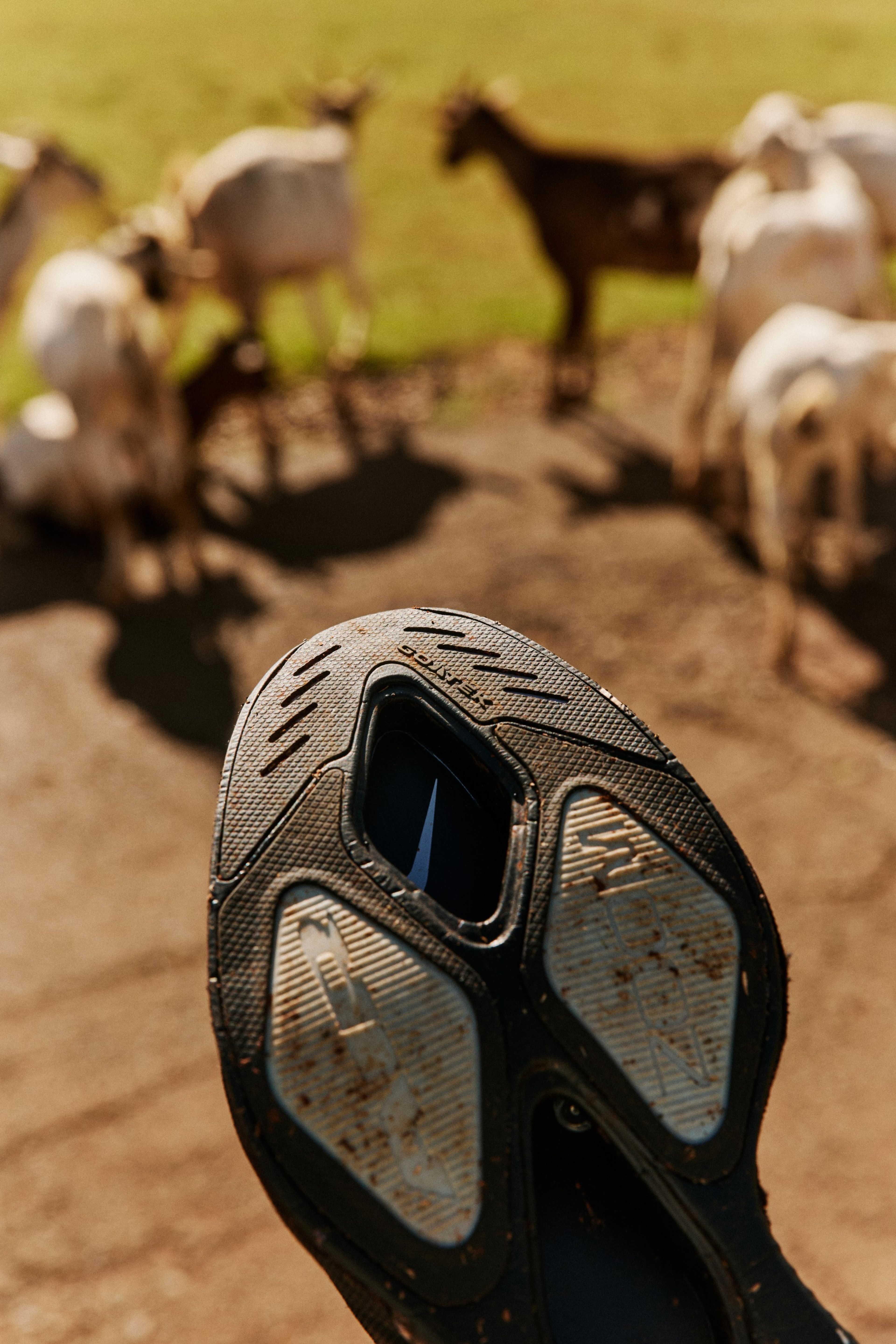
The next morning, with prototypes in hand, Kiplimo and Kosgei head to the track. Kiplimo rotates through several configurations over a series of 1,000-meter repeats and 400s, while Kosgei cycles through all four options across 12 1,000-meter repeats. At nearby camps, the rest of the group does the same, swapping shoes and comparing notes with the Nike team between efforts.
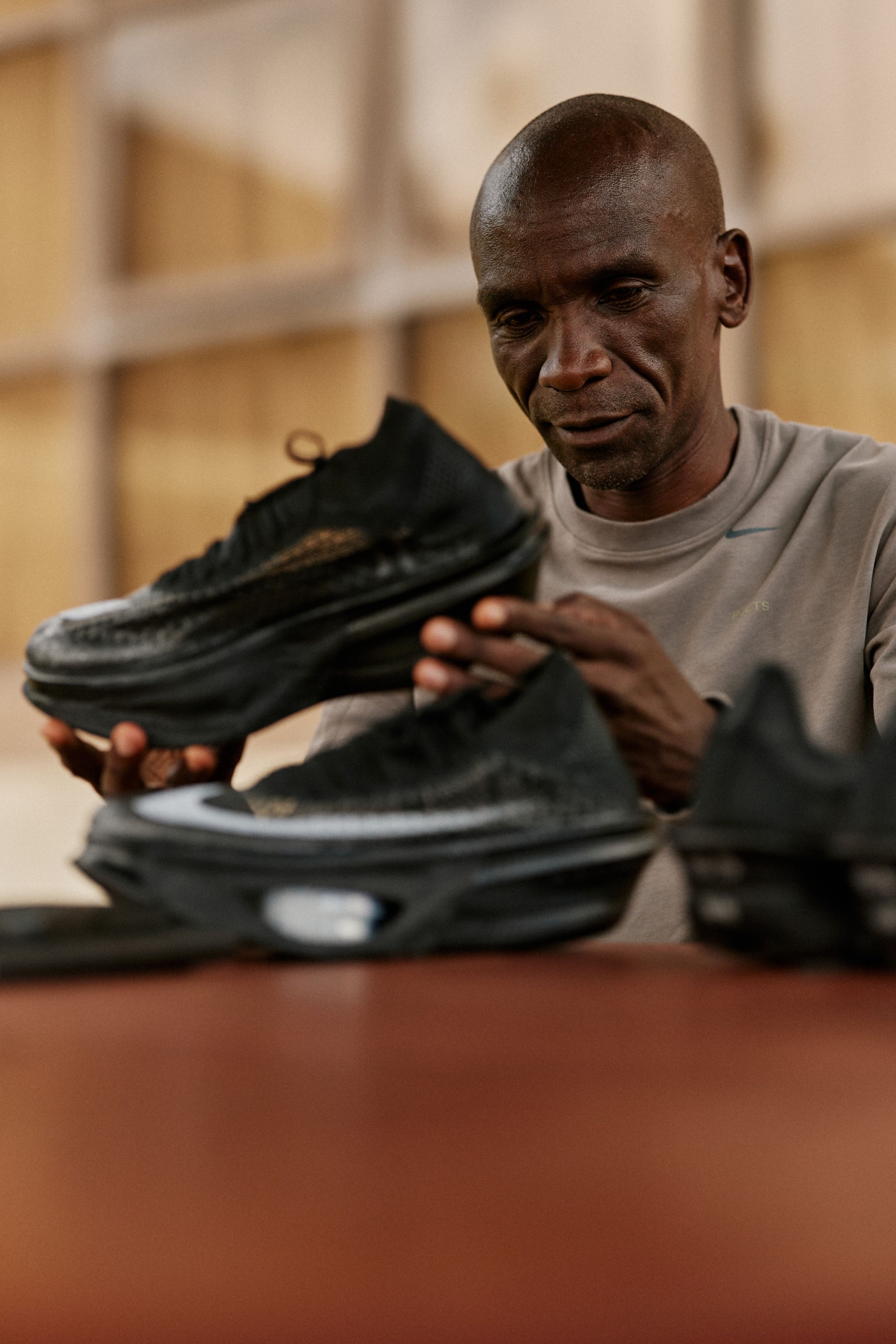
Later, during a one-on-one fitting with Kipchoge, the marathon champion tries a prototype he finds too wide and suggests removing some of the material. A Nike teammate reaches for another version.
They’ve anticipated and made the change.
That cycle — trying on shoes, running in them, offering feedback — continues throughout the week with the athletes, each round giving the Nike team a clearer picture of how the prototypes perform.

Nike’s product designers have built an openness over time with the athletes, who are encouraged to give their honest thoughts throughout the process.
Arriving in Kenya with shoes this closely tuned to the athletes they serve starts long before anyone steps onto the track or road.
Eric Grimberg, a Nike Principal Footwear Developer based in Korea, was with Kiplimo at the London Marathon earlier that year, where the team saw both what was working in his shoe and what they wanted to improve. He remembers the conversations that fueled the innovation.
“The feedback was really good in some ways, but there was also room for improvement,” says Grimberg. “We immediately started talking about what we could do to make a more lightweight version.”
The team looked at how they could strip out weight without losing the energy return that was making the shoe great, says Cook.
“Making performance products is always a balance of athlete feedback and testing in the lab. Ideally, those two things match up. If something is validated by the athletes, we try to amplify it even further. If it’s invalidated, we go back and understand why.”
Elliott Heath, Nike Running Lead for Sport Innovation Studio

Jacob Kiplimo road-tests a Nike racing prototype.
If they were going to achieve this, it would mean reworking virtually every element.
They thinned the outsole, lowered the density of the foam, and reduced the thickness of the film surrounding the Air units. For the upper, they borrowed ultralight yarns developed for the spike Kipyegon wore during Breaking4, her attempt to become the first woman to run a mile in under 4 minutes.
Together, the changes brought the prototype from roughly 176 grams to about 120, slicing nearly one third of the weight away, an incredible drop.
Some of those changes had unexpected effects. Not only did the lower-density foam save weight, it made the shoe softer.
“We were a little bit nervous about that initially,” says Cook.
But the athletes loved it.
“From the feedback we’ve gotten so far, that’s actually been perceived as a benefit, the fact that it’s a little bit cushier,” explains Cook.

Kipyegon, the world’s fastest female miler, tells the Nike team what she thinks about the new Nike Apex.
That interplay between what the team can measure and what an athlete actually experiences is central to the development process. Stats are one thing, but how it feels is what matters.
“Making performance products is always a balance of athlete feedback and testing in the lab,” explains Heath. “Ideally, those two things match up. If something is validated by the athletes, we try to amplify it even further. If it’s invalidated, we go back and understand why.”
The longer Nike works with an athlete, says Cook, the more specific those conversations tend to become. As the team learns what the athlete needs, the athlete also learns what they want, and exactly how to articulate it.
“When you meet with an athlete for the first time, the conversation may be very short: ‘Yeah, it’s good. Green’s nice. Good color,’” says Cook. “But after working together across multiple shoes, the athletes get much more in tune with the kinds of questions we’re asking.”
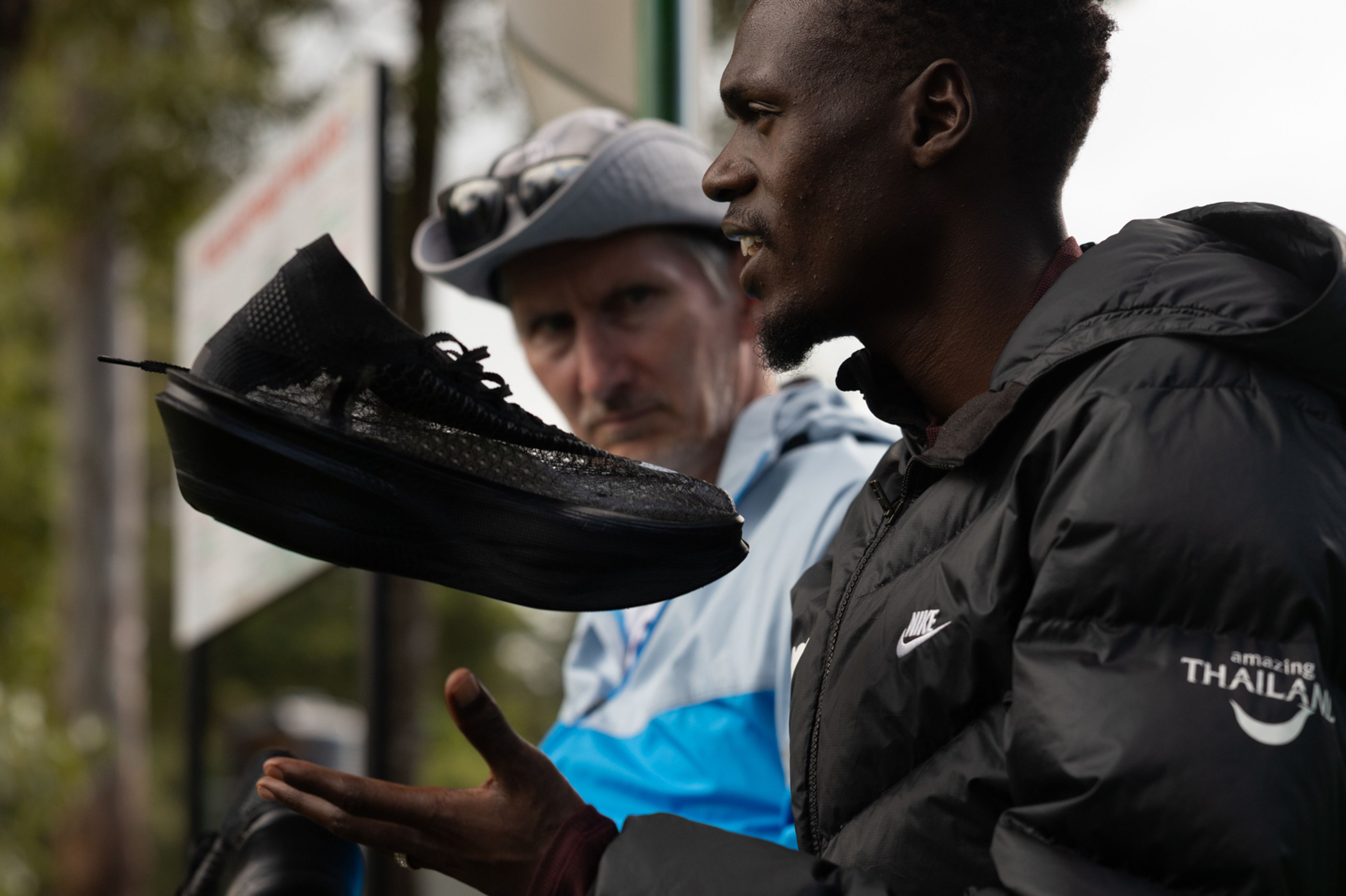
The results from many hours of listening and iterating will soon hit race courses across the globe.
The Nike team has also learned how individual athletes describe what they feel, which questions get the most useful answers, and what matters most to each runner. Over time, those learnings can extend beyond the athlete or shoe they began with.
Kiplimo’s own racing history is a testament to the process. The shoe he wore when he broke the half-marathon world record, for example, helped inform the new Alphafly 4, carrying lessons from an elite racing shoe into a model that will reach runners more broadly.
“What was the past for him will be the future for others,” says Heath.
So too for the latest high-performing Nike prototypes hitting the red Kenyan dirt this summer. The eked-out benefits, born from the hours of listening and iterating, will soon be put to the test on race courses the world over, worn by the most elite, then, not long later, by any runner with the goal to find out what their fastest speed might be.
