Fast Forward: How Distance Shoes From Nike’s Vault Inspire Sportswear Sneakers of Today
- August 10, 2026
- Words:
On May 23, 2017, Jonathon Riley dropped his Skylon 11s into a Nike shoe-recycling bin. The well-worn, well-loved sneakers were the last of a stash the elite runner had spent years stockpiling, buying up every pair he could find once the shoe was discontinued.
He’d run thousands of miles in various Skylons, first as a professional runner and later as a Nike footwear developer. They carried him through everything from long runs at a 5-minute pace to 20-mile training days on the road to the 2004 Athens Olympics, where he competed in the 5,000 meters for Team USA.
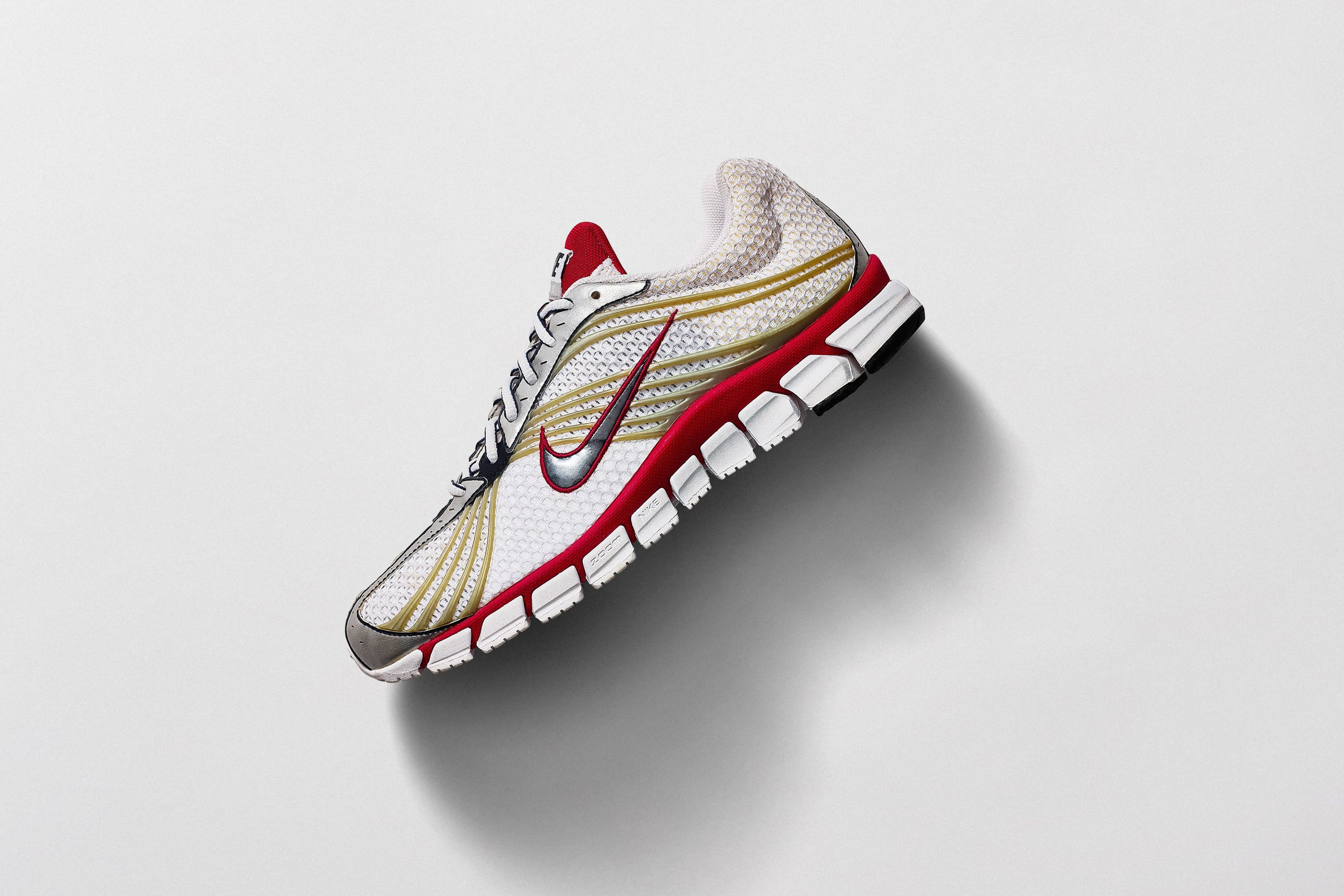
The original Nike Skylon 11, the brand's lightest, most performance-minded, most responsive training shoe of the mid-aughts.
Before he let them go, he wrote them a farewell on social media.
“You were the last of your kind, you held up well, you were a bad-ass. Thanks for the miles and the memories.”
Nearly a decade later, the performance-driven, once-elusive Skylon 11 is back — and for everyone who’d admired it from the sidelines.
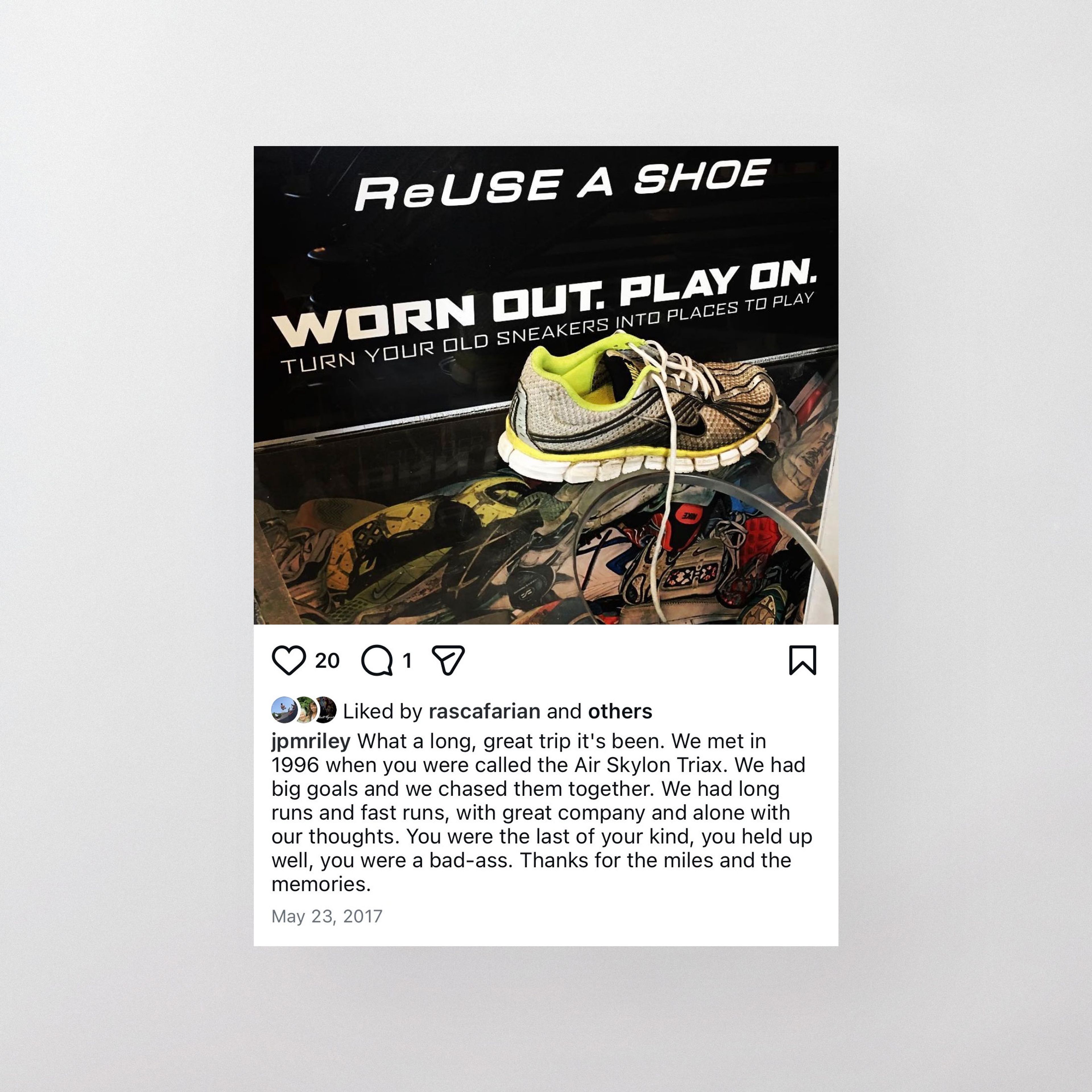
A 2017 social post from former elite runner and Nike footwear developer Jonathon Riley, saying goodbye to his last pair of original Skylon 11s.
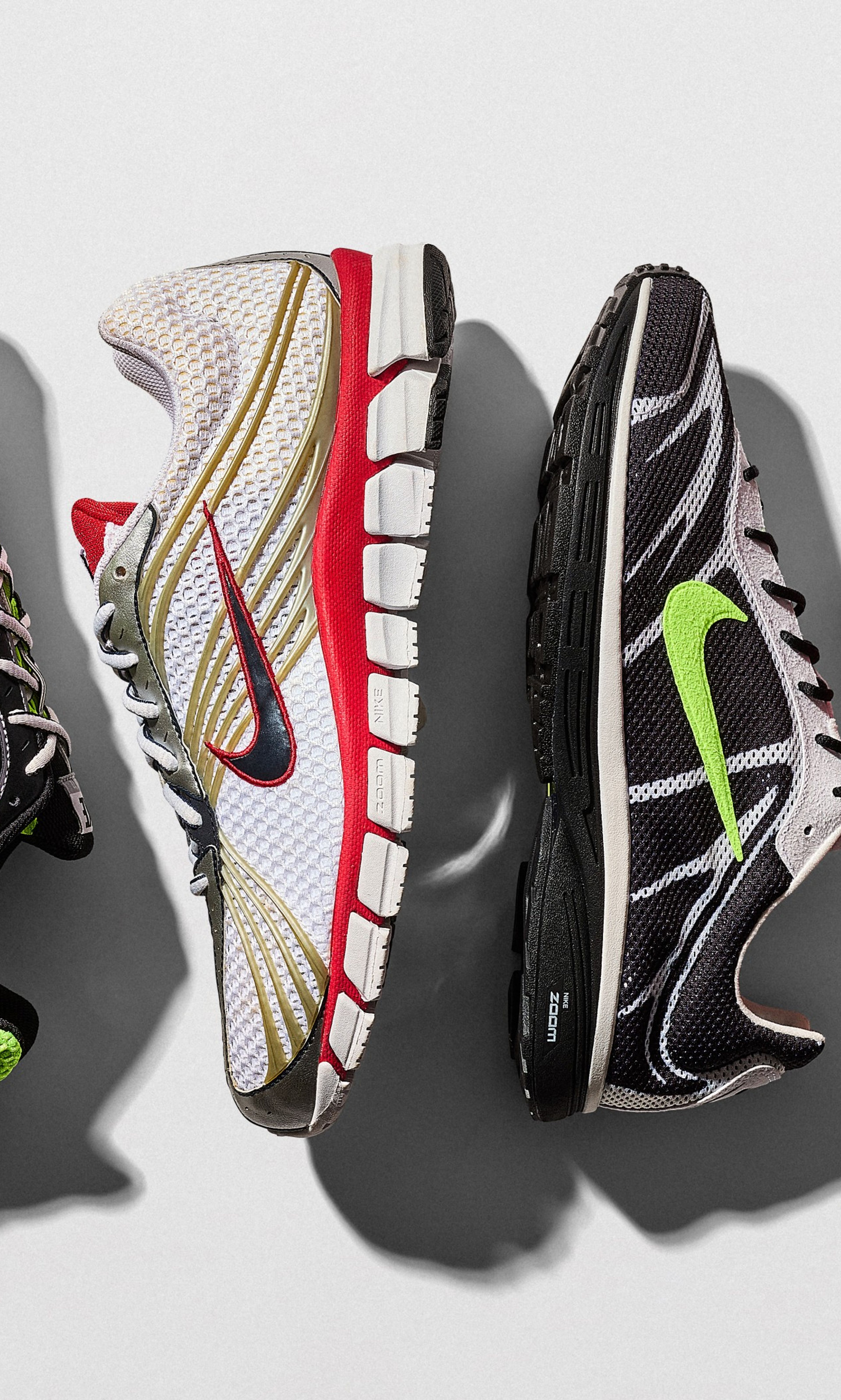
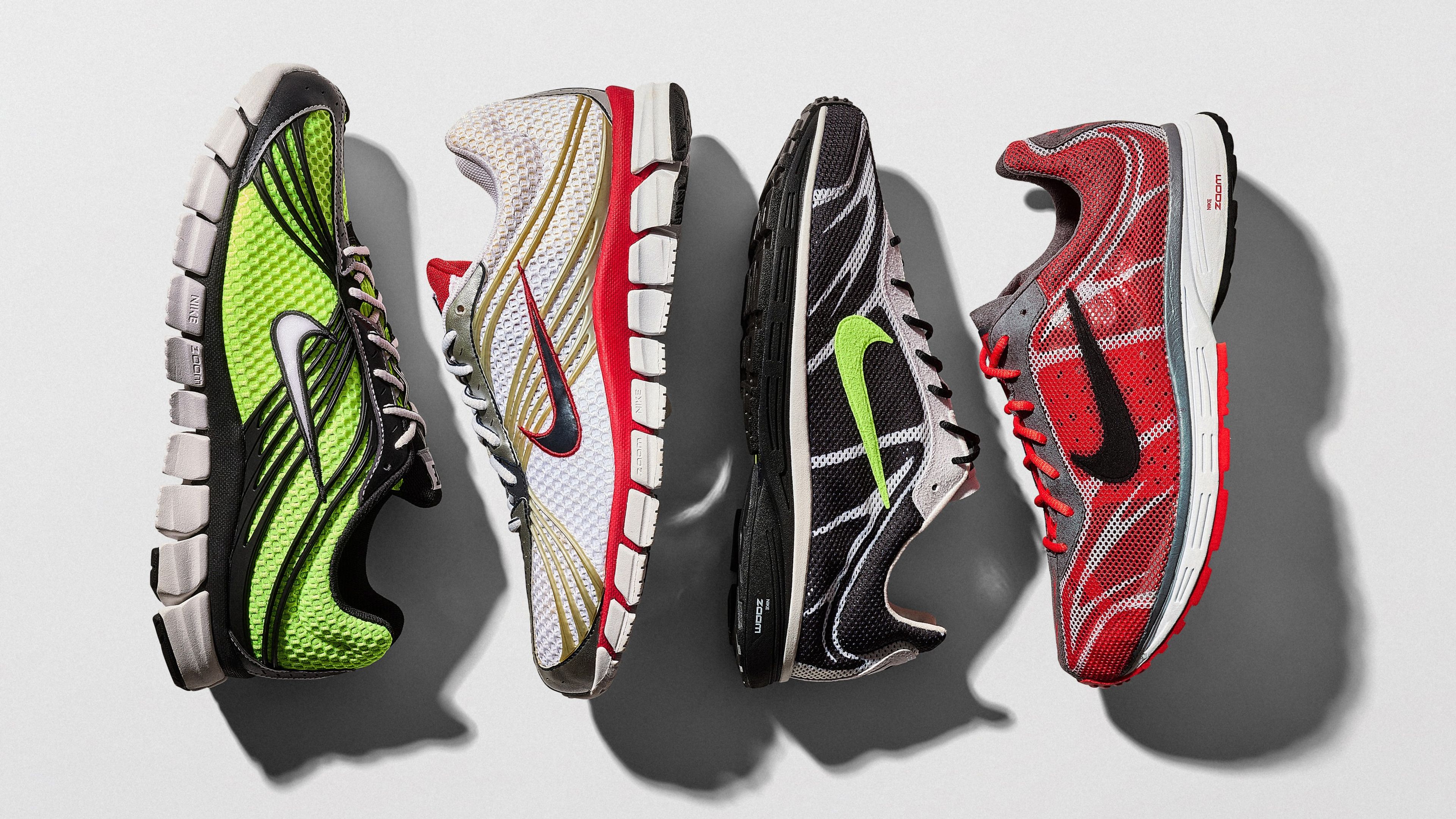
The relaunched Skylon is part of a new collection that also includes the return of another distance-running favorite: the Zoom Streak 3, the most decorated marathon shoe in Nike history and one of Nike’s most celebrated silhouettes of the pre-Vaporfly era. Together, two shoes that once defined elite athletic footwear have been reimagined for daily wear.
For Nike, this isn’t nostalgia, it’s strategy. The brand has always understood that its performance archive contains something more valuable than history: a design language that culture keeps coming back to. And right now, that currency has never been higher.
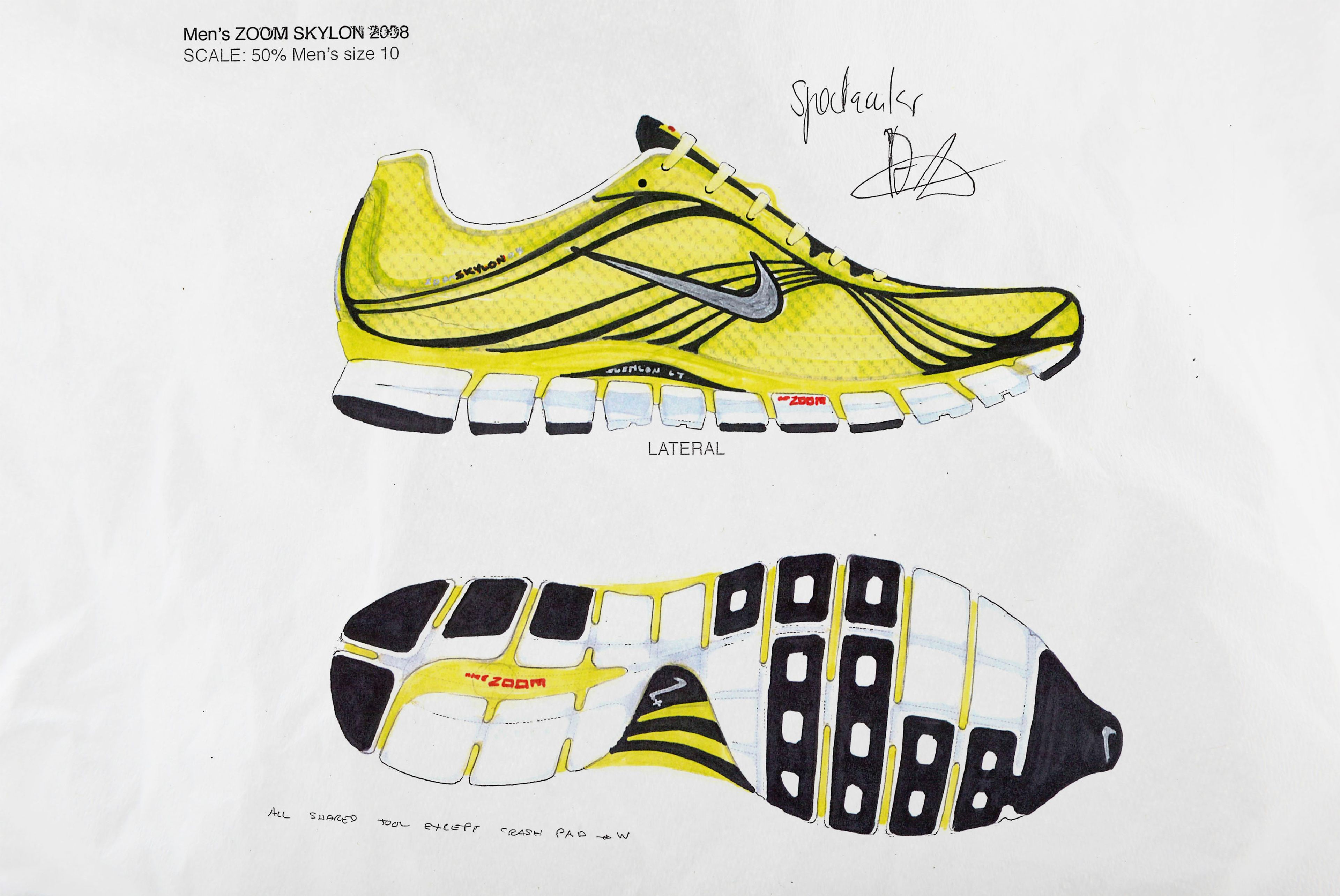
The original Skylon 11 concept sketch was signed off by Bowerman Series PLM Andre Kriwet.
“We’re always exploring new ideas,” says David Mawdsley, Expert Footwear Designer at Nike Sportswear, who led the design of the new Skylon 11. “But those new ideas have to have a sense of familiarity, and that comes from our archives. We’re looking back to push forward.”
As Zack Sweet, Senior Expert, Nike Sportswear Footwear Product Management, puts it, “Running is essential to our DNA, and we like to look back into our vault for that sport inspiration. Instead of taking the exact recipes of shoes that we’ve done before, we’re always looking for new ingredients to share with the next generation.”
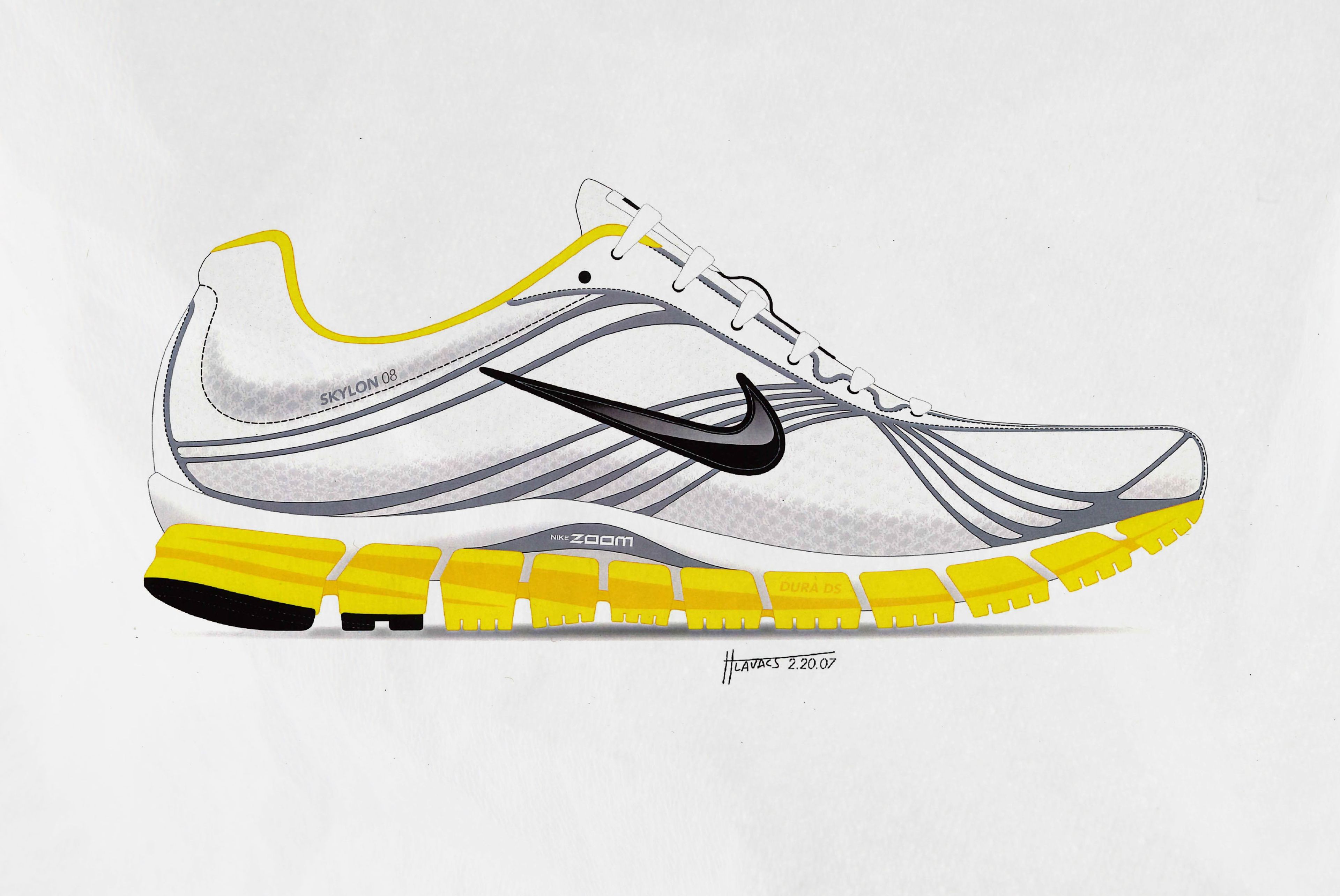
As the Bowerman team moved away from intro-year naming conventions — shown here as Skylon ’08 — and towards the new model-version, this design became the eventual 11th rendition.
“Running is essential to our DNA, and we like to look back into our vault for that sport inspiration. Instead of taking the exact recipes of shoes that we’ve done before, we’re always looking for new ingredients to share with the next generation.”
Zack Sweet, Senior Expert, Nike Sportswear Footwear Product Management
Each time, the pattern has been the same: a shoe that earned its credibility through performance finds its moment in culture. The trick is identifying the moment just before it arrives. That’s the edge Nike has spent decades sharpening.
“We’re constantly innovating and redefining what modern means,” says Ash Hanson, Expert Color and Material Footwear Designer at Nike Sportswear, who worked on both new sportswear shoes. “Sometimes, modern means looking to our past and reinventing it. With the original Zoom Streak, its simplicity and deconstructed design are what make it feel new. In the context of today, where so much of the footwear industry is heavily built up, that simplicity felt fresh.”
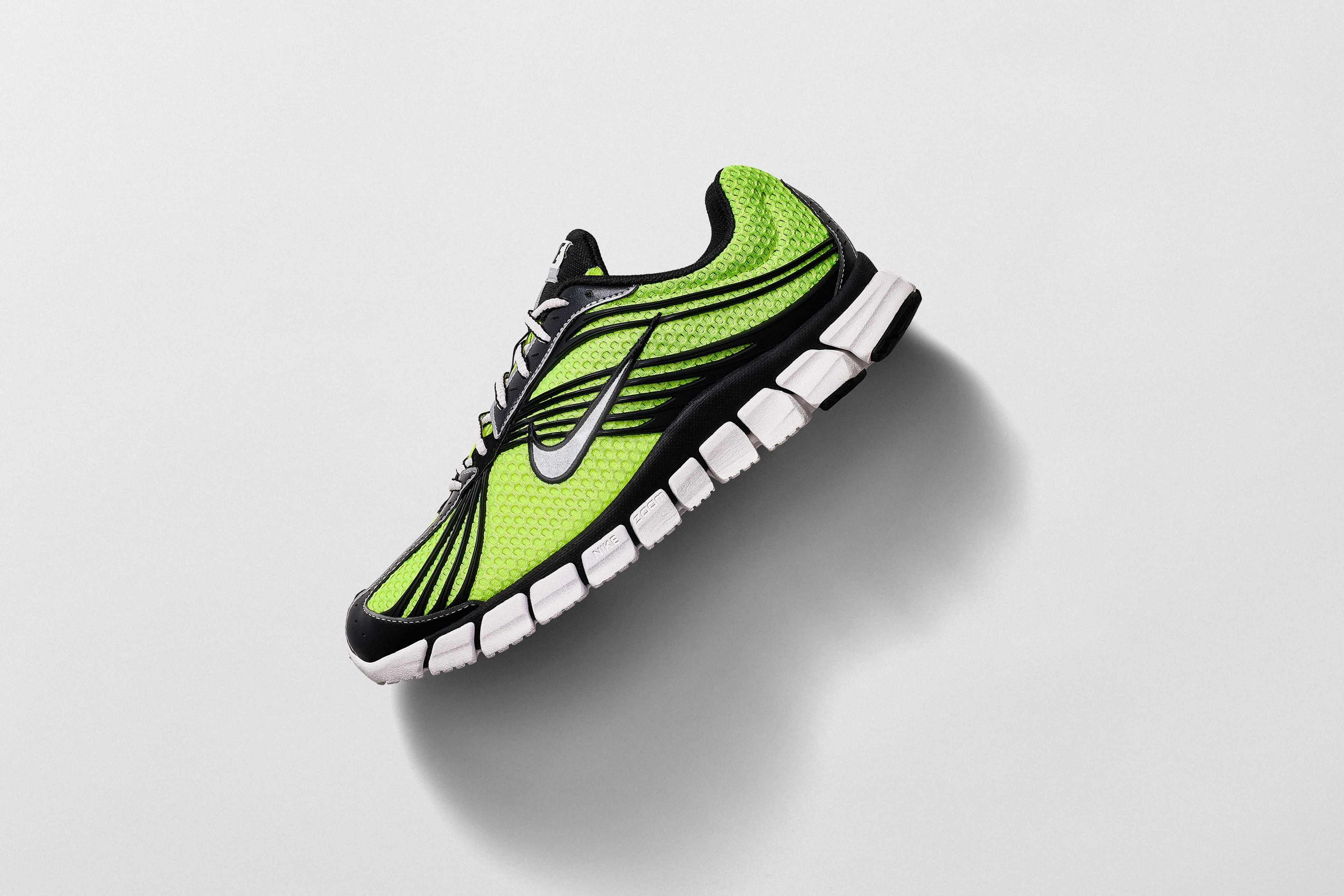
The 2026 Skylon 11, still cushioned, structured, and with the profile of a serious distance shoe, but reimagined for daily wear.
Edwin Cruz, Expert Footwear Designer at Nike Sportswear and the designer behind the new Zoom Streak 3, recognized the same opening. “The market was almost a bit of a sea of sameness. Very additive, very Y2K, very chunky,” he says. “We knew through our archive that we had models that could show the other end of the spectrum. Lower profile, lighter weight, but still expressive.”
That thinking led to the 2026 releases, each born from the same belief: that the performance archive still has something new to say.
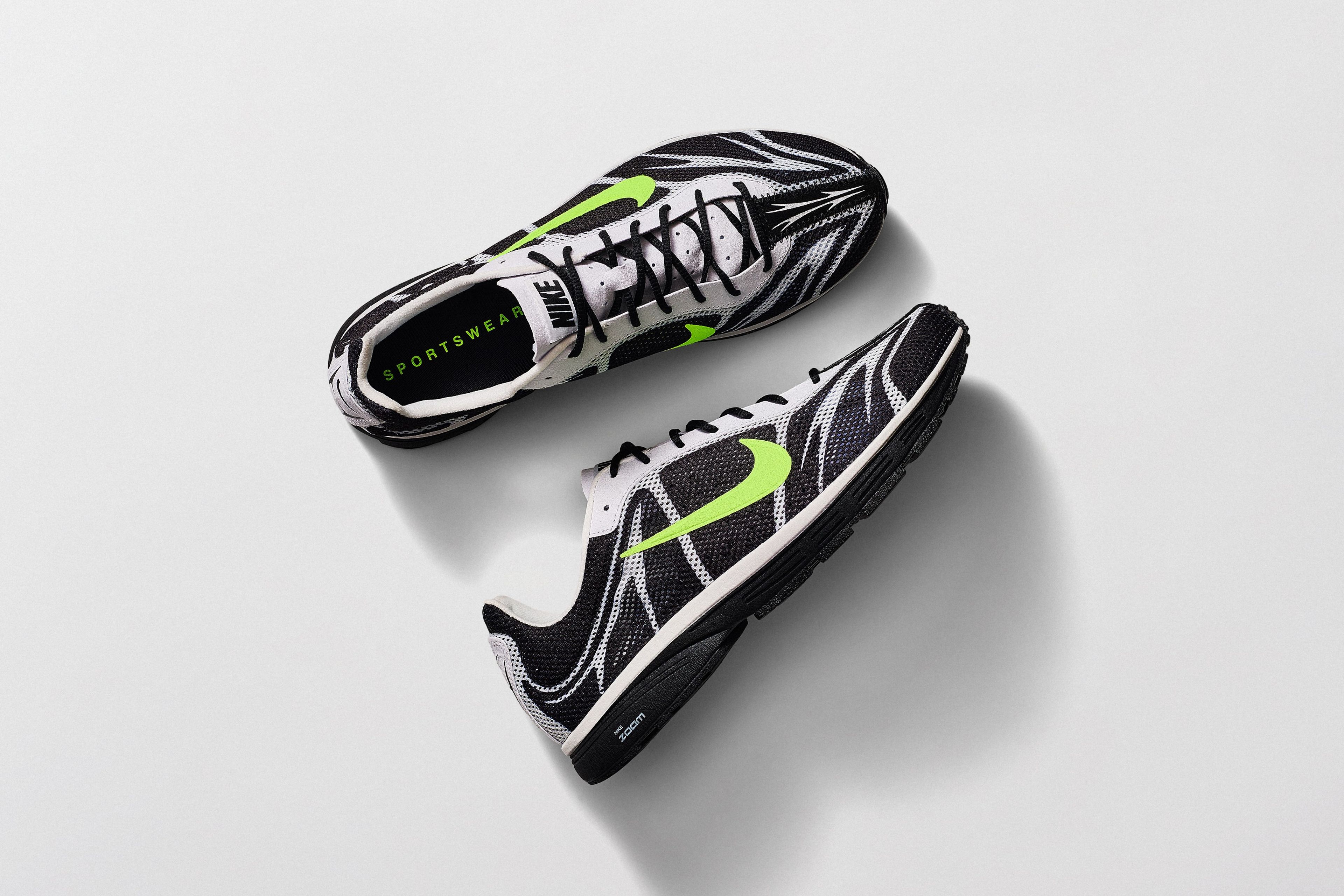
The 2026 Zoom Streak 3, a sportswear shoe that keeps the DNA of its performance predecessor, with a new, barely-there mesh that’s light and breathable for all-day wear.
Like its predecessor, the new Zoom Streak 3 sits low to the ground, with a mesh upper so minimal it almost disappears. The result is something that looks less like a sportswear sneaker and more like something built to move. Which, of course, it is — and was.
Between 2009 and 2013, the original Zoom Streak 3 crossed more major marathon finish lines than any Nike racing flat that came before it. A true race-day shoe, every gram was accounted for, its proportions dictated entirely by speed.
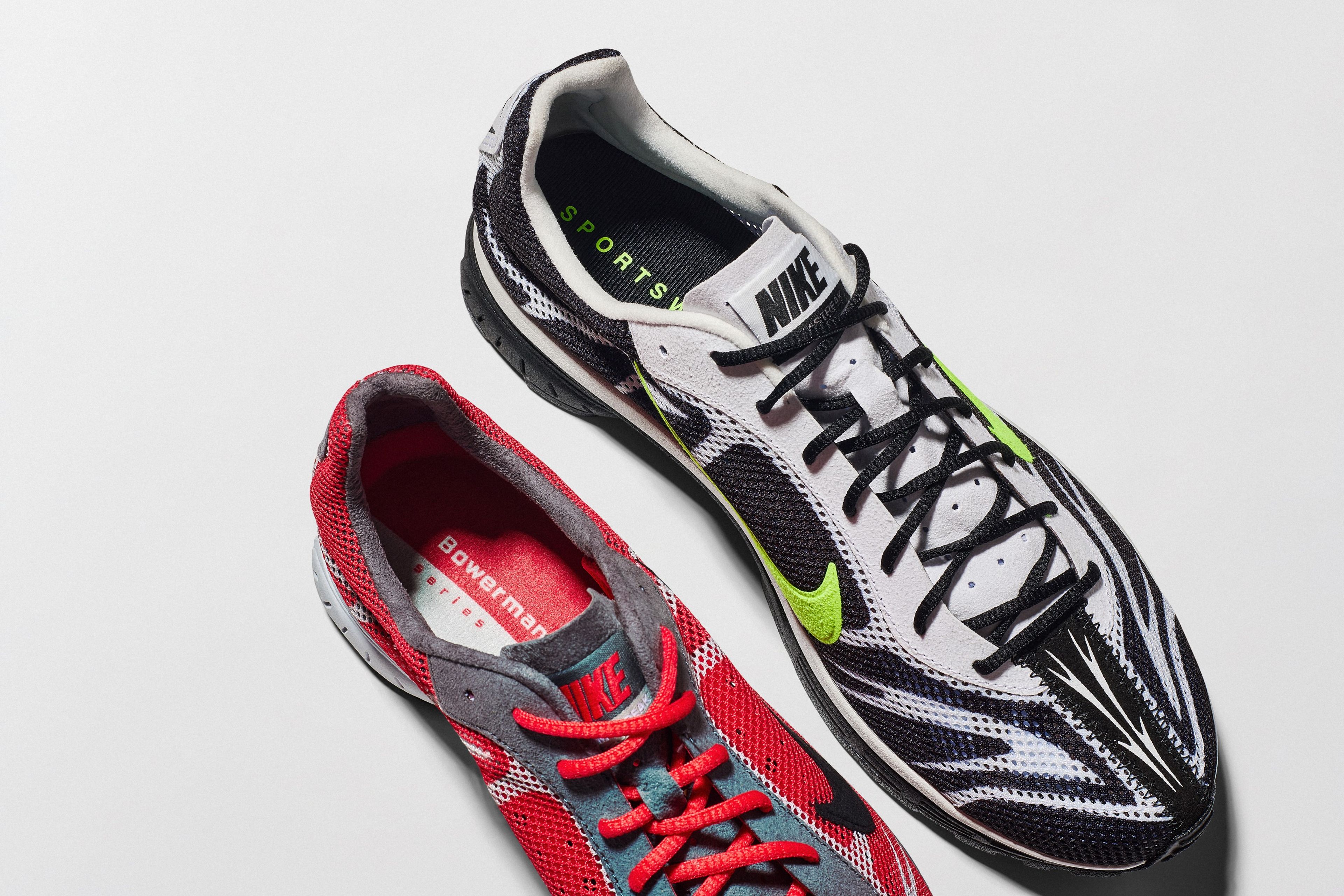
A side-by-side comparison of the original Zoom Streak 3 (left) and the 2026 remake. The insole inscription on the original signals performance, the new model’s signals sportswear.
The setup was so beloved that when Nike designers began developing what would become the Vaporfly — the carbon-plated supershoe that redefined marathon running — they kept the Streak 3’s outsole intact and simply built the midsole taller.
After the original mesh was retired, Sweet’s team sourced a new material for the 2026 iteration that matched it as closely as possible in both weight and breathability. Everything else follows the original’s lead. The heel Zoom Air unit remains, and it’s now paired with softer Cushlon 3.0 foam and a slightly wider forefoot.
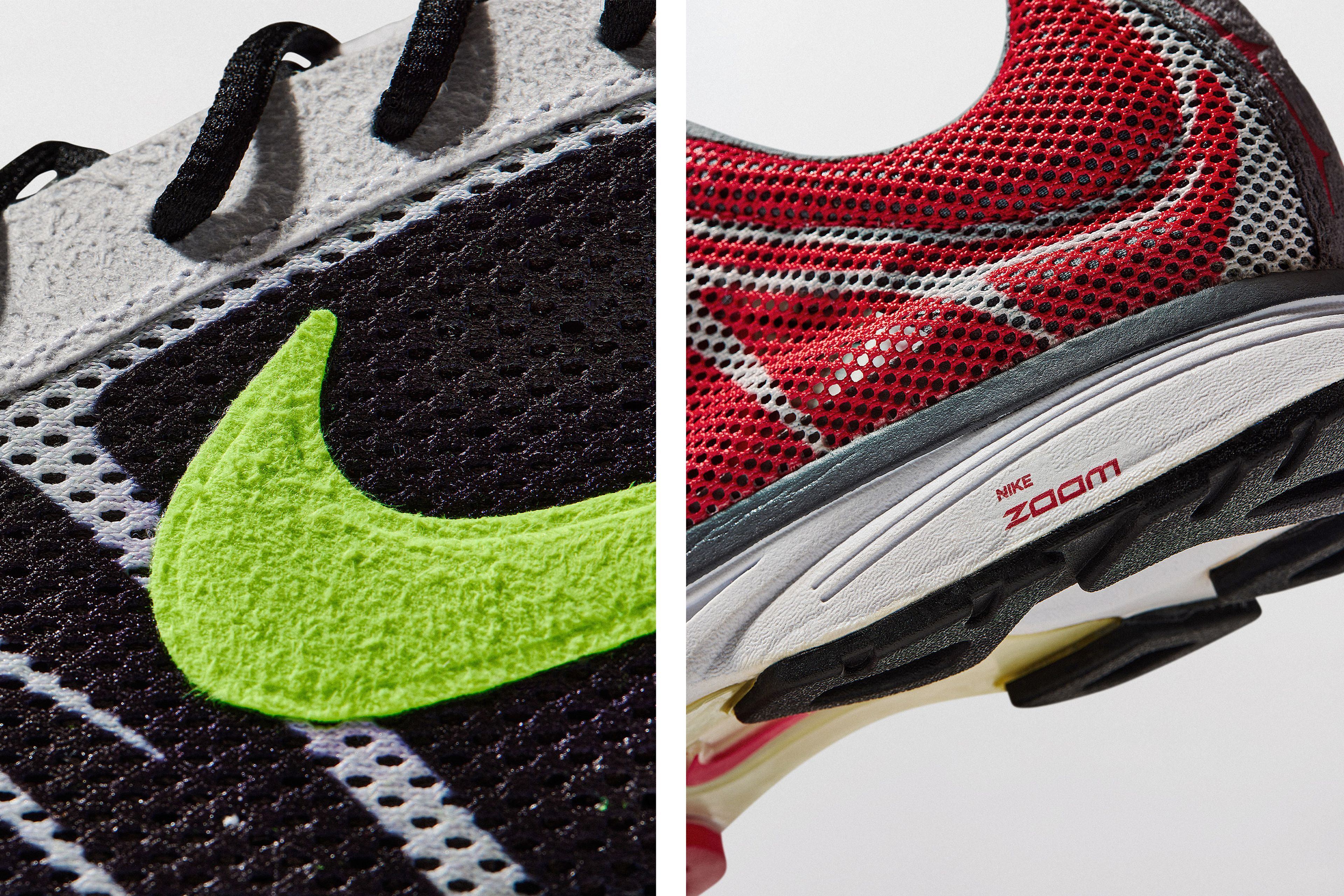
A close-up look at the 2026 Zoom Streak 3 mesh (left) and the retired mesh from the original.
“We wanted to find ways to progress the design through new technologies, but in a way that’s right for the city athlete, someone who’s going to be on their feet all day, making sure that person feels as confident on the street as an elite athlete feels on the track,” says Cruz.
That feeling begins with the design itself, he explains. “Those jagged lines feel like a sense of speed, a gesture of speed. That can resonate with how people are trying to express themselves today. We have this ability to be reductive but still be as confident and expressive.”
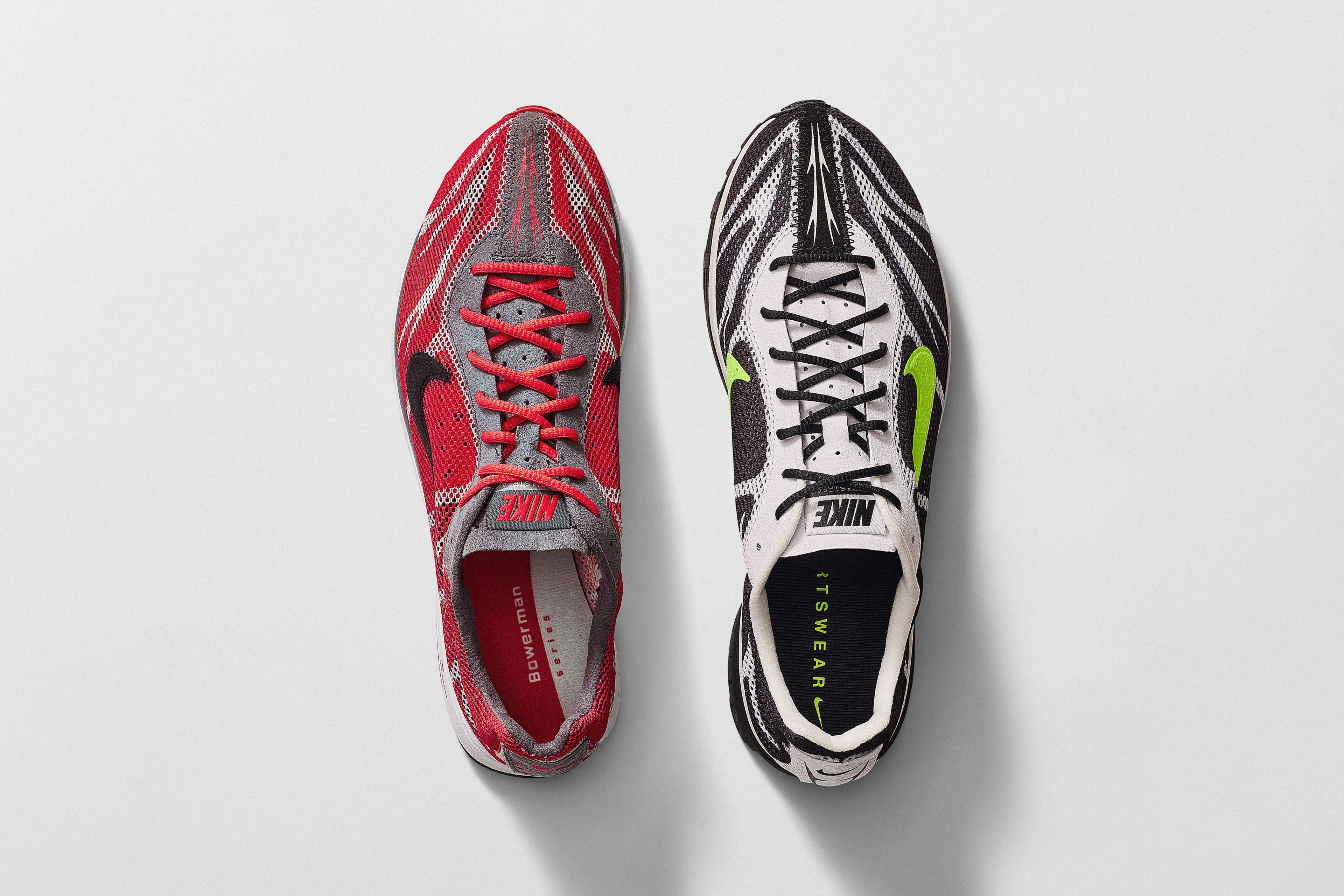
A side-by-side comparison of the original Zoom Streak 3 (left) and the reimagined sportswear shoe, which retains the same “jagged lines” that its designers say convey a sense of speed.
The new Skylon 11 takes after its original in the same way. True to its roots, the 2026 version looks like a shoe built for 26.2 miles: cushioned, structured, with the profile of a serious distance shoe. But slip it on, and the comfort is immediate.
For Mawdsley, getting both of those things right — the look and the feel — meant striking a balance between respecting the original and building something for today.
“It is my responsibility to ensure that this shoe comes back the way previous consumers remember it but also brings along new consumers,” he says. “It’s about honoring the people who worked on the product originally. And it’s an honor to work on a shoe designed by a Nike legend.”
That legacy belongs to John Hlavacs, a veteran Nike footwear designer who helped design the original more than two decades ago. Hlavacs says the goal at the time wasn’t to chase casual joggers.
“We were definitely in that ‘committed-for-life’ runner zone,” Hlavacs recalls. “The Skylon was our lightest, most performance-minded, most responsive training shoe.”
Its defining philosophy was something called Natural Motion Engineering, an obsessive focus on how the foot moved through each stride. Deep flex grooves allowed the forefoot to bend naturally, while an arch bridge added stability. Zoom Air, paired with a unique carrier construction, created responsiveness during fast pickups but was forgiving enough for high-mileage training.
The result was a shoe built to handle practically anything — one of the reasons elite runners like Riley kept coming back to it long after it left the shelves.
“When you wear products that emulate speed, you feel like you’re living in action. Speed isn’t necessarily a physical pace. It can be a mental pace. It’s progressive. And in that way, progressive and speed go hand in hand.”
David Mawdsley, Expert Footwear Designer at Nike Sportswear
Matt Tegenkamp felt the same pull. A two-time Olympian in the 5,000 and 10,000 meters and now a Lead Innovator at Nike, he too was devoted to the Skylon 11 during his competitive years, noting that it was a versatile training shoe he reached for almost every morning.
“The ‘Swiss Army knife’ appeal was the superpower for the Skylon 11,” he explains. “It was my mileage workhorse, my tempo or threshold shoe, and it was great for short-burst hill sessions, fartlek efforts with constant change of pace, and form-drill sessions.”
That unique combination may help explain why so many elite runners struggled to let it go — and why Mawdsley was so determined to preserve that feeling in the 2026 version.
“When you wear products that emulate speed, you feel like you’re living in action,” says Mawdsley. “Speed isn’t necessarily a physical pace. It can be a mental pace. It’s progressive. And in that way, progressive and speed go hand in hand.”
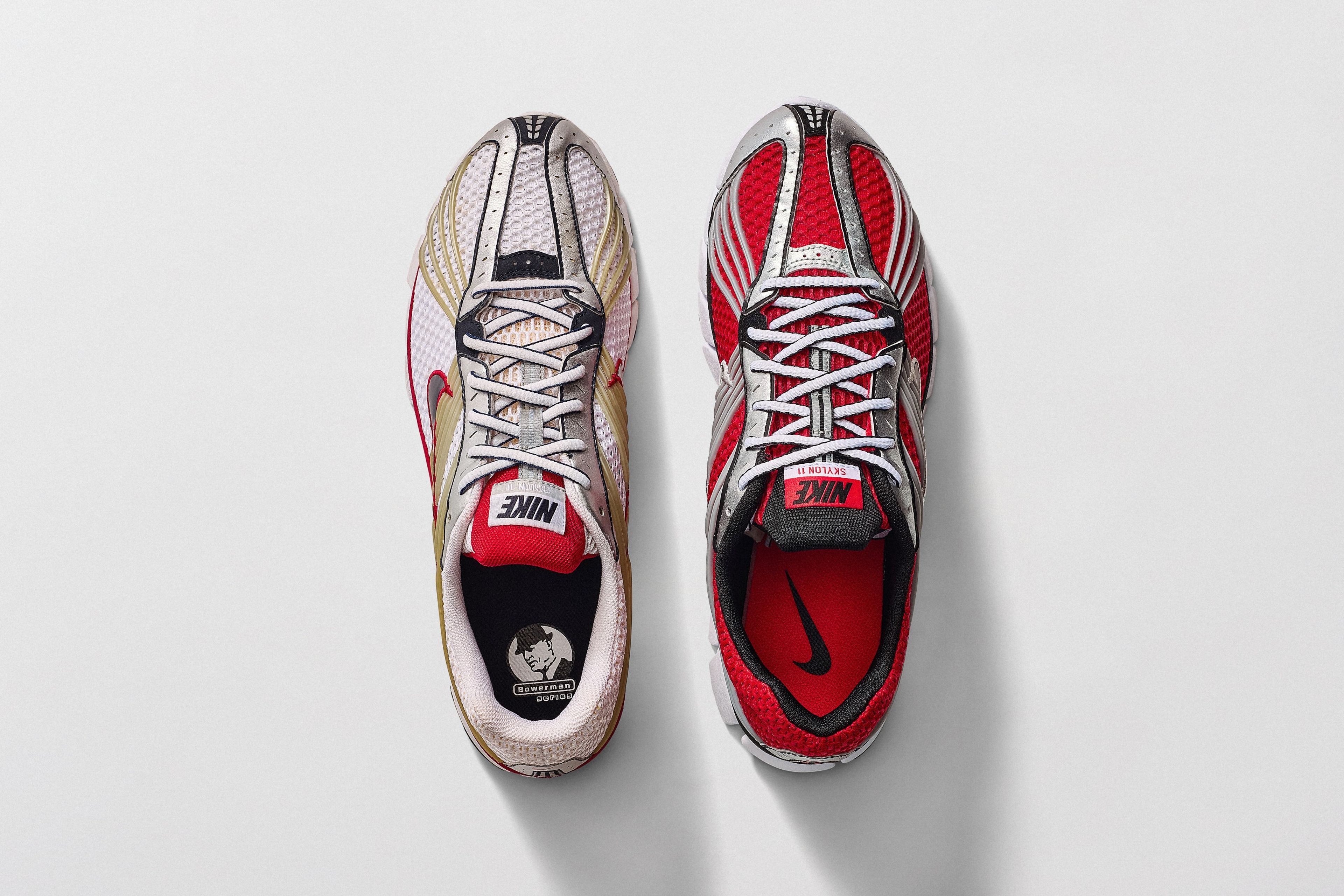
A side-by-side comparison of the original Skylon 11 (left) and the reimagined sportswear shoe, built to emulate speed and provide constant comfort.
“When athletes’ needs and wants are kept at the center of our work, the result creates more than a product. It creates an emotion or a memory that can stand the test of time."
John Hlavacs, veteran Nike footwear designer
For Hlavacs, it took nearly two decades to fully appreciate what he and his team had created. Hearing stories from Olympians like Riley and Tegenkamp, he realizes how special it was.
“Whenever you create something great, it can take years to legitimize what it was that you did. It takes time to realize you’ve created a legacy.”
Today, it’s come full circle for Tegenkamp. Seeing the return of a shoe that played such a central role in his own career has reinforced what he now knows as someone helping shape the next generation of Nike footwear.
“When athletes’ needs and wants are kept at the center of our work, the result creates more than a product,” he says. “It creates an emotion or a memory that can stand the test of time.
“I'm excited to see how these fresh sportswear versions resonate with a new set of athletes. I know I'll have a pair — or two — in my closet.”