5 Questions With Nike Running’s Coach Bennett
- July 07, 2026
- Words:
- Images:
If you’ve ever cued up a Nike Run Club (NRC) session, you know his voice. He’s the one in your ears every time you lace up and head out the door, equal parts coach, philosopher and hype man. Chris Bennett, or “Coach B” to the running world, is Nike’s Global Running Head Coach and the man behind the mic on the NRC app.
He’s one of those coaches who always knows what to say at mile 3. You find yourself nodding along mid-run, digging deeper because he’s spurring you on. As the voice behind the free running app with users worldwide, Bennett has become widely popular, his mantras so deeply embedded in running culture that they’ve taken on a life of their own across Reddit threads and social media posts. “Struggling doesn't mean failure.” “If you can't do the run you want to do, do the run you can do.” “Kindness is hardcore.” They’re the kind of lines people write on mirrors and carry through difficult days that have nothing to do with running.
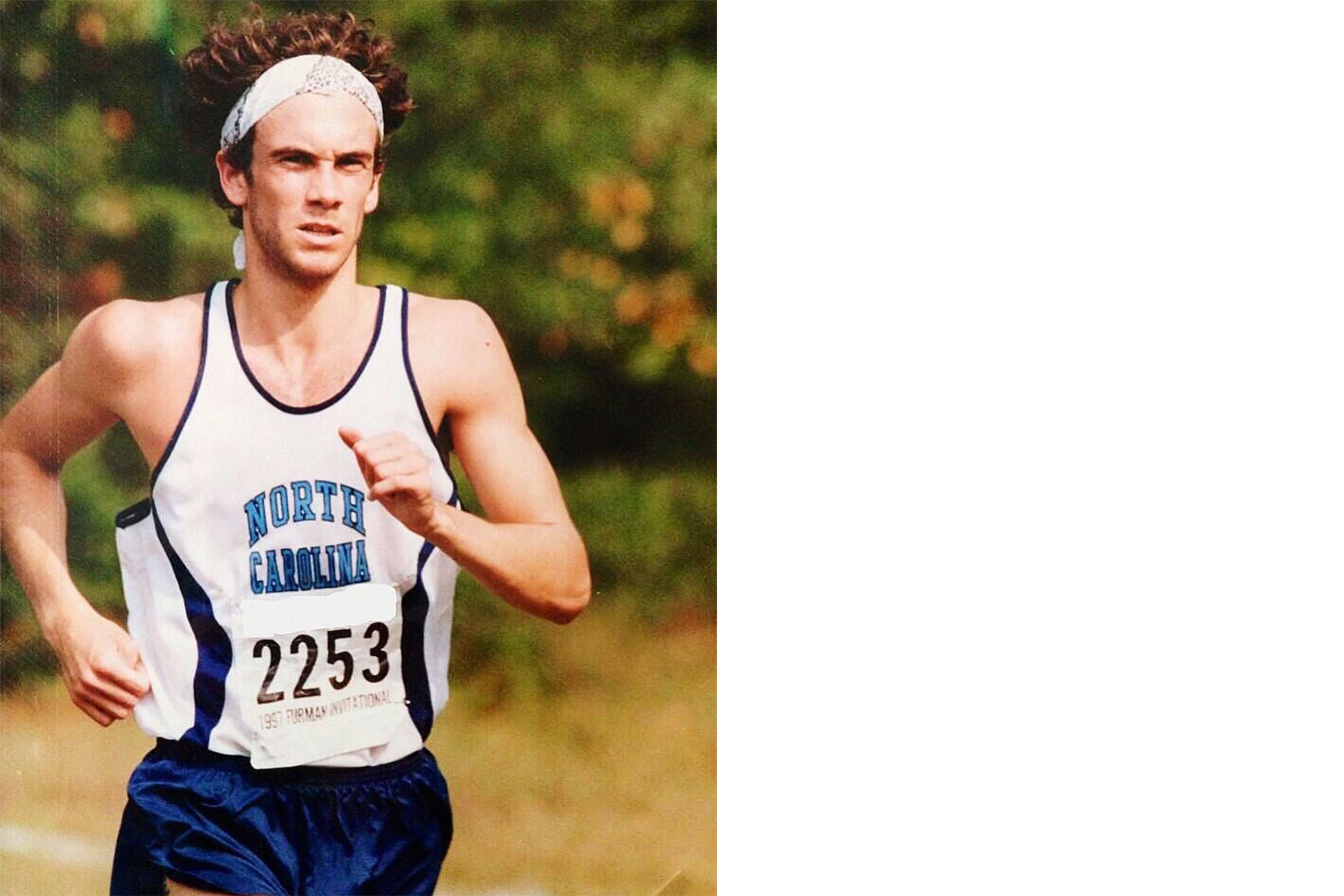
Coach Bennett, the voice of Nike Run Club, was a competitive runner at UNC-Chapel Hill before he began coaching future Olympians.
A competitive runner from New Jersey, Bennett ran at UNC-Chapel Hill before coaching future Olympians at the post-collegiate level and building what became the Northeast’s most successful high school cross-country program. When Nike asked him to come on as a full-time coach in 2014, he wrote his entire coaching philosophy down on a legal pad and handed it over. Those notes became the NRC Truths, and he’s been building on them ever since.
Now, he’s distilled that philosophy into his first book, This Is About Running. This Is Not About Running, a motivational guide that will be released this fall and is available for preorder. It’s a title that, if you know anything about Coach B, tells you everything. Bennett’s not stopping there. Beginning July 7, as part of Nike's 2026 After Dark Tour, his popular podcast will feature a months-long series of conversations with women across the world. From elite athletes to first-time racers, Coach B is passing the mic to women who are changing the game and redefining what’s possible.
Below, he talks about why he fell in love with running; what he believes about the sport; and why the job, as he sees it, is never finished.
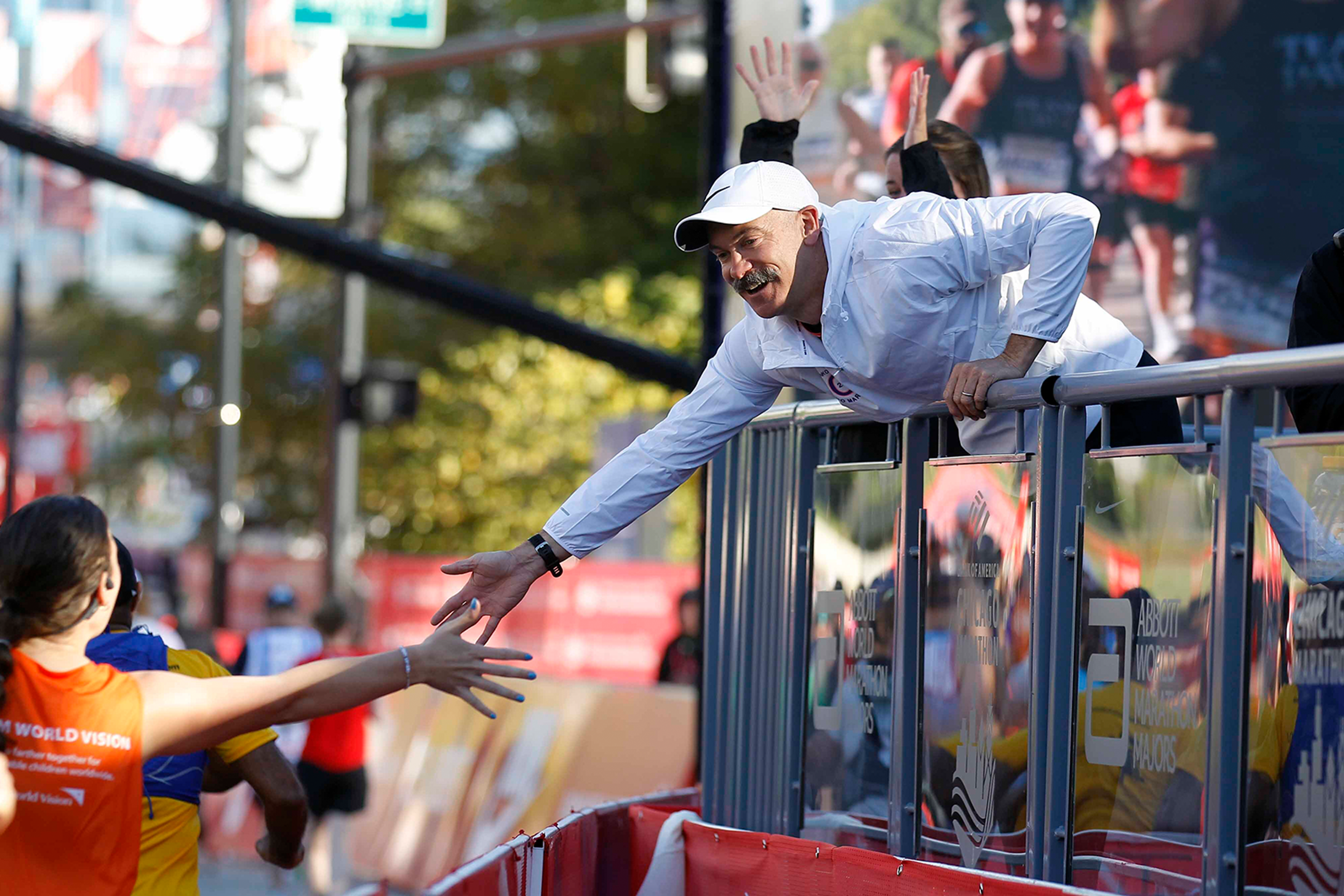
Known as “Coach B,” Bennett is always on the sidelines high-fiving and cheering on athletes, some of who have carried treats or thank-you notes for miles to hand to him when they pass.
“My philosophy is that when you go for a run, it should be about more than running. I think that’s why the connection with listeners has been so intense and durable over the years.”
Coach Bennett, Nike Running Global Head Coach
How did you get into this line of work, and what led you to where you are today?
I’ve been running basically my entire life. I was the fourth of five kids, so if you wanted to keep up with your older sister and brothers, you had to move. That was the first inspiration to run.
I grew up in New Jersey, where there’s a really rich tradition of cross-country and track and field at the youth level. It was just something you did. I was introduced to it as a team sport, which I think was really important. I wasn’t in love with running initially — I was in love with having teammates, and that’s what bridged the gap between trying the sport and dedicating myself to it. I was incredibly lazy until I made the connection that my laziness was hurting the rest of the team. That’s what actually got me to train consistently and intelligently. It wasn’t about me, it was about the fact that I was letting my team down.
I got to run for the Nike Farm Team, a post-collegiate Olympic-development team at Stanford University, and my first coach there was Jeff Johnson — employee No. 1 at Nike and a good friend to this day. I ran for them for five years. I wasn’t trying to make the Olympic team, just the trials. But I was training with people who were, and it was a really incredible experience.
I had already decided in high school that I wanted to coach and teach. When Nike eventually sat me down and asked what I would do if I were coaching the runners who met at their New York City stores, I mapped out a weekly schedule, the kind you’d give any serious athlete. And that’s how I coach. Just because they’re not elite doesn’t mean I wouldn’t treat them like they are. You don’t give somebody less of a regimen because they have less speed.
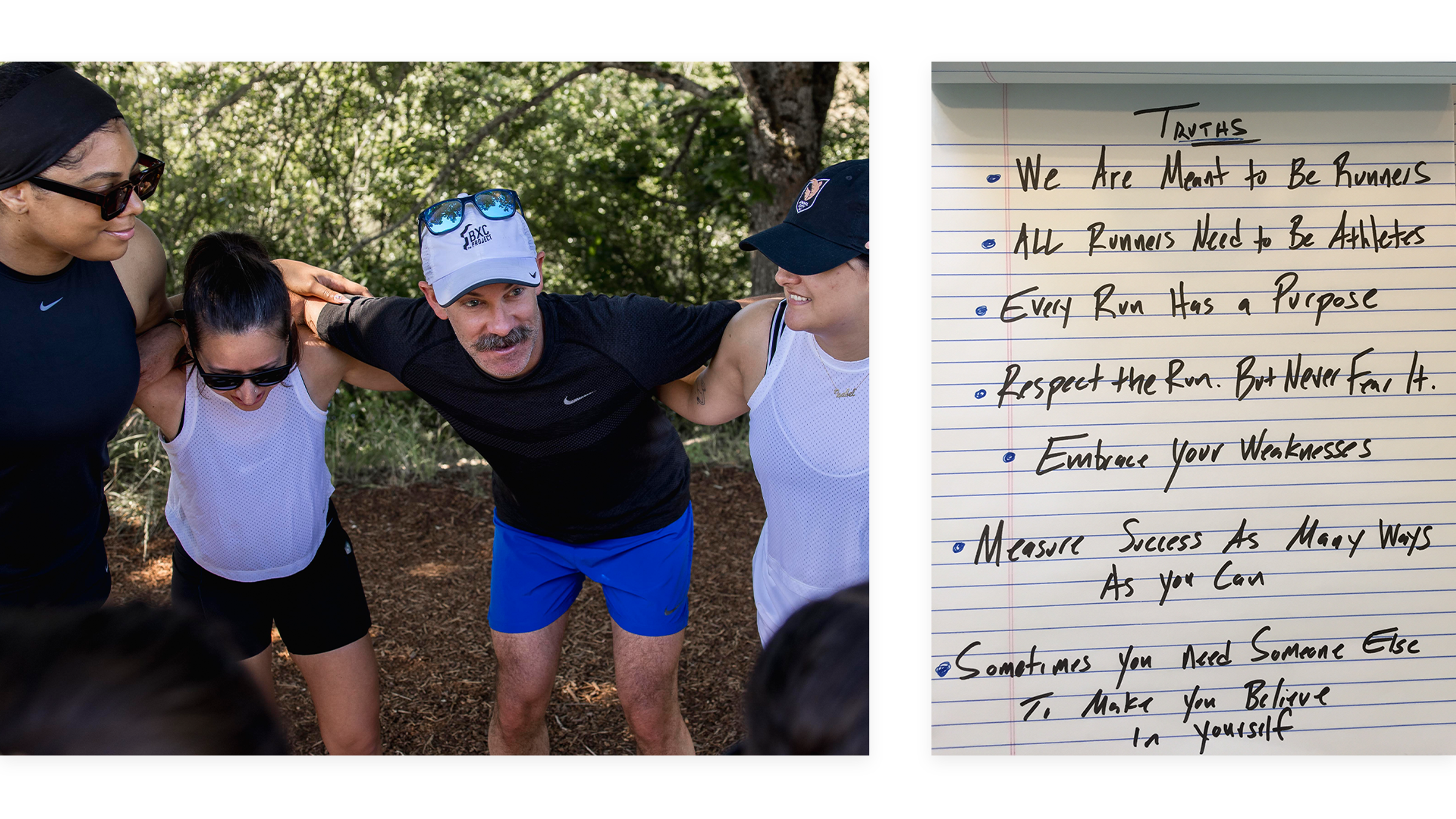
Some of Coach B’s most famous mantras include “Struggling doesn’t mean failure” and “Kindness is hardcore.”
What is it about the Guided Run format and your specific approach that makes people connect with you the way they do?
When it’s just audio, you’re only engaging with one of their senses, which I think is super powerful. People become more focused on what you’re saying. With video, people are paying attention to your hand movements, they’re paying attention to the background, their mind starts to drift. But when it’s just sound, they’re more tuned in, which means that what I’m saying has to be honest. When people are hyper-focused, their BS detector is on high.
When we first started creating these, I had a couple of rules. One was that this is unfiltered. There isn’t anyone between me and the athlete. I’ve always been adamant that if I was going to do this, it was going to stay unbelievably human. It wasn’t going to be like other guided runs. It was going to be grounded in the coaching philosophy that I espouse, which is that kindness is hardcore, and that the best way for athletes to be able to break through barriers or clear hurdles is for them to be supported while they’re trying to do it. I won’t lie to them. I want them to become their own best coach. With every Guided Run, I want them to need me less and less. I want the athlete to own this. When I’m telling them to do something, they have the final decision.
People develop a relationship with me. There are a lot of people I’ve never met, but we’ve gone through some stuff. When we do finally meet, it’s often a very emotional meeting. That connection is so important. We’re in a world where disconnection is only getting greater and greater. Knowing that this is a digital format and we’re not in person, I wanted to make sure it was as human as possible. That means that like with human interactions, I ramble. I go off on tangents. I make really bad jokes. I have runs called the “It’s Okay 5K,” the “Struggle Run,” the “Tough Day, Easy Run,” the “Thank You Run.”
My philosophy is that when you go for a run, it should be about more than running. I think that’s why the connection with listeners has been so intense and durable over the years.
You’re often described as someone who can make a person believe they’re a runner before they’ve ever even gone for a run. Where does that come from?
Well, first, I really believe it, so that helps. But I also think it comes down to the understanding that coaches don’t create anything, coaches uncover things. When you understand that, it makes your job so much easier. I don’t have to create a runner, all I have to do is convince you that you can do things you don’t believe you can do.
I like to keep the bar low intentionally. I never say, “I can get you to run a marathon.” I say, “I can get you to run from here to the end of the street.” You don’t believe that counts as a run. My job is to convince you that it does. The second you realize that counts as a run, you’ve experienced success. Inevitably, what you think next is, I could have gone a little further. I could have gone a little faster. I can do that again. And that’s how it all starts.
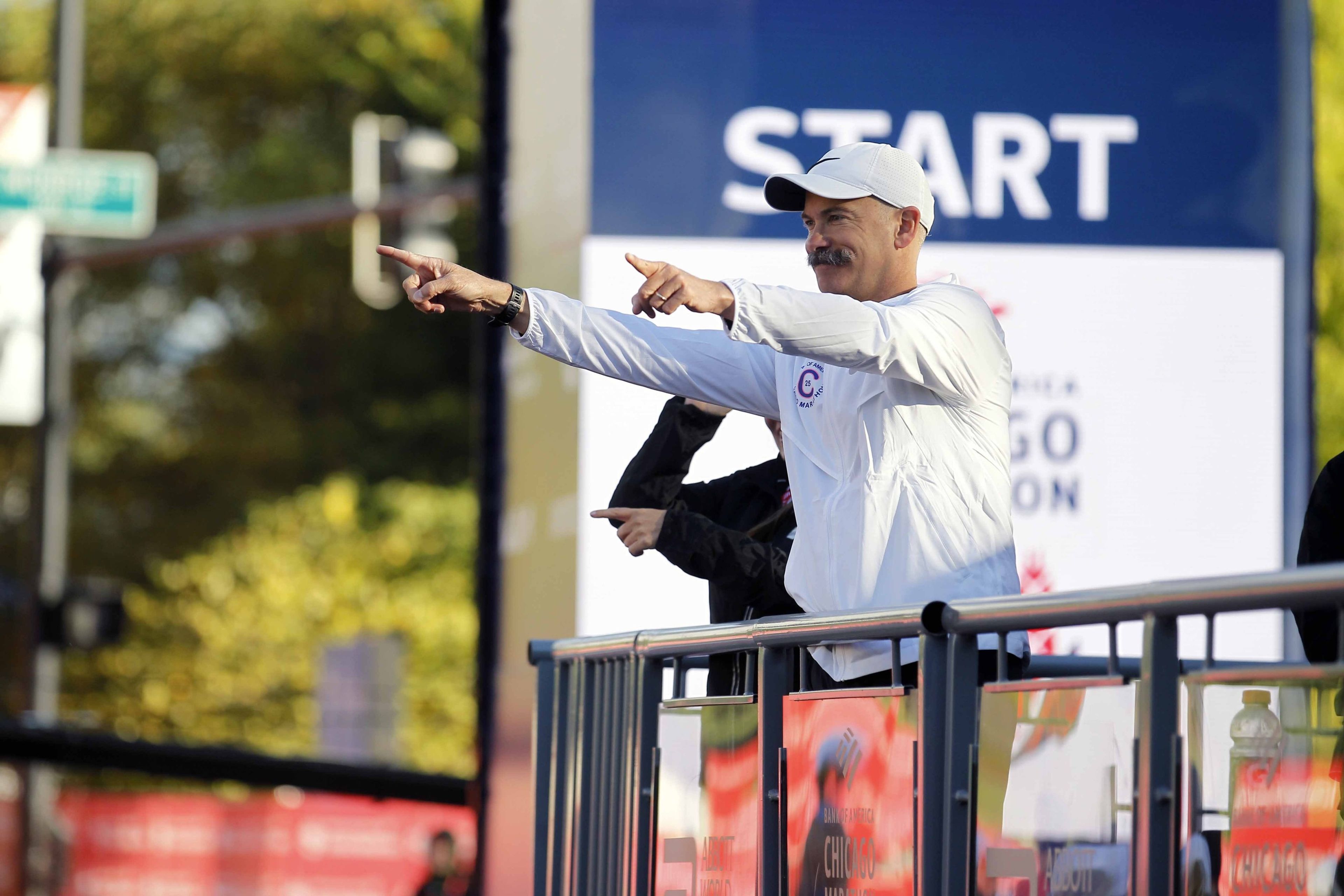
Coach B cheering on runners at the start of the 2025 Chicago Marathon.
“It was that all-or-nothing mentality. But there’s so much something between all and nothing.”
Coach Bennett, Nike Running Global Head Coach
One of your more famous quips is, “If you can’t do the run you want to do, do the run you can do.” What do you mean by that?
As a runner myself, I used to sometimes put off runs until very late in the day, and then I’d get to a point where it was late and I wasn’t going to be able to run for as long as I wanted to. I would convince myself that if I couldn’t do the full run, what’s the point?
It was that all-or-nothing mentality. But there’s so much something between all and nothing. If you’ve got 20 minutes, that’s all you’ve got. So if you run for 20 minutes, you’re actually giving it 100 percent of what you’ve got. How can you diminish yourself for giving it 100 percent of what you could do?
This idea ended up in a Guided Run when I was working with Michael Orenstein, NRC’s former Head of Product, and one of the guys who helped develop the runs early on. He was going to a pottery class and he said, “I'm not going to be able to run today, I’ve got to rush.” And I said, “When’s the class?” He told me it was 35 minutes from then and a 20-minute drive, so I said, “Why don’t you just go run for five minutes?” I remember him saying, “Five minutes? That’s not a real run.” And I said, “Five minutes is the only run you can do.”
I recorded the “Five-Minute Run,” put that line in there, and it blew up. That was about seven years ago, and it’s one of my most quoted lines ever.
On July 7, as part of Nike’s 2026 After Dark Tour, Bennett’s popular podcast will launch a months-long series of conversations with women racing in cities across the globe.
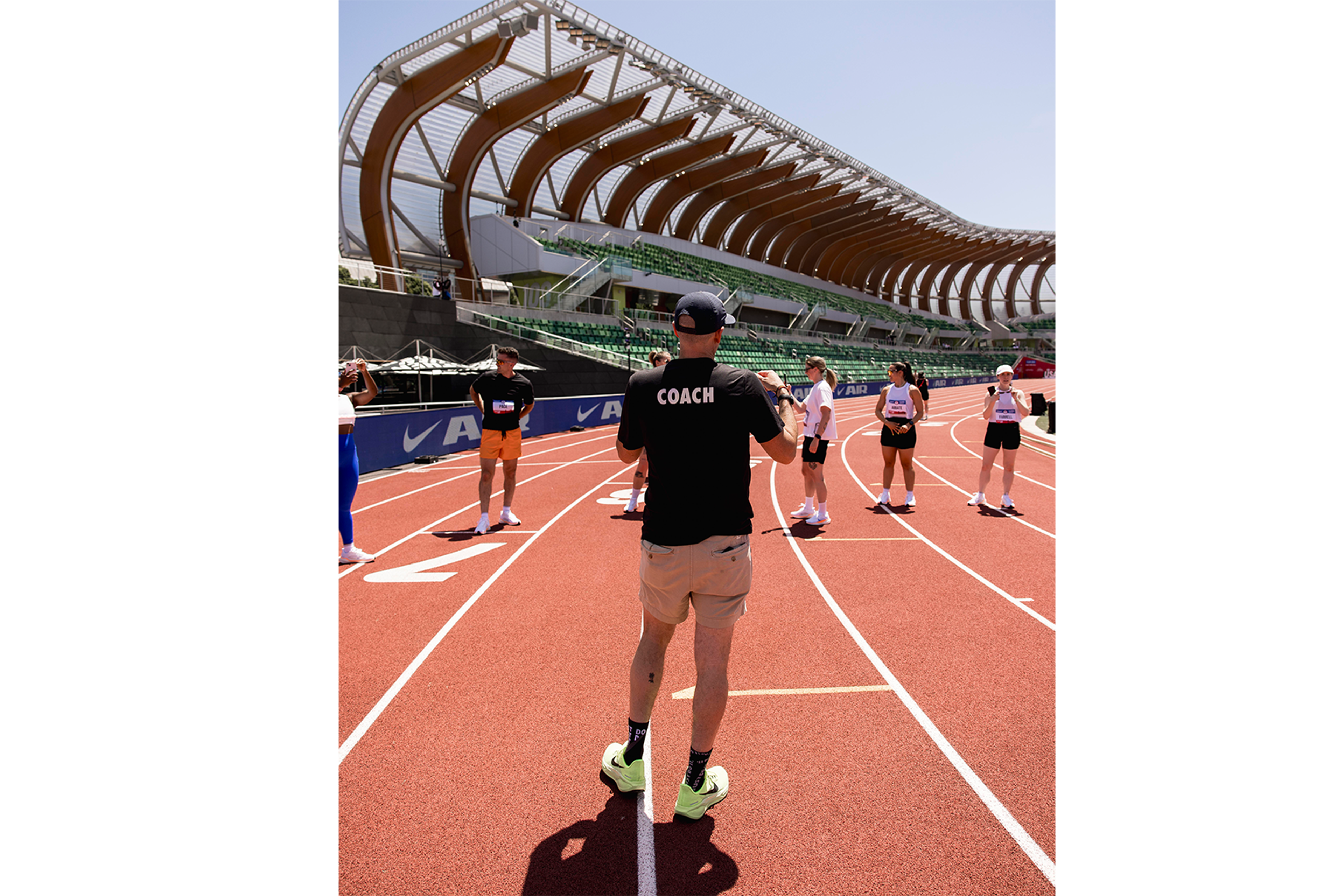
You have a book coming out called This Is About Running. This Is Not About Running. Can you talk about the book and elaborate more on the title?
It’s another one of those things I would casually say that kind of took off. I’d say it after making a point that was seemingly about running, but that was really about something bigger. It goes back to coaching kids. I had to make sure that the 90 minutes I had with them every day counted. I wanted them to have the opportunity to learn something about life. I felt like I would be a failure as a coach if the only thing they walked away with was the ability to go farther or go faster.
I wanted to give them strengths and habits they could carry into the rest of their lives. How you deal with struggle, how you have relationships with people, how you get through hard times, how you dig deeper, how you act as a supportive teammate to others — these are things that go on during practice. You have to get across to your athletes or your students that these are things you will take with you out of here. Don’t leave this at practice. Bring this home.
“This is about running, this is not about running” has been the foundation of my coaching for 18 years. And the book embodies that — if you’re a runner, whether a new runner or long-time runner, you’re going to end the book and you’re going to be a better runner. But if you’ve never gone for a run before in your life, you’re going to be a better person. It doesn’t need to lead to you running.
Regardless of where you’re coming from, whether you’re about to graduate the eighth grade, going through a breakup, training for a marathon or taking on any other kind of challenge, this book is for you. It’s about running. But it’s also about much more than running.
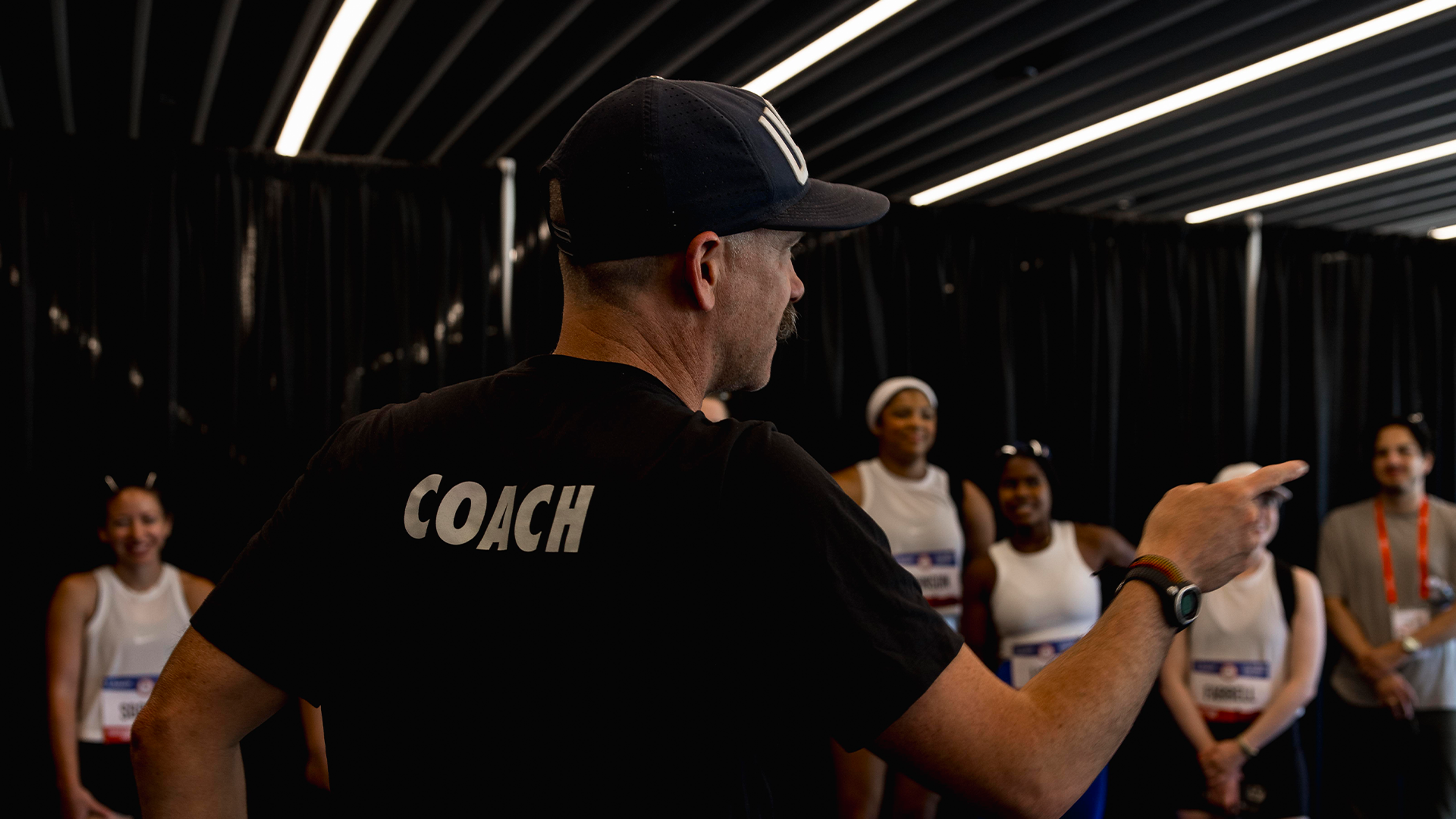
Bennett’s first book, a motivational guide titled “This Is About Running. This Is Not About Running,” is currently available for preorder.