Martin Lotti is Driving a New Wave of Creativity at Nike

- April 20, 2026
- Words:
- Portraits:
There is a moment Martin Lotti still sees clearly in his mind. He was 16 years old, a Swiss exchange student standing in the original Niketown in Portland, Ore. — a kid from Fribourg, a town of fewer than 40,000 people, who had arrived in the Pacific Northwest for what was supposed to be two weeks and became a year. He left Niketown holding a pair of Air Max 180s and a Michael Jordan Wings poster, the one that reads: "No bird soars too high if it soars with its own wings." His host family snapped a photo of him outside the store, mid-Jumpman pose, arms wide, grinning.
That photograph would travel with him across two decades of craft, curiosity and creative ambition. And one day, while serving as Chief Design Officer for the Jordan Brand, Lotti stood in front of Michael Jordan himself and showed him the image.
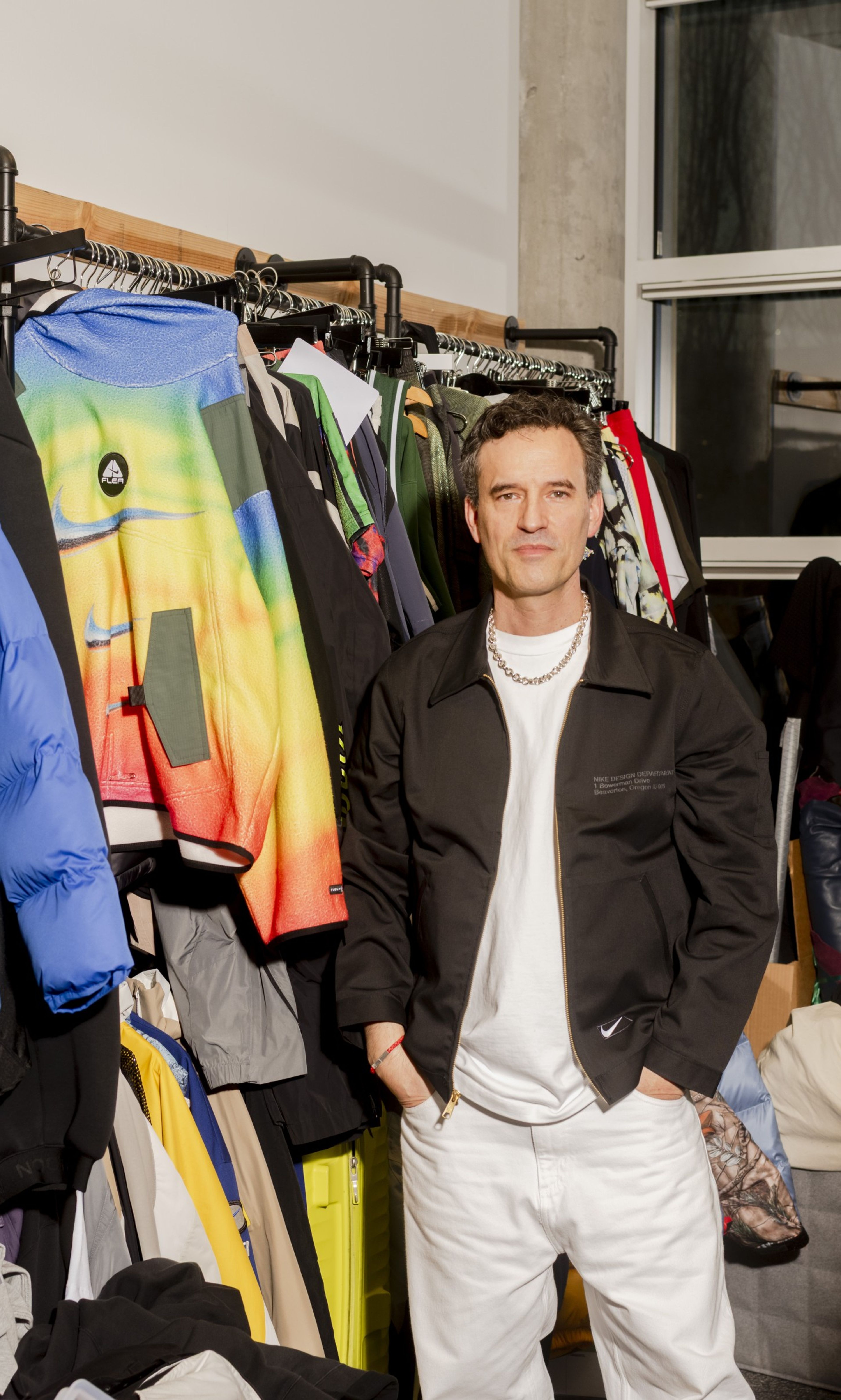
"This is why I fell in love with the brand as a 16-year-old," he says, sitting at the Philip H. Knight Campus on a cool February morning, dressed in an immaculate all-white fit that reflects an understated confidence. "To have the person from the poster over your bed actually standing in front of you — that was surreal. One of those moments where you think: How did I get here?"
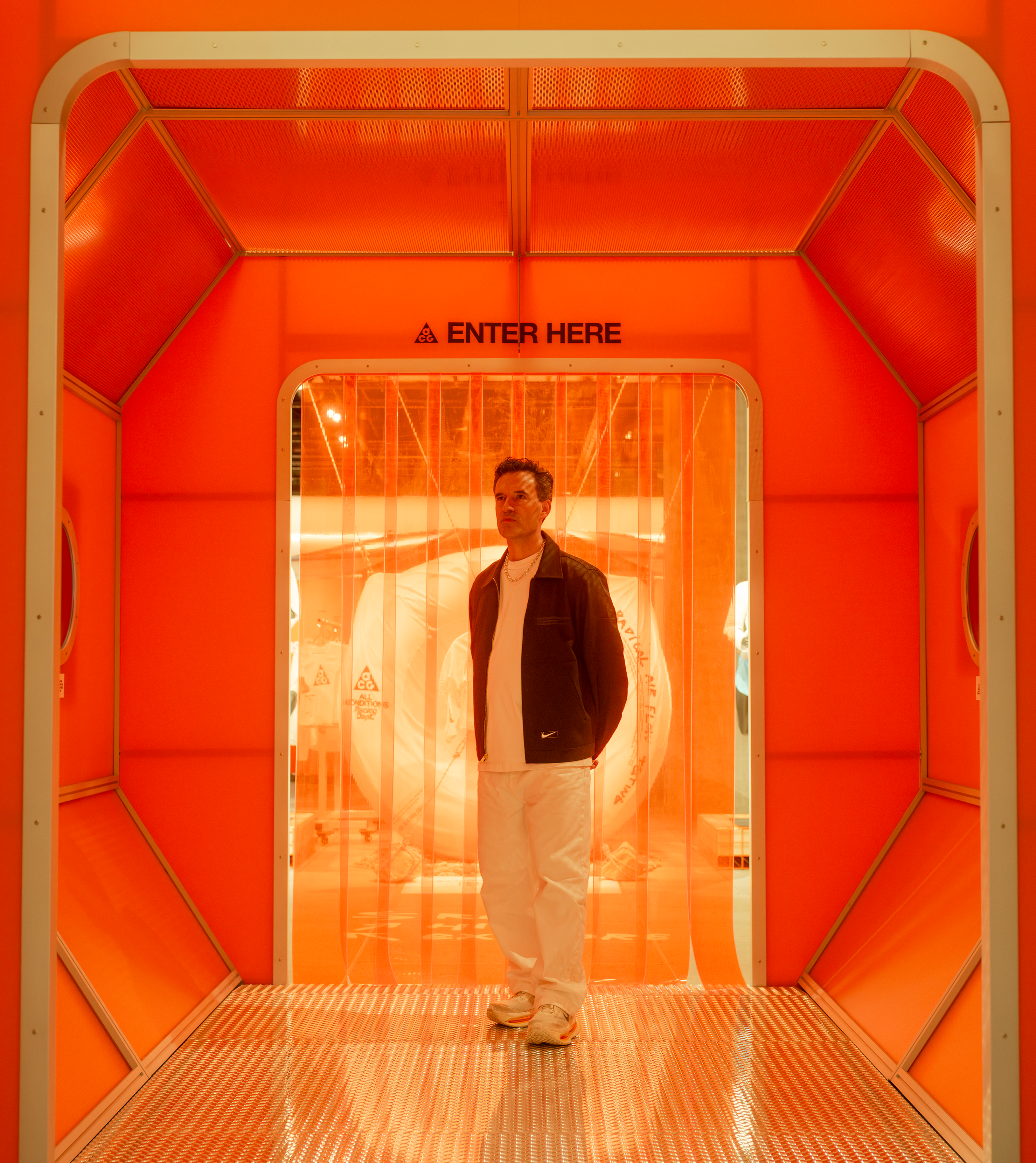
"Design is not just executing or sketching — we are problem-solvers. Bill Bowerman baked this into the DNA of the company: You create for a reason, not just because you can."
Martin Lotti, Nike Chief Design Officer
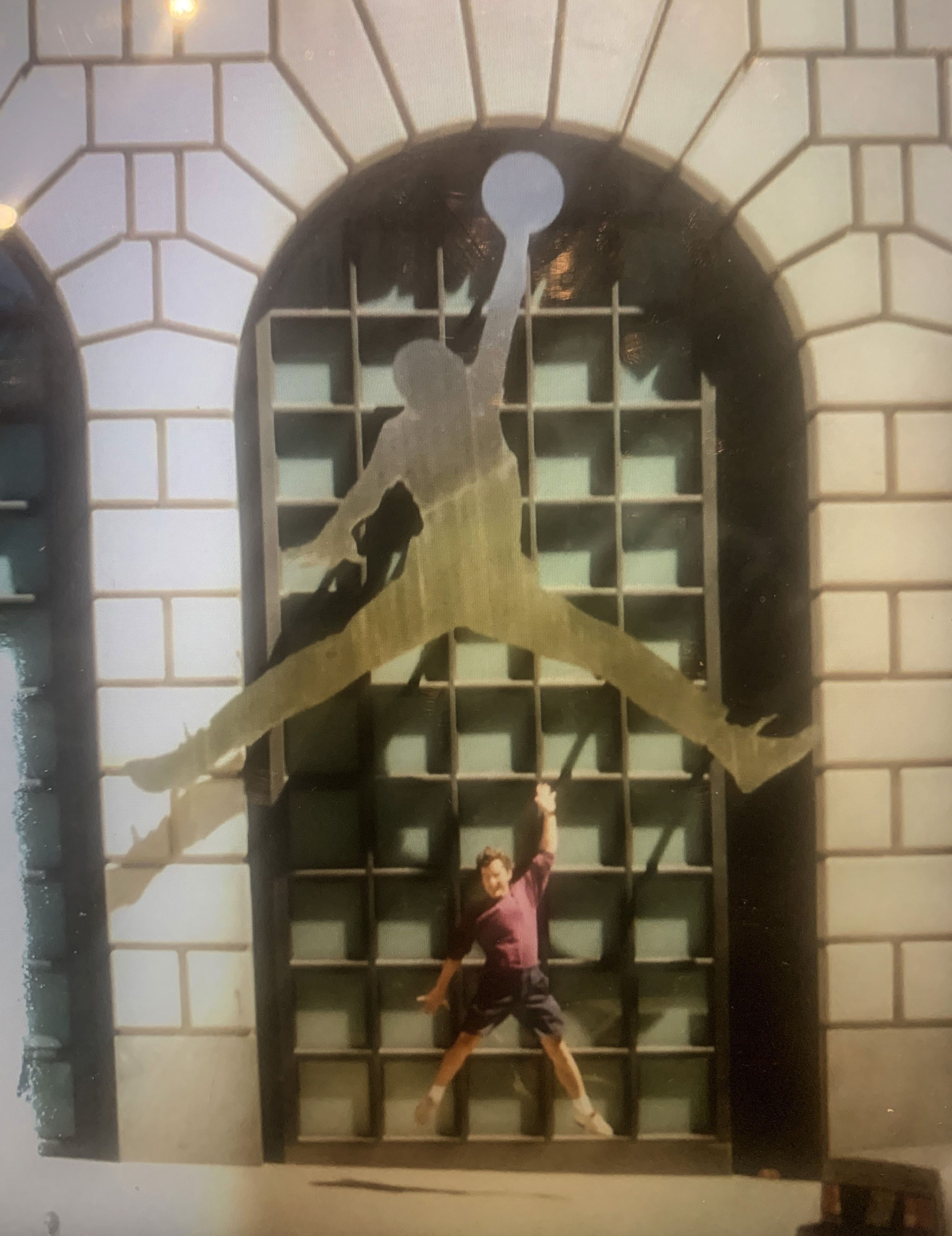
A 16-year-old Martin Lotti in front of the original Niketown Portland store, a visit that would shift the course of his career and life.
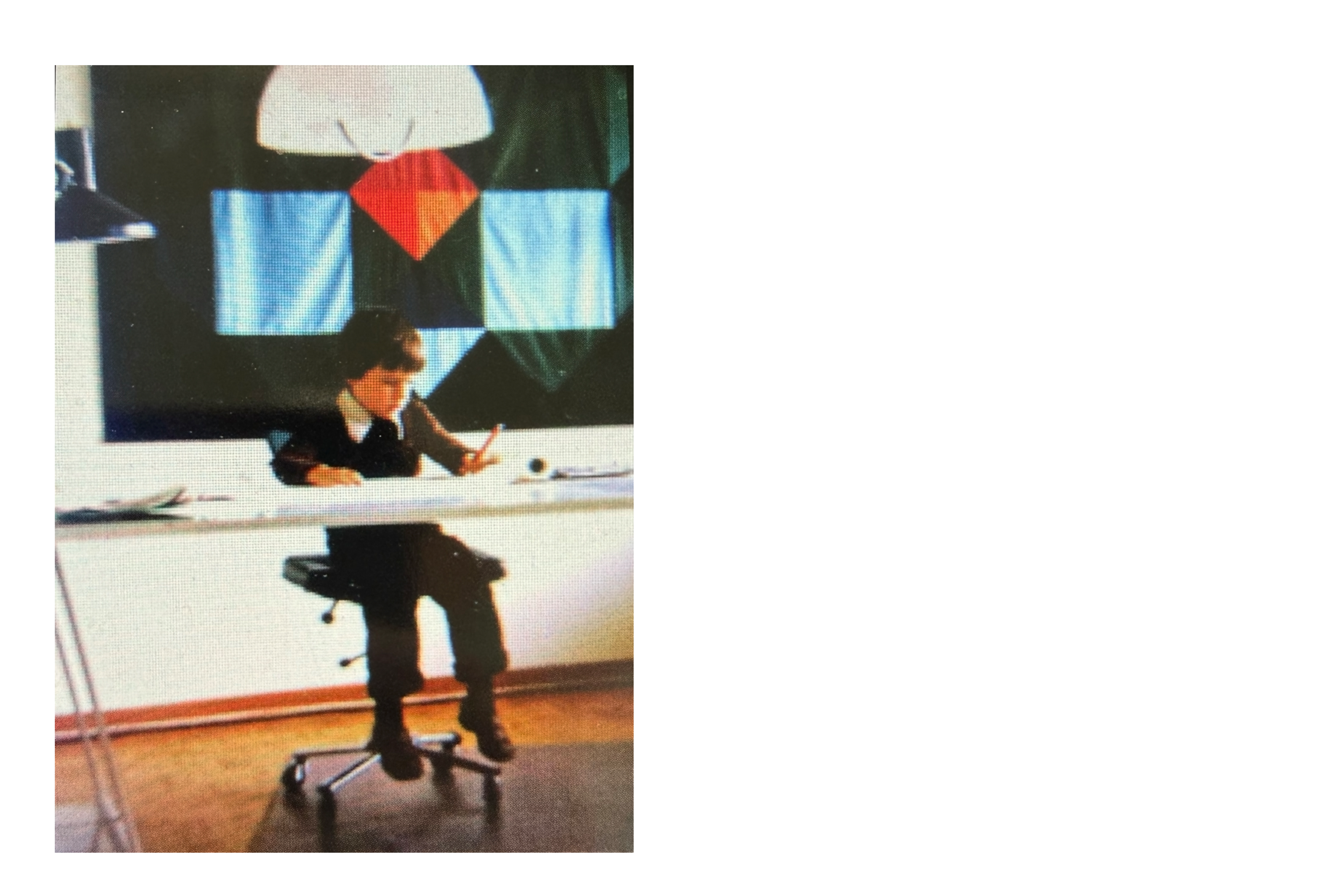
Five-year-old Lotti, in his father's architect office in Fribourg, Switzerland. "I spent countless hours here, drawing away," he says.
Getting to Nike was never a straight line — and that, Lotti will tell you, is exactly the point. After finishing high school in Switzerland, he enrolled at ArtCenter College of Design in Pasadena, Calif. A woman in his visual communications class mentioned she'd interned at Nike, which piqued his curiosity. He sent in an application, Nike sent back a job offer. He would later marry that classmate, Linda Mai-Lotti, a detail he shares with a quiet smile that suggests he still can't quite believe his own story.
What Nike represented to Lotti, and still does, was something he didn't have a word for growing up in Europe. "In Switzerland, it's more step by step," he says. "The leash gets longer one step at a time. Whereas in the U.S., the opportunity is just …there for the taking. It doesn't matter how old you are or where you're from. If you can bring it, you get the chance to design it."
That belief — that potential has no ceiling — became the foundation of how Lotti designs, leads and sees the world.
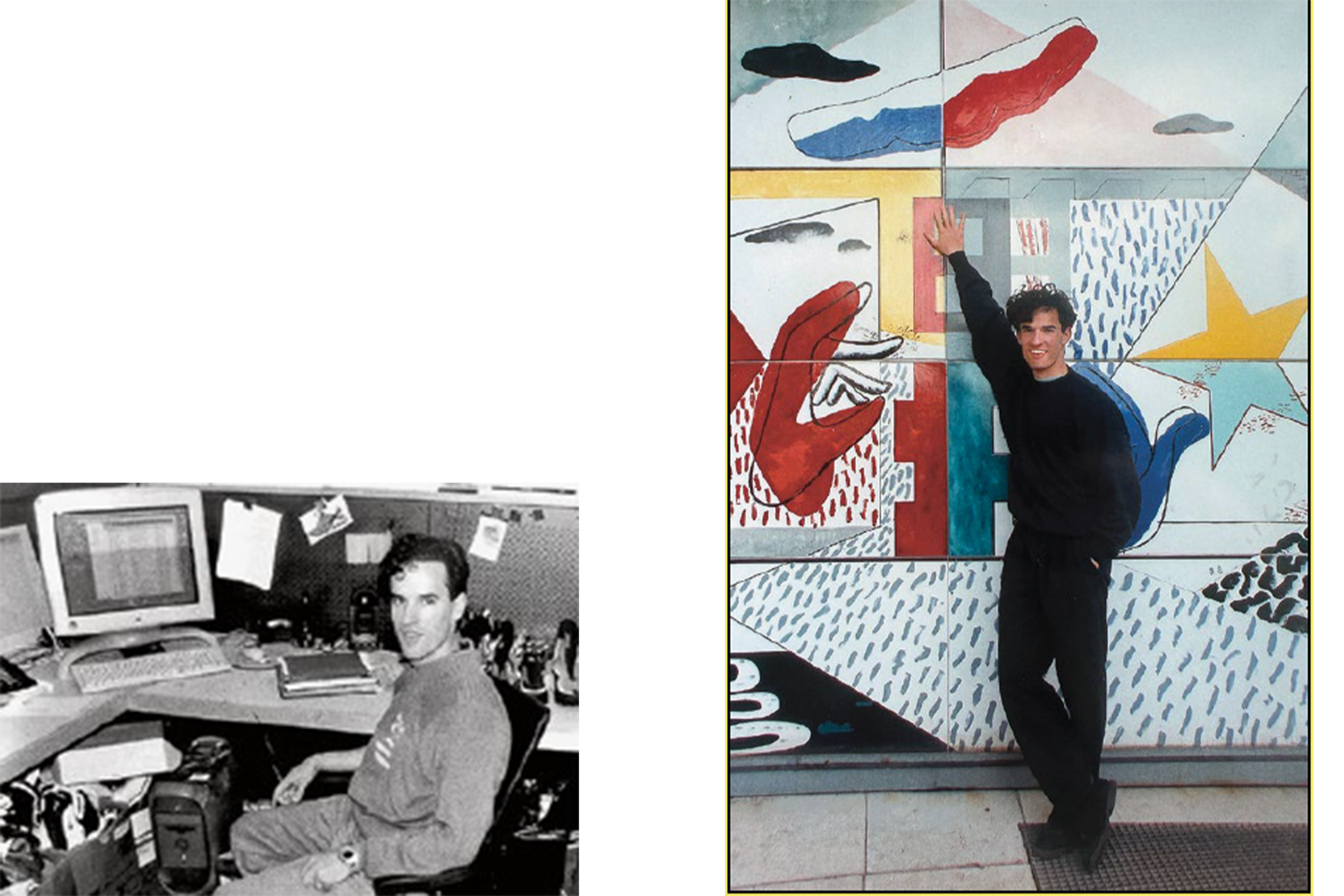
Left: Lotti in his Nike world campus workspace in 2000, a footwear designer at the time. Right: An 18-year-old Lotti in front of the famed Chapelle by Le Corbusier in Ronchamp, France.
Today, Lotti serves as Nike’s Chief Design Officer, representing the Swoosh in major cultural moments such as Milan Design Week, and overseeing product and concept design across the company — an enormous responsibility he approaches with the same grounded clarity that has defined his career. A good designer is a good listener first, he says, because creation is so reliant on input, from the athletes, of data sets, for how to support the product with the right storytelling. The why of your creation — who you're creating for and what problem you're solving — is what delineates a designer from an artist. "Design is not just executing or sketching; we are problem solvers," Lotti says. "Bill Bowerman baked this into the DNA of the company: You create for a reason, not just because you can." He also points out that this is no simple task. "Creativity is often romanticized. It's painful! I think it's like a marathon. It takes time, you have to lean in, and in the end you're exhausted and elated."
The drive to continue that process runs deep within Lotti. There is a phrase he returns to again and again, a quiet north star beneath everything he creates: making people fly. He didn't fully understand its weight until his team began working with the Make-A-Wish Foundation, and he watched critically ill children choose, as their wish, to spend time with Jordan Brand designers.
"Not everyone can be Michael Jordan, but everyone can make someone feel something," he says, his voice measured, the words deliberate. "After something like that, you don't come in the next day and just make another shoe."
He invokes Steve Jobs' idea of leaving a dent in the universe — of finding your platform and using it with intention. "We have this reach, and I don't take it for granted," he says. "It's not just an opportunity. It's an obligation to make an impact."
That impact is felt within Nike too. "There's no one who pushes me more than Martin," says Nicole Graham, EVP and Chief Marketing Officer. "He's so good that it makes you want to be better; he'll come up with a great idea, which will make you want to come up with a great idea." That mindset, says Graham, comes from the way Lotti looks at the world. "He can walk down the street and see 18 different things that could be interesting for a project that we're working on — color, material, font, topography. He lives and breathes creativity and design."
"There's no one who pushes me more than Martin — he's so good that it makes you want to be better; he'll come up with a great idea, which will make you want to come up with a great idea."
Nicole Graham, EVP and Chief Marketing Officer
Lotti's design philosophy goes beyond aesthetics or function. He wants his teams to truly understand athletes — not just what they need from a product, but what drives them, what they carry onto the field, what makes them feel seen and inspired.
In 2014, a Brazilian footballer described his why to Lotti's team: "We play for the love of the game and for the love of Brazil," the player said, grabbing his shirt as he spoke. The gesture unlocked something. The jersey wasn't just a piece of clothing; it was a symbol of pride, an encapsulation of purpose.
That year, the team printed in Portuguese "nascido para jogar futebol" — born to play football — on the inside of the jersey. So that every time a player placed his hand over his heart during the national anthem, he'd feel the purpose beneath it.
"You aren't just listening to what athletes say about what they need," Lotti says. "You want to hear the person. You want to understand what makes them tick."
Sometimes, Lotti and his team's inspiration is more abstract. It surfaces in the raked gravel of a Zen garden in Kyoto, Japan, which became the outsole geometry of the Nike Kyoto, the brand's first yoga-inspired shoe, its upper a subtle nod to the kimono's wrap. Or it can live in the stark, earthy palette of Iceland, which shaped a fall and holiday training collection.
This is one of the quiet gifts of being based in Portland, he says. You’re required to go out, seek, learn. "We’re more global citizens, which I love, because so many doors open up when you go to new places.”
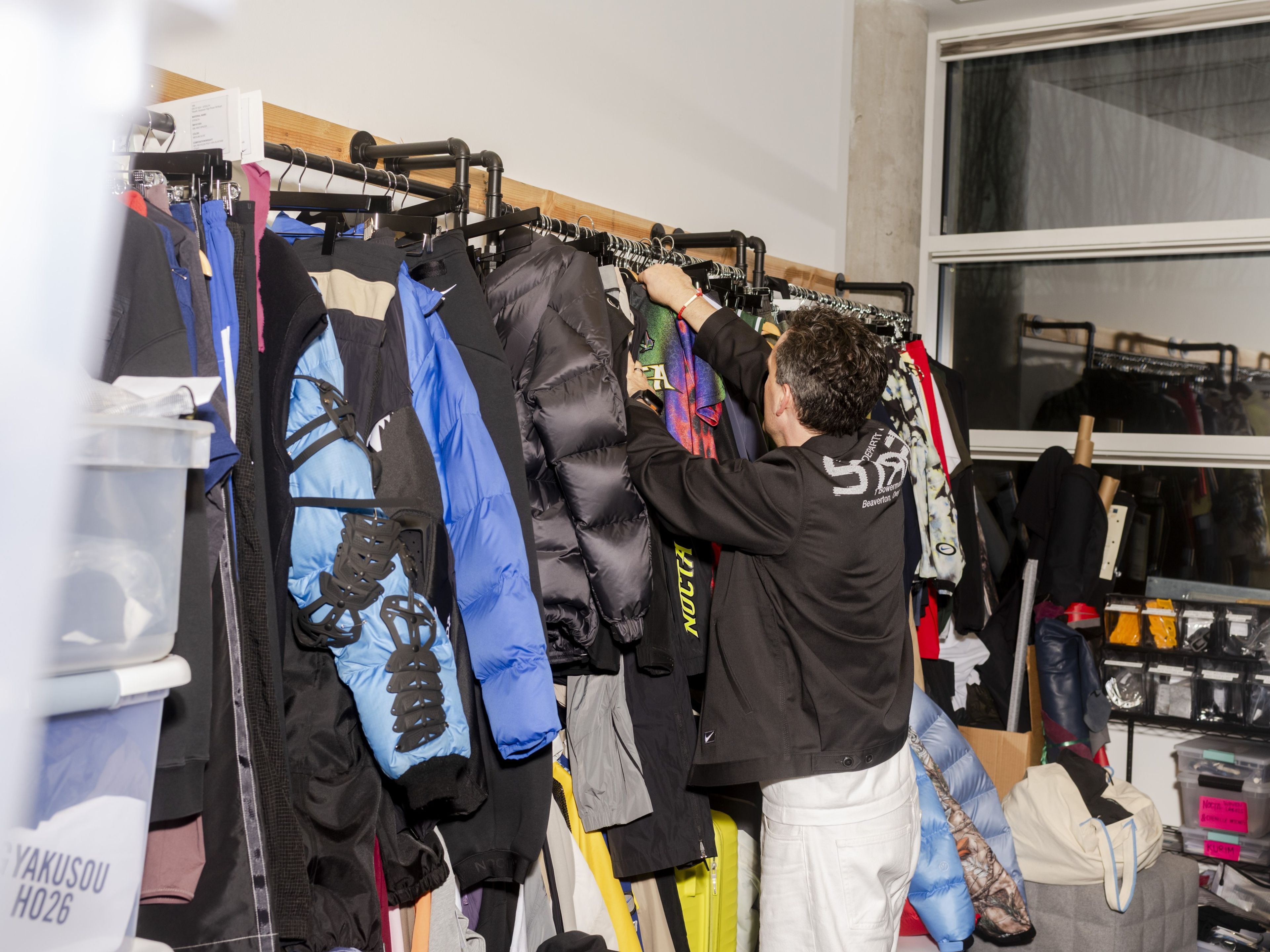
Lotti reviewing a NOCTA collaboration with Jarrett Reynolds, Energy VP and Creative Director. One of Lotti's standout traits, says CMO Nicole Graham, is nurturing a world-class creative team.
His wife Linda describes Lotti as an athlete — not just literally (he competed and taught snowboarding), but in the way he approaches his craft. When their professor in school assigned 10 sketches, Martin did 20. Not because he had to, but because the work was alive to him, and the push to keep refining it would never rest. Curiosity, for Lotti, isn't something you switch off.
That energy surfaces everywhere. A recent trip to a car dealership ended with a salesperson offering him a job, only half-jokingly. He'd arrived knowing more about every model and option than the staff. "He's able to stay focused and keep working until he plows through it and finds the solution," Linda says. "Like an elite athlete with a relentless drive to grow and perfect. Just in a very different arena."
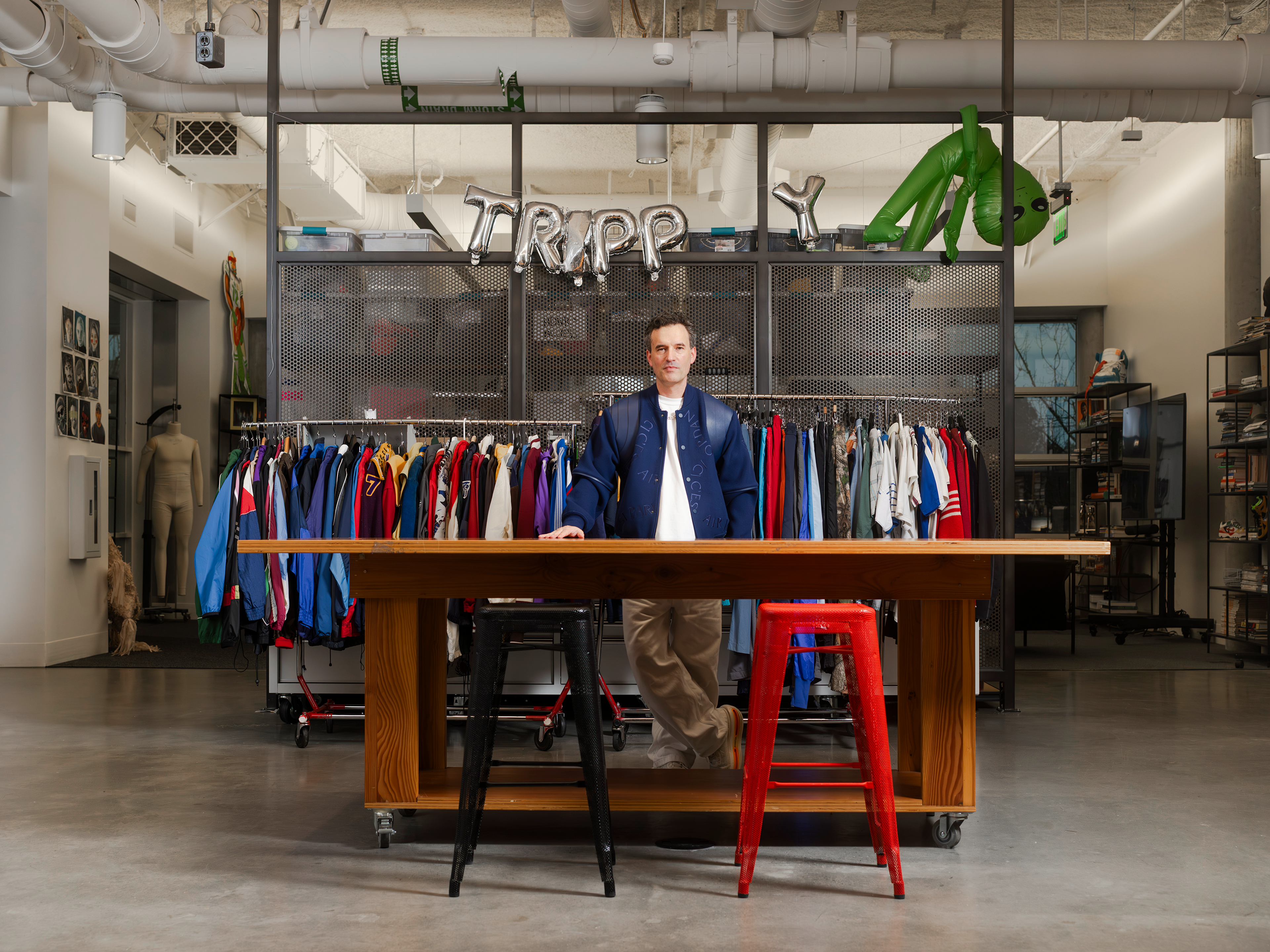
We're sitting in the Energy Product Design space in the Mia Hamm building, and Lotti is flipping through the pages of the Nike Design Annual, a thick-stock magazine containing a sweeping overview of the best that the Nike brand has done in the past year, through a range of sport, athlete and product moments. “We’re so focused on the future, being able to look back is almost cathartic, and it allows us to set a benchmark: if you want to be in this book, it has to be a certain level,” Lotti says. “It’s a way to celebrate the team.”
The team Lotti's gathered, says Graham, is unmatched. "One of Martin's most meaningful contributions to Nike is the creative community he's nurtured," she says. "When you're on Martin Lotti's team, you feel like you're one of the most creative people in the world — and that's exactly what he wants you to feel, how he's empowered people to feel."
You see the impact of that in this year's Nike Design Annual, which includes 25 of the most innovative pieces the company produced in 2025. Many are feats of the unexpected, breaking the mold — like the Nike Radical AirFlow long-sleeve for ultra-marathons. People were skeptical at first of the long-sleeve jersey meant to cool you down, says Lotti, with some even affectionately dubbing it the "Christmas sweater." Lotti laughs about it even now. “Believing is wearing it,” he says, “it’s like air conditioning for your body. You pump your arms while you run, and the material creates little cyclones of airflow. That’s its geometry — it’s naturally cooling.”
"Calculated risk is what athletes do every day. They don’t try to replicate their fastest time or most powerful serve or heaviest weight, they want to be better. The best."
Martin Lotti, Nike Chief Design Officer
Throughout our conversation, Lotti emphasized the uniqueness of working on design at a company like Nike: the cutting-edge technology, like the nascent ability to create prototypes from 3D printers or virtual mockups; the eye toward sustainability, shown in the new base material, Aero-FIT, for all football jerseys that are more breathable for athletes and have a lower environmental impact to create; the Mind Science team, which focuses on improving athlete experience from the neck up.
This depth and range creates the perfect balance of humanness, enterprise and technology that Lotti seeks. That even the executive chairman, Mark Parker, shares Lotti's design background makes Lotti’s work all the more fulfilling. “It makes our life so much easier to see design as part of the foundation of the company," he says, dancing his fingertips over the tabletop. "It’s not an afterthought. It’s central to everything we do.”
That belief extends to how Lotti thinks about risk — not as something to manage, but as something to embrace, to push Nike to new places. "Calculated risk is what athletes do every day," he says. "They don’t try to replicate their fastest time or most powerful serve or heaviest weight, they want to be better. The best."
Why shouldn't we all?