Is It Bad That I Pronate When I Run?
- December 02, 2025
In running shoe jargon, pronation is a word that gets a bad rap. If you pronate, the thinking goes, you need correction. But there’s more going on than that.
How to Understand It
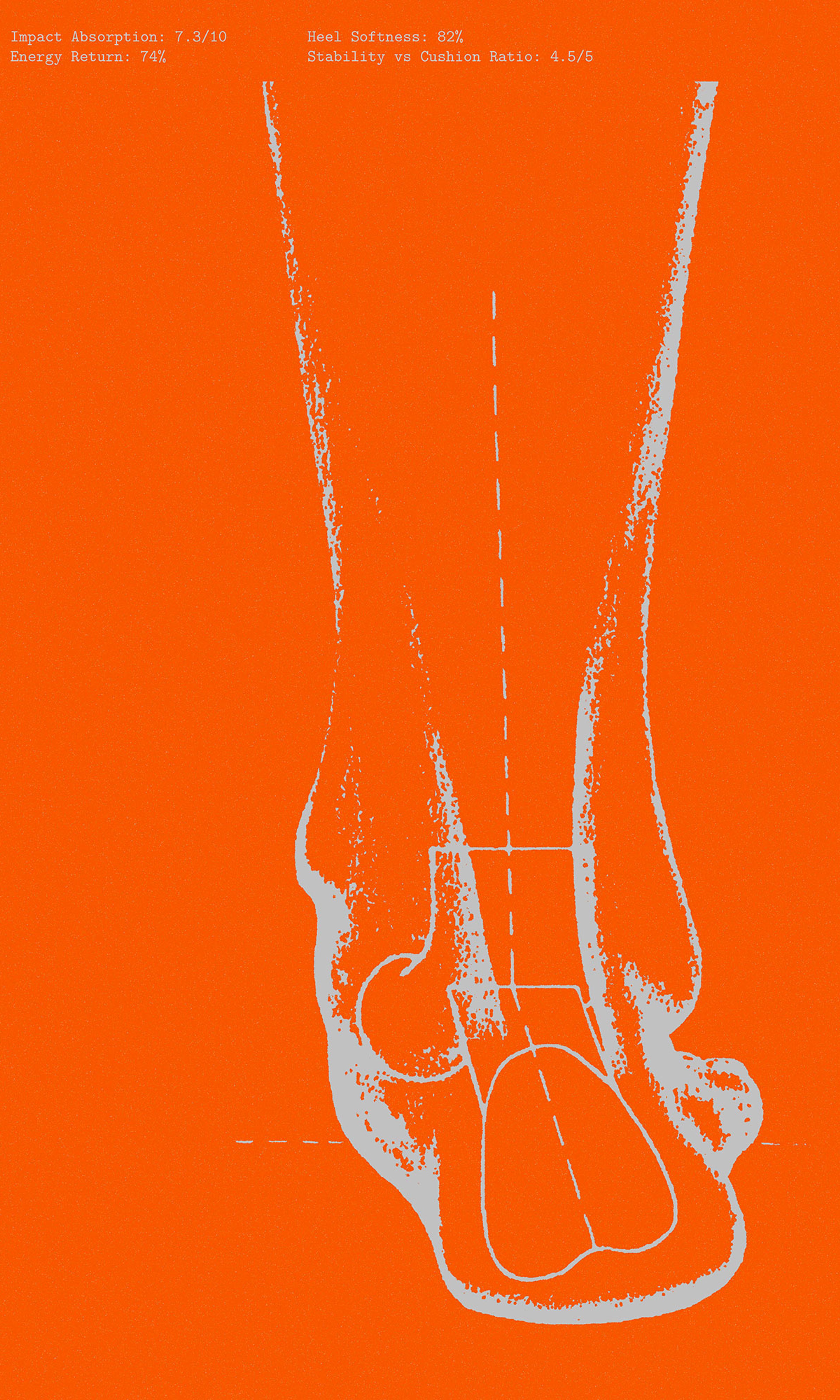
Everybody pronates when they run. “It’s a natural motion,” says Emily Farina, PhD, Senior Principal Researcher in the Nike Sport Research Lab (NSRL). With each step, your foot rolls inward and a bit forward as it hits the ground. Technically, this is what pronation is: a combination of ankle eversion and external rotation.
What’s the point of pronation? When you walk or run, your ankle needs to help stabilize your body mass as your foot crashes into the ground. That stabilization requires three-dimensional movement at the ankle to act like a shock absorber and keep the body headed where it wants to go.
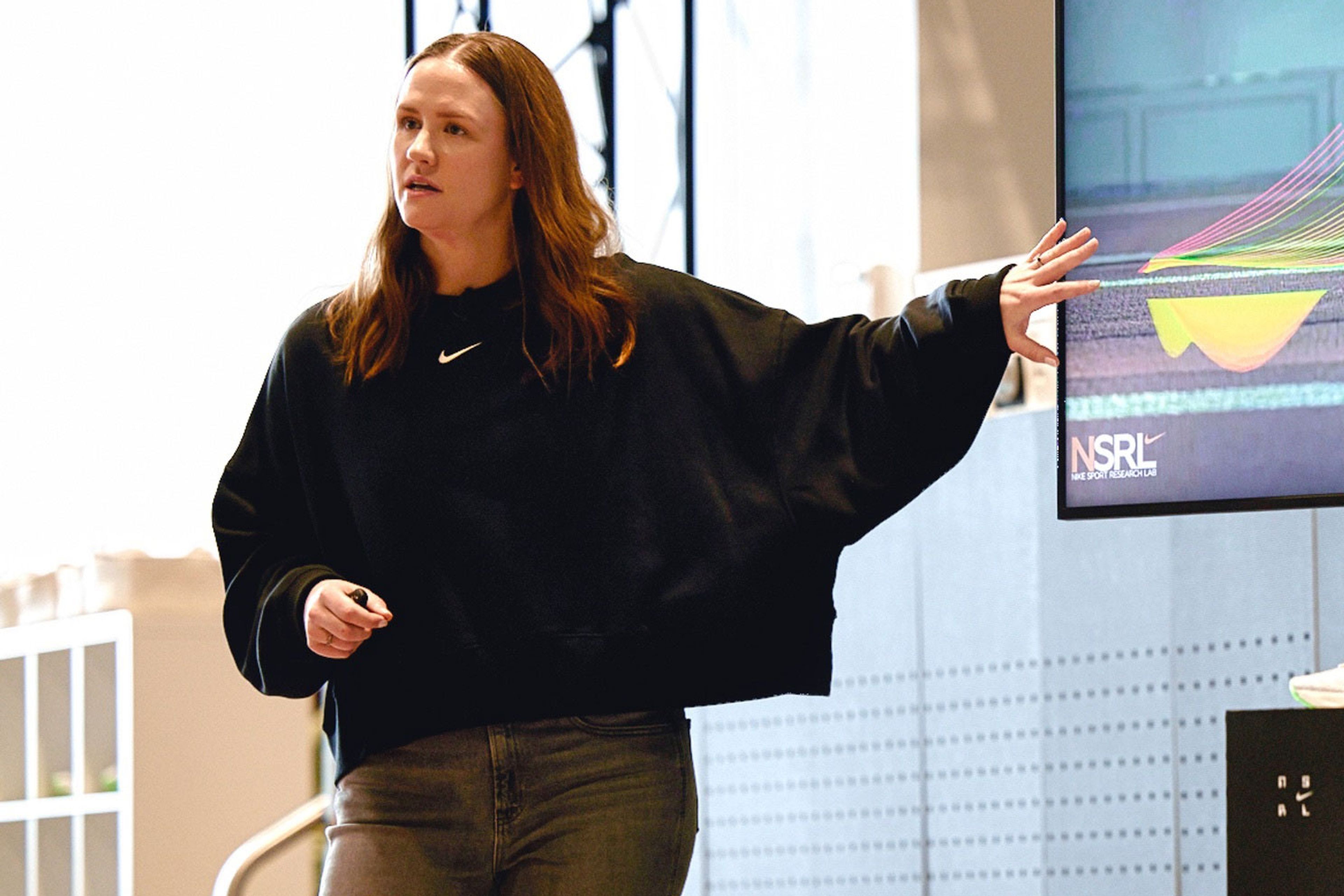
Emily Farina, PhD, Sr. Principal, Running Footwear Research
Pronation is one step in the sequence of how we run, says Farina. It can’t be isolated from the rest of your body. “When we design and test our running shoes, we study pronation holistically and look up the kinetic chain to examine effects at the knee. Then we research how pronation can be supported through product choice.”
The kinetic chain, which is how your joints, muscles and other parts of the body work together to produce force and movement, treats your body as a system. Each part of your body has a role to play. Take your ankle. It might roll from side to side too fast, too much, or at the wrong time in relationship to the rest of your body. For eversion, when the ankle rolls inward, the research is mixed on the outcomes of trying to mitigate it. But literature suggests that for those who need it, focusing on ankle motion and the forces acting on your knee from either side are important to cut back on running-related injuries. It’s not either-or but and, because not all joints move in the same way. Your ankle can handle some eversion. Your knee isn’t meant to torque sideways. Again, think of the kinetic chain. The body is a system.
To address pronation and still help reduce the pounding from running, it’s essential to solve for both cushioning and stability, which is what NSRL researchers have done in the new Structure 26.
How We Approach It
To keep your ankle from being too loose, you’ll find a host of “stability shoes” throughout the market, many of which try to address the ankle-movement issue with features that focus on the angle of eversion, or how much your ankle is moving side to side. The most extreme of these “motion control” stability shoes use medial posting — tough components that are attached to a rigid midsole — to force your ankle through a more limited range of motion. But research from the NSRL has found that this can send harmful loads up the chain to the knee.
Nike designers found a more natural approach to controlling eversion in the Structure 26.
Here, the foot’s arch sits above a wide base and is wrapped in a supportive midfoot system. The midsole has a full bed of ReactX foam, which helps you roll forward smoothly from heel to toe-off (the Structure 25 had a Zoom Air unit in the forefoot and Cushlon 3.0 throughout the midsole). The shoe’s outsole has added rubber in areas that can get worn down due to the ankle’s side-to-side movement, like the inside edge of the heel. All of this gives the Structure 26 increased durability and can help lead the runner through a more confident eversion pattern.
The true pronation needs for each runner come down to a combination of perception and personal history, says Farina.
“Our research tells us a few things hold true: Find the right balance of cushioning with inherent stability, and you can help a runner address their unique pronation pattern."
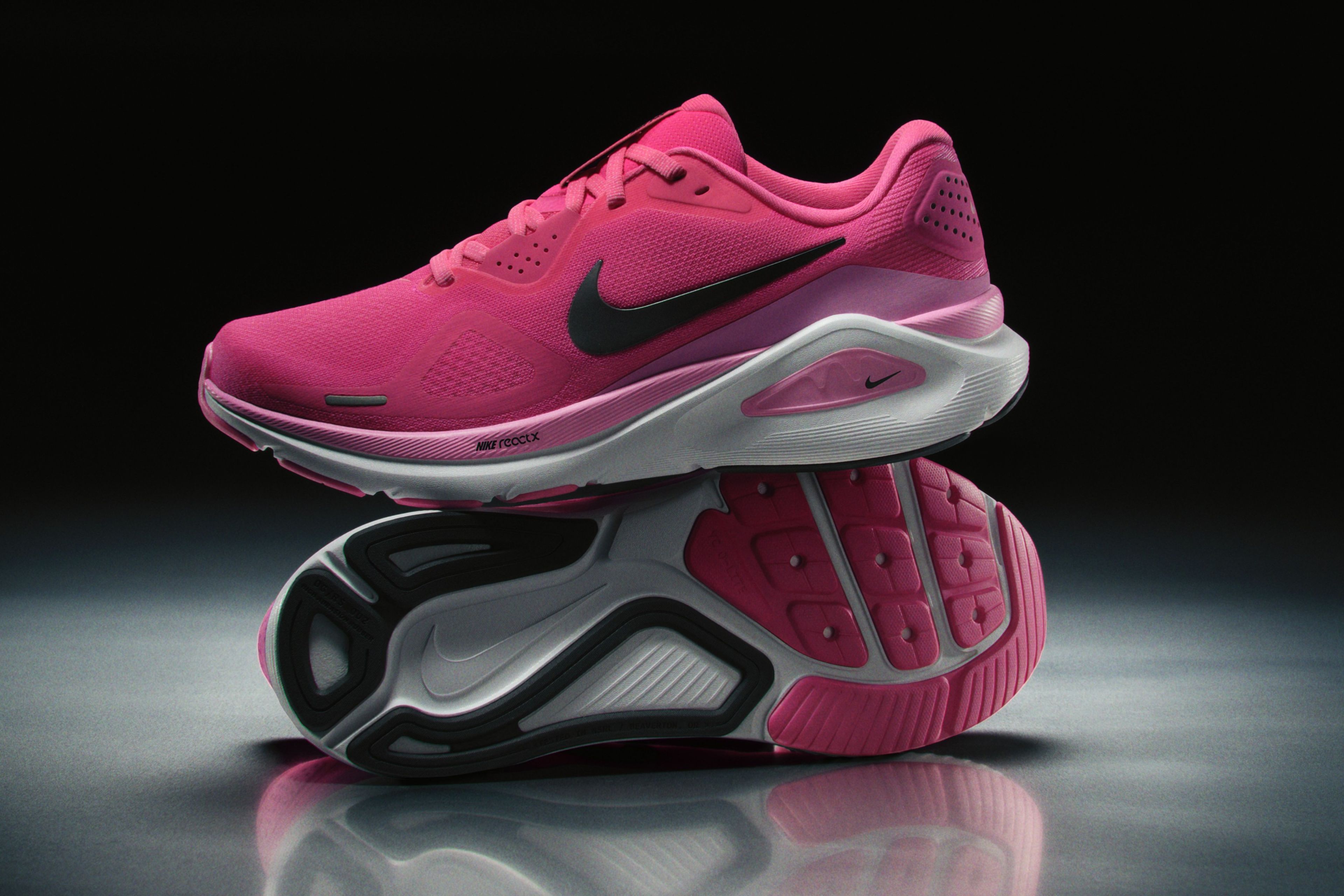
For the Structure 26, the foot’s arch sits above a wide base and is wrapped in a supportive midfoot system.