The NSRL Baseline Testing
- December 23, 2025
- Photos:
What would the back of your athlete trading card say? That’s what Nike’s Baseline testing is for: A way for all athletes to understand their physical tools.
What It Does
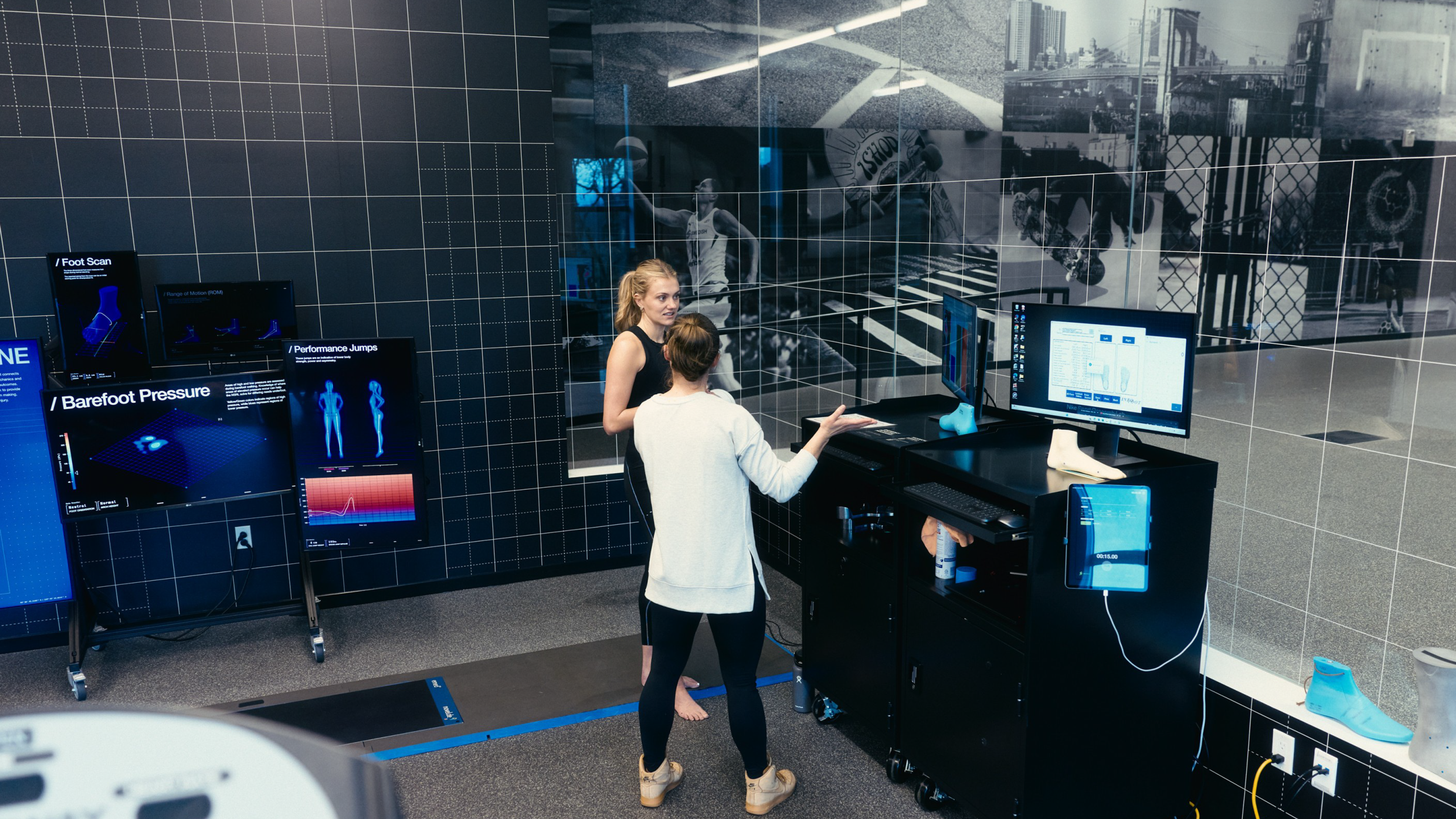
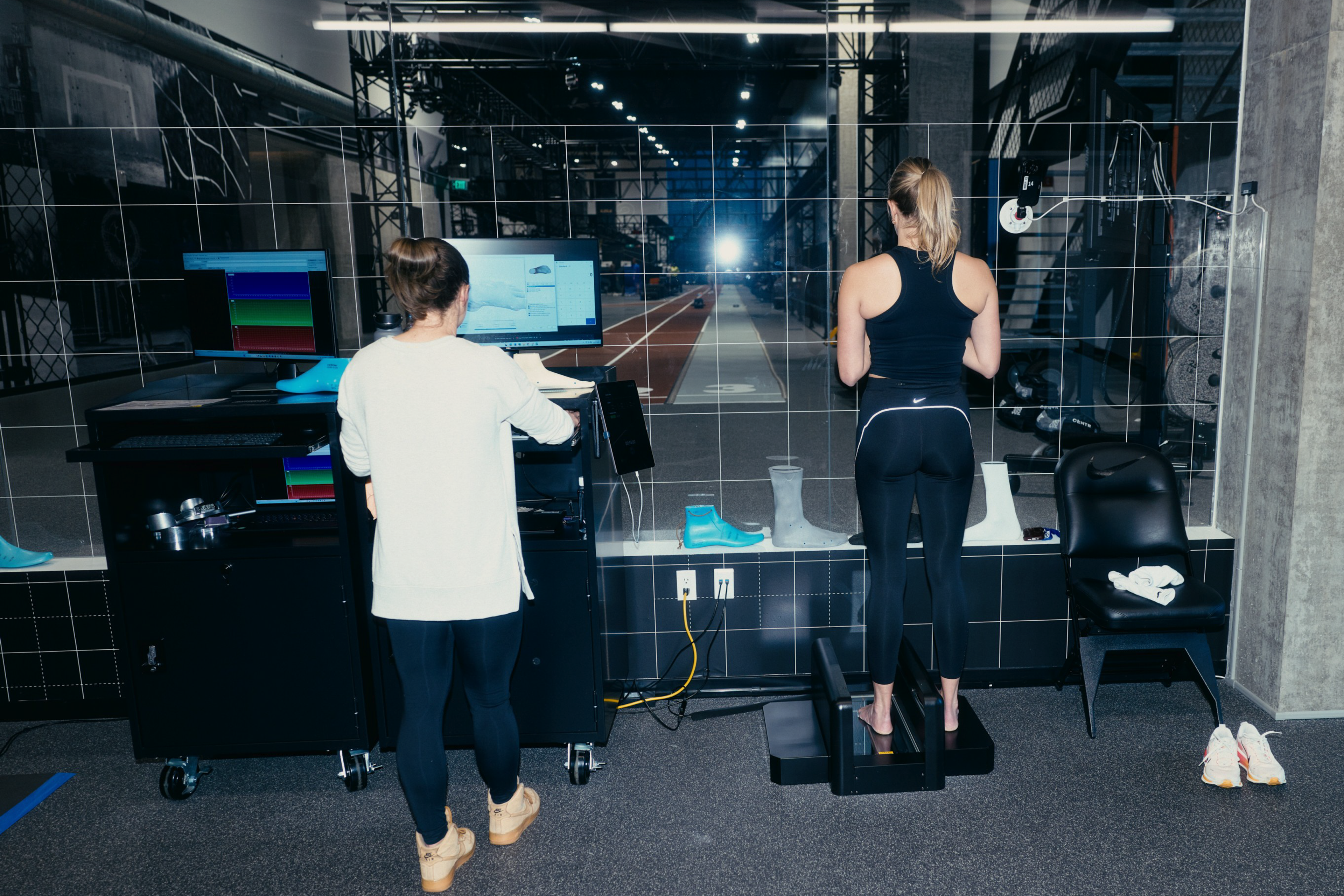
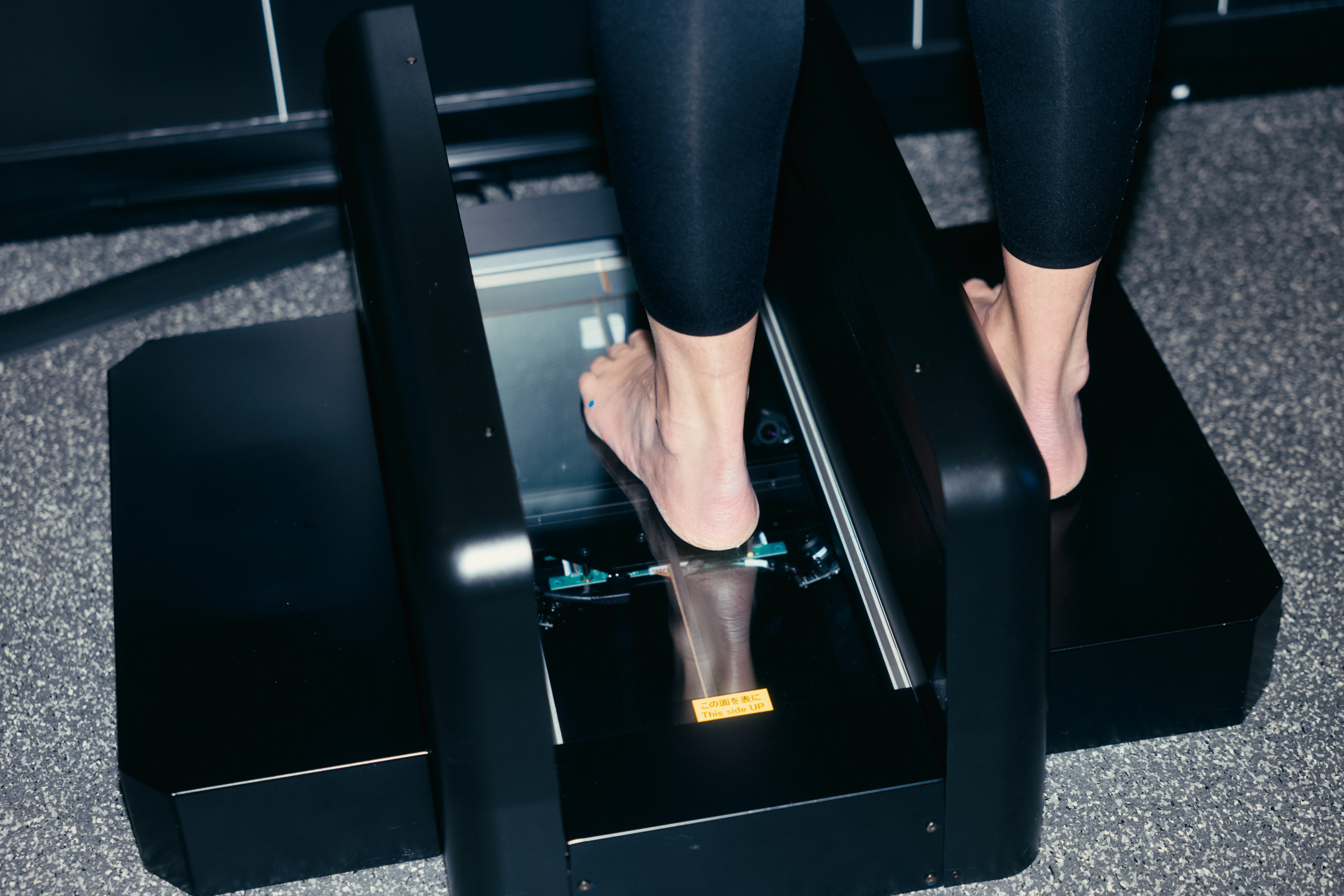
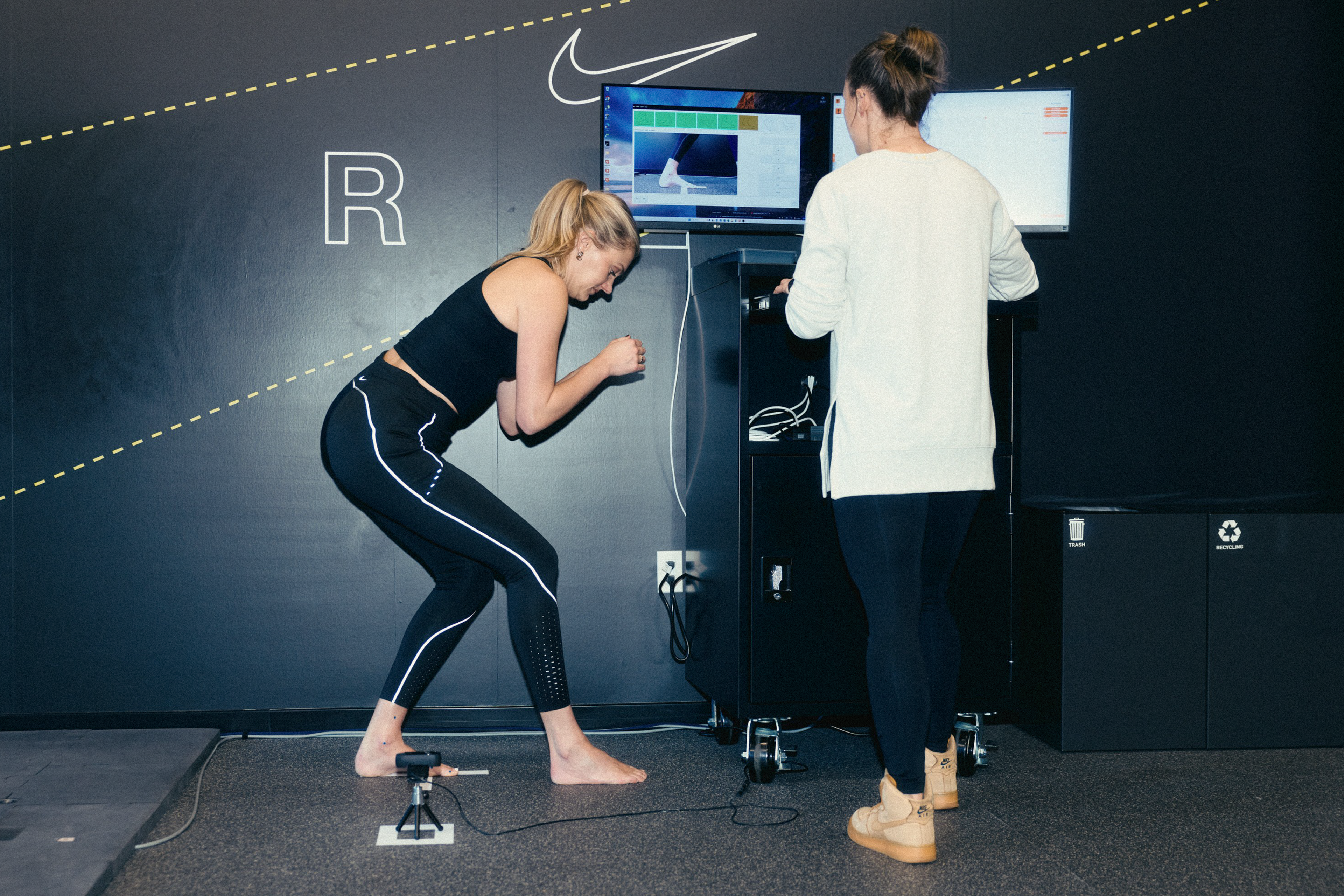
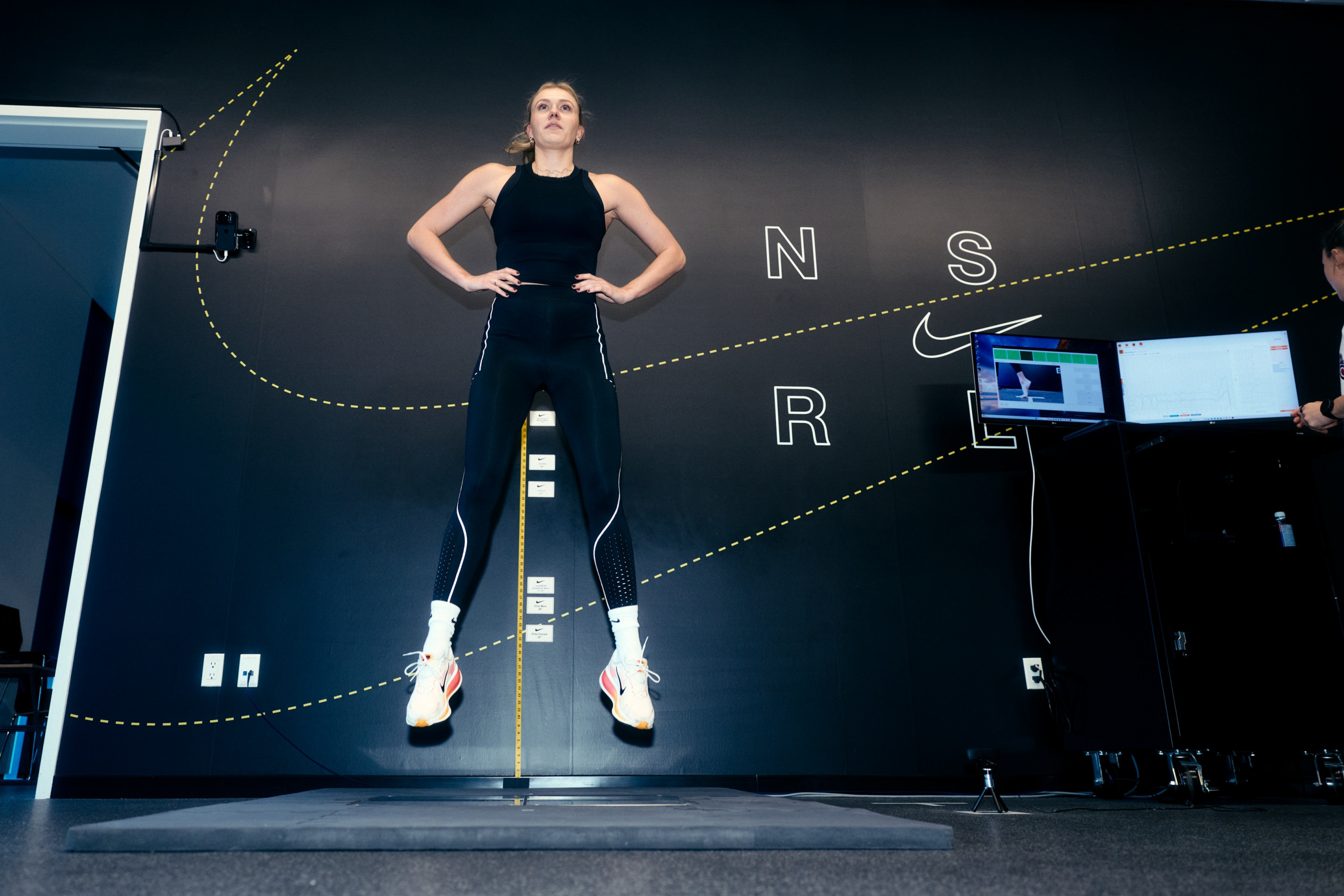
Nike's Baseline testing, made up of five assessments, is as foundational as it sounds. The assessments are borrowed from the worlds of biomechanics, physical therapy and exercise science, and can be completed in a matter of minutes: a 3D body scan, a foot scan, a barefoot pressure test, an ankle range of motion test and countermovement jumps. In many ways, Baseline is the most ubiquitous tool that the Nike Sport Research Lab (NSRL) offers. Every professional athlete who visits the NSRL has the option of doing the testing, no matter their itinerary. But that doesn't mean it's a resource exclusive to a precious few. Baseline is the one test series in the NSRL that's also open to every Nike employee.
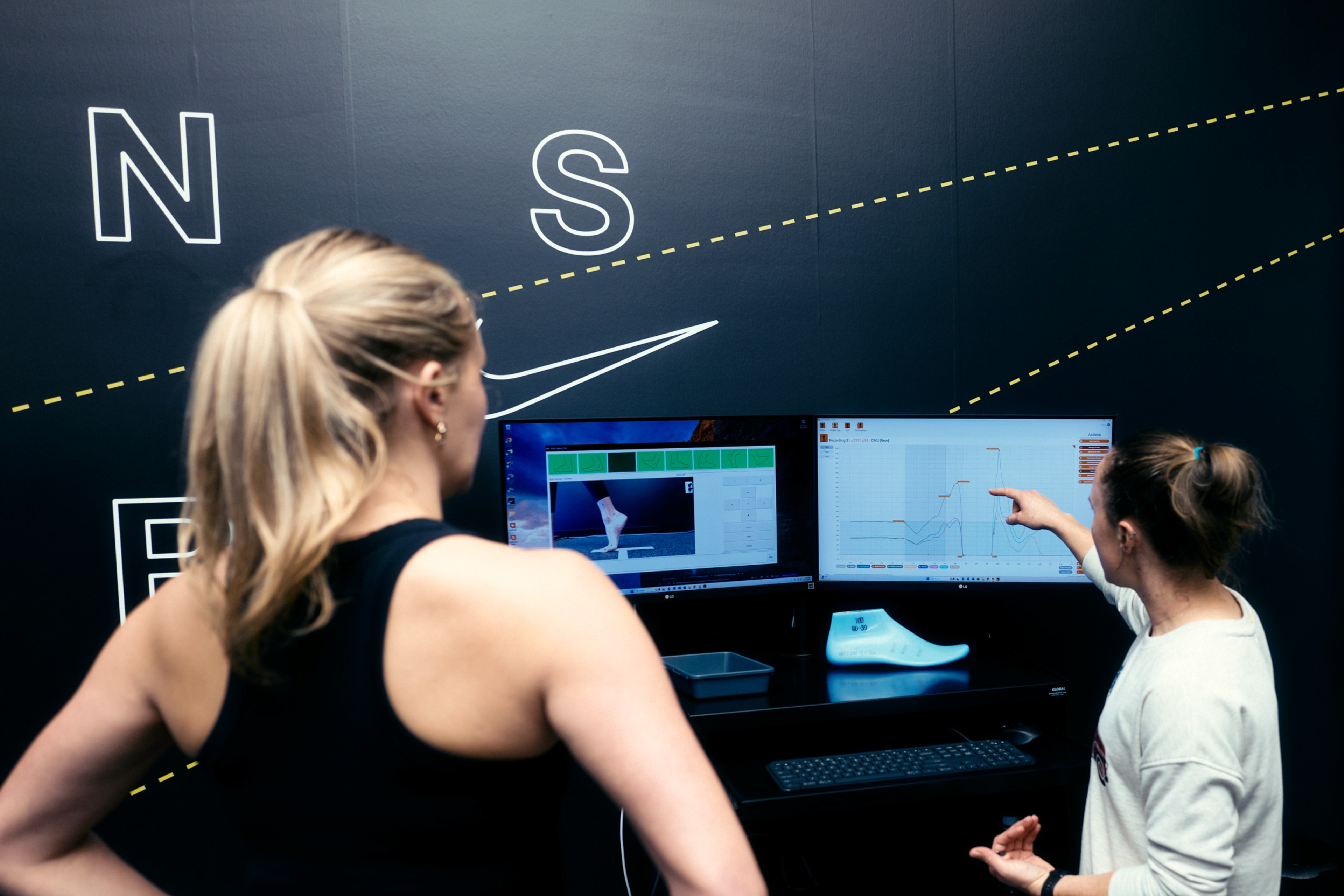
Considered together, the test results form the baseline of a person’s athletic profile — how powerful they are, how mobile they are, how explosive they are, and other traits. Knowing these attributes gives Nike researchers, scientists and designers a clearer picture of how to serve an athlete's needs.
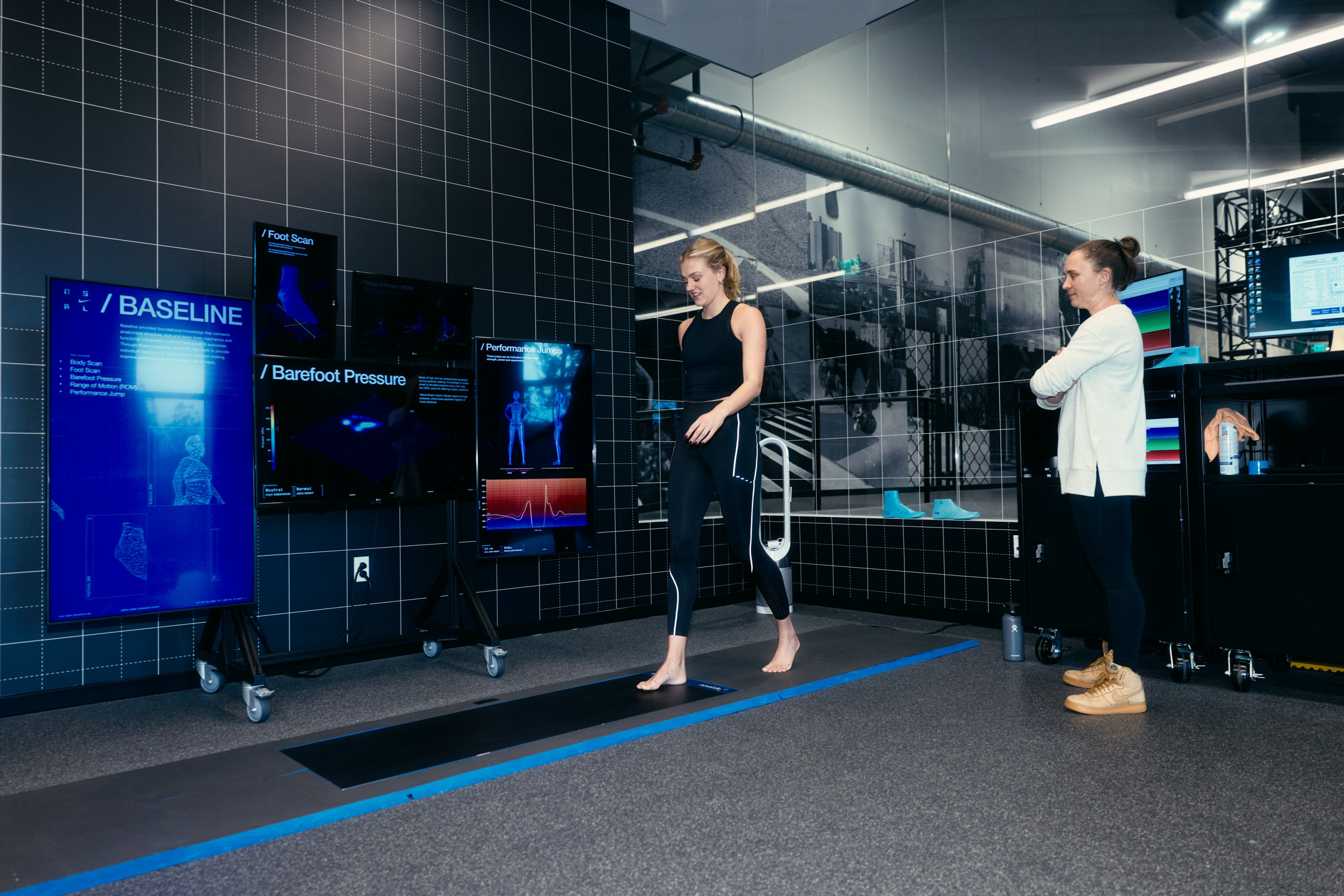
What It Helps Us Do
Jackie Shea, Baseline Operator, Innovation, says Nike researchers selected each of the Baseline tests to set an experiential, diagnostic tone for every athlete interaction within the NSRL. Before the opening of the LeBron James Innovation Center in October 2021, athlete engagement in the lab was largely reserved for testing footwear and apparel prototypes. There’s nothing wrong with that, says Shea, a former D1 athlete who studied kinesiology and exercise science. But that process largely treats the athlete as a test pilot secondary to the vehicle — the product — they are steering. “We wanted Baseline to help bring athletes to the center of the lab, distinct from product,” she says.
Through their Baseline results, athletes can see nuances in their athletic profile. Are you geared toward slower endurance or more explosive power? Your vertical jump results might point you toward an answer. Does your anatomy from the 3D body scan suggest you have any imbalances in your proportions? These results are valuable to athletes for their own sake. You don’t need to test a product to gain a better awareness of your own body.
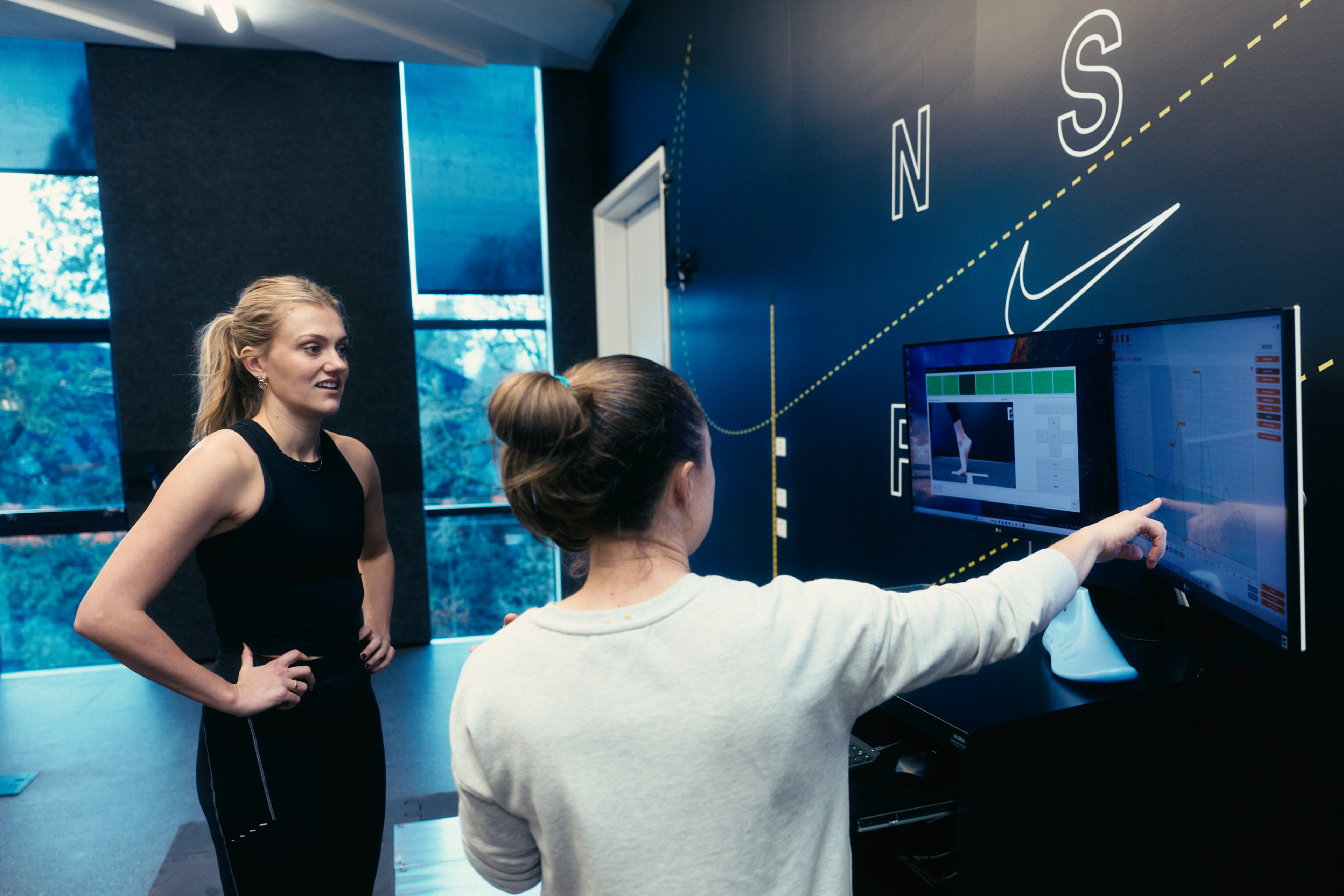
Baseline is a tool and an individual service. It gives an athlete a more complete snapshot of their physical strengths and their opportunities for improvement.
After guiding more than 4,000 athletes through Baseline, Shea has learned to spot trends in physical profiles among different sports while offering remedies via other Nike tools. For example, runners tend to have weak posterior strength, so in their back, glutes and hamstrings. They stand the most to gain from consistent weight training, provided in the hundreds of workouts from the Nike Training Club App. Athletes who play lateral sports, like basketball, tend to have limited mobility, so a Nike yoga class at a nearby store might be just what they need to balance out.
Key to Shea’s job is a fair amount of myth-busting when discussing test results. An athlete might comment on how running hurts their knees, but when they test their ankle mobility, the athlete grimaces, looking stiff as a board. They test their gait on NSRL Form — a recent addition to the test lineup — and are clearly overstriding. With each step, most of their force is displaced through their knees and their back instead of transferred evenly through their body. Running doesn’t hurt their knees, the way they run hurts their knees. Baseline results help give athletes a course of action for what troubles them the most.
“We wanted Baseline to help bring athletes to the center of the lab, distinct from product.”
Jackie Shea, Baseline Operator, Innovation
Baseline does play a role in ensuring that Nike researchers test products efficiently and orient them toward real solutions. For example, Baseline results are a common way for NSRL researchers to recruit for new studies. An athlete with strong results in explosive vertical jumping power is an ideal fit for a future basketball jumping study that tests a new hoops silhouette. A distance runner, on the other hand, might find a steady-state treadmill run in the climate chambers a better match, which in turn can help scientists evaluate the latest sweat-wicking material innovations like Aero-FIT. As more and more athletes do Baseline, the lab’s research specificity gets sharper and sharper. The same is true for product development.
That process is ongoing. A Baseline evaluation is never the end of the story. It’s the beginning of a conversation.
“Baseline creates relationships with athletes that aren’t passive, but active,” says Shea. “The conversations between athletes and their test results are in a constant cycle with each other. One of my favorite parts in this job is getting to ask follow-up questions. You’re showing some imbalance between your left leg power and your right leg. Did you have some kind of injury to your leg early on? Tell me more. There’s always more to every athlete’s story.”