Amy Montagne: The Force Returning Nike to Sport
- May 14, 2026
- Words:
- Images:
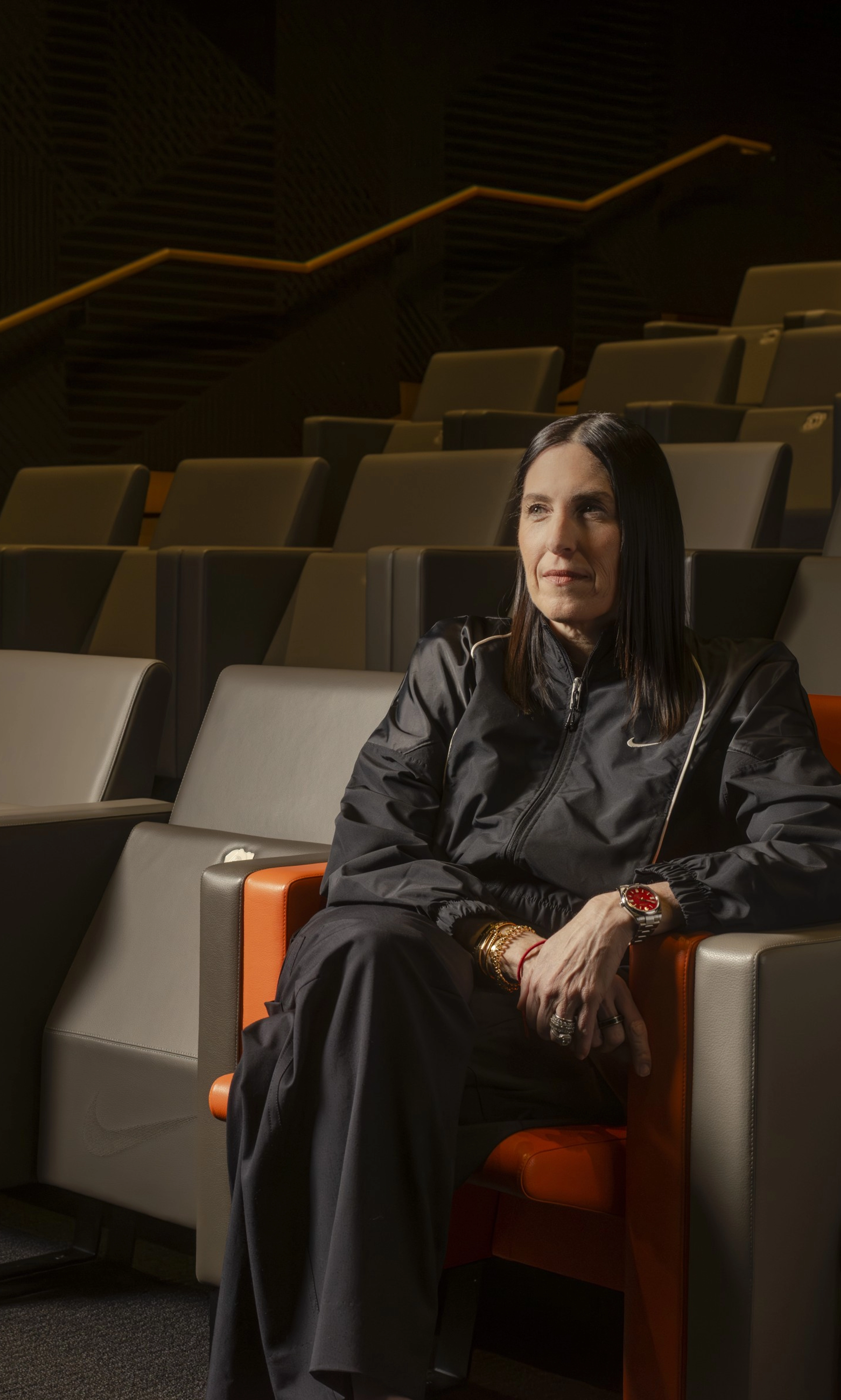
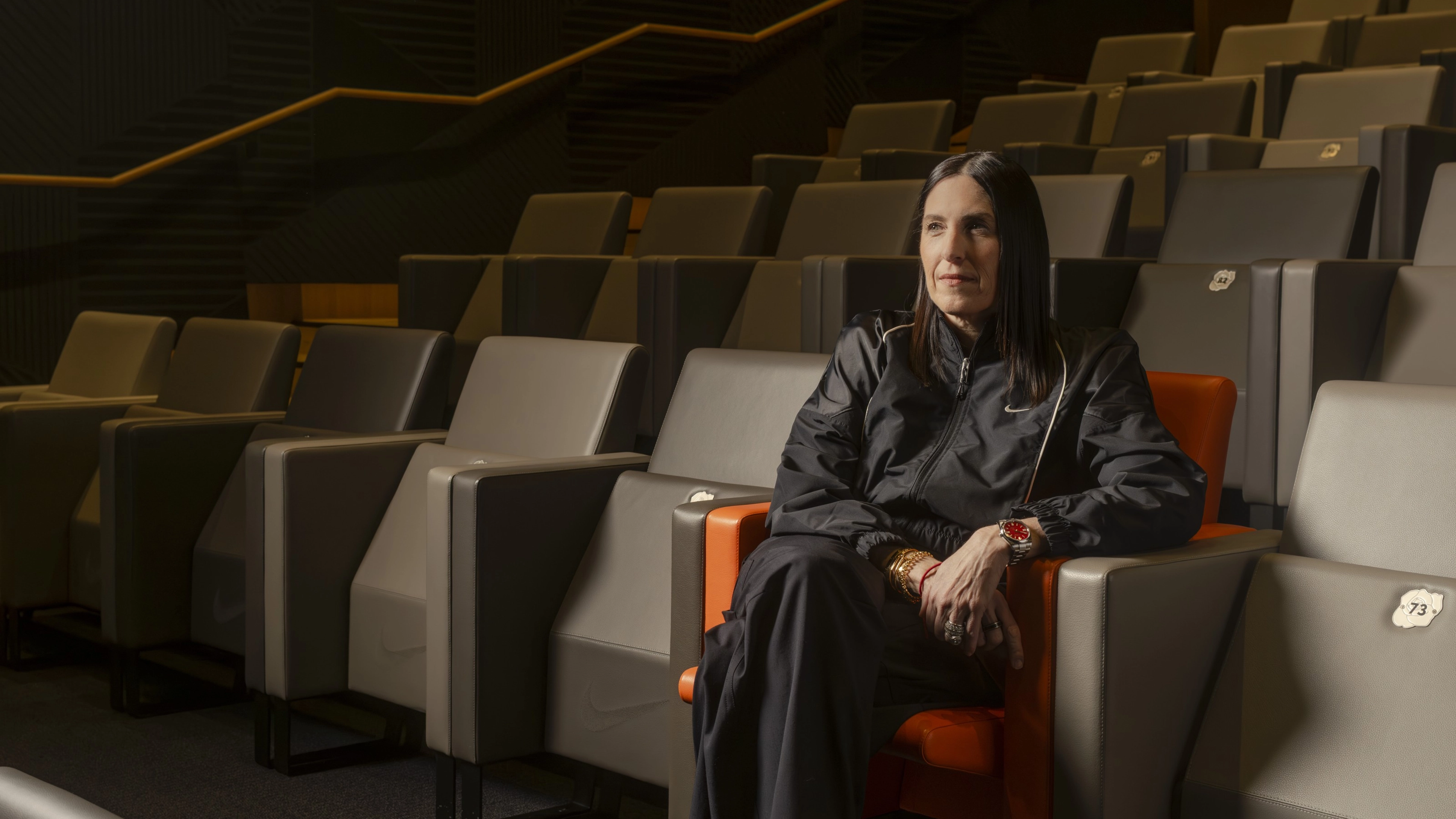
On an early Wednesday morning in February, Amy Montagne stands in front of a small production team in the Serena Williams Building on the Philip H. Knight Campus in Beaverton, Oregon. The President of Nike has a presence — commanding, assured and dressed in hues of black. She stands on a makeshift stage while the crew adjusts the lights. Whether or not the camera’s recording, Montagne is on, personable and assertive and ready to go, despite waking up well before sunrise. She says the energy and passion it takes to do that day over day, week over week, comes from the shared dedication of the teammates surrounding her during her more than two decades with the company: “Bringing my A game is critical to my role, because I want to rise to the level of the people around me.”
Montagne is filming a message for the global Nike Team Meeting in Milan, a thank you to the tens of thousands of worldwide employees for the hard work leading up to the winter’s major sport moments — the Super Bowl, All-Star Weekend, the Winter Olympics — and a rallying cry for the hard work everyone knows is still ahead. After her first read-through under the lights, a make-up artist dabs her face with a sponge while she listens to feedback. Her delivery — only two takes! — earns applause, and she laughs. “This is not a normal day,” she promises.
But when a day in the life of the president of the world’s largest sports brand can encompass anything from lunching with premier athletes to leading meetings on global sport brand strategy to snapping a pic with Kim Kardashian for her Instagram grid during the NikeSKIMS launch in New York (this one jackpotted Montagne cool points with her triplet teenage sons), maybe the normalcy is found in accepting that every day will be different. And that’s exactly what she loves about it. “Each day, you get new information: People loved a certain product drop, a new sport campaign resonated with a specific community, an athlete’s authentic style led to a whole new way of dressing to compete,” she says. “The energy of that immediate response from people who love Nike is what inspires me.” The question that she has asked herself to guide each unique day over her two decades at the company remains the same: “How do we lead our teammates and this brand to greatness?”
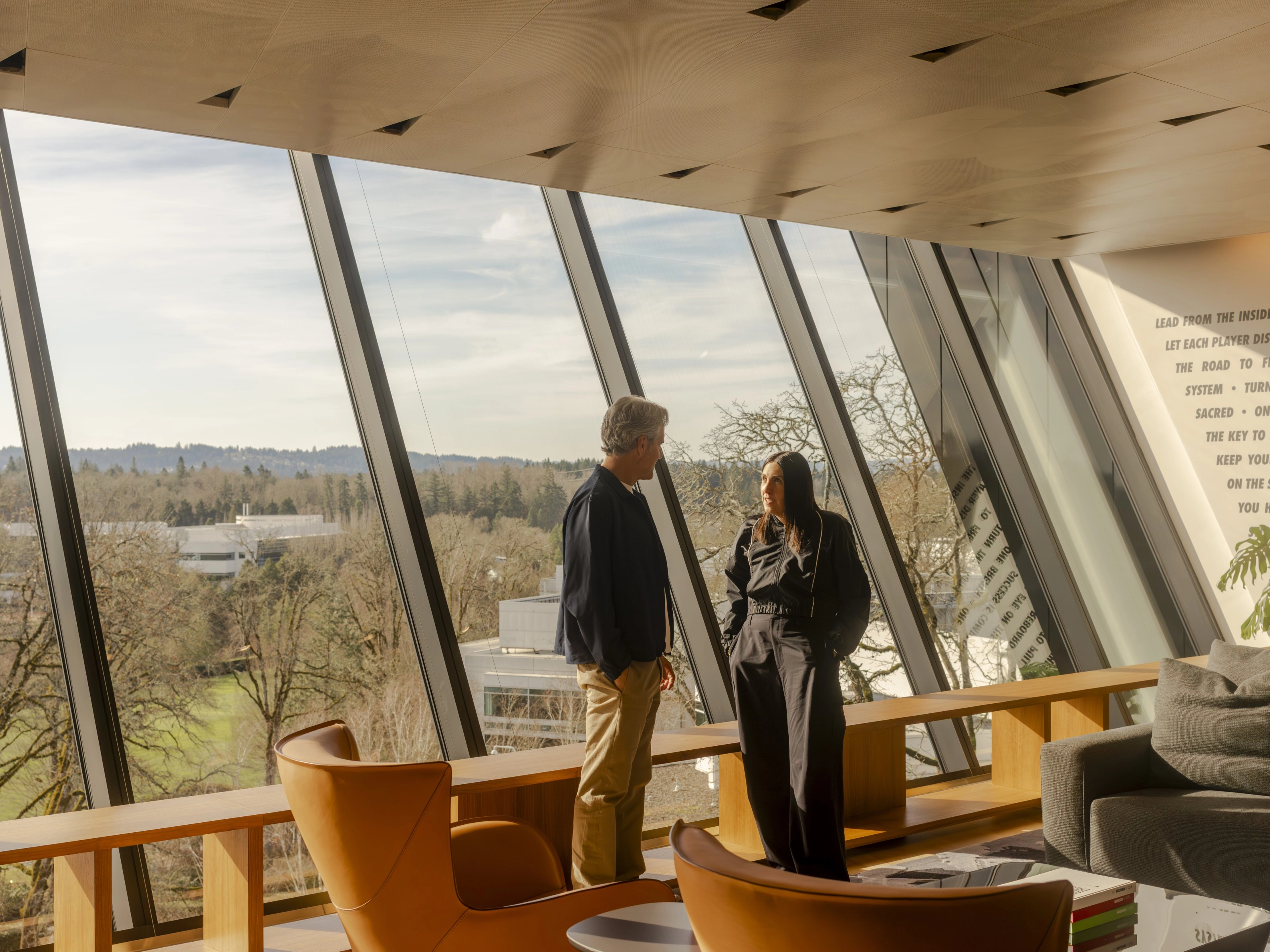
NIKE, Inc. President & CEO Elliott Hill and Montagne. “I picked Amy because of her passion for this brand and her experience,” says Hill. “She creates inspiration, and she creates aspiration.”
“Amy's the leader Nike needs right now. I believe the structure we have in place, the team she’s put in place, the expectation that she set, is going to give us that sharp clarity against the different consumers we’re serving, and that will unlock another wave of growth.”
Elliott Hill, NIKE, Inc. President & CEO
When Elliott Hill accepted the NIKE, Inc. President & CEO position in 2024, bringing the company back to its sport roots and focusing on the athlete was at the top of his to-do list. Nike needed a turnaround. After years of dominance, the brand was no longer the untouchable giant in the sports industry, and upstart brands were clawing away at the Swoosh marketshare. Nike’s once-clear mandate to be steeped in sport by listening and serving the athlete had turned murky. Finding a visionary leader to drive a vigorous reestablishment of the brand's credo was key, and the path to that had to be through strengthening the relationship with athletes (and that means Nike’s definition of “athlete” — anyone who has a body).
Hill needed a trusted leader for the Nike brand who could lead its new Sport Offense, a plan that rebuilt the company and its priorities by sport, allowing teams to go deep on what those specific athletes need. This right-hand leader would need a not only a mind for end-to-end strategy, a commitment to innovation, and an adroitness for emotional storytelling, but also the skills to make deliberate choices to strengthen the business for the long term, activating Nike’s many levers to connect with athletes, sport communities and fans across the world. Hill had a clear choice: Amy Montagne.
Over her 12 roles and 21 years at the company, Montagne had established herself as a healthy balance of left- and right-brain — an outside-the-box thinker who also uses “spreadsheet” as a verb — and was a motivating force behind Nike’s new sport-first operating model. “She always asks, ‘How is this connected back to sport, back to the athletes?’” says Hill, outlining her strategic filter. That comes from her unwavering dedication to the benefits of sport that go beyond playing: In high school, for example, Montagne tried out for the basketball team but didn’t make the cut. Instead of walking away, she doubled down and became the team’s statistician, a role that encapsulated her talent, her secret sauce: She can see the whole court, identify people’s unique abilities and skill sets, and use that data to help make the whole team better.

Montagne and Charles Williams, VP of Footwear, during a product meeting last year. Williams describes Montagne as a “courageous, empowering” leader.
Montagne is a straight shooter, with the sort of no-filler management style that makes it clear what she’s thinking. If she works with you, she believes in you. And she’s the first to admit that she expects big things. But she knows that success is achieved only by pushing past what you think are your limits, and as a team. Charles Williams, Global Vice President of Footwear, wasn’t remotely surprised when Montagne became the president of the Nike brand. For years, he’d known her as a “courageous, empowering” leader, one who was just as likely to come meet Williams in his office as he is to meet her in hers. It’s a small gesture with a big ripple effect. Not only does it show respect for his time, says Williams, but it’s also an opportunity for more junior employees to get a bit of face time with her. Hill likens her to a coach and notes how many relationships she’s fostered during her time at Nike. “Because of Amy’s level of clarity and accountability, she builds trust with the team, and then you get the followership,” he says.
Once, Montagne received feedback from her team that, while she has extremely high expectations, they knew that she has those same high bars for herself above all. “It was one of those moments where I felt really seen for who I am,” she says. And that approach has resulted in a genuine loyalty between Montagne and her teams — she gives people the tools, guidance and space to be great, and in return, they are.
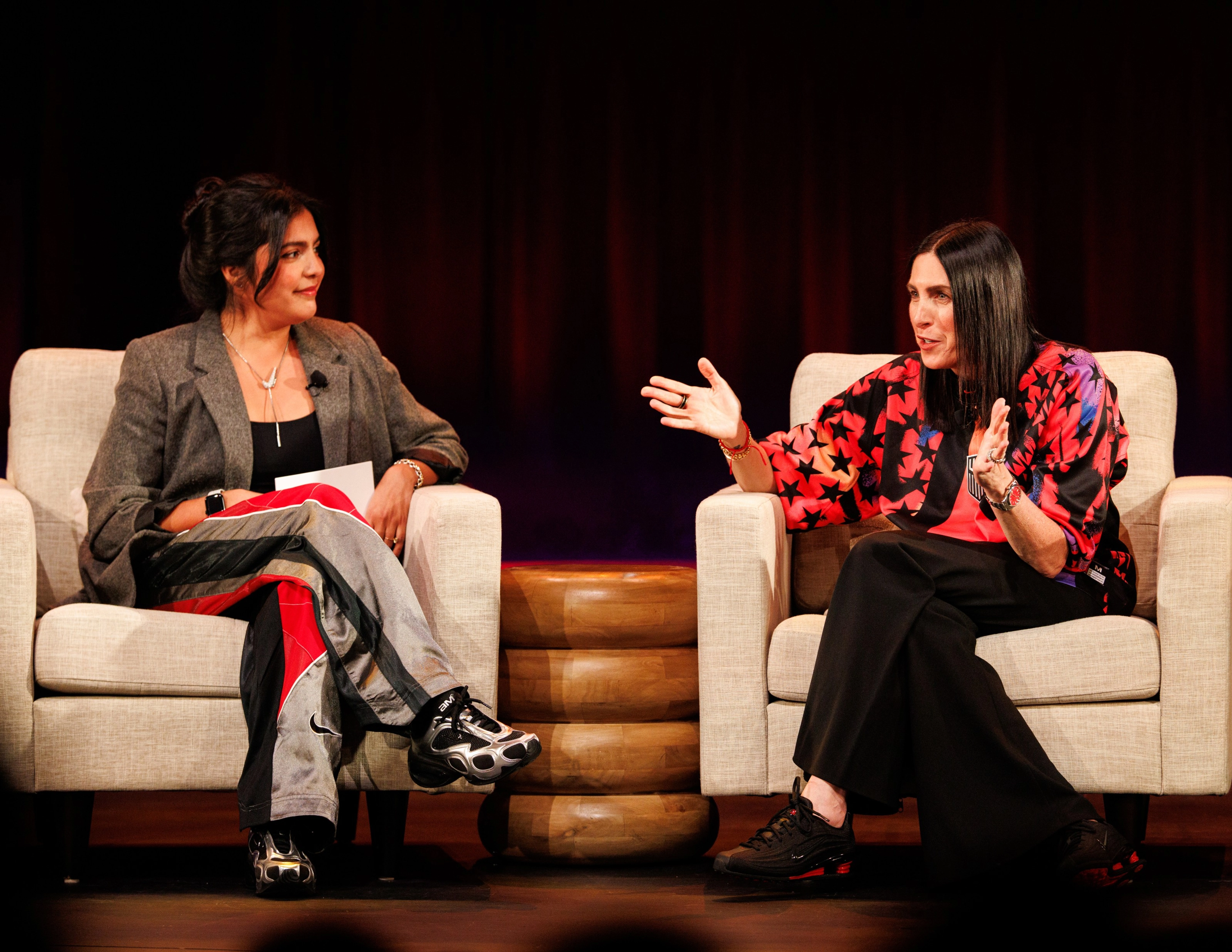
Montagne and Maricruz Rodriguez, an EKIN based in Los Angeles, discuss how Nike can move faster, and better serve consumers and deepen their connection to sport .
“Bringing my A game is critical to my role, because I want to rise to the level of the people around me.”
Amy Montagne, Nike President
Nike’s winning history is never far from Montagne’s mind. It excites her that everyone around her knows they have big, and well-made, shoes to fill. “Every product, every story we tell, every marketplace execution has to be done with uncompromising excellence,” she says. How does she make that happen? By asking honest questions. Is the product living up to our expectations, what we know this company is capable of? Is that the best way to tell the story? Is the execution the most premium, sustainable way we can do it? Did we give it absolutely everything?
If that philosophy sounds almost unbelievably driven, well, that’s on purpose. And it’s what makes her ideal for the job. “Amy's the leader Nike needs right now,” says Hill, “and I believe the structure we have in place, the team she’s put in place, the expectation that she set, is going to give us that sharp clarity against the different consumers we’re serving, and that will unlock another wave of growth.”
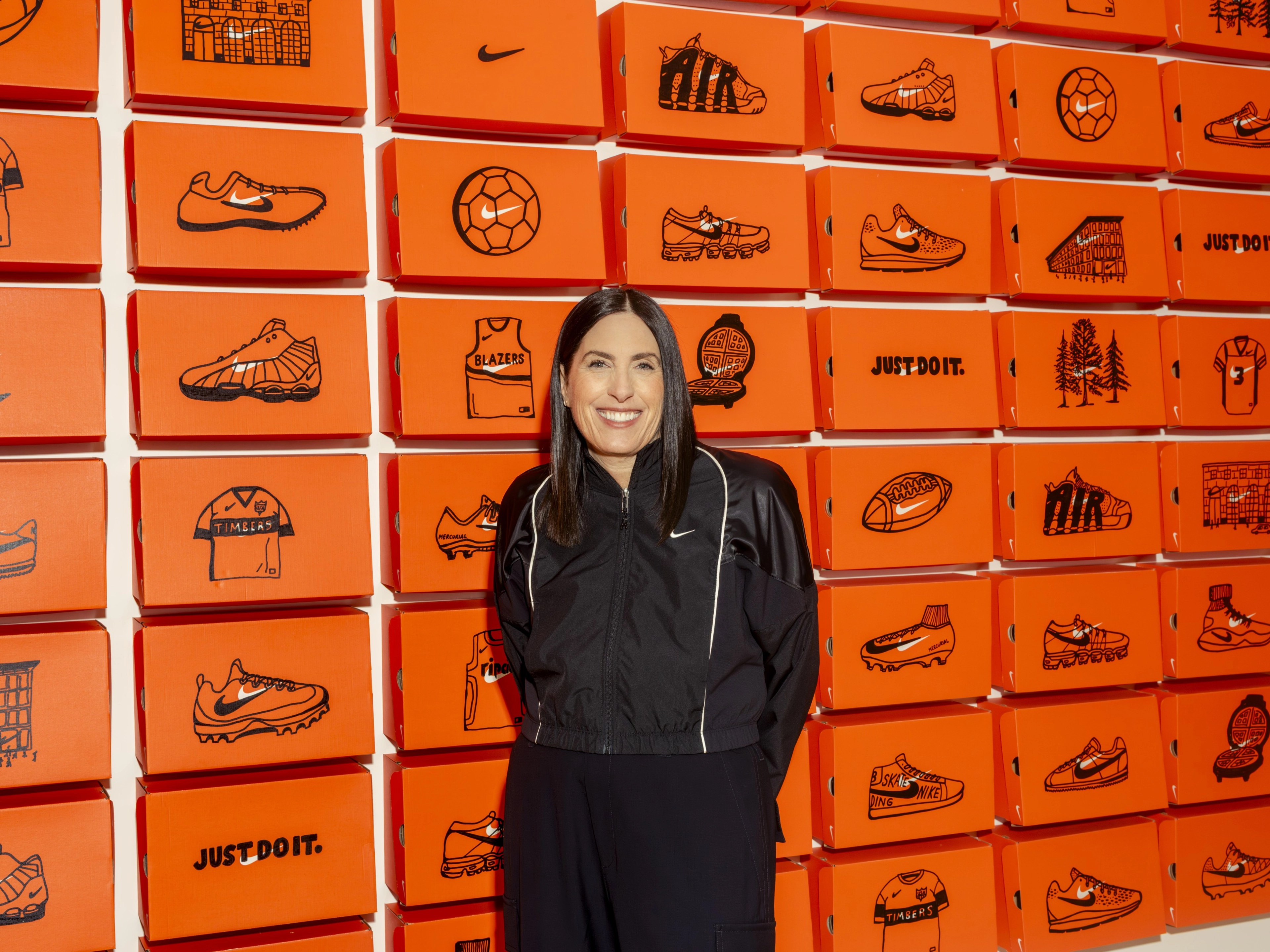
Over her 12 roles and 21 years at the company, Montagne had established herself as a healthy balance of left- and right-brain.
“I’m watching her now, in the last couple of years, become a different kind of leader who is braver and a little more vulnerable, and I think that’s an evolution of her leadership that’s going to take her far.”
Janet Hayes, CEO of Crate & Barrel and longtime friend to Montagne
Only recently has Montagne allowed herself — her full self — to be seen in the workplace. Early on in her career, working at the corporate headquarters for The Gap, in San Francisco, she was known for leaving her personal life at the door. Work was work, home was home, and never the two shall meet. “She has a strength to compartmentalize things to be able to move through adversity,” says Janet Hayes, her former coworker, longtime friend and current CEO of Crate & Barrel. But that also meant that people had a harder time getting to know her. “I’m watching her now, in the last couple of years, become a different kind of leader who is braver and a little more vulnerable, and I think that’s an evolution of her leadership that’s going to take her far,” says Hayes.
For Montagne, the shared trauma of the pandemic illuminated a new managerial approach. For the first time in her career, everyone she knew was going through the same struggle. There was no reason to pretend it wasn’t happening, so why not face it head on? The comfort that came with that allowed her to bring more of her personal life into the workplace. Not as a proselytizer, but as a person. “I am who I am because of the life experiences I’ve had,” she says. Having kids later in life, going through a difficult IVF journey, having triplets when she thought she was having a single child, and being all too familiar with grief and family loss — these are truths, as integral to understanding Montagne as her management style or work habits. “We all have these things, and you find the right ways to bring your personal and professional lives together; to be your true, authentic self; and to support people to be theirs,” she says.
Seeing a leader like Montagne be vulnerable and sincere in the workplace has allowed others to do the same. “She’s a real one,” says Williams. “You need that in this organization, because it shows people they can be themselves.”

“I am who I am because of the life experiences I’ve had. We all have these things, and you find the right ways to bring your personal and professional lives together; to be your true, authentic self; and to support people to be theirs.”
Amy Montagne, Nike President
Montagne’s true self at Nike is pure energy. She has a palpable enthusiasm for the job, a humming aura around her. Her role today is a culmination of a steady focus throughout her career, starting from what drove her when she was working retail in high school in Arizona: a curiosity about the consumer. Even then, she was fascinated by buying habits. What do people like? Why do they buy the things they do? How does fit, color and style make a difference? That desire for understanding makes just as much sense for Montagne now as it did back then. “In a big company, driving billions of dollars of revenue, everything gets clear when you come back to a consumer and their insights,” she says. “Nike can seem so big, but in the end, we’re shop owners.”
As an undergrad at Santa Clara University, she enrolled in the retail management institute, where that curiosity became a tenable career path: This was an actual job, being a buyer for a store. “And that was it!” she says. Her path unfurled before her, like a finger before it beckons. She graduated with a degree in communications, sharpening the storytelling skills that now drive Nike’s most simple and powerful message: that sport can change the world. That’s a fact Montagne’s seen time and time again, be it watching her kids commit to and improve at a new skill or being part of grand moments, like the Super Bowl or World Cup. “In a world today that has so much challenge and change, sport is the unifier that really brings people together,” says Montagne.
“In a world today that has so much challenge and change, sport is the unifier that really brings people together,” says Montagne.
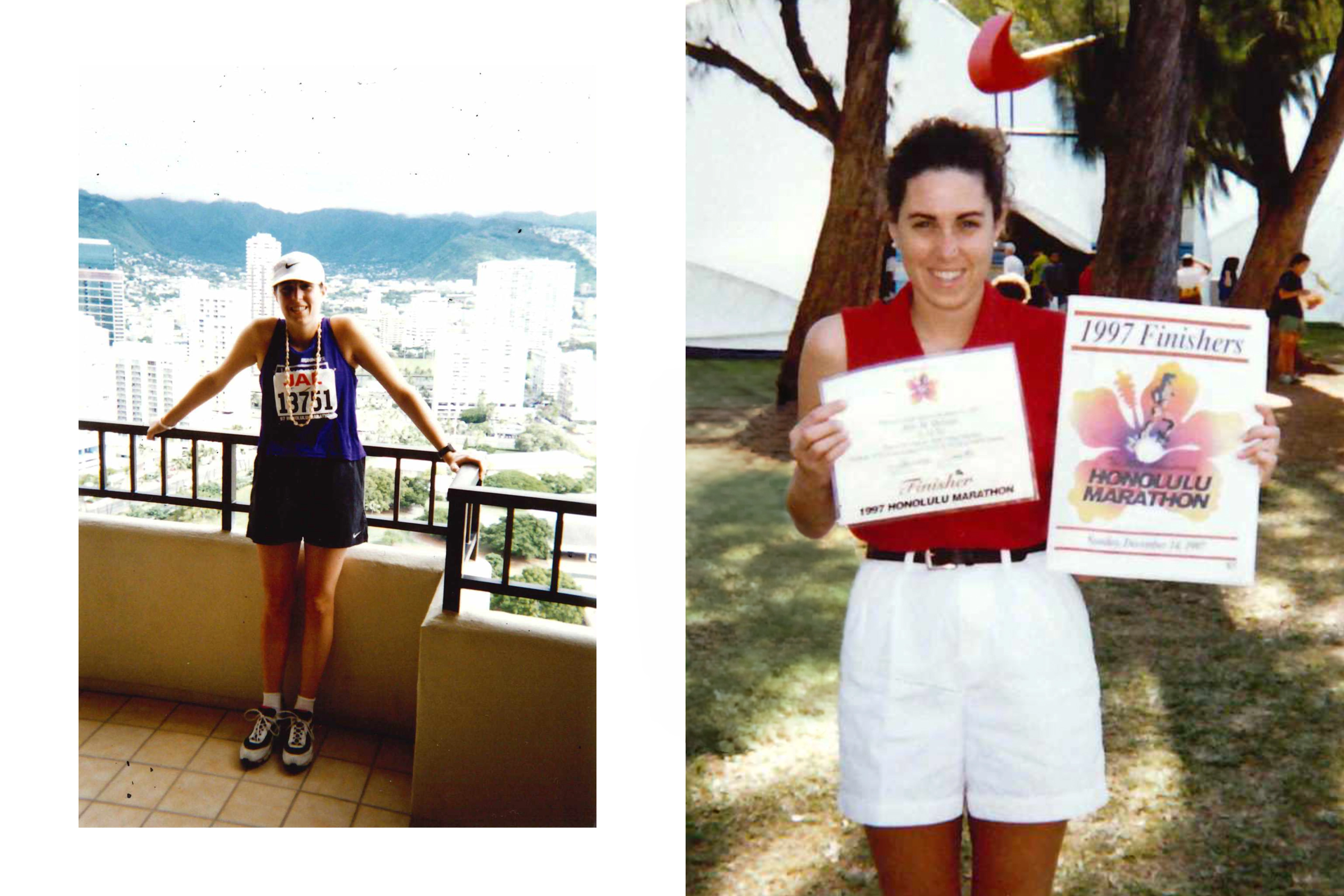
After graduation, she completed buyer training at Walmart headquarters and took a role as an allocation analyst at Gap Inc., capping off 11-hour days by running across the Golden Gate Bridge, training for marathons with friends. Her sport of choice has changed — now you’re more likely to find her in a pilates studio or cycling class — but her tenacity and drive for excellence is the same. Her husband, Pete, formerly a category manager at Nike, calls her the hardest worker he’s ever met. (Their pairing was a matter of fate; though they attended the same college, they didn’t meet until after graduating, when Pete was working at Nike and Amy had just started.) More than anything, Pete says, Amy is smart, sharp and prepared. Though that hasn’t always come easily; she’s had her fair share of shoot-down remarks, plenty of times where she’s been the only woman in the room, he says. “What she does that sets her apart is create a culture of inclusivity. She cares about her team, about mentorship, about elevating people’s careers.”
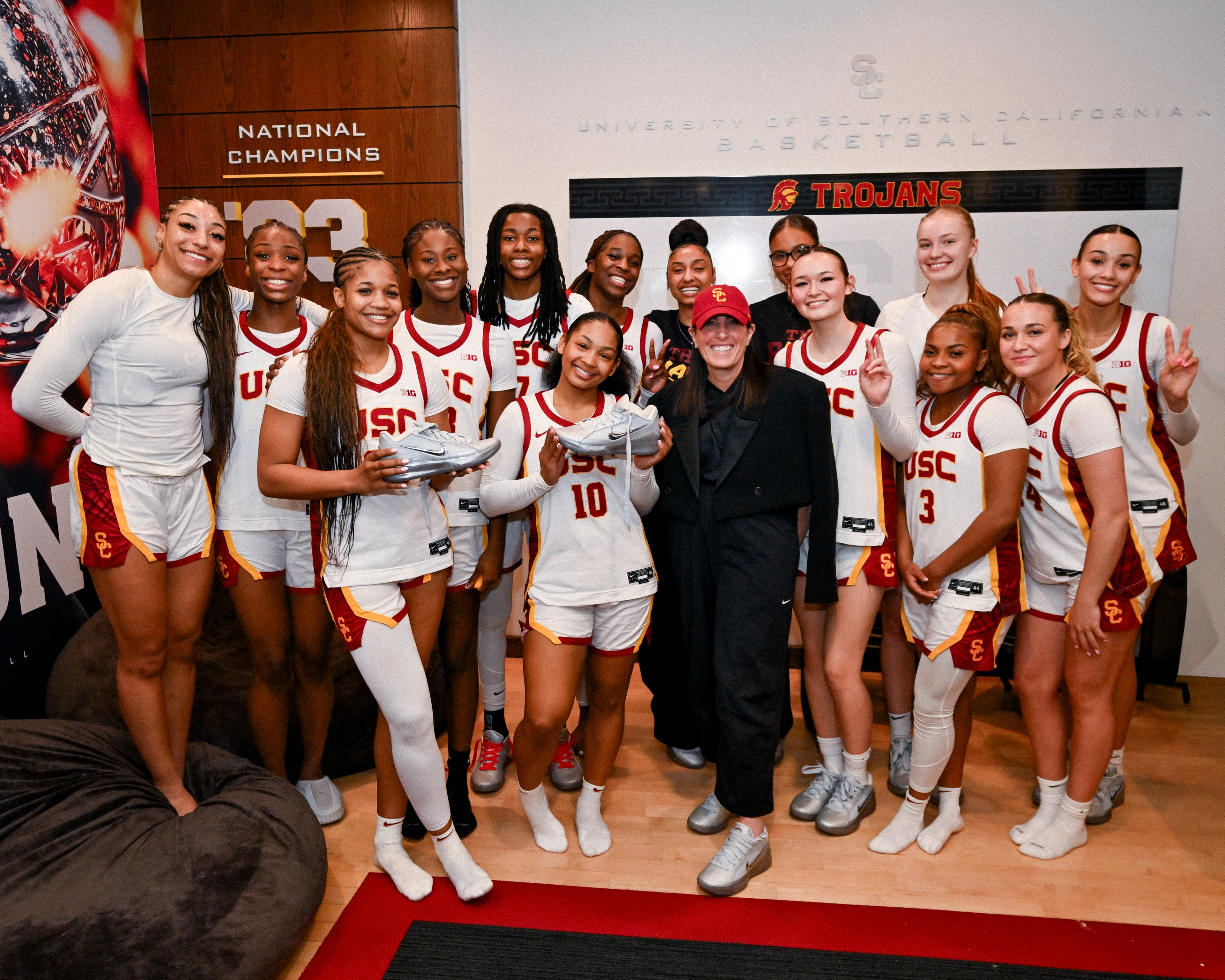
Her passion and commitment to champion women is well-represented in her office, on the fifth floor of the Sebastian Coe Building, where an oversize copy of the company’s 1996 print ad “If You Let Me Play” sits on her desk. Working with top athletes like A’ja Wilson, Caitlin Clark and JuJu Watkins is one of the most fulfilling parts of her job, which includes “doing everything I can to show them support — that we want to learn, listen and meet them where they are, and keep doing that as they succeed,” she says. The bar isn’t what the world expects Nike to do. “It’s giving so much more than that,” she says, “what we know our athletes deserve.”
When Montagne took over her current role in May 2025, she and her team went on a retreat to hammer out a clear vision for the Nike brand. The company will always be about sport, they contended, but the evolution had to come from following the lead of the Nike athlete. “They don’t compete just to be like anybody else,” she says. “They say, ‘I can do it better, faster, stronger, more stylish.’ They break things to be better — and that’s what we’re meant to do too.”

Montagne films a video to be played during an all-employee meeting at the Winter Olympics in Milan.
For Montagne, that means taking her vision of the Nike Sport Offense — establishing more than a dozen specific sport focuses and creating the teams that power them — and nurturing those sport cultures, from running and global football and basketball to golf, tennis, training and more. Each of these has its own personality, energy and nuances, and, essential for Nike, its own aesthetic. For example, the look of running, Montagne says, is style, for everyday and professional athletes alike. She points to Sha’Carri Richardson, who doesn’t run fast and break records in spite of her long nails or false lashes — she does so because of them, how they allow her to be her authentic self. Show up as the most real version of you, Montagne says, and you perform at your best. That’s a tenant that stretches across sports. “Look at the relaunch of the ACG brand at the Winter Games,” she points out. “The brand has legitimate outdoor legacy and innovation, and products that speak to an epic, unique style.”
As our interview ends, Montagne is in her fifth floor office, seated at her desk and turning to the next events of the day: meetings, presentations, preparations. You can see her mind whirring, just like that high-school statistician. The court is bigger, but her diligence has remained the same. She’s surveying, watching her teams’ plays and noting what must happen next to make everyone, and the brand, better. The through line, to be sure, will be sport. To know where Nike is going next, look to where the energy is in the world behind sports, behind athletes. Wherever you find that, you’ll find Nike, supporting, listening, learning — and fiercely competing like no other.