Full-Court Press: How Nike Found Its Footing in University Basketball
- 06 April 2026
- Words:
Basketball has never seen a decade like the 1980s. With a deep roster of incandescent stars and bitter rivalries in both the pro and university games, the sport's growth curve had never looked so steep, and may never again.
In some aspects, Nike rode the wave of the round-ball revolution. In others, the Swoosh was out in front, fuelling—and occasionally suffering the effects of—the money and fame that pulsed through the sport.
But before signature shoes, before billion-dollar categories, before basketball became central to Nike's identity, there was a foothold to secure.
That foothold began in US university gyms.
In March of 1979, the NCAA championship game between Larry Bird's Indiana State and Magic Johnson's Michigan State captivated the country. It remains the highest-rated televised university basketball game in history. A year later, ESPN launched with a heavy diet of university basketball programming. By 1985, the NCAA tournament would expand to 64 teams.
US university basketball was no longer regional. It was televised, expanding and captivating the country.
Nike was already moving.
Nike began its push into university basketball in the late 1970s with the help of a personality named Sonny.
By then, the company's foray into the NBA was already underway. But aside from the University of Oregon, the university game had largely been ignored. That changed in the summer of 1977, when John Paul "Sonny" Vaccaro met with Rob Strasser, Phil Knight and a handful of others to pitch a sandal-type basketball shoe.
The shoe idea was a dud; Vaccaro, however, had an idea that would stick.
Before signature shoes, before billion-dollar categories, before basketball became central to Nike's identity, there was a foothold to secure.
Vaccaro's strategy: create connections. Through the Dapper Dan high school tournament he had been running in Pittsburgh since 1965—essentially the first countrywide All-Star showcase—he built a network inside the coaching ranks.
And the university business was ripe for the picking. In the early to mid-1970s, only a handful of elite coaches were paid anything. A few received lecture fees. Converse had sent Georgetown's John Thompson to Italy in 1977 to run a clinic. But most coaches with shoe deals received little more than discounted products.
Nike saw an opportunity. NCAA rules barred companies from paying players, but coaches were fair game. Provide products. Build relationships. Establish loyalty.
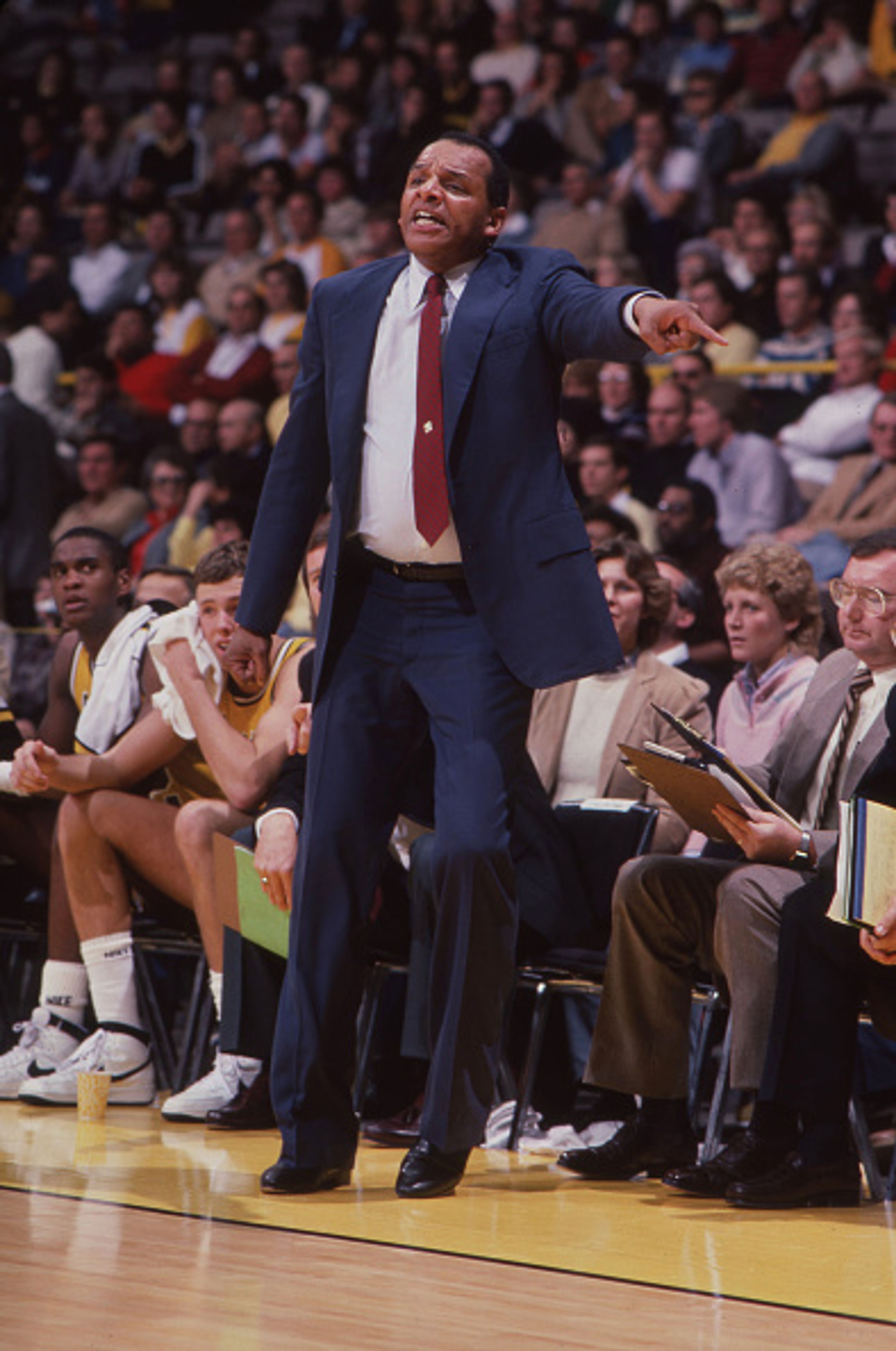
Coach George Raveling leading Iowa in 1983
"Just the idea that someone was going to give me money and free merchandise was a revolutionary step forward".
Iowa coach George Raveling
With that philosophy in mind, things moved quickly. By November 1978, Nike had 17 universities on board. By 1980, it had 71.
What began as a gamble was starting to look like a sure bet. But contracts were only the first step. Growth gave Nike reach, but it still needed credibility.
No programme encapsulated the 1980s university basketball scene and Nike's growing presence within it quite like the Georgetown Hoyas under head coach John Thompson, whose programme became one of the most formidable forces in the sport.
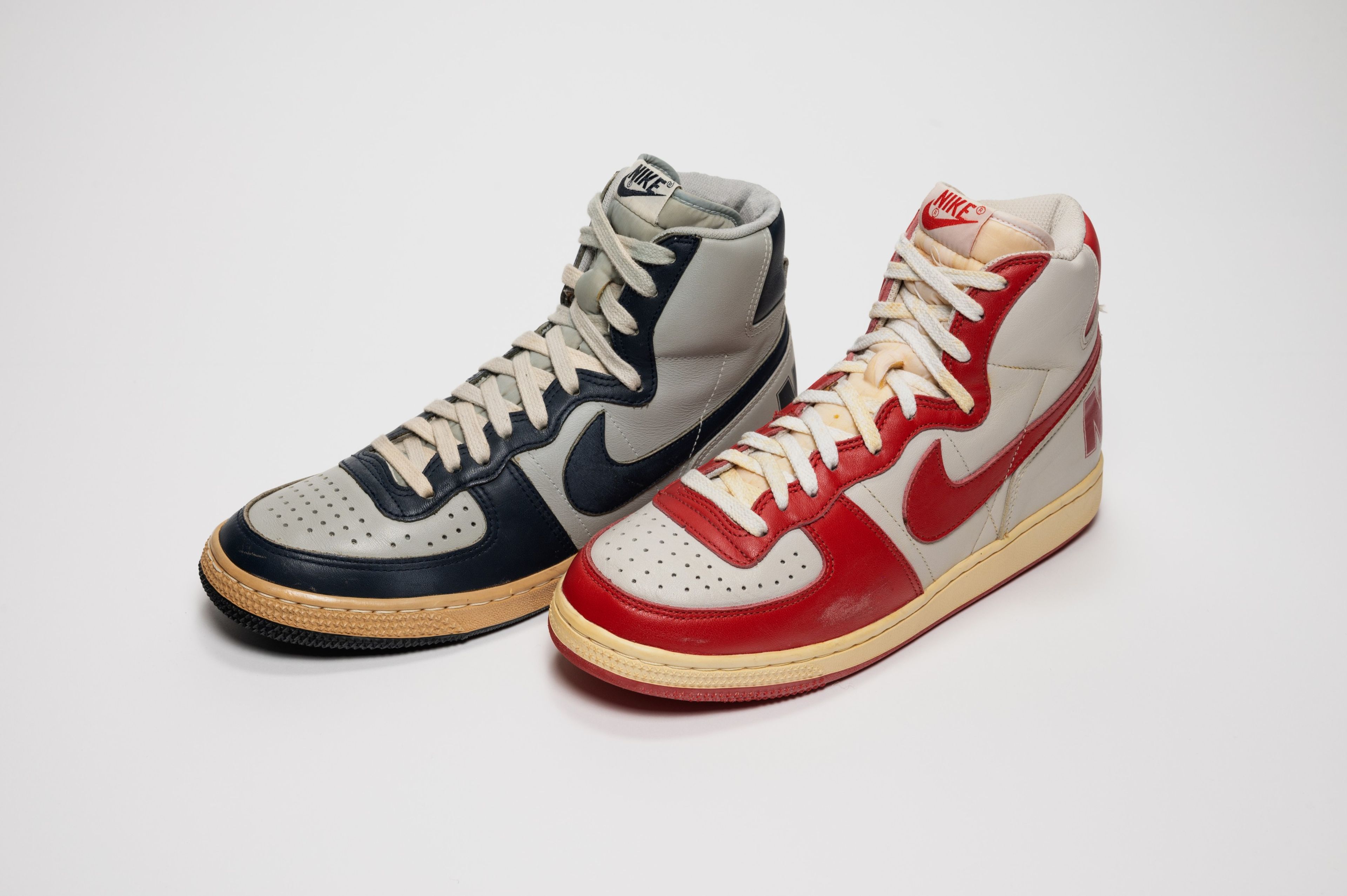
Nike Terminator High in the Georgetown and UNLV colourways, 1985
While serving as Nike's unofficial flagship, Georgetown made the Final Four in 1982, 1984 and 1985, winning the national championship in 1984 and claiming five Big East regular-season titles during the decade.
Thompson first met Phil Knight on a trip to Nike in August 1980. "The esprit de corps manifested by your people is most impressive", he wrote in a letter to Knight soon after. Following a falling out with a close friend at Converse, Thompson signed with Nike and the relationship deepened quickly.
"What you found out about Phil, there were certain people he didn't cross", said Ron Hill, who ran the basketball programme in the mid-1980s. "If John Thompson barked, Phil didn't want to hear it. 'Just get him what he wants'. There were a few of those, not many".
Georgetown became a lab of sorts for Nike ideas.
Take the Legend, released in 1982. It featured thick, durable leather that took time to break in but was ultimately comfortable. It introduced coloured soles and linings, a perforated toe, a flex point at the lacing break and a hook on the back—small evolutions that felt distinctive at the time.
"Legend was the shoe when I came to the company", said Mike Caster, Nike's basketball marketing manager in the mid-1980s. "I remember everybody played in that shoe. It was just an awesome basketball shoe".
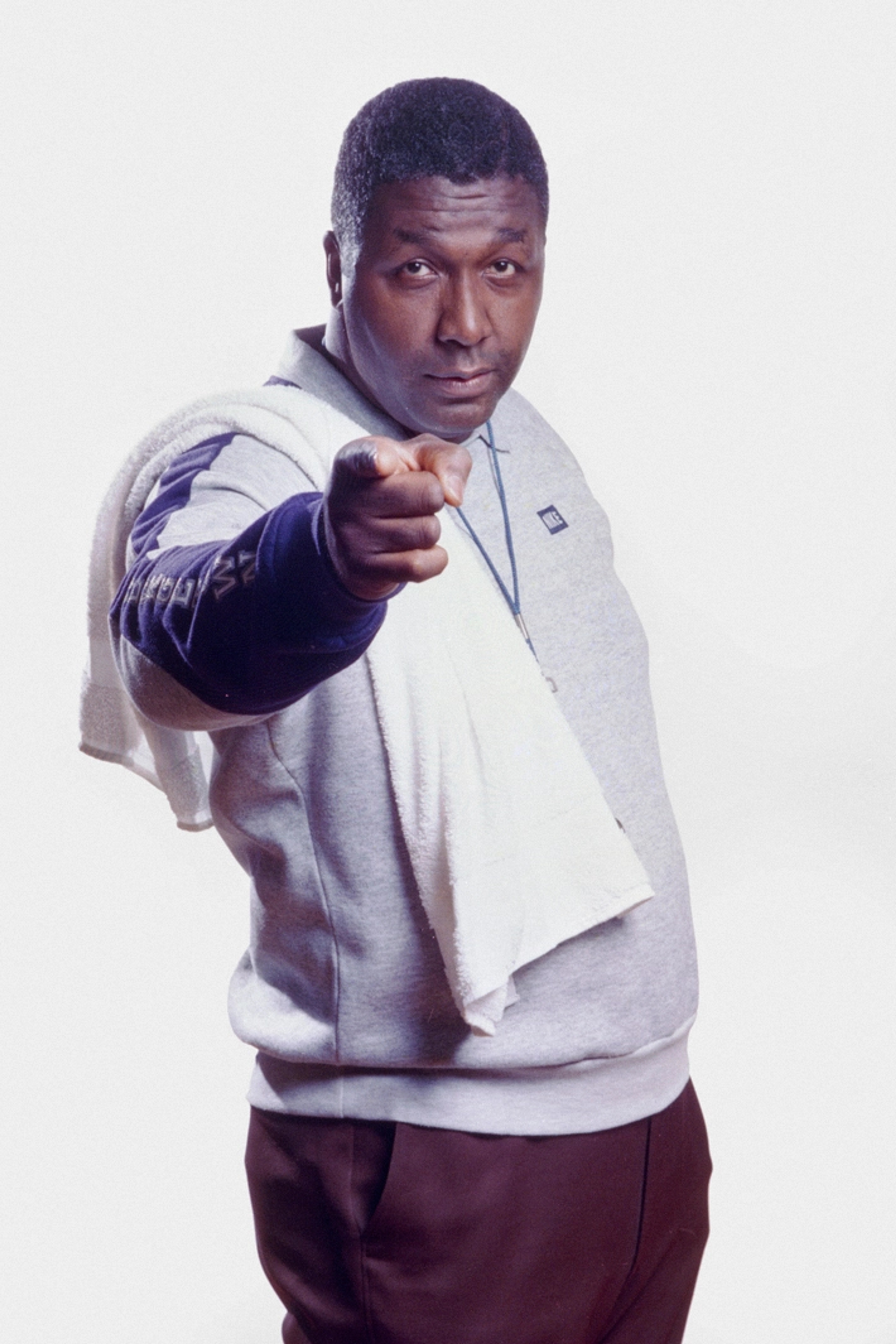
The Nike "Join the Force" poster, featuring coach John Thompson of Georgetown University, released in 1986
"The esprit de corps manifested by your people is most impressive".
Georgetown Coach John Thompson in a letter to Phil Knight
Thompson's Hoyas were fiercely loyal to it. So when Nike executives approached him about switching Georgetown into softer-leather Air Force models or the upcoming Dunk, Thompson refused. He preferred the thicker material, and he wanted Georgetown to stand apart. Wearing the same shoe as a dozen other programmes was not acceptable.
"He said, 'I'm not wearing anybody else's shoes, number one; and number two, I want it exactly this way'", Hill recalled.
By then, the Legend had been discontinued and the name was no longer available. So designer Mike Aveni modified the design slightly, adding a heel counter stamped with "NIKE", and created what became the Terminator. For Georgetown's player-only versions, "HOYAS" was stamped on the back instead, avoiding university royalties and reinforcing Thompson's demand for identity.
The collaboration extended beyond footwear. In 1983, Thompson had Patrick Ewing wear a Nike undershirt in a nationally televised game against Virginia, featuring an illustration of the Legend on the sleeves. The NCAA objected, banning what it considered "free" on-court advertising.
But the message was clear.
Nike wasn't just supplying products. It was embedded inside one of the sport's most visible programmes, testing ideas, responding to a powerful coach and building trust on a national stage.
If Georgetown gave Nike credibility, March gave it scale.
At the 1985 Final Four, Nike leaders Rob Strasser, Jack Joyce and members of the New Products team saw university passion up close. Students and fans lined up overnight to get into the games. University colours dominated the arenas. Allegiance was visible, tribal and loud.
The "Be True to Your School" ad from 1986 features the Nike Dunk as the centrepieces of Nike's College Colours programme, the first push to bring colours to basketball shoes.
They began to see something bigger than product placement. If Nike could create footwear in the actual colours of these programmes, fans might wear them as badges of identity.
The success of the Air Jordan 1 and Jordan player trousers had already suggested that consumers would embrace bold colour. Now the idea moved to college and university basketball.
The College Colours programme was born.
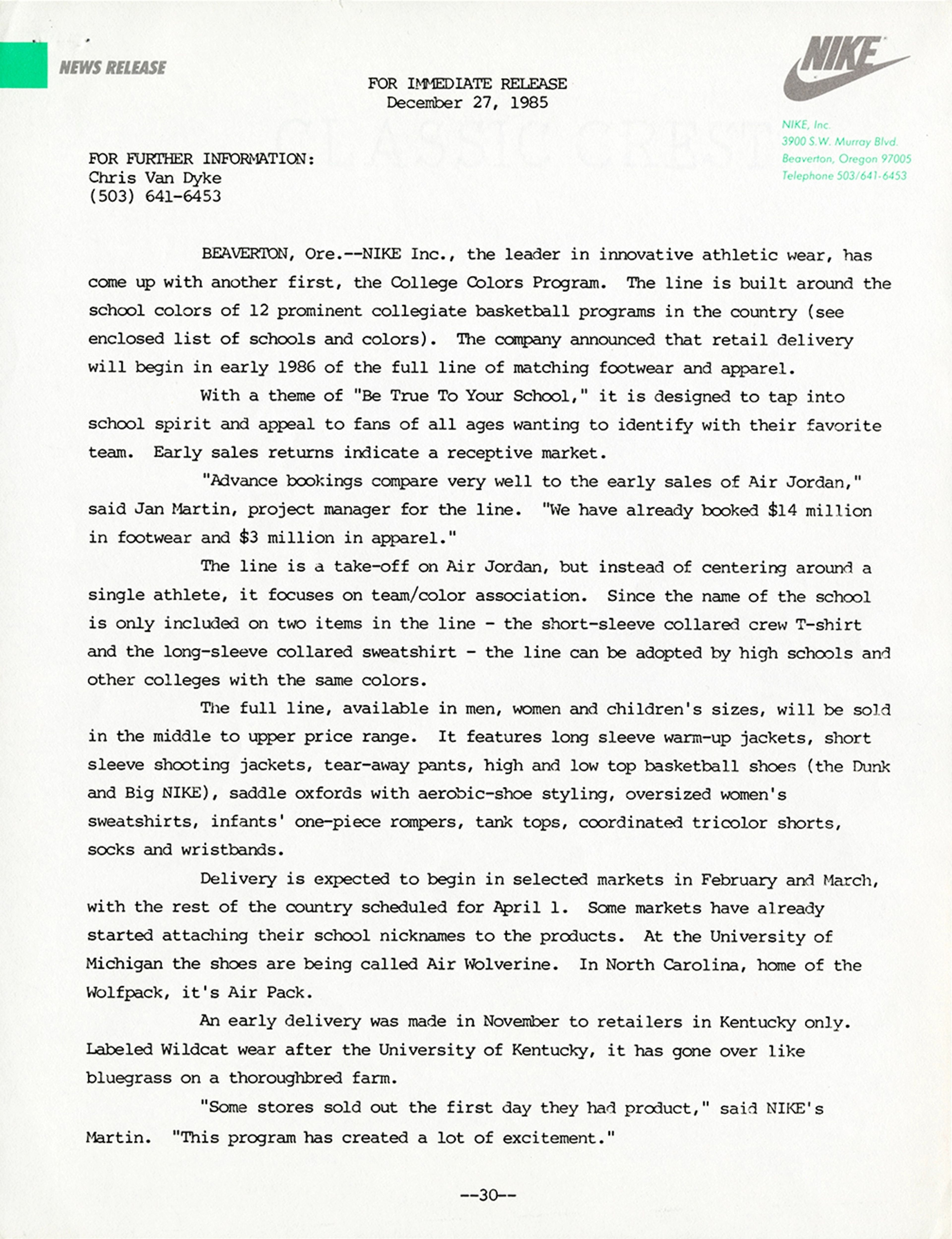
Conceived by Strasser, Joyce and a small internal team that included creative director Peter Moore and Mary Bodecker McGoldrick, the programme paired footwear, apparel and bags in coordinated university palettes. It began as part of the "Guns of August" sales push in June 1985, promising samples by August and carrying a simple directive: "Be True to Your School".
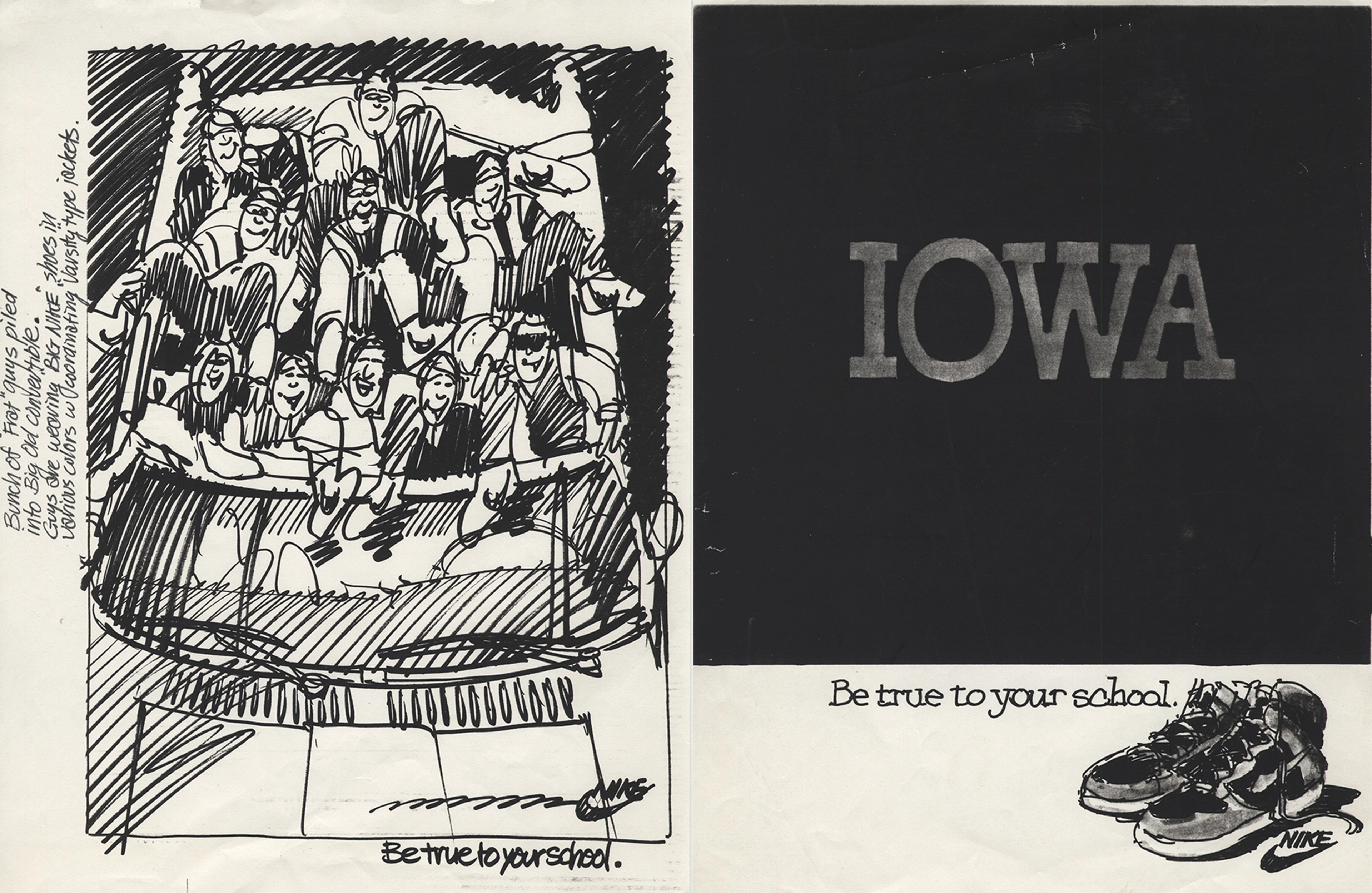
Original sketch concepts for the "Be True to Your School" campaign
Twelve universities anchored the initial release: UNLV, Arizona, Iowa, Purdue, Michigan, St. John's, NC State, Georgia, Maryland, Syracuse, Georgetown and Kentucky.
The centrepiece was a high-top basketball shoe originally sketched by Moore. At first called the College Colour High, it was, as Nike veteran Brad Johnson later said, "a mash-up of different shoes"—a common design practice at the time. Its outsole resembled the Air Jordan I and the Big Nike. Its upper echoed familiar silhouettes. It was built on the same last used for the Legend, considered one of Nike's best-fitting basketball forms.
Eventually, the shoe took a name from that lineage.
It became the Dunk.
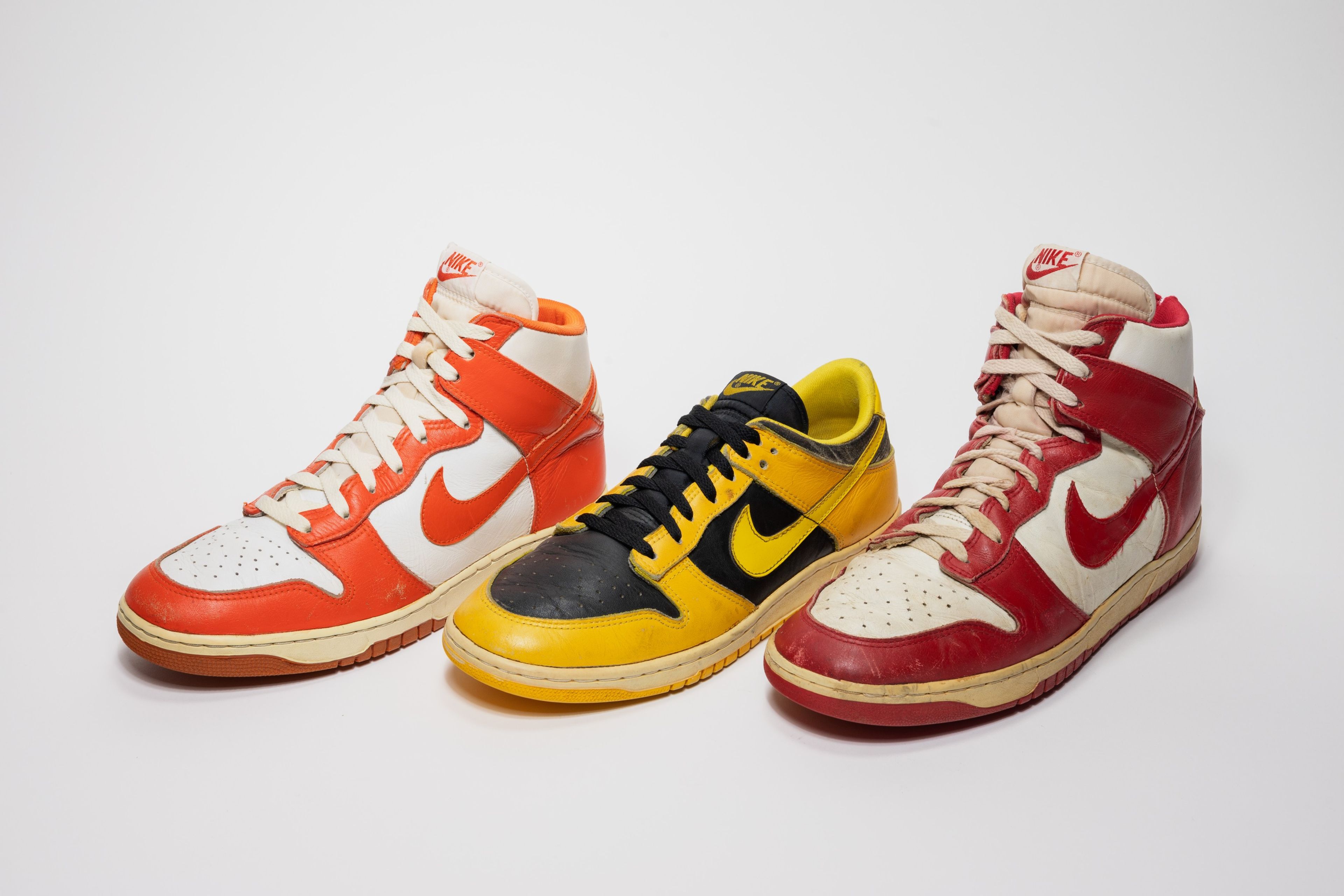
Nike Dunks in the Syracuse, Iowa and UNLV colourways, from 1986.
College Colours disrupted a basketball footwear landscape that had largely been defined by white shoes with minimal colour. For the first time, university identity could be worn head to toe, on campus, in dorm rooms and in packed arenas during March.
The Dunk's initial retail performance was moderate. The marketplace was suddenly crowded with colour after the Air Jordan I. But culturally, something had shifted. Nike had aligned itself not just with players and coaches, but with fan allegiance itself.
The foothold in university basketball was no longer theoretical. It was visible—in blue and orange, in red and white, in navy and grey—on feet across the country.
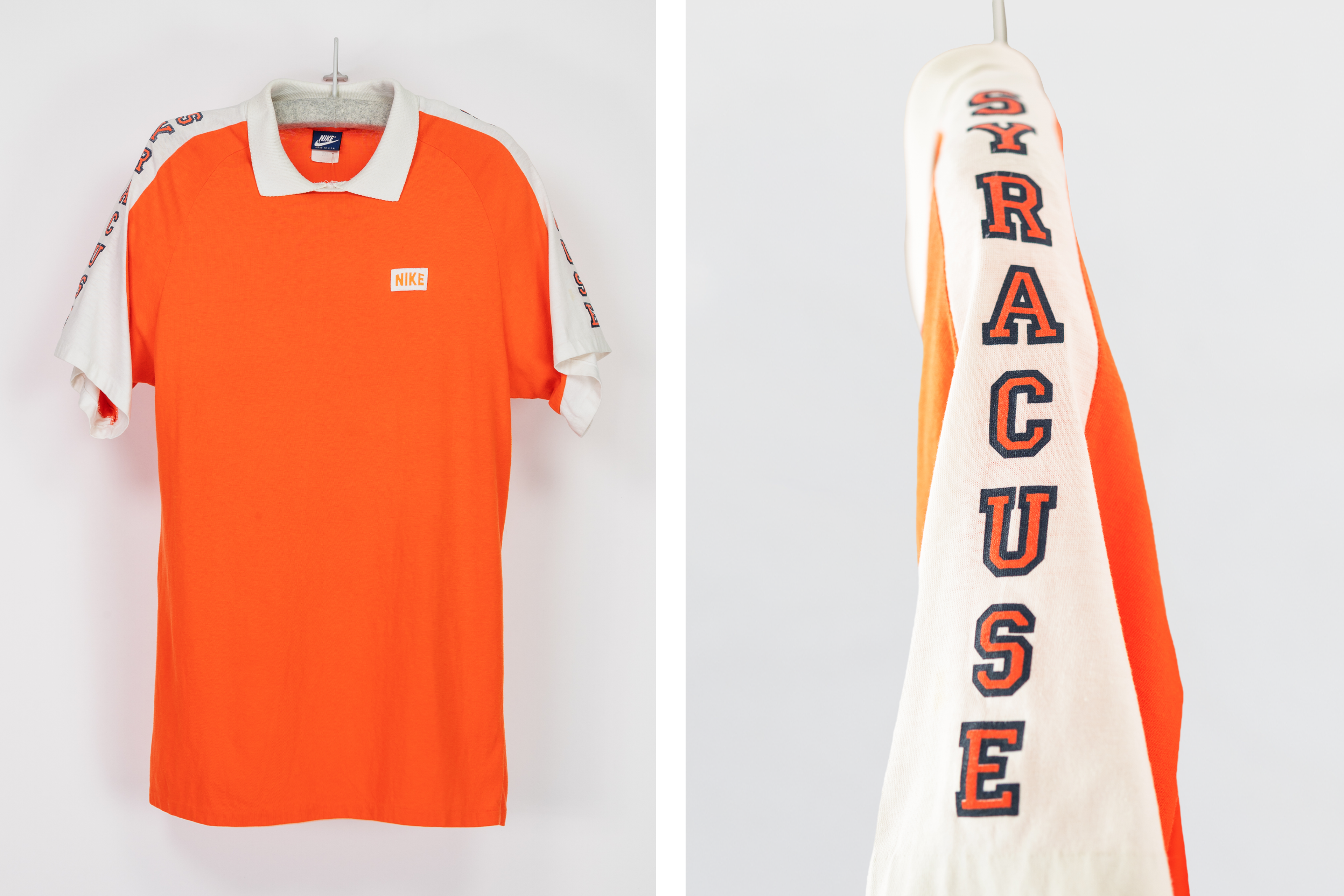
Nike's College Colours push included apparel, giving fans the ability to show their pride from head to toe.
As the 1980s progressed, that visibility only intensified.
Nike universities began advancing deeper into the NCAA tournament with increasing regularity. By 1985, the shift was undeniable: the entire Final Four—Villanova, Georgetown, St. John's and Memphis State—wore Nike.
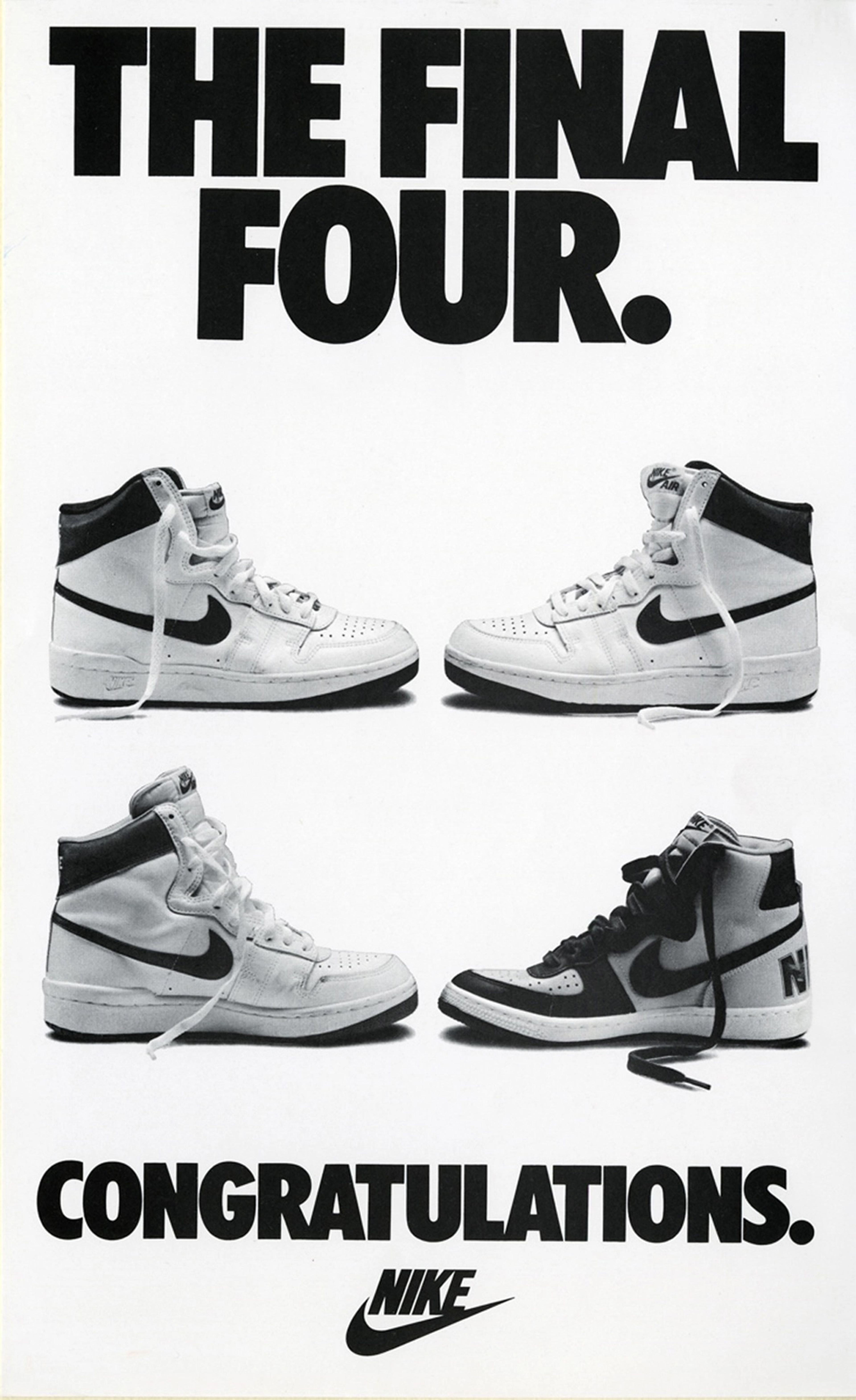
This print ad from 1985 features the Airship High and Terminator High.
The tournament had become the sport's national convention, and Nike was everywhere.
By that point, Phil Knight reportedly asked what it would cost to sign every top-level programme in the country—an idea that never materialised but spoke volumes about how far the company had come in less than 10 years.
Exposure in March did more than sell shoes. It cemented perception. University basketball was now national theatre, broadcast into living rooms across the country, and Nike was attached to some of its most high-profile programmes.
The 1977 strategy—build through coaches, embed through relationships—was no longer speculative. It was unfolding in front of a national audience.
The relationships that fuelled that rise extended beyond contracts.
Each autumn, Phil Knight received envelope after envelope from university towns around the country containing handwritten notes on university letterhead thanking Nike for the summer trip and praising the company.
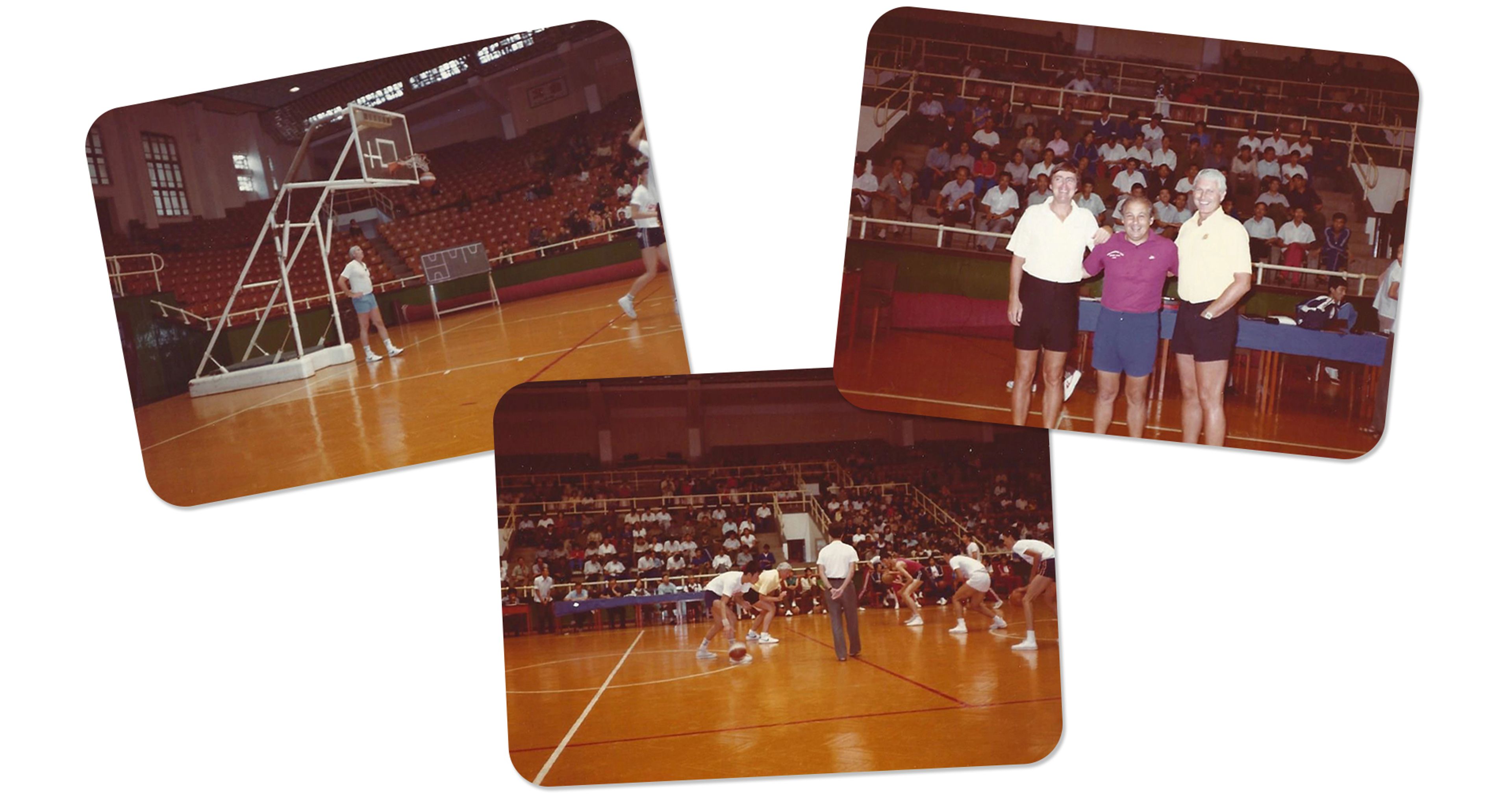
A 1982 coaches trip to China, led by Lute Olson, Rollie Massimino and Don Casey.
"The Nike company is simply amazing", wrote George Blaney of Holy Cross. "Not only are you aggressive, young and dynamic, but the company is actually concerned about people. I like that".
Those letters followed Nike's annual university coaches trips, gatherings that were nominally about product evaluation but functioned as something deeper. Coaches met with designers. They discussed equipment. They compared notes. They built bonds both with the company and with each other.
Clinics expanded the network further. Nike-sponsored events brought elite university coaches together with high school coaches and players, spreading influence and reinforcing the company's presence at every level of the game.
"It's about relationships, service and product", Ed Janka later recalled of the philosophy from the early days. "None is more important than the other".
Service became a differentiator. Nike representatives were on the road constantly, visiting campuses, talking with trainers, building custom solutions when needed. While competitors sold stock products, Nike showed up.
The approach required sustained time and investment. It proved effective.
By the mid-1980s, being a "Nike university" meant more than wearing a logo. It meant belonging to a network, and one that connected product innovation, marketing visibility and personal relationships in ways the sport had never previously experienced.
Even as colour and culture captured attention, performance remained central.
Georgetown's status as an informal laboratory was not cosmetic. Coaches demanded durability. Trainers offered feedback. Designers iterated.
Models like the Legend and the Terminator reflected those conversations—incremental shifts in materials, structure and identity. Shoes were refined season by season, informed by the needs of university programmes competing at the highest level.
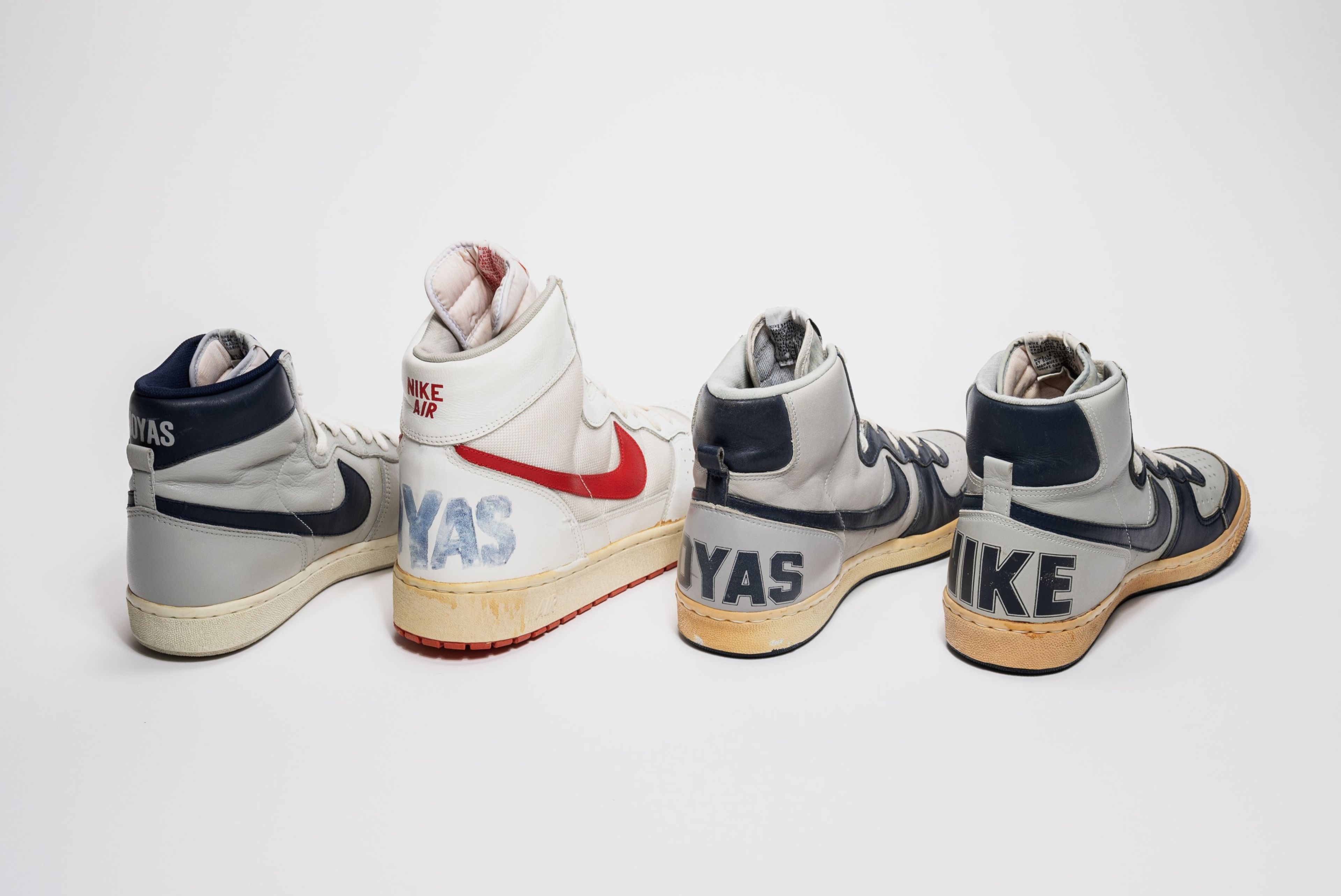
From left: the Legend GT, a Georgetown-specific version of the Legend shoe in 1984; a prototype red Air Train High; a HOYAS Terminator for Georgetown players; a NIKE version for retail.
By the close of the decade, Nike universities had claimed multiple NCAA championships. The company that had started the 1977–78 season with a single university wearing its shoes had embedded itself across more than a hundred programmes.
The experiment had scaled.
Basketball's growth in the 1980s is often told through signature athletes and market-share battles. But before any of that came into focus, Nike's position inside the sport was built in university gyms.
By the time the tournament lights grew brighter and basketball's commercial stakes escalated, Nike no longer needed to prove it belonged. It already did.